
Creators v ads and the attention v branding dilemma: Lessons from Alix Earle’s tie-up with soda challenger Poppi and Pepsi’s $2bn acquisition
An Mi3 editorial series brought to you by
QMS
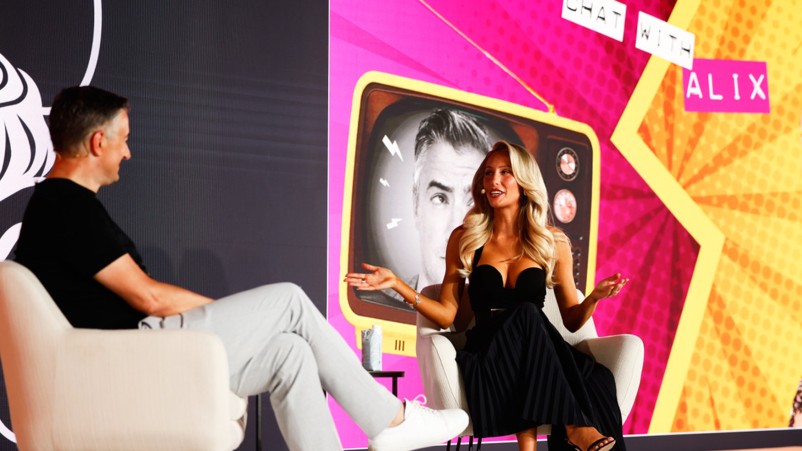
Creators v brand rules: System 1's Jon Evans talks brand and attention with creator-influencer Alix Earle and her 10m followers.
An Mi3 editorial series brought to you by
QMS
Pepsi completed its $1.95bn acquisition of pre-biotic US soda challenger brand Poppi in May with all the fanfare of a new shiny breakthrough coveted by the marketing profession – creator-influencer Alix Earle, with circa 10m followers across TikTok and Instagram, played a central role in the deal as a Poppi collaborator and investor that reportedly tipped Pepsi’s decision to buy Poppi over archrival Olipop – along with the brand’s blend-in of traditional TV ads. Poppi rolled the dice on a TV ad in this year’s Super Bowl and new data from System1, which measures consumer emotional response levels to advertising and creative work, outlines the best explainer yet on the grand tension emerging between traditional brand advertising and what works in the creator economy.
It was one of the macro themes du jour at the Cannes Lions two weeks ago – creators and influencers are now ensconced on the Cote d’Azur as the hot channel – yes they’re still a tactic, not a marketing strategy to summon Mark Ritson. But what actually works best for brands – not creators – and how and why across the socials: creator-influencer plugs or TV-style advertising?
The answers are coming, but let’s understand the context first or the tendency for marketing professionals’ swimlane myopia will march on with sub-optimal results – that is, whatever the marketing problem, your specialist marketing capability or bent is the solution.
Jon Evans, System1’s Chief Customer Officer and host of the Uncensored CMO podcast series, did both the hard data yards and the glitzy bit in conversation with creator-influencer Alix Earle, considered central to Pepsi’s $2bn acquisition of US pre-biotic soda challenger Poppi.
Here’s the Jon Evans data drop from user research inside the TikTok juggernaut:
- Brands need consumer attention and for that attention to link back to the brand
- In the creator-influencer economy, do brands lose more often to creators in building their own brand awareness and the knock-on benefits? (Yes)
- Hence the question du jour: creators v advertising/advertisers – who makes the bigger impact?
“We measured how much attention you gain by using TV advertising on TikTok versus creative content,” Evans outlined in the set-up before the boisterous arrival of Earle on stage for a fireside chat. “Creator content beats advertiser content quite comfortably,” Evans concluded from System1 testing, per the chart below:

But the bad news is “you don’t often remember which brand they’re [creators are] talking about,” Evans demonstrated. “A TV ad is very effective at helping you remember which brand it was, but creators are less effective when it comes to making sure you know who they are, unless you do it well.” The takeout was clear – in aggregate, creators drive more attention but less brand recall and the inverse is true – ads generate less attention but greater brand recall. The first priority for Evans and System1 is to embed branding early in creator-influencer content for a 2.3x lift in brand linkage and awareness.
No logo mojo
But there’s another curveball according to the System1 analysis on TikTok, which broke down the different features inside Tiktok that captured attention and embedded a brand in user memory structures. "It's not the logo, ladies and gentlemen,” Evans declared. Rather it was, in a flashback to the heady days in Australian advertising of Mojo and John Singleton Adverising, a jingle, or in modern parlance “sonic branding”. Another in the top three was “fluent branding and characters” – recurring, recognisable figures associated with a brand that creates a narrative people can connect with to help the brand message “stick” and be more easily recalled. Jingles, in both cases, tick the box. “Jingles are a bit old school,” Evans acknowledged. “Actually, jingles are brilliant as a fluent character. That means a character associated with your brand that people recognise.”

Challengers v category leaders
And here’s the ultimate big insight from System1’s study – challenger brands see the biggest lift from creator and influencer content. “If it’s well branded you get a stunning 333 per cent uplift in brand awareness,” Evans said. “So if you're a challenger brand, the way to beat the competition is to leverage creators. Creators are brilliant at helping you build your brand from scratch.”
Established brands and category leaders, meanwhile, can rely on more “traditional tactics” like cut-down TV ads although they don’t see the “same explosive gains”. The same goes for category leaders using creators. High impact, emotion-triggering brand content on TikTok – whether from a creator-influencer or an ad – will still drive “3.2 times the awareness” of low emotion, low impact content for established brands.
But either way, challenger brands just get more traction, period.
New is old – entertain first
Evans said in analysing “tens of thousands” of TikTok messages, System1’s “number one insight is you have to entertain your audience for commercial gain”. Evans cited the work of System1 colleague Orlando Wood who says “showmanship over salesmanship” is the best way to understand advertising that works.
“What he means is showmanship is entertaining advertising that captures your attention and makes you feel something. Salesmanship is telling you what to buy. Now the problem is, most people are not thinking about buying you when you're talking to them. So what Orlando says is basically, you need to be like a showman rather than salesman. And what he’s saying here is that creative content does that incredibly well. As a creator, you have to entertain your audience, and this is where TV advertisers can learn from creators, because what they're brilliant at is being entertaining.”
In the end, Evans' final thesis on the rapid success for Poppi and Pepsi’s acquisition was that the brand combined creator content with traditional TV-ads and did them well – it was both in tandem that moved the needle.
“Because they combined creators and advertising together in the last year, they overtook [arch rival Olipop], and that’s why Pepsi bought them, rather than Olipop. And if you think about it that way, the decision to go on the Super Bowl, mainstream advertising, with creators and build a brand is the difference between the $2 billion payday – and not at all.”

Authentic addicts
For Alix Earle, all of the fancy brand science and research distilled down to one core theme: authenticity. “Authenticity is the only reason that I'm sitting up here today,” she said. “It's gotten me very far, and I think it's the one thing that I look for when I follow other people as well. So you can just feel that, I guess real authenticity through the screen and it's a big thing. I look for that when partnering with brands as well. I had someone asked me recently … ‘do you think it's luck’? Do you think having a platform and success online is luck? I said potentially, like having a viral video blow up or a few viral moments I think can be luck - just where your video ends up and who ends up seeing it. But I think going for the longevity and the sustainability of your career, I don't think that's luck. You have to put a lot of time and effort and thought into it. So it's always at the forefront of my mind when looking to partner with brands like Poppi and such, is doing it in an authentic way. Because if you lose that and you lose that trust with your audience, then slowly, over time, it's going to dwindle down to nothing. And if you can't have that trust with [fans] there's nothing really holding that relationship together.”
