'Beloved by humans and agent-readable’: Unpacking the brand AI challenge; Prompts replace keywords, as customers want action; Reputation matters beyond owned channels
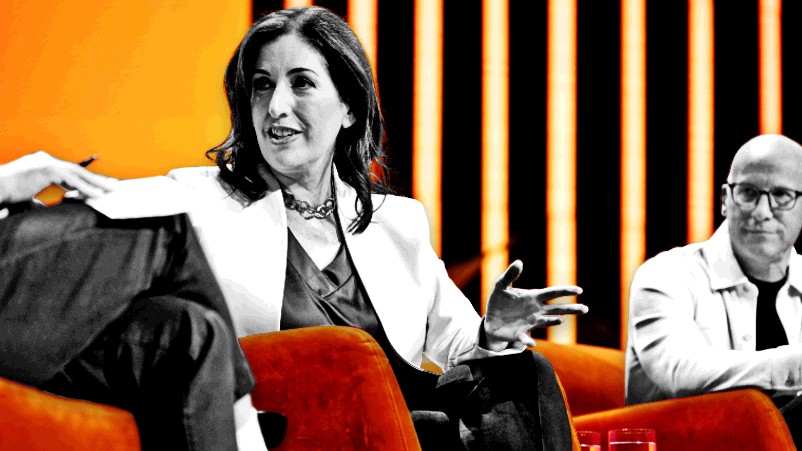
Edelman and Braze board director (and former YouTube VP for the Americas) Tara Walpert and Intuit (and former Uber) CMO Tom Ranese
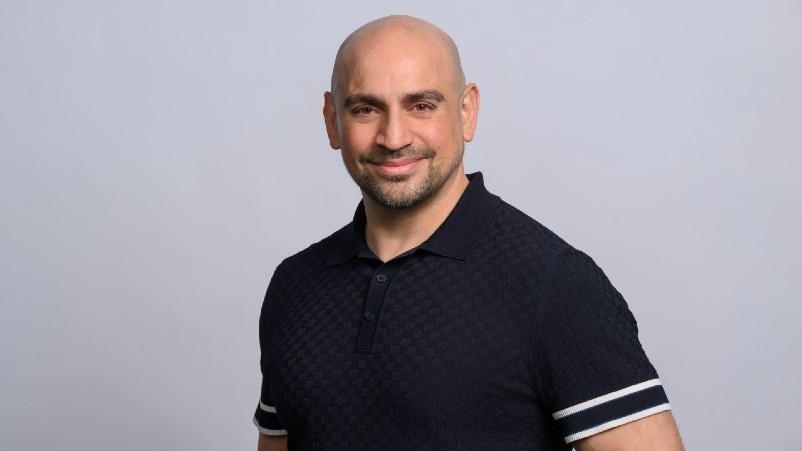
AI is raising customer expectations and reducing brands’ control over how people discover their products, agree Intuit chief marketing officer, Thomas Ranese, and Braze and Edelman board director, Tara Walpert, who until recently was VP for the Americas at YouTube. They were speaking on a panel at Braze’s customer conference – Forge – in Las Vegas last week. Ranese said customers increasingly expect AI to take action on their behalf, while Walpert urged brands to serve both machines and people. Both said trust and human assistance remained central to customer relationships, with Intuit building a network of 13,000 experts alongside its AI capabilities. They urged marketers to use time saved through automation for creative thinking, arguing that taste, judgement and originality remained essential to effective engagement.
What you need to know:
- AI is shifting customer engagement from keywords to richer prompts and from providing answers to taking action, Intuit marketing chief, Thomas Ranese says.
- Brands must be “readable by agents and machines, and beloved by humans”, Braze and Edelman board director, Tara Walpert says, arguing that intermediaries reduce control over customer encounters.
- Ranese outlined why brand reputation matters to AI discovery as well as human preference, pointing to public discussions as potential signals influencing recommendations.
- Permission, transparency and customer control remain essential to personalisation, while Walpert says the value must accrue to customers.
- Both urge marketers to preserve creativity and judgement, using AI’s time savings to improve ideas rather than becoming consumed by production and optimisation.
We’re going from personalisation to anticipation. So much of what we’re doing at Intuit is: How do we actually take all these forces and transform our product so that we’re able to show up for folks in these ways that meet these higher expectations?
Brands face growing pressure to turn customer prompts into useful actions while maintaining trust, as artificial intelligence changes how people discover products and raises expectations about what businesses should do for them.
Speaking at Braze’s customer conference, Intuit marketing chief, Thomas Ranese and Braze board director, Tara Walpert said the shift was expanding customer engagement beyond campaigns and individual interactions into product delivery, public reputation and access to human assistance.
According to Ranese, who was also the Global CMO at Uber at the start of the decade, one of the early areas showing this is AI search. “There are a number of forces, from moving from search and keywords to prompts. We’re understanding intent now at such a nuanced level, down to the individual, because the question can capture so much versus the keyword," he said.
“And understanding how to respond to that, I think we’ve gone from a world, particularly having lived at Google for a while, of answers now to actions, where people don’t just want answers; they want you to do something for them. What’s that interaction look like when you have to do something for them, not just give them the answer or the insight?"
Ranese told attendees, “We’re going from personalisation to anticipation. So much of what we’re doing at Intuit is: How do we actually take all these forces and transform our product so that we’re able to show up for folks in these ways that meet these higher expectations?”
Walpert, meanwhile, responded by adding, "The result of a lot of what you're describing is that, in some ways, brands actually have less control than they have had in the past because there are so many intermediaries between the customer and your brand."
She said that is true irrespective of whether that is an agent providing information, or actually doing something for the customer. It's also true whether that's a customer who is sharing a bad experience, or a creator talking about a brand.
"What that means is figuring out the levers for managing the touchpoints that you do control, particularly first-party relationships, and how you set yourself up to be best positioned for the ones that you don’t control," she continued. “It’s a really interesting and challenging moment because you have to be readable by agents and machines and loved by humans, and those are two different skill sets."
Both Ranese and Walpert also argued brand reputation and creative judgement remained consequential as technology changed those encounters.
Understanding engagement
Walpert defined engagement as “a relationship, the trust and the earned perception of how customers experience your product, your service, your brand over a long period of time.” That relationship could be measured along the way, she said, but marketers needed patience because meaningful connections were difficult to build in a single moment.
For his part, Ranese said the proliferation of channels and intermediaries had increased customer expectations while leaving businesses responsible for understanding people’s needs and delivering value when it mattered.
Prompts were changing that task by allowing people to describe their intentions more fully than a search keyword, he said. The expectation increasingly extended beyond receiving information.
“People don't just want answers; they want you to do something for them,” Ranese said.
He said Intuit was transforming its products to respond to those expectations, including anticipating needs, adding the boundary between a product and customer engagement was becoming blurred as customers gained ways to experience products outside their usual environments.
For brands, those changes also introduce more participants between a business and its customers.
Walpert said an agent could provide information or act on someone’s behalf, while creators and customers sharing their experiences could influence perceptions in ways a brand had not intended. Businesses therefore needed to consider both their first-party relationships and how they appeared in environments they did not control.
“You have to be sort of readable by agents and machines and loved by humans, and those are two different skill sets,” she said.
The tech alone is not sufficient, she argued, saying judgement, creativity and originality are just as critical.
The discussion also exposed a question for marketers about how brand preference works when an agent helps someone choose.
Walpert said,"I think brands are actually more important than ever in this world because if you can stop the person from going to the agent because they know and love your brand, that is a way better place to be, and a stronger way to drive engagement results than having to go through the machines."
She noted that agents were more likely to examine functional benefits, such as price, speed, quality and what others said about a product, than to understand a person’s emotional attachment. But Ranese challenged that distinction, arguing reputation mattered to machines as well as people.
"I do disagree with one point you made, which is I think brand is as relevant for AI as it is for humans. I think we’re all starting to figure out how these LLMs work, including the LLMs themselves, so I don’t profess to be expert on this. But I have to believe, with AI, with the LLMs, that they’re picking up signals on your brand and how it’s showing up in Reddit forums, and who’s talking about what, with what affinity, or what sentiment, and is it coming up in positive ways or negative ways. We know that influences how we then show up in prompts and prompt results.
“So your brand is really relevant from the standpoint of getting AI to pay attention to you in a positive way."
He agreed with Walpert, however, on the importance of investing in the brand as a way of circumventing agentic intermediaries. Using QuickBooks as an example, Ranese said customers with an existing relationship might expect the brand to appear in an answer about small-business services or favour it when presented with recommendations.
Walpert agreed with that qualification, describing it as indirect brand management involving listening, tracking and responding. She also pointed to YouTube creators as trusted voices that brands were only beginning to consider in that context.
Ranese also offered an account of Intuit’s investment in human expertise, demonstrating a practical example of how automation and customer relationships could develop together. He said the company had concentrated on data, domain expertise and insights to help consumers and small businesses manage money, while also focusing on connecting customers with people when needed.
“We're building a network of 13,000 experts,” he said. "So when you're doing your taxes and you just want the extra confidence that a human has looked at it, we're going to put you in touch."
This point was that greater connectivity and human interaction would be important for brands as people sought to feel understood in a fragmented world.
If the value accrues to the customer, it’s good, and if the value is only accruing to the brand, that’s pretty bad.
Creepy, personal, or both?
The panel also addressed the tension between personalisation and privacy.
Ranese said delivering value could make customers more willing to share information, including access to accounts, but businesses needed permission, transparency and control. “Personalisation without permission is a disaster,” he said.
While AI may add new capabilities, his recipe for managing the personalisation/privacy balance sheet still sounded eerily similar to every failed attempt to address these issues in the past. Companies, he said, should explain when they used data and give customers confidence that they retained control, particularly when a service failed to deliver the value they expected.
Walpert said those safeguards were necessary, but not sufficient. "People love Instagram ads because the personalisation is that good and it delivers real value. But I don’t want something that’s creepy, like, ‘I saw that you were at the waxer the other day ... and you’re giving me some amazing product that relates to it.’
“But I think the headline I would use is: If the value accrues to the customer, it’s good, and if the value is only accruing to the brand, that’s pretty bad.”
For marketing teams, Walpert said AI’s ability to accelerate work created a risk of overindexing on optimisation over growth.
"The biggest mistake I see and the biggest advice I would give is: The AI revolution can allow you to do so much more, and people are so excited about that, and that’s awesome. But you can really get on that treadmill of only being in the nuts and bolts of the data and the optimisation, and that’s going to stick because the value of it is in taking so much of that off your plate.
She urged marketers to use time released by automation to examine their ideas. "Use that to really sense-check what’s happening against your own judgment, your own creativity."
She said there was real value in carving out the time freed up by optimisation to step back, think, to make sure that your big idea is the right idea.
“Creativity has always been king, and it still is, maybe more than ever,” Walpert added.
Andrew Birmingham attended Forge as a guest of Braze.