The senior marketing jobs market: Top recruiters weigh in on 2026 conditions – from complexity of briefs and chasing unicorns to hot attributes and AI impact now and next
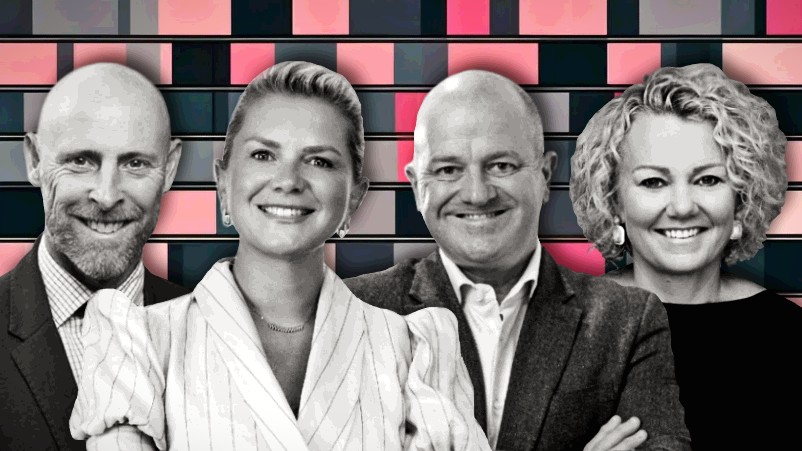
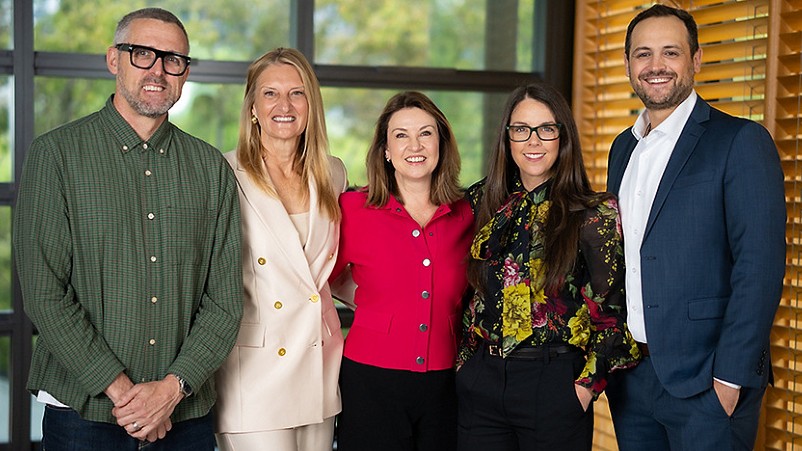
From left: Perceptor's Mark O'Connor, Six Degrees' Suzie McInerney, Hourigan International's Stuart Tucker and Johnson Partners' Kate Ferguson

“If we just take briefs from clients as per their laundry list, it’s a hiding to nothing,” declares Six Degrees CEO and CMO and senior marketing recruiter, Suzie McInerney. With today’s ever-expansive expectations of marketing leadership, it can now take twice as long to fill roles as recruiters work to identify the true priorities versus chasing unicorns. The one thing that is consistently intensifying is CEO and board’s growth-first focus as technology and AI propel always-on revenue engines that are full funnel – and then some – says Johnson Partners’ Kate Ferguson. For Hourigan International’s Stuart Tucker, the need for today’s marketing leaders to be “enterprise executives” is a balancing act of ‘ands’: Customer and data, commercial and creative, growth and risk management, team development and rationalisation; strategy and execution. Perceptor’s Mark O’Connor meanwhile, points to commercially astute marketing nous as a game of situation and company. Unprecedented CMO moves there may have been, but we’re still largely at the bottom of the cycle, supply is higher than demand, and no one yet knows when that upswing will really arrive. And AI is definitely shaking things up: Latest IAB figures indicate the entry-level digital advertising talent pipeline is drying up; although one recruiter claims AI is being used as an excuse for rapid restructuring through redundancy or quiet functional attrition. Here’s the lowdown on Australia’s senior marketing jobs market in 2026.
What you need to know:
- Australia’s senior marketing recruitment market remains sluggish, with recruiters still describing conditions as firmly employer-led.
- This is despite an unprecedented wave of CEO and CMO turnover across sectors including banking, telecoms, retail and QSR now cascading through marketing leadership teams, triggering restructures and broader team refreshes.
- Recruiters say CEOs and boards increasingly expect marketing leaders to operate as enterprise-wide growth executives, blending company-specific commercial acumen, customer strategy, AI literacy, data capability and operational leadership.
- Traditional “brand-only” CMOs are falling out of favour as organisations prioritise full-funnel leaders armed with modern tech and tools who can connect marketing strategy directly to business outcomes, revenue growth and profitability.
- Yet recruiters also warn many businesses are still searching for “unicorn” candidates, with overly ambitious briefs and unrealistic expectations driving prolonged hiring cycles and continued executive churn.
- AI literacy, CRM capability, first-party data activation and martech expertise are now viewed as baseline expectations for modern marketing leaders, while demand for leaders capable of integrating AI into commercial operations is intensifying. But AI hasn’t yet materially changed senior marketing roles, recruiters claim, adding immediate impact on senior marketing jobs is more likely to be attrition and non-replacement of roles rather than large-scale redundancies.
- That’s despite entry-level marketing and adtech hiring deteriorating sharply as AI-driven automation accelerates: New IAB Australia data released today shows junior vacancies now represent just 1 per cent of open roles.
- For Six Degrees CEO Suzie McInerney, redundancy programs increasingly being used as rapid restructuring tools, often functioning as a workaround for difficult or risky formal performance management processes.
- You can’t blame it all on AI either, she says, sceptically suggesting AI-linked layoffs could be “copycat behaviour” and a result of the pressure to justify AI investment to boards.
- For Hourigan’s Stuart Tucker, the preferred executive profile emerging for 2026 is the ‘grounded leader’ – commercially astute, operationally hands-on and able to simplify complexity, drive clarity and manage ambiguity amid relentless tech and AI change.
Twelve months ago, Aussie marketing recruiters saw the jobs market heating up as emphasis finally shifted from cost-cutting to growth. Come June 2026, they’re still feeling a little chilly.
We’ve undoubtedly seen unprecedented turnover in CMOs across multiple categories and competing brands in the last 18 months, which has created a knock-on effect in the top part of town: NAB and Westpac; Optus, Telstra and TPG; Domino’s and McDonald’s; Woolworths and Coles; Uber and DoorDash. Perceptor managing director, Mark O’Connor also points to the now notable flow-on effect of CEO reshuffling in the last couple of years to senior marketing gigs.
“If you look at 2024-2025, there were more CEO changes in the ASX than pretty much any time for the previous 15 years. So guess what; that is cascading now down to the next level, which in the marketers' world is the marketing leadership role, or whatever you want to call it,” he argues. “We're starting to see that movement, which will continue. Then guess what, next year, we'll see those CMOs restructuring their teams, kicking off refreshes there.”
Yet it’s clearly still an employer’s market, with recruiters flagging a higher level of talent and supply than demand. “I cannot tell you how many people are still getting in touch with me … the demand is growing but there’s still a lot of supply,” says Johnson Partners partner Kate Ferguson.
That’s typical bottom of the cycle stuff, comments O’Connor. “I doubt if it’s going to get worse from here. The question is how soon it starts picking up. The other thing to point out is that this is the case for all functions in businesses; it’s not marketing specific. It’s not even specific to recruitment, it’s all business services. Everyone is saying it’s the bottom of the cycle and there isn’t a big corporate appetite.
“I do think we have to keep reminding people of that, especially marketers. They tend to go down a rabbit hole and think it's the end of the world for marketing. But it's not only marketing recruitment that's suffering – that’s just not the case. It’s a business cycle we’re in.”
We think about it in terms of balance: They have to be strong at customer and data; they have to be commercial and creative; they have to understand growth, but also risk management; they have to develop their team, but also realise cost savings; they have to build a brand, but also deliver personalisation. And all of that is underpinned by AI understanding, comfort and execution.
Growth and agility: CEO and board expectations of marketing leadership
What is unique to marketing recruitment is the complexity of what it is that CEOs, boards and hiring managers are looking for in their next CMO or head of marketing.
Per O’Connor: “I still think what they're looking for is a bigger definition of marketing, which really is what they call ‘growth’. It's this concept of all the elements of digital, whatever the go-to market model is for that company or sector – they want the marketing people to think as broadly as possible, to reinvent or restructure their teams accordingly, and to leverage the data and tech accordingly.”
Ferguson agrees, arguing boards and CEO are deliberately looking to marketing as a revenue engine. She cites two fresh examples of active roles renamed from CMO / marketing director to chief growth officer/director of marketing and growth.
“The growth-first focus is rife, and it’ll only intensify. Now that you have all this first-party data, the martech stacks, the AI capability, and always-on revenue engines that are full funnel from brand through to acquisition, customer experience and retention – that’s only going to intensify with technology,” she says. “Growth and return on investment are non-negotiables.”
But Hourigan partner, Stuart Tucker, hits back at terms like transformation and growth as “the most overused and misused terms not only in business, but specifically for marketers”.
“What they have are different levers they can pull today, particularly in a fully digital business – they genuinely have control over the full P&L,” he says. “And businesses are always transforming. It feels like a cop out to always be talking about transformation when really it's a constant evolution, because customers are changing, categories are changing, and markets are changing. There's also the uncontrollables, like we're seeing at the moment. Transformation is a constant, it's just a matter of how fast and how often.”
Instead, Tucker – with input from his Hourigan colleagues, Mark Buckman and Jo Trapnell – points to the emergence of the ‘enterprise executive’ in the C-suite, having direct bearing on how CMOs and senior marketing leaders are being viewed and hired in 2026.
“By this, we mean people who are highly skilled in their functional set of experience and capability, but also able to seamlessly balance the tech, AI and data piece,” Tucker says. “They are outstanding people leaders, and they have a deep understanding of their commercial contribution ... It's no longer ok just to operate in silos and be sort of ignorant to category dynamics or even the commercial drivers of the business.
“We think about it in terms of balance: They have to be strong at customer and data; they have to be commercial and creative; they have to understand growth, but also risk management; they have to develop their team, but also realise cost savings; they have to build a brand, but also deliver personalisation. And all of that is underpinned by AI understanding, comfort and execution. We also think it's never been a better time to be a marketer. But with margins being squeezed, their expenditure is under more scrutiny than ever, and so they really have to be able to articulate the commercial contribution of their team.
“We really feel like there's really only one question they should be delivering against: How does the marketing strategy deliver against the business strategy? The expectation is higher, and CEOs are looking for broader capability from the exec team, including the CMO. Some CMOs are stepping up to it, and some are not.
“We still think we're seeing some CMOs that just want to play at the top of the funnel, or maybe across one or two of the traditional marketing Ps, while others are genuinely becoming full-funnel marketers and commercial leaders.”
I don't know if we’ve ever had to push back harder on briefs. If we just take briefs from clients as per their laundry list, it's a hiding to nothing, because we're ultimately going to run around looking for people that don't exist. We've been spending a lot of time in training our consultants in really agitating for priorities, and also talking about trade-offs. It’s also talking about the reality, which is no longer just you're not paying enough. It's the brief is not going to provide you with the person you think.
Looking for unicorns
But with so many ways they can cut the marketing cloth, you can justifiably accuse some CEOs of looking for unicorns.
Last year, O’Connor told Mi3 he spend a lot more time working with CEOs to get to the heart of what they’re looking for and prioritise top attributes and skills accordingly. They’re not much clearer in 2026, he admits.
“Apart from the fact they’ll just say it’s about growth and change. But what they mean by that is very specifically to their situation and company,” he says. “I just finished a search in financial services, and it’s probably taken twice as long as it would normally … it was getting the client absolutely clear on what they wanted, then getting everyone in the organisation aligned.”
Six Degrees CEO Suzie McInerney, doesn’t put all the blame on marketing leaders either. With so many things a CMO can be responsible for, it’s rare to have people with expertise in all of what modern marketing can be.
“One of the things we need to do with CEOs or the hiring/briefing manager is give them a bit of a dose of reality around what has become an exceptionally long list of things they expect this role or this person to have,” she says.
“I don't know if we’ve ever had to push back harder on briefs. If we just take briefs from clients as per their laundry list, it's a hiding to nothing, because we're ultimately going to run around looking for people that don't exist. We've been spending a lot of time training our consultants in really agitating for priorities, and also talking about trade-offs. It’s also talking about the reality, which is no longer just that you're not paying enough. It's the brief is not going to provide you with the person you think.
“It’s also a tenure issue – they might be the right person for 18 months, but the minute the shift to execution happens, they’re probably not the right person and it’s a very expensive exercise changing CMOs.”
Ferguson is equally convinced churn will continue if companies can’t get to a more exacting insight on what it is they’re after – then give marketing leaders the tools and space to make it happen. “I've had a really fluffy brief recently – I’m not going to say who the client was – and I had to say, what do you need this person to achieve? What is the commercial outcome you want? When they finally articulated it, I was then able to say this is the kind of marketer you need with this kind of experience,” Ferguson says.
Tucker recognises that the momentous changes to occur in how marketing both operates and reports into the business have some bearing on what the role and function involve. “The really competent marketers are thriving under that environment, and their remits are expanding to include growth, digital, customer success, innovation, sometimes products, while still retaining their traditional function functions like building brand," he says.
As a consequence, what appeals to hirers are “people with agility in their career, who have worked across categories, regularly taken on additional responsibility, and pushed themselves out of their comfort zone,” Tucker says.
Hourigan nevertheless has five skills it believes are most critical to the modern CMO. Number one is "CRM capability – lifestage segmentation, data personalisation, and powered by the right AI tools and martech stack”, says Tucker.
“We are seeing brands with customer data pools of 3 and 4 million customers. Now you're into the world of owned media, touchpoints, real-time triggers, and that's where you make your money – by retaining and developing customers.”
Second is in response to the growth of internal agencies. “The CMO is essentially running a full-service agency, so the relationship with their creative agency has changed, and they need to be now partnering with the right type of agencies to build big ideas and brand platforms that they can then execute internally. That's a big shift,” continues Tucker.
“Bouncing off that, there is the ability for partnering … How do you leverage your sponsorships more deeply? Is it a loyalty program? A third party? Another brand where you can partner up to unlock pools of growth?”
The fourth must is “talent magnetism”. “CMOs need to think differently about where talent comes from; They've got to look outside their own industries,” Tucker says. “We still receive briefs that just ask for candidates from within category, which just creates category sameness. We challenge that notion by always wanting to bring in wild cards who may not obviously meet the initial brief, but who come in and bring a different lens or a different profile, and challenge that traditional thinking.”
The fifth is bravery. “One of our 10 leadership traits is about disruptive thinking. It's the ability to challenge stale conventions, spark new ideas, and redefine categories. And it's not just about making ads,” says Tucker.
AI impact
Then there’s AI. Now everyone is talking about it, and CEOs are agitating for AI adoption, another question for the recruiters is whether it’s finally having a material impact on marketing jobs themselves.
The latest IAB Australia 2026 Digital Advertising and Ad Tech Industry Talent Review certainly paints a bleak picture for the entry-level part of town as AI matures. In data released today, it found that entry-level roles have almost disappeared from the available vacancy pool, falling to just 1 per cent of vacancies. By contrast, 49 per cent of open roles require more than six years’ experience.
IAB data also points to a mixed jobs market more broadly. While 42 per cent of organisations reported headcount growth over the past year, 37 per cent contracted and 21 per cent remained flat. Contraction is concentrated among larger established global platforms responding to AI-driven efficiency programs and global restructuring.
Recruiters looking at the senior marketing remit say every role has an AI piece to it. “Depending on the role, that's either increasingly large or it's relatively minor,” says O’Connor. “It may be we start to see the new roles coming in the next 6-12 months, but I just think back to the digital period and when digital first kicked off. It took a while for those actual new roles to emerge and be significant enough … and we're not seeing major changes in job titles or new roles as such across the market yet.
“I think what’s going to happen is roles will just not get replaced. I’m not sure we’re going to see massive rounds of redundancies, I just think they won’t get replaced.”
Supply versus demand
Where recruiters do stress obvious shifts is in how senior marketing has dramatically evolved thanks to the tech and tools available. This is where they still see candidate gaps.
“Some are embracing it exponentially, but definitely in a lot of the interviews I've done recently, there are many that are not there yet,” Ferguson says. “It may be they just have not had the opportunity because the company hasn't been willing to invest, or they've got legacy systems they can't afford to upgrade … I really feel for those people.”
McInerney also spies shortages of such talent. “We're still relatively immature as a market when it comes to things like digital and AI and automation literacy, so those are still roles in the highest demand that we recruit more often,” she says. “It may seem obvious, but the top 20 per cent of CMOs have never been in higher demand, because getting that role right has never been more critical. But there is then a real split now between those people who've really moved with the market, upskilled and gained the experience they need, then perhaps some who have fallen behind. They're the ones in many cases slipping from tier-one businesses to tier-two businesses.”
Category-wise, all recruiters see financial services as the strongest hiring sector, but offer different views on demand in retail and FMCG.
McInerney meanwhile, puts a different spin on the debate, arguing that too many marketers have been burnt coming into organisations only to find the promise of ‘big M’ marketing very different to the reality. It’s again a reflection of the confusion and lack of clarity on the job and the tools at hand to do it. To help, Six Degrees has a proprietary framework with 14 capabilities, and works to whittle down to a top five.
“We need to have a lot of actual answers to get someone to say ok, I’ll take this role,” she says. “I've got all the strategic capability in the world, but am I going to have one hand tied behind my back and therefore be responsible for a program I can't execute because I don't have the resources? The best talent has learned these mistakes the hard way.
“It’s a two-way recruitment process now. A business is assessing the candidate, but I can promise you, given how much of a risk it is for a really great CMO to leave their job they're probably being very paid very well for, and to jump into another organisation, the cost of that going wrong for them in their career, and in this environment ending up without a job if it doesn't work out, means they're job hugging. We need to provide them with as much commercial information as we can to give them the confidence and to mitigate the risk of going somewhere where they can't be successful.
“It builds respect in the right clients … but it also means it can be a three-month process and require very in-depth conversations.”
Grounded, commercially astute leadership the big ask in 2026
Another persisting trend O’Connor highlights is marketing leaders being able to do both strategy and execution. “We're definitely not seeing teams split between strategy and execution; we're definitely seeing clients looking for CMOs that can do the strategy, but then be in the weeds of execution,” he says. “Whatever the direct report is, they then want them to be able to run the strategy for that piece of the business or piece of the marketing function.”
Tucker agrees. “Any CMO that thinks they can sit in the ivory tower is probably kidding themselves, because they need to be close to their teams,” he says. “They need to understand the customer better than ever. They need to be able to go in and extract data. But more than anything, their teams are looking to them to drive alignment and simplification where they can.”
He references the skills horizon work Hourigan did with the University of Sydney Business School last year, which hit on the notion of the “grounded leader” as the preferred executive profile in 2026,
“It’s the ability to make sense in ambiguity, drive clarity, filter out the noise, keep it real, creating a stable, safe place where people can speak up and always be curious,” Tucker says. “It's never been more relevant to the modern CMO, because you are getting bombarded. You've got stakeholders coming at you, you've got everyone who's an expert on marketing, and more data than ever before. Keeping it grounded to the strategy, driving relentless prioritisation, and providing clarity and alignment for your team rather than just noise, particularly with the pace of AI and tech tools – it would be very easy to get distracted by the next shiny thing.”
And of course, being ‘commercial’ marketers remains as high up the priority list as ever. “Commercial acumen has obviously been extremely important in CMO roles, but never as much as what it is now,” says McInerney. “CMOs who have been part of a transformation? Great. But they also need to display really strong evidence of actual impact – marketing attributed revenue, or what your impact was on those KPIs.
“We used to see the CFO and the CMO often in opposite corners; we’re now seeing CMOs rising to the top, have formed a really important strategic relationship with the CFO, and they're locked into the commercial KPIs of a business. They understand it's not just financial literacy; it's a really broad understanding of those financial levers. It's like transformation has moved to real evidence of being able to still grow and deliver commercial results.”
McInerney then becomes even more specific, arguing marketing leaders need to demonstrate they can build business cases for investment, as well as “understand, act and interpret financial data that then informs what exactly the marketing strategy is to be”.
“They're also needing to pull levers in other teams to help resource those business cases in technology,” she continues. “That's why that stakeholder intelligence, as well as that financial oversight, becomes important.”
Flexibility of the cost base is so important in business right now, McInerney insists – and CMOs need to adapt to it accordingly. “The best CMOs are really smart about leveraging teams that already exist and resources that already exist. It’s about having a really strong understanding of what the current margin pressures are, what the restraints are from a labour cost perspective in businesses, and being really sharp when it comes to knowing what's realistic about what they can get approved,” she says.
The growth-first focus is rife and it’ll only intensify. Now that you have all this first party-data, the martech stacks, the AI capability, and always-on revenue engines that are full funnel from brand through to acquisition, customer experience and retention – that’s only going to intensify with technology. Growth and return on investment are non-negotiables.
The redundancy factor
Which inevitably ties into the redundancy question. McInerney is in no doubt redundancy has become a more frequently used lever for rapid restructuring.
“The reality is it’s never been more difficult to performance manage in business these days,” she comments. “The risk of performance managing people out is one major reason why a restructure is a good way to trim the tree and clear out some of the dead wood. Even convincing people to take on new roles is very complex, very time consuming, and from a workplace perspective, very risky. So we are seeing now businesses using redundancy as a very rapid restructuring scenario, often to address underperformance.
“It’s not necessarily under the heading of a genuine redundancy, but if they have issues as far as the capability within their overall team, a redundancy program to restructure is a pretty good way of – unfortunately – preserving those few they think above the line, and it's a spill and fill scenario, generally.”
Thousands of tech industry redundancies are now being blamed on AI, from Atlassian to Meta. McInerney was cynical however, of this as a wholesale, cross-industry necessity, suggesting “copycat” mentality.
“I honestly do believe that for a lot of businesses it's like, well, it's good enough for them, it's good enough for us,” she says. “There's almost this acceptance now that's just business, and it's a way you can make changes quickly, and no one's got time to do anything else … I think there’s a bit of copycat behaviour.
“If there are business cases for huge investment being made to boards around AI, you can bet your bottom dollar that part of the promise is this is going to show up in reduced headcount. Often, that's a ticking time bomb. You asked for the investment, we've embedded the tools, you need to show us that it's working, and sometimes the easiest way for an executive group to show it's working is to take out some headcount, even though there's probably not a good case to say that headcount is no longer required.
“What happens often is three or four months later, they're back talking to us about needing to rebuild their teams and plug capability back in, because the tools are just not delivering.”
Even with all this, O’Connor predicts opportunities in two years' time will be more than they are now for senior marketers. “Each of those CEO and CMO moves are a little bit of the individual company situation, but then it becomes broader. Take Endeavour Group: Who'd have thought? They had a new CEO last year with a massive transformation limit, and now they've just appointed a new chief customer officer. Go figure, right?
“While I'm optimistic about the long term, and that it's going to get busier, it’s not going to feel like it's going to get busier for several months.”
Advice for those getting into the market
In the meantime, Tucker advice to those entering the marketing job market is this: “Know your value proposition. Understand the category, be really clear on the contribution you can bring to the business, beyond just your functional contribution or functional team delivery. Think like a CEO in some respects.”
McInerney recommends looking for opportunities inside your existing organisation to develop skills first. “There's an inertia that sets in, which is not going to help someone grow," she says.
“Even if it's focusing on the two or three skills or experience you don't currently have; you're not going to be able to tick every box straight away, but you just have to demonstrate you're continuing to evolve, that you have change agility, that you're building the kind of future skill sets people are looking for, and managing your career that way.
“Rather than managing it by climbing a corporate ladder, it's about managing your career to continue to add a suite of skills and tools, and case studies to make you more valuable to another organisation – even if it is in the same role.”