Fear, loathing and existential crisis: CMOs at Ikea, The Iconic, IBM plus Thinkerbell, EY on AI adoption – and where next

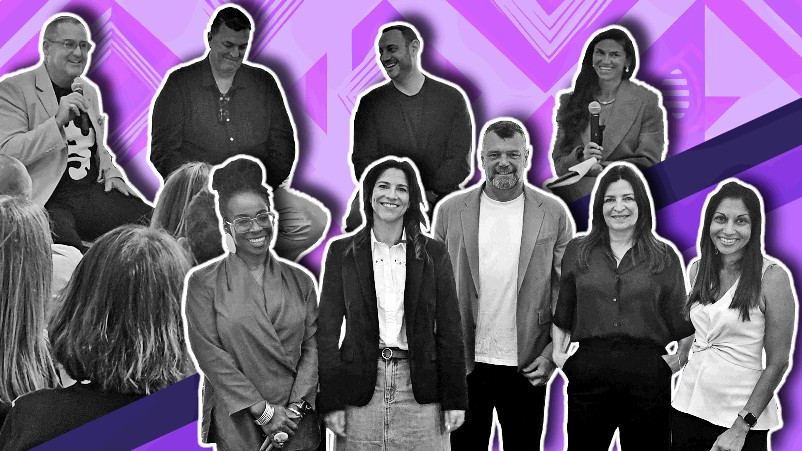
ACAM panel (from left): Australian Red Cross Lifeblood's Jeremy Weiss, IKEA's Kirsten Hasler, ACAM's Rochelle Tognetti, The Iconic's Jo Robinson, Bluescope's Lisa Dent and IBM's Miki Luong
Being perceived as a cheat or doing something wrong by bringing AI into your work, naggy cognitive bias against change, wanting to belong and feel valued – these very real human universal truths dominated two panel discussions this week around what it’s going to take for marketing and broader business to successfully adopt AI. The first, a panel of CMOs from IKEA, The Iconic, Bluescope, Australian Red Cross Lifeblood and IBM off the back of ACAM’s new benchmark report on marketing’s readiness for AI; the second featuring Thinkerbell’s Adam Ferrier and a cast of CIOs, risk, digital transformation consultants and tertiary analytics leader, insisting we shouldn’t be afraid as the AI agents take over even as they admit they don’t know what’s coming next week, or next year. What all agree is coming to terms with AI is as much about change management and human emotions as it is keeping up with the tech. And for that, we’re going to need to focus on learning, ethics, values, behavioural science and addressing human frailty.
What you need to know:
- Want to get AI adoption up? Then think about human vulnerability and change management, say a panel CMOs from IKEA, Australian Red Cross Lifeblood, Bluescope, The Iconic and IBM. The five marketing leaders were speaking at the inaugural Australian Centre for AI in Marketing (ACAM) event marking the release of its benchmarking report on marketing’s AI readiness.
- Per the report, 79 per cent of CMOs are “excited but cautious” about the onslaught of Gen AI into marketing functions. Only 18 per cent feel ready to fully ready to lead the Gen AI transformation, and six in 10 CMOs believe they need to first elevate their own skills to be able to lead charge more confidently.
- One culprit hindering uptake is fear that using AI is cheating on the job. Both IKEA’s Kirsten Hasler and The Iconic’s Jo Robinson cited examples where they’ve witnessed this fear manifesting in their teams.
- Another hurdle is perfection over progress: Australian Red Cross Lifeblood’s Jeremy Weiss is pushing for bravery with AI in the face of Australia’s blood supply, even after copping backlash for an Insta superhero post of the power of blood donors done as part of an AI experiment with his team.
- The very human behaviours fuelling whether AI uptake is successful or not was also the key subject of a second panel at an Adobe media event this week. The event marked the release of new Adobe research that shows Australian consumer take-up of agentic AI has grown 50 per cent in just three months.
- Thinkerbell’s Adam Ferrier cited many AI use cases at the creative agency, plus a personal predilection for parenting tips using AI. But he warned we don’t have our eye on the ball when it comes to the human aspects of AI transformation. Per Ferrier: “I’m dusting off all my existential psychology books and going, this is about freedom, meaning, understanding my place in the world now given AI is a better parent than I am, and that AI is a better creative mastermind. What’s my role? I’d love the discussion to get above behaviouralism and more into how does this impact at a fundamental, human level.”
- For fellow panellist, EY’s Luke Bower, enabling people to learn, step by step, is more critical than ever as AI technology is rapidly accelerating. And it’s going to be critical to overcome the fear of AI across our teams. “The practice of change management becomes 10 times more important than it has been previously… how you engage with your people is now fundamental. Because we shouldn’t be afraid,” he said.
- Even as we debate what AI will do to the very fundamentals of marketing, IBM’s Miki Luong and Bluescope’s Lisa Dent were optimistic we’ll see marketers gain ground strategically and in business thanks to their communication powers.
Tackling our human need for meaning, ingrained negative bias to change, and fears were common refrains across two very different panels this week looking at successful AI adoption: One, a panel of CMOs from diverse categories; the other featuring a sometimes cross-purpose mix of tech, risk, innovation and analytics, and creative agency leaders.
The first panel of CMOs from IKEA, Australian Red Cross Lifeblood, Bluescope, The Iconic and IBM took place at an Australian Centre for AI in Marketing (ACAM) event marking the release of the for-purpose organisation’s benchmarking report on marketing’s AI readiness. ACAM’s benchmark study of 60 Australian marketing leaders, the first findings of which were covered by Mi3 in May, found 79 per cent are “excited but cautious” about the onslaught of Gen AI into marketing functions. Only 18 per cent feel ready to fully ready to lead the Gen AI transformation, and six in 10 CMOs believe they need to first elevate their own skills to be able to lead charge more confidently.
A second, very different AI panel at an Adobe media event was made up of Thinkerbell founder, Adam Ferrier, former CIO and IBRS senior adviser cybersecurity, risk and governance, Andrew Fox, EY financial services Gen AI leader, Lukas Bower, and Western Sydney University executive director of education innovation and analytics professional, Cherie Diez. It was also accompanied by new research – this time into rapidly rising Agentic AI and AI assistant adoption by Australian consumers. In just three months, Adobe found Agentic AI usage across Aussie consumers has jumped by 50 per cent, and 42 per cent now expect to be using these tools in the next year.
Not one of these panellists doubted AI is upending jobs, corporate constructs, creativity, learning and knowledge itself. Several Adobe panellists insisted they’re not afraid of AI even as agents topple modern corporate structures and processes. But they all agreed change management and human factors were going to be critical to successful adoption.
“The practice of change management becomes 10 times more important than it has been previously… how you engage with your people is now fundamental. Because we shouldn’t be afraid,” Bower said.
Bringing in a creative and agency perspective, Ferrier noted AI is embedded in insights to ideas, concept development, execution, distribution of content and more. “At the moment it’s all enhancement – a bit like the Wild West of opportunity and that’s exciting,” he commented.
“At a personal level, I use it for parenting tips and AI is a better parent than I am; it’s amalgamating all the parent advice that’s ever been and deciphering that, and I go, fuck, that’s good… It’s a better teacher than many teachers, a better parent than many parents, a better creative than many creatives.
“But I actually think we’re being hoodwinked a bit – we haven’t got our eye on the ball. We’re talking about behaviours, we’re talking about learning to cook and we’re using various superficial behavioural insights to try and understand this. Whereas I think it’s much more existential. I’m dusting off all my existential psychology books and going, this is about freedom, meaning, understanding my place in the world now given AI is a better parent than I am, and that AI is a better creative mastermind. What’s my role? I’d love the discussion to get above behaviouralism and more into how does this impact at a fundamental, human level.”
And there’s the crux of it: Tech innovation aside, what both panels brought home was how vital change management and coping with the most humans of emotions – fear, shame, a sense of belonging – are going to be as AI upends everything.
We’re talking about behaviours, we’re talking about learning to cook and we’re using various superficial behavioural insights to try and understand this. Whereas I think it’s much more existential. I’m dusting off all my existential psychology books and going, this is about freedom, meaning, understanding my place in the world now given AI is a better parent than I am, and that AI is a better creative mastermind. What’s my role? I’d love the discussion to get above behaviouralism and more into how does this impact at a fundamental, human level.
Marketers are afraid they’re cheating, or just don’t know enough
Marketing staff afraid of sharing AI learnings for fear of doing something wrong, along with younger recruits worried they’re perceived as “cheats” for using AI on the job, were flagged by ACAM panel CMOs looking to get employees embracing AI.
One example came from IKEA Australia head of marketing, Kirsten Hasler, who has been taking the lead and encouraging her team to experiment with AI. Such curiosity led to an informal call out asking who's using AI, with about half sharing use cases.
“Then there were quite a few people who messaged me on the side, and all had a very similar tone of, ‘Hey, I didn't want to post this in the group one else, because I don't know if I'm allowed to do this’. It feels a bit like cheating, but this is how I’m using it,” Hasler said. “I thought it was really interesting they had that perspective. I straight away went back and said, these are incredible examples and such great examples for you to share with everyone else.
“We’re now going on this journey in that roadmap of sharing these use cases… Because I'm sure you all see this in your own organisations: There’s a huge variety of people that are incredibly advanced, then those that just don't even know where to start. A lot of what I'm trying to do is unlock that fear of doing the wrong thing, and that fear of it [AI] seeming like it’s cheating.”
ACAM’s research brings this home. More than half (56 per cent) of respondents lack a roadmap, ethical framework or AI plan for Gen AI adoption in their organisations today. Role-modelling in the c-suite is another hurdle: Fewer than half of CMOs surveyed (45 per cent) believe their company leaders are clearly committed to Gen AI deployment, and only 35 per cent see leaders actively advocating by example.
The Iconic CMO, Jo Robinson, noted the pure-play retailer is awash with AI use cases. Multi-modal search was one of her favourite external-facing examples, while internally, “democratisation of data” for analysis, plus tools helping her team cut back days of reporting for weekly trade meetings so they can spend more time strategising are other winners.
But even at The Iconic, Robinson has also noticed this fear of “cheating” creeping into sentiment around using AI.
“The Iconic is 75 per cent 25- to 35-year-olds… What we are seeing is that there's a real leaning in from the older generations, and potentially a leaning out from some of the younger generations to AI,” she said. “I don't know whether that's because of something I see even with my own 19-year-old and 15-year-old: They're reticent because they view it as cheating. They’ll say, I won’t use it because it's cheating. I'm trying to say to them, no, it's going to enhance the output. It's not in place of, it’s enabling you to get to a point where you can be more critical and human nuanced.
“At work, we are seeing that younger population [being reticent]. I don't know whether they're more worried it's going to replace their jobs. But adoption has been much more for us from my anecdotal observations, but also in chats with other execs in that older cohort.”
Because I'm sure you all see this in your own organisations: There’s a huge variety of people that are incredibly advanced, then those that just don't even know where to start. A lot of what I'm trying to do is unlock that fear of doing the wrong thing, and that fear of it [AI] seeming like it’s cheating.
Dangerous DIY learning
Another revealing ACAM finding – and potential explainer for this angst – is how marketers are capability building and upskilling around AI. More than eight in 10 (83 per cent) say they’ve taught themselves about Gen AI. Only 35 per cent have seen any internal Gen AI, and just 17 per cent claim to have had external Gen AI training. Not surprisingly, only 27 per cent of respondents said their teams were highly skilled in AI.
“It’s a big tick for curiosity, but also it’s highly dangerous,” ACAM co-founder, Douglas Nicol said when detailing the finding. “Why is it dangerous? One reason is we are seeing maybe half of people having an ethics and compliance frameworks for gen AI deployments within businesses.
“We’re rapidly moving to the point where Gen AI and AI is creating customer-focused and customer-facing experience – in customer service, CRM. If we don’t have a very clear set of guiding principles, that is highly dangerous for the brand. If we’re all self-taught, just doing our own thing, and we don’t have a clear understanding of ethics and brand risk, we’re really going to be under pressure and potentially could cause a lot of damage to the brand.”
It's a fine line between waiting for formal structures and getting people comfortable with AI, however. Backlash on Instagram after an experiment using ChatGPT Mattel superhero templates to represent blood donors proved a lesson for Weiss and the marketing team at Australian Red Cross Lifeblood. But Weiss doesn’t want that stopping people from trying something new.
“Recognising the demand for our product is growing much faster than our ability to stimulate the supply, we’ve had to be bolder and braver,” Weiss said. “We’ve probably come from a place where the 1 per cent has stopped us from doing anything, versus the focus on the 99 per cent. So I think the major thing has been to acknowledge it, learn from it, but don’t take a backward step. And if you're not too worried then about stuffing up, that’s ok.”
Then there’s the broader fear of job transformation. The CMOs pointed to a burning question all marketing teams are confronted with: What does it even mean to be a marketer in the world of AI?
“If you look at the traditional model of what marketing is, it’s about consumer behaviour of humans. What does that mean when suddenly we're marketing to agents? What does branding even mean? What is the importance of brands? We’re all on this journey together, and I'm really encouraging the teams to be a bit more open and vulnerable about that,” Hasler said.
Aligning how employees use AI with core company values is one way of helping guide people in the right direction. “It's uncanny how much our values align with what AI can actually help us achieve,” Hasler continued, highlighting three from IKEA’s list: ‘Renew and improve’, ‘obvious difference with the meaning’ and ‘cost consciousness’.
“For us in marketing, it's about looking at our entire marketing process, end-to-end, from consumer insights to strategy to media to creative, and going, okay, how can AI help us? And I find that by rooting it in our values, it makes it more understandable, and it takes people on a much better change journey.”
What we’re trying to change is people’s behaviour. We think about how to cook – when you learn how to cook, you don’t go from making scrambled eggs to a three-course French meal in a week. There are a few people on the edge who can learn quickly, but most people have to learn in stages, steps, and have to get fundamentals in place and build on those.
From scrambled eggs to Cordon Bleu cooking
These very human points were echoed by EY’s Bower on the Adobe AI panel. In nine months of AI deployments in financial services, he’s seen the tech capabilities rapidly accelerating. Yet none of this changes the steps required to give people the opportunity to learn.
“What we’re trying to change is people’s behaviour. We think about how to cook – when you learn how to cook, you don’t go from making scrambled eggs to a three-course French meal in a week. There are a few people on the edge who can learn quickly, but most people have to learn in stages, steps, and have to get fundamentals in place and build on those,” Bower said.
Western Sydney University’s Diez brought it back to what are the core, human transferable skills needed.
“There are subject domain specific skills and knowledge that have to be developed, but realistically, those skills and capabilities such as analytical thinking, curiosity, lifelong learning, digital and AI literacy and influencing are really important, as are communication, leadership, an ability to negotiate, social influence,” she said. “They are more important than ever because those are the elements that allow for resilience, agility and flexibility across experiences, workplaces and technology change as well. That being said, I will echo the importance of change management, taking people on the journey and allowing time to build advocates for the work you’re doing as well.”
As a manufacturing business, risk management and frameworks are more prevalent at Bluescope, and there has been an understood need to employ guardrails around AI. It didn’t stop Dent from running an ideation session encouraging people to think about things differently and try different things.
“And we’re trying to stop talking about the tech. Our head of digital said the other day, it's changing every week, Lisa, stop worrying about that. Just work on your use cases,” Dent said during ACAM’s event. “As a manufacturing business, we've got great commercial outcomes that have come from those teams using AI. So it's actually a little bit competitive… I’ve said right marketers, let's show them what we can do on the customer side.”
We’ve probably come from a place where the 1 per cent has stopped us from doing anything, versus the focus on the 99 per cent. So I think the major thing has been to acknowledge it, learn from it, but don’t take a backward step.
Marketing’s moat in the AI onslaught
Even as fear, uncertainty and doubt pulse through teams, panellists at ACAM agreed marketers are in a strong position as AI becomes the norm. Luong, who boasts a computer science and economics background in addition to marketing expertise, said the fact marketers are such great communicators is a superpower.
“The best programmers have linguistic backgrounds; they have many languages. And really, coding itself is about communication,” Luong said. “When we move to AI, you don’t need to know codes because it's prompted by natural language. So you have to be good communicators, because you've got to tell the AI what to do.
“With Generative AI… the output is dependent on how well you instruct it. You can sit two people down, use the same model type in the same prompt, and you'll get different outcomes because it's on the balance of probability and patterns. Think about how many combinations of words, letters to form words to form sentences. The better you guide the tools, the better the outcome. So I think marketers as natural communicators, means you have an advantage already to others.”
Dent agreed. “You need more people that have logic, thinking, communication, and who can think about those commercial outcomes. I’m excited by this idea of AI bringing marketers back to what they’re good at. I’m hopeful AI will free people up from doing lots of reporting and who don’t have enough time to think about what does it mean? What will I do with that?”
Dent’s also betting on the generalist marketer making a return. “I suspect we'll do what we did when the internet arrived and we needed all these specialists. I suspect at the start we'll probably put titles in for people to do that, but overall, it'll shift.”
Luong described AI as a “skills equaliser”. “AI will bridge the gap that each individual has. At the moment we’re all playing with the desktop AI, but if we get serious about it and build an enterprise platform, it can definitely fill the gap every individual has. However, the skill we will all have to develop is that of innovator, entrepreneur, and the identifier of new business models and new paths to growth. I think the expectation of marketing around that element is going to increase, and that will the qualifier of an effective marketer.”