SBS Upfronts: Out-of-home and creator to go beyond TV, outcomes-oriented measurement, another FIFA win and distinctively different content fire up the gameplan
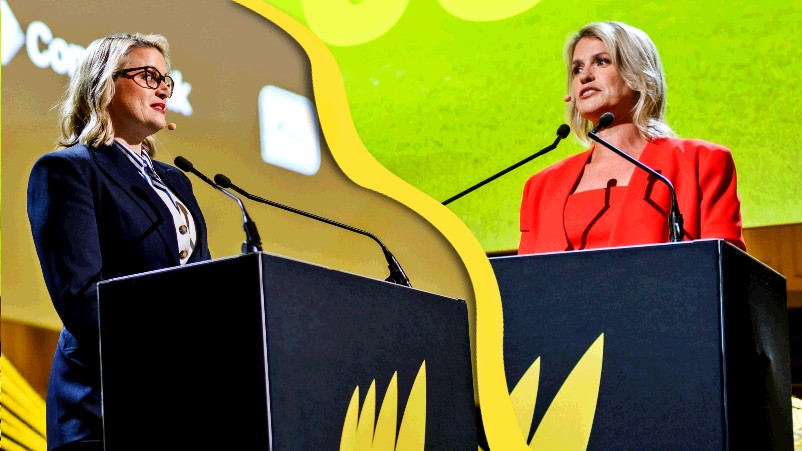
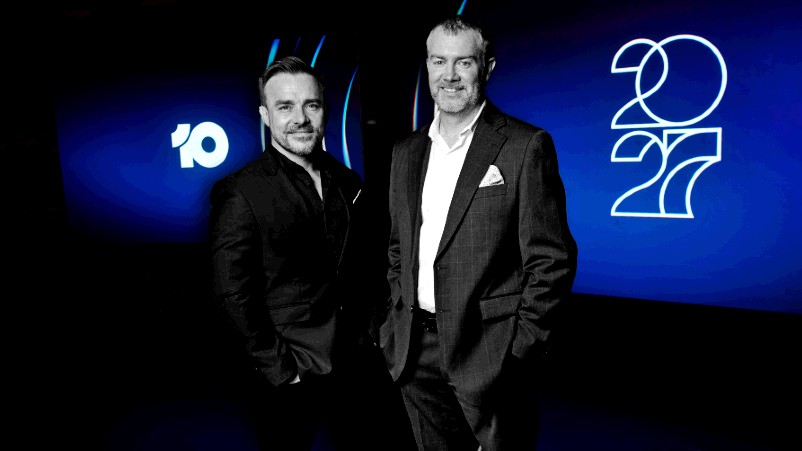
From left: SBS's Lee Fifoot and Jane Palfreyman
SBS has been declaring to us all that it’s not afraid to go there. Now, that sentiment is encouraging the media operator to go beyond distinctively different content, and its own linear TV and On Demand platforms, and to extend content and audience reach via outdoor advertising, retail and creator partnerships. The TV and audio media operator calls this play a move to take “from couch to community to counter”. And to prove all of this works, it’s pitching a fresh assortment of data partnerships to fuel bespoke outcomes-oriented measurement. Incrementality is the name of the game here, along with a desire – like many cross-network and cross-channel peers – for SBS to own the premium narrative through increasingly sophisticated effectiveness scoring on its own terms.
It was the first upfronts of the season and had all the hallmarks of an SBS showcase: Distinctive content with a decidedly multicultural and First Nations slant anchored in documentaries and drama, freshly confirmed FIFA World Cup rights for the centenary in 2030, another pitch to do away with persistent 25-54 demographic buying as the ‘booster’ economy takes hold, fresh data partnerships to deliver better outcomes-oriented measurement, a pitch for sustainability. Plus a Sydney Town hall setting.
But two things stood out to many from the slew of announcements made. While neither are new ideas, they are signs of the changing, fragmented media landscape – and how much pressure is being piled on to prove media still works, through the funnel and especially in terms of commercial payoff.
The first announcement: SBS’s desire to extend content and reach beyond the confines of its own linear TV and On Demand services and engage with audiences in more places, including out-of-home and social. The second: Growing data partnerships and tools to deliver an outcomes-based measurement approach that continues to prove SBS’s core proposition can drive sales impact for brands.
The oOh! media partnership was the most compelling announcement for me and timely given the recent Nine and QMS acquisition. The formats it unlocks from an outdoor perspective show real layering, spanning large and small format, office, airport and retail, with further retail presence through MCO. Together, that gives SBS a footprint across broadcast, outdoor, retail and the creator economy and, in their words, it brings ‘couch to community to counter’.
The 2027 pitch
Unlike the other TV networks, SBS has spent years exuding a confident story around audiences increasingly preferring on-demand services over linear TV. This year was no different: Of the record 18.1 million who watched FIFA World Cup on SBS, digital accounted for about 55 per cent of consumption.
Now, SBS is taking its omnichannel ambitions further, expanding both its content and advertiser offerings into outdoor, creator marketing and multicultural retail. On the outdoor side, it’s struck new partnerships with oOh!media and Multicultural Outdoor (MCO). For creator marketing, it’s teamed up with influencer management platform Fabulate.
“By combining SBS's cultural expertise and audience insights with partners across outdoor, creator channels and retail, we're helping brands show up more authentically within the audiences they want to reach,” said SBS CulturalConnect national manager, Kate Young. “It's about taking a single idea from couch to community to counter, creating a seamless and culturally relevant audience experience.”
The oOh!media deal includes joint packages enabling sponsors of SBS’s 2027 Tour de France coverage to extend campaigns into out-of-home. Schematics will be built out as one buying plan. This is distinctly different to oOh!’s existing relationships with the Australian Open and Cricket Australia, which are direct deals between the OOH operator and sports.
Meanwhile, under the MCO deal, the 280-screen multicultural retail network across five metro markets will be connected to SBS CulturalConnect’s audience insights and in-language creative capabilities. That extension of multicultural reach is something one agency planner described as the most significant audience announcement made at this year’s Upfronts. MCO claims a weekly network reach of 2.1 million people and to cover 25 languages.
A TV or publishing network wanting to tie into OOH isn’t new (Nine bought QMS after all). But it certainly caught the attention of most of the agencies Mi3 spoke to. Several described it as a clever way of SBS going beyond its own platforms to find more engaged reach.
“‘We Go There’ has always been about the hard stories SBS is willing to put to air, and this year's documentary slate kept that promise with the likes of 2.6 Seconds and Bondi. What stood out to me, though, was how SBS extended that same mentality into its strategic partnerships,” said Innocean head of investment, Suzanne Mellon, referencing SBS’s brand platform.
“The oOh! media partnership was the most compelling announcement for me and timely given the recent Nine and QMS acquisition. The formats it unlocks from an outdoor perspective show real layering, spanning large and small format, office, airport and retail, with further retail presence through MCO. Together, that gives SBS a footprint across broadcast, outdoor, retail and the creator economy and, in their words, it brings ‘couch to community to counter’.
“It won't compete with Nine on mass reach or scale, but as a one-stop ecosystem that can integrate a wider media footprint against a brand brief, this puts SBS in genuinely strong territory.”
Kaimera trading director, Ngita Bowers, echoed these sentiments, adding the first upfronts of the season saw “SBS do what SBS does best: Play to its strengths in culture, food and sport”.
“But it was the smart new partnerships that stood out, extending its proposition well beyond the screen and giving advertisers a more credible full-funnel offering from couch, to community, to counter,” she told Mi3.
Additionally, and exclusively, SBS has inked a separate content partnership with oOh!media to push SBS News across more than 6,300 office towers (lift and lobby screens), airport terminals and universities. SBS said the partnership offers potential reach of more than 10.6 million people over 12 months, with an estimated 5.28 billion impressions.
oOh!media chief product and marketing officer Bel Harper said the deal combines SBS News’s “scale” and “credibility”” with the outdoor network’s scale and frequency to reach the content potential of more than 10.6 million people over 12 months, with an estimated 5.28 billion impressions across the oOh!media network.
This news distribution deal is a switch-out for oOh!’s former relationship with AFR, which is now restricted to screens under its Qantas partnership. Since last year, oOh!media has also maintained a news distribution deal with ABC across street furniture nationally, excluding Melbourne, where ABC news content runs across retail locations.
By comparison, Nine-owned OOH provider, QMS, has a longer-standing relationship to extend Nine’s news content through its digital out-of-home network. But agency reps told Mi3 the broader scope of oOh!’s network, including lobby screens, airport terminals, and universities, made the SBS tie-up an appealing one.
As to how the creator play will work, SBS said Fabulate will provide a mechanism to connect advertisers with creators and take SBS campaigns into social channels. Yet SBS stressed creator extension plays would come out of bespoke deals, with creators vetted by SBS’s CulturalConnect team. In a press briefing, the team expected creator extensions to be reflective of “those natural product placement environments” and more likely to occur around culturally resonant programming such as food and sports.
“We'd take a brief from brands on what the overarching brief is as CulturalConnect, and work on that through line or creative concept of how we would respond across our network and how that could extend into the creator environment,” Young explained. “Say, a noodles company comes to us and says they want to partner. We would say, great, we can take this into the Cook Up environment with Adam Liaw, but we can also extend beyond that with creators, and take that into SBS Food because it's such a premium platform with great reach to extend their brands through.”
We wanted to be able to offer more flexibility around the solutions that can meet different advertisers' objectives because there's no one size fits all in terms of what marketers are looking to measure,
Connecting to sales lift outcomes
SBS’s other big investment is proving all this works to advertisers. SBS Data Lab was launched last year as the umbrella brand for the media operator’s data partnerships, and came with a slew of new data clean room partnerships with Adobe, Snowflake and InfoSum.
This year, more data is being piped into the picture: Spending insights from CommBank iQ, plus behavioural audience targeting and measurement across SBS environments using HYP.
“We wanted to be able to offer more flexibility around the solutions that can meet different advertisers' objectives because there's no one size fits all in terms of what marketers are looking to measure,” SBS senior data and commercial product manager, Claire Lawler, told Mi3. “What we're building on this year through our partnership with CommBank IQ in particular, addresses one of the challenges we saw, which is not all clients are ready to bring their own data into a clean room and measure return on investment from their marketing spend. There are a few ready to be doing that, but it's not yet really at scale.”
CommBank comes in three offerings: Pitch iQ, providing category and brand insights; Measure iQ, linking campaign sales outcomes and audience profiles; and Segment iQ, enabling activation of over 500 spend-based audience segments.
This data was used to measure the commercial impact of BVOD campaigns for three major Tour de France and tour de France Femmes sponsors. One long-standing, unnamed sponsor recorded a 6 per cent year-on-year growth in customer spend among exposed audiences, while another returning sponsor saw a 23 per cent uplift in new customers – five times category growth rates. A third new sponsor saw 9 per cent year-on-year growth in customer spend over the month-long campaign.
Separately, SBS has worked with Coles 360 and InfoSum to measure the impact of Rexona’s recent FIFA sponsorship and activation. That paired SBS campaign exposure data with in-store trade activity. That reported Rexona had a 186 per cent uplift in sales thanks to the mix of SBS media activity and in-store activations.
“CommBank IQ helps us with the merchants. So any of the brands you transact with – retailers, insurance brands, telcos, entertainment services, and anything you can see on a bank statement – can be measured through this particular partnership,” Lawler said. The price of such services comes back to the advertiser and is wrapped into the final charges.
“This definitely solves for a big pain point around major retailers being able to prove effectiveness of campaigns with very little lift from the advertiser and the agency.”
Hyp meanwhile, sits in the bucket of measuring consideration and what action a user took off the back of seeing a campaign, both in terms of digital properties and physical store footfall. “The key with this partnership is that advertisers can essentially see the impact of audience exposure on CTV or listening to digital ads, and what consumer actions were taken off the back of that,” explained Lawler.
Privacy is clearly a growing consideration for brands – this week’s latest Privacy tranche 2 draft legislation release is only going to deepen those concerns. As SBS acting director of media sales, Lee FiFoot, reiterated, that’s where the multitude of clean room partnerships fit. CommBank data is also aggregated and in non-identifiable form. To conduct the data pair-up, SBS On-Demand registered users exposed to a campaign are captured, the data is identified using hashing, and then CommBank does the match and analysis on their side, vetted through the iQ team.
“It’s all done in a privacy compliant way, no PII, and that’s the whole reason why we took this agnostic approach to clean rooms – we just take the most precautionary route we can with regards to any sort of data,” Fifoot said.
All TV and streaming networks are increasingly talking outcomes-based measurement, and coming up with their own ways of proving the effectiveness of their channels. There’s also been movement at a broader TV industry level to find cross-network measurement that can help claw back the $200m a year in revenue being lost to the walled gardens. During this year’s Future of TV event, Foxtel, Nine and Seven were on stage alongside third-party measurement player, Adgile, touting a cross-network solution that can capture signals across linear, BVOD and FAST channels and was on its way “within weeks”.
But it’s clear relying on one solution for TV still isn’t the preference. Nor do many want to purely rely on third-party Marketing Mix Modelling (MMM) for telling the impact narrative.
“No one measures the efficacy and the premium nature of SBS like SBS,” Fifoot said. “You cannot rely on an MMM model, which is measuring a multitude of different sectors, to really understand how SBS audiences are different, how they stand out, and what that premium nature is. So a big part of what we do as part of Data Lab, is really trying to bring that in, and support our agencies with proving the value of the investment for the clients.”
Fifoot noted that while some clients are heavily reliant on MMMs, others use it as one tool in a wider toolkit. “And they're bringing in lots of different data points. For us, it's about working with them on that and how we shape it and their story back to the client as well.
“All the uplift and research we've done recently offers some really strong proof points just to the value of putting your money with SBS – and broadcasters in general, but particularly SBS, obviously.”
FIFA wins
As to the other announcements at SBS Upfronts, leading the day was confirmation that SBS has secured Australian exclusive TV rights to the 2030 tournament, with all 104 matches to be available live and free. The most geographically diverse World Cup yet will be hosted principally in Morocco, Portugal and Spain, with three centenary matches in Argentina, Paraguay and Uruguay. SBS has had the rights to FIFA locally for over 40 years.
It comes after stellar results from this year’s 2026 FIFA World Cup. Having seen total viewing time tip to digital-first in 2022, this year’s ‘record-breaking’ coverage reached more than 18 million Australians and generated more than 209 million viewing hours, with digital accounting for about 55 per cent of consumption.
A confident SBS MD, Jane Palfreyman, said over 5 million of these FIFA viewers then stayed on to watch other content across its offering.
“One of the privileges of working at SBS is the view it gives you of Australia. You see the moments that divide us, yes, but every day you also see the things that continue to bring Australians together, and I think we sometimes underestimate that,” she told upfront attendees. “Last year I stood here and said 2026 would be our biggest audience year in SBS's history, and it was. But what stayed with me wasn't the audience; it was what that audience revealed about Australia during the FIFA World Cup … There was a time when football was seen as the migrant game. Today, simply part of Australian life.”
Content built to pull audiences deeper
SBS’s wider 2027 programming slate is anchored by a run of provocative Australian documentaries tackling misinformation, homelessness, terrorism and major events shaping the country.
Ray Martin is Misinformed will examine AI, fake news and conspiracy theories along with Ray (A)I – his AI buddy and clone, while Samuel Johnson-hosted Homeless 300 will challenge perceptions of homelessness. Bondi will chronicle the aftermath of the December 14 attack through survivors, victims’ families and first responders, while NITV co-commission 2.6 Seconds: Death in the Outback will revisit the fatal police shooting of 19-year-old Kumanjayi Walker.
SBS’s most successful commission, Alone Australia, comes back for a fifth season set during an Arctic winter. Major international acquisition Legacy of Spies, based on John le Carré’s novels, will headline the drama slate with Matthew Macfadyen, Charlie Hunnam and Hugh Laurie.
Elsewhere, Eurovision will head to Bulgaria after reaching more than 3.27 million Australians in 2026, The Cook Up with Adam Liaw will reach its 1000th episode, and SBS will deliver more than 850 hours of international cycling coverage.
Involved Media Group managing director, Sarah Keith, found this year’s SBS Upfronts “reassuringly familiar”.
“SBS leaned heavily into the things it knows it does well: Quality, distinctive content, international sport and stories that feel genuinely different from the rest of the Australian television landscape,” she told Mi3. “Much of the attention naturally centred on football, with the success of the 2026 FIFA World Cup still fresh and the announcement of the 2030 tournament giving SBS a powerful platform to build around. But football wasn’t being presented as a standalone proposition. Rather, it sat within a broader story about the value of packaging quality content across the SBS ecosystem. The familiar SBS strengths were all there: Alone, the food slate, the Tour de France and its broader cycling calendar.
“These are proven franchises, and returning series that audiences recognise, advertisers understand and SBS knows how to deliver. In a television environment where everyone is chasing the next big thing, there is something to be said for knowing what works and doing it well.”
Like Mellon and the Kaimera team, new offerings, such as Ray Martin is Misinformed, appealed to Keith as something with “the potential to generate strong audiences and conversation”.
But underneath this sits a more complicated commercial question raised by Keith. “SBS has a relatively limited advertising load on linear television,” noting its 5 minutes per hour advertising cap.
“If there are fewer commercial spots available, audience growth becomes increasingly important to delivering campaign weight. And that puts more pressure on SBS On Demand to do the heavy lifting from a revenue perspective.
“The combination of premium, distinctive content and an increasingly sophisticated digital proposition gives SBS something that advertisers continue to value: An environment that feels different. But it also means the success of the SBS commercial proposition increasingly depends on how effectively it can connect the strength of its linear offering with the scale, targeting and flexibility of its digital one.”
In her speech, Palfreyman acknowledged that the pressure on brands to optimise performance today is real. Trust, consistency and long-term commitment to Australians of the future is how SBS will continue to differentiate, she said.
“Long-term growth comes from recognising where the country is heading. The biggest risk facing Australian brands isn't missing audiences; it's misreading Australia,” Palfreyman warned. “Growth won't come from talking to the same audience more efficiently. It'll come from recognising the Australia that's emerging and making sure your brand grows with it.
“We've spent 50 years earning the trust of communities that are shaping Australia's future. That gives us a perspective on Australia that's difficult to replicate. Trust is part of that. We live in a world where information is abundant, content is everywhere, and AI is transforming industry. But trust still has to be earned.”
The $140bn family subsidy
This year’s SBS Upfronts did include a fresh burst of consumer insight, this time around the transformation of wealth between the generations that’s started to occur. Forget the “Bank of Mum and Dad”, SBS argued, Australia’s intergenerational wealth transfer is already happening through an everyday ‘Booster Economy’ worth more than $140bn annually.
In yet another play to stop marketers fixating on the traditional 25–54 demographic, SBS argued they risk overlooking who is actually funding the purchase.
Per the SBS CulturalConnect study, based on in-depth interviews with 50 parents and grandparents and 2,500 Australians, more than 12 million people support younger adult family members in some form. Among those providing assistance, 34 per cent buy groceries, 33 per cent pay for restaurant meals, 30 per cent buy clothing, 18 per cent fund travel, and 14 per cent purchase cars, appliances or electronics. SBS additionally estimates older family members account for 49 per cent of toy spending, 21 per cent of roadside assistance, 17 per cent of furnishings and 10 per cent of home-appliance expenditure.
The $140bn estimate excludes cash transfers, debt repayments, homes and home deposits, suggesting the full scale of intergenerational support is considerably larger. SBS argues the findings complicate the conventional idea of a single consumer: The person using a product may not be the person choosing it, influencing the decision or footing the bill.
Diversity and First Nations watch
Multicultural audience insights weren’t as front and centre as they have been. But SBS will relaunch its free Australian Census Explorer in June 2027, turning fresh Census data into updated profiles of the communities, languages and locations reshaping the nation. Again, it’s an effort to give marketers another planning lens on multicultural Australia.
Housed under SBS Examines, the refreshed platform will allow users to compare findings from the 2026 Census with data from 2021, 2016 and 2011. It will include multilingual support and a sharper focus on gender, ancestry and languages other than English, as well as insights from the Census’s new questions covering sexual orientation and gender identity.
More than half of Australians were born overseas or have at least one overseas-born parent, while more than 5.6 million people speak a language other than English at home.
First Nations engagement is another huge part of the incrementality story for SBS. NITV will mark its 20th anniversary in 2027 with new programs including Search for the Snowy, featuring Tony Armstrong and Stephen Curry on a 400km journey along the Snowy River, alongside Saltwater Cowboys, In Design and First Nations romantic-comedy collection Proper Loved Up.
Continuing to channel ad dollars into First Nations programming is another major focus. As previously reported on Mi3, Optus has committed 3 per cent of its consumer brand spend to First Nations media over the next two years, becoming one of the largest brands to back NITV’s Beyond 3% initiative. The commitment comes as part of Optus’ new large-scale brand repositioning comeback campaign plan, and also fits under its Innovate Reconciliation Action Plan. Other major supporters of Beyond 3% include NRMA Insurance, Coles, AAMI and Amazon.
SBS, Guardian supersize sustainability prize
Finally on the sustainability front, SBS Media is bringing Guardian Australia into its Sustainability Challenge, and bumped up the prize money for the 2027 competition to $700,000 in television and digital advertising inventory. The expanded alliance brings together two publishers that have publicly pushed the media and advertising sector to reduce its environmental impact.
Now in its third year, the initiative asks brands and agencies to develop campaigns that make sustainable behaviour more visible, relatable and actionable for Australian consumers. Entries will open in February 2027, and an industry jury will pick the winning campaign.
MobileMuster won the 2026 challenge with a campaign encouraging Australians to get millions of unused mobile phones out of drawers and into recycling. The Australian Museum’s FrogID app was highly commended.