Tackling creator effectiveness: L'Oreal, Desperados, Vamp, Social Soup, Whalar weigh true value of influencers on brand and demand; Kantar reveals big budget increases incoming
An Mi3 editorial series brought to you by
Kantar


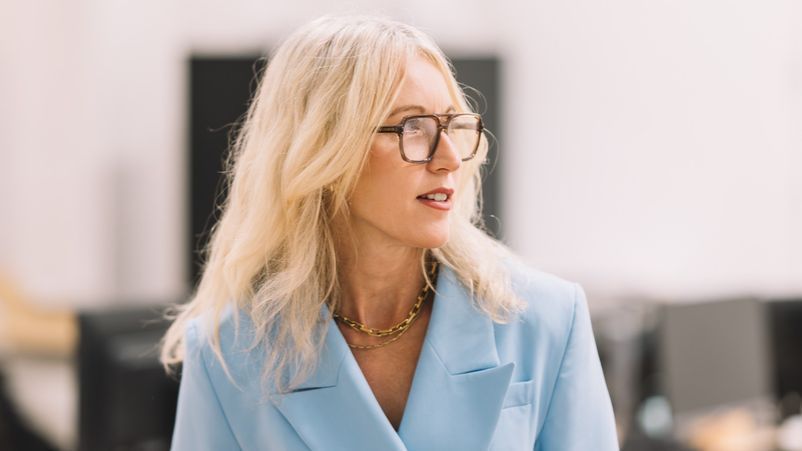
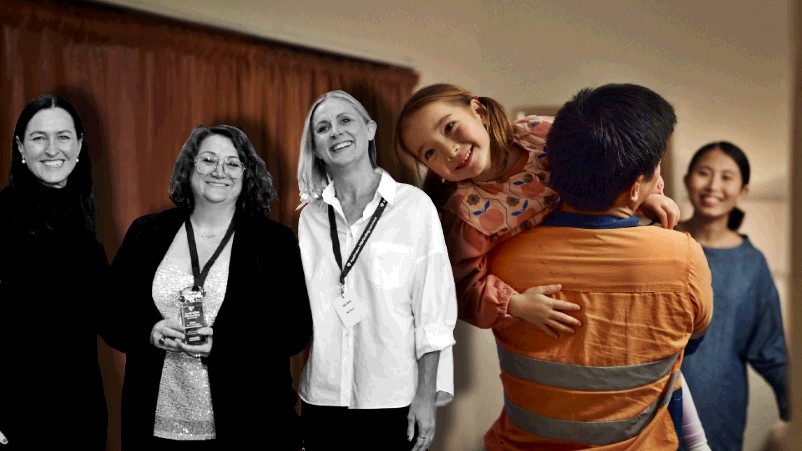
From top, left to right: Whalar's Emma Harman, Kantar's Irene Joshy, Desperados' Ligia Patrocinio, Social Soup's Sharyn Smith, Vamp's Emma Gonzales and Simone Bevan
An Mi3 editorial series brought to you by
Kantar
Creator marketing is growing up and with it comes the need for brands to do a better job of understanding its effectiveness. With nearly US$44 billion expected to be spent on influencer marketing this year, including an anticipated $1.2bn in Australia, and with 61 per cent of global marketers planning to keep increasing investment, there’s clearly confidence in what creators can deliver for brands. Yet most are relying either on pure reach figures or platform engagement data that's often more misleading than helpful, only aligning to brand building and short-term sales measures one third of the time. Mi3 takes a deep dive into Kantar’s latest guide and frameworks for creator effectiveness, as well as scrutinises how brands and agencies, including Vamp, L'Oreal, Heineken, Whalar and Social Soup, are working to find the best ways of measuring and aligning the impact creators can really have with brand and demand.
What you need to know:
- Reach, engagement and platform data are poor proxies for creator marketing effectiveness. Kantar’s fresh analysis of 800 cases and 15,000 sponsored creator assets across APAC found that platform engagement data points marketers in the wrong direction around two-thirds of the time for both brand building and short-term sales.
- Yet even with the disconnect on how to best measure creator marketing, 61% of global marketers are planning to increase creator investment this year. What’s more, 77% of Australian marketers surveyed by AIMCO and the Marketing Association of Australia plan to increase spend over the next two years.
- Kantar’s argument is brands need to assess creators for their cultural power, relevance and ability to build brand associations – not simply their audience size or algorithmic visibility.
- The marketing data and insights company has detailed three roles for creators – media channel, creative partner and cultural asset – with the latter offering the strongest potential to tap into a creator’s relationship with their community and deliver effectiveness beyond top-line reach figures.
- The industry experts agree: Clear objectives via the briefing process, and based on full-funnel outcomes, should come before creator casting. Agencies Vamp and Social Soup say brands need to establish the business objective and measurement framework before choosing creators, rather than starting with a list of influencers and working backwards.
- L’Oréal is applying full-funnel measurement: The beauty giant measures sponsored content, organic advocacy and boosted advocacy across visibility, incremental impact and business outcomes, integrating creator activity into the same measurement ecosystem as paid media.
- It’s also clear to many that always-on creator relationships build more value. For Vamp, Social Soup, Desperados, Whalar, Kantar and L’Oreal, repeated creator partnerships strengthen audience trust and effectiveness, whereas ad hoc campaigns and constant re-briefing can limit the value brands extract from creator communities.
- A critical piece here is ensuring creators play a role in your campaign flywheel and are involved in the creative process. Brands also need to respect their existing relationship with audiences, rather than treating them as another media channel to execute against rigid brand guidelines.
- Creative execution is the other key piece to effectiveness: Kantar creative testing data has found product benefits, innovation and demonstrations of product function among the strongest drivers of creator content effectiveness, while explicitly stating a brand name in audio produced a 22-point lift in brand linkage in its testing.
- There’s another point our experts are keen to make: Culture can’t simply be manufactured by brands. Creators can help brands participate in cultural moments, but brands need to distinguish durable cultural relevance from short-lived trends – and give creators enough freedom to contribute authentically.
- Get it right, and Kantar’s data shows well-aligned creator campaigns can outperform other digital advertising on awareness and consideration, with ads scoring highly for predicted brand memorability generating 45% more awareness than average.
Marketers have been told in no uncertain terms that relying on pure reach or engagement numbers such as likes, views and click throughs is a fool’s game when understanding creator effectiveness.
Nor do platform numbers equate to direct success. As shown in Kantar’s new report, The Creator Game Plan: The CMO Guide to Creator Effectiveness, relying solely on platform engagement data steers marketers in the wrong direction two-thirds of the time for both brand building and short-term sales.
Kantar’s data was based on analysing 800 cases and 15,000 pieces of sponsored creator content across APAC to promote a product or brand across TikTok, Instagram and YouTube, including creative effectiveness predictions from Kantar’s LinkAI for creator content.
Of all sponsored creator content scoring highly on platform engagement, fewer than one in five pieces of content shows strong potential to build brand, and just 9 per cent of content marked ‘high’ on engagement rates on platforms actually delivers long-term brand equity. This was roughly one in eight for short-term sales impact.
Yet an AIMCO and Marketing Association of Australia State of Creator Marketing Australia 2026 report found 92 per cent of Aussie organisations are relying on platform analytics to measure creator impact right now. The other alternatives? Engagement quality (65 per cent), creator-supplied reporting (58 per cent), and media efficiency (57 per cent).
Another recent System1, TikTok and WPP report released at this year’s Cannes Festival found most paid creator campaigns to be underperforming. The top 10 per cent of creator campaigns studied (all on TikTok) generated four times the brand memory lift of the remaining 90 per cent. Yet only 29 per cent of creator-led ads outperformed the average branded ad. And across 129.6 million engagements, System1 found virtually no relationship between engagement rate and Brand Memory Lift.
None of this is stymying spend, however. Per Kantar, 61 per cent of global marketers planned to increase investment on creator content this year, while 77 per cent of those locally surveyed by AIMCO / Marketing Association of Australia plan to up the dollars over the next two years. IAB’s US data sees creator advertising spend reaching US$43.9 billion in 2026, while it’s sitting at about $1.2bn annually in Australia.
Put all that together, and you realise for a bunch of marketing teams increasingly obsessed with ever-shorter returns on investment, there are some glaring effectiveness and measurement omissions in an area growing about two times faster than the total digital ad market and four times faster than the global media market.
“Creator marketing is cool; every single brand wants to partner with somebody. And in many cases, caution is thrown to the wind … everyone is doing it, so I’ll partner with 1000 creators, I’ll create 20,000 assets – but it’s more confidence than measurement,” Kantar APAC head of creative, Irene Joshy, tells Mi3.
She believes the “beauty of the creator economy is in itself a paradox”. “Being able to actually do last-mile attribute of creator 1,2,3,4 and if this is the person who sealed it and therefore, this was the multiplier effect from one to the other, and the handoff points? That would be ideal. The irony of it all is, you can’t do that,” she says.
“But walking into this economy blind is hugely risky for multiple reasons. One, it’s going to spread the little dollars you have even more thinly. You wouldn’t know who to boost. Engagement is a proxy – I’m not saying engagement isn’t good; I’m saying engagement doesn’t tell you the full story. And when you look to meta-analysis and retrospectively, it doesn’t really add value.
“You entertain me, so of course I’m going to participate with you. But on the other side, I’m going to listen to what you have to say, then I’m going to chat to ChatGPT, ask a bunch of friends, and then I’ll make a decision on what I do with you.”
Walking into this economy blind is hugely risky for multiple reasons. One, it’s going to spread the little dollars you have even more thinly. You wouldn’t know who to boost. Engagement is a proxy – I’m not saying engagement isn’t good, I’m saying engagement doesn’t tell you the full story. And when you look to meta-analysis and retrospectively, it doesn’t really add value.
Creator effectiveness framework
Gauging creator / influencer effectiveness has to start from understanding why brands tap creators in the first place.
“You engage them because they talk to a certain cohort. You’re capitalising on their skills, their abilities, creativity, to the benefit of the brand,” Joshy says. “What you can do is use it to drive associations, and ensure you’re connecting with the right cohorts. The only thing we keep saying to people is to ensure your brand plays a role.”
In Kantar’s Creator Game Plan: The CMO guide to creator effectiveness report, the firm groups relationships brands can form with creators into three buckets: Creators as a media channel; creators as a creative partner; and creators as a cultural asset. In the case of creators as a media channel, the core strength becomes reach. Creative partners, acting more as co-authors, boast relevance as a core strength. But it’s the latter, creators as cultural asset or ‘protagonist’, that provides what Joshy considers the strongest power of all types of creator-brand relationship.
As Joshy puts it, viral power might get your content interactions, and algorithmic power is designed to earn you platform visibility. “The clincher is cultural power,” she said. “Your creator will have cultural power by sheer value of who they are, what their followers want from them, and the kind of content they have historically created.”
Joshy then highlights a number of “principles” brands should follow, grouped under the acronym, ‘ART’ (alliance, resonance and transformation). Alliance is about making your choice of creator “very cautiously”.
“Fame doesn’t fund ROI,” Joshy says, warning a mismatch in values is a dead giveaway for a poor creator partnership choice. “Effectiveness comes from working with creators, not through them – that’s resonance.” Again, Kantar's campaign testing shows the strongest examples of brands using influencer / creators are when they're leveraged for their transformative cultural power.
That’s not to say other relationship types – media channel, creative partner – can’t still be used. Joshy points out a certain type of relationship may be more appropriate depending on the brand versus demand ambition being sought, or messaging (brand versus a new product promotion, for example).
Briefing process
The most foolproof way of ensuring a creator-brand partnership works logistically is to ensure the brief is absolutely clear. “You build resonance through the rigour of the creative brief,” Joshy recommends. Kantar has a beta product it’s been building for clients to help test briefs and inform them via prediction scores of whether it’s likely to drive short and/or long-term power.
Reverse briefing is something social and influencer agency, Vamp, has adopted with its clients to improve creator-brand impact. Its client list includes Vaseline, Estee Lauder, Dyson, Coca-Cola, Adobe, Asos, Snickers and McDonald’s.
“Even before creator selection and casting, we need to ask: What is the business objective? What are we trying to do here? Is it awareness? Is it conversion? What department is this sitting under? Is it a media play? Is it an awareness play? Is it a content play? And how do we really think about structuring the campaign from there?” chief operating officer, Emma Gonzales, tells Mi3. “Objectives have to be the first part of this; measurement needs to be the second part. Then you're looking at what creator are we going to work with to drive those two objectives, then what's the emotional hook that we can brief them on that's going to drive those goals?”
Measurement would always be something that's agreed upon and defined, continues Vamp head of brand and integration, Simone Bevan.
“What we are seeing, which is really interesting in terms of measurement, is that it’s the traditional [marketing] measurements – sales awareness, engagement – but also things like participation,” she tells Mi3. “That’s especially strong when you look at Gen Z communities, where digital channels are often more an invitation for real-world participation. And this is something Nike does really well; it’s not trying to sell trainers [via creators], they’re trying to create a role for community.”
Bevan and Gonzales add associate comments, shares, saves and conversations to this, arguing they’re good indicators of content being seen as well as resonating. Yet they also agree: The industry still lacks a shared language for value around creators.
“Too much emphasis is placed on follower counts, while creator fit, strategic partnership, community influence and the work behind creator selection remain consistently undervalued,” Bevan says. “It’s also why nano and micro creators are so often misunderstood. They’re not a lower-cost option; they’re a different mechanism for influence.”
And as the imperative shifts towards ‘creator intelligence’, how these creators consistently reach and influence new audiences in terms of predictability, relevance and repeatability, becomes a stronger indicator of value than scale alone, adds Bevan.
Social Soup CEO, Sharyn Smith, labels it the “marketing bit in influencer marketing”. “We are still marketers that need to drive a strategy build on the foundations of what works in marketing – consistency, creativity, having key objectives for what we’re trying to achieve,” she tells Mi3. “We’re still seeing this given to quite junior people who know how the platforms form, and how to get content that gets some views, but that’s not the same thing.”
What we are seeing, which is really interesting in terms of measurement, is that it’s the traditional [marketing] measurements – sales awareness, engagement – but also things like participation. That’s especially strong when you look at Gen Z communities, where digital channels are often more an invitation for real-world participation. And this is someone Nike does really well; it’s not trying to sell trainers [via creators], they’re trying to create a role for community.
From ad hoc to integrated into the campaign ecosystem
A related effectiveness limitation all point to is ad hoc relationships. Part a reflection of immaturity, and part a problem that’s arisen from which budget the money to pay for creators historically came out of, many agree: Having to rebrief fresh creators every time isn’t helping anyone very much.
Speaking on a panel during Kantar’s recent Cannes 2026 event series, co-CEO of creator and social agency Whalar, Emma Harman, put the problem down to creators initially being treated as a media channel, with brands contracting and selecting them “virtually as a version of display media”. Anyone who says they need 100 people to make reels “is not the place to start” either, Harman warned. Whalar was acquired by Accenture in June.
“Don’t get me wrong – you can work with these amazing storytellers and of course amplify that. But the idea is you work with creators, think more strategically and intentionally about who and how you’re working with them, and measure things like cultural vibrancy, social listening, thinking about more brand power and love metrics around the organic work you’re doing. Understanding that special relationship a creator has with the audience is the best way,” Harman told attendees.
Global head of Desperados and Sol, Ligia Patrocinio, said the Heineken-owned organisation learned this lesson the hard way. Speaking on the same Cannes panel as Harman, she warned creators can “never be treated as channels or the afterthought”.
“We were doing all the wrong things: It has to be red; it has to be black. Never green. We are part of the Heineken organisation, we need to have the guardrails … this really destroyed it,” Patrocinio said. “The moment we understood that, we literally invited them [creators] into our creative process, and asked: How do you add to our brand using your community? How do we add to your community through our project? That was when the magic really happened.”
Desperados is leveraging creators across campaigns in all channels. Take its ‘vibe nails’ by Coca Michelle, or its creator dance challenge, vibe notes and lenses, and Avinda Desperados experiential work. Its award-winning ‘The beer with Latin Vibe – Supermarket’ ad brought together a Colombian artist and producer as artistic director and saw Desperados turn a mundane supermarket setting into a vibrant, Latino street party to grab attention, with a soundtrack relating to the edgy side of Latin culture. This ran alongside a longer music video version.
Per Kantar Link+ campaign scoring, the way Desperados is leveraging creators has helped drive a +30 lift in its brand power scores, and +2.2 per cent volume increase. It’s also either growing or holding market share in all markets it operates in.
“Desperado is a brilliant example … it’s about creating a campaign system which is synergised, including the creators, then letting the creators be. The only thing they ensure is all of them have that bottle in hand,” comments Joshy, with a nod to the beer’s use of a key distinctive brand asset. “That’s the hygiene factor.
For Joshy, creators must become part of the campaign flywheel. “The moment you decide to engage with them [creators], you need to be very intentional, but you need to respect their universe. Because that's the beauty of creators; you're stepping into their universe, you cannot just be a brand destroying it. You need to build it," she says.
In Harman’s words, that means brands must shift “from linear campaign planning to a learning agenda”. “It’s treating planning almost like it’s gardening – you have to really nurture communities and creators you’re working with”, she said, so they work for you “day in, day out”.
“That can scale, and you can work with many creators to get the reach with many creators for scale,” Harman said. “Social is being rewilded in some way; it’s building around passions, it’s watching entertainment, and it’s being educated. That’s where we have to look at it in a slightly different way.
“Which also means from a creative measurement perspective, we need to look at compound creativity over time: What are we trialling, what are we learning, what do we take forward … where are consumers in a funnel and being really clear about that.”
Quality over quantity
Most of Social Soup’s work is in the always-on creator community space, with clients including Aldi, Treasury Wine Estates, Blackmores and Huggies. The influencer marketing agency designs a measurement system around a client based on its objectives – although Smith warns it does need a sizeable amount of investment to make traditional measures such as market and brand impact viable.
“One of the things we look at is more quality signals – comments, saves, shares – as those are more relevant in particular content categories,” Smith explains. “For example, with Aldi, are people saving the content because it’s food-related? Are they going to come back and use it in their recipes, for their cooking?”
Sentiment analysis is another must, along with social and digital performance by category, and what comments are about. To do this, Social Soup has built its own proprietary tools. “It depends on what the objectives of the campaigns are – we're also pulling and analysing thousands of comments. Take our work across Aldi, for example: Are we driving more trust? Are we driving more people into stores?” asks Smith. “You’re also looking at share of voice as well within the competitor set.”
Where many, including Smith, want to see influencer measurement extending further is into the MMMs. “Market mix modelling is the new emerging gold standard overall in how you understand your [media] mix – the great thing for influencer stuff is it in that model and is recognised when you put the right assumptions into them and the variables,” she comments. “They are much more sensitive to what’s going on in the market, so I think we’ll start to see that used a lot more.”
We were doing all the wrong things: It has to be red; it has to be black. Never green. We are part of the Heineken organisation, we need to have the guardrails … this really destroyed it. The moment we understood that, we literally invited them [creators] into our creative process, and asked: How do you add to our brand using your community? How do we add to your community through our project? That was when the magic really happened.
L’Oreal’s full-funnel measurement
One of the world’s biggest creator marketing investors is L’Oreal. It’s working with half a million creators globally, helping it shore up almost 29 per cent share of influence in beauty. Its approach to full-funnel measurement of creators covers three forms of content – sponsored content, organic advocacy and boosted advocacy – and tracks visibility and attention (reach, views, share of voice), incremental impact (brand lift, conversion list) and business outcomes (sales lift, ROI).
In a recent study undertaken by L’Oreal with WARC and Meta, campaigns using both brand and creator assets delivered 35 per cent higher ROI than campaigns without creators, while brand outcomes outperformed industry benchmarks by up to 2.7x.
Again, the important thing here is that creator activity is sitting inside the same measurement ecosystem L’Oreal uses for paid media. As chief digital and marketing officer, Asmita Dubey, told attendees at Cannes Festival this year, the beauty giant has also ensured it has a culture of measuring short and long-term together.
“What we do is more than 30 per cent of our sales is A&P, which is a very large investment. It shows we believe in our brands,” Dubey said. “But at the same time, we have our beauty engagement touchpoints, and all the investment going to those brands. We have a proprietary measurement mechanism, tool and program, Beauty IQ [beauty engagement touchpoints IQ]. That’s about measuring short-term ROI with market mix modelling.
“But every single time we put on a long-term multiplier. So the Beauty IQ tool doesn’t perform with the long term. We have to build that culture of measuring what is valuable.”
The short and long of creative creator effectiveness
As to the specific creative drivers of effectiveness with creators, Kantar cites two dimensions influencing shorter and longer-term performance: How the creator interacts with the brand, and how effectively they communicate the brand message.
Kantar has introduced next-generation creator content testing in its Link AI creative testing solutions that provides platform-specific benchmarks based on analysis of more than 21,000 pieces of creator content. This assesses five dimensions: Brand power, sales power, engagement, algorithmic favourability and cultural power.
Joshy also points to “a circularity to content; it’s not so linear”. She uses the example of planning a narrative for a merino wool brand to make the point.
“If I’m thinking about repositioning merino wool as the best quality wool in the world, my entire campaign is about liveable moments and moments that last longer. The creator needs to be part of that ecosystem, but operate on the fringes as cultural assets,” she explains. “Which means they need to create content that talks not to durability, dancing moments or great poetry – no, leave the poetry to long form and the precise storytelling of provenance to digital. Use your creators as anchor points of the cultural relevancy of merino wool. Is there a backstory to that provenance? Let them go and be explorers.”
When ensuring the best brand linkage in creator work, Kantar specifies two main forces at work: How well the creator interacts with the brand; and how well they integrate branding devices into their piece of content. In creative testing, it’s found that stating the brand name in audio led to the biggest percentile points lift in brand linkage (+22), yet only half of brands are using this device. The second-highest brand interaction scores came from interacting with a product (+17) and shopping activities in action (+15). Brand logos – either outside the product (+20) or on the product (+16) performed best.
Social Soup works in a structured way when briefing creators, because that’s critical to getting genuine, unique creative that’ll cut through, Smith says. “The first thing we would do is distil the strategy down to the brief, the dos and don’ts and give them brand frames, references and inspirational content... they then go away and come back with more concepts. They may have put that into a storyboard, which we can take to the brand and say, this is what they’re wanting to create, does this work? Here’s the actual script they’re suggesting, and we can work with it before it’s moved into production,” she explains.
It’s obvious to Smith that longer engagement gets the best work out of creators. Not least because creators shouldn't be judged on just one piece of content at a time.
“You really only get that ROI on the time and investment over multiple rounds of content,” she says. “The benefit of that is the audience comes to trust that more, because they’re genuinely seeing you working with that brand. To the point now where we see some creators’ audiences asking when the branded content is coming – they get to the point where they’re asking, what’s happening at Aldi?”
When it comes to brand messaging itself, Kantar data found the highest scoring drivers of long and short-term effectiveness are product benefits communicated (+18 percentile point lift in brand power, +12 sales power), innovation (+19 percentile point brand power uplift, +10 sales power), and demonstration of product function (+17 brand power uplift, +90 sales power).
It depends on what the objectives of the campaigns are – when analysing thousands of comments across Aldi, for example, we look at things like: Are we driving more trust? Are we driving more people into stores? You’re also looking at share of voice as well within the competitor set.
Brands don’t control culture
There’s another leveller Kantar, Vamp and Social Soup point to here: The fact that brands do not control cultural moments.
“I don’t believe brands can create culture, and I hate when people say that,” says Vamp's Bevan. “You can harness it and leverage it to your best ability, but a corporate entity can’t create culture. Real moments, real people do. Culture moves so quickly now with social media, and these big enterprise brands with compliance and red tape can’t move quickly enough.”
It was a point brought home by a recent Publicis Groupe and TikTok whitepaper, which studied six months of social trends data from the agency’s ANZ Cultural Fluency intelligence engine, and showed trends have a media shelf life of just three days in Australia, with only 27 per cent sustaining relevance beyond two weeks. The best way to cut through and sustain relevance, per the Globalization of TikTok Trends: How Culture Travels, Transforms and Connects’ report, was rather old school in its profundity: Find cultural gravity and core local audience alignment. Then let consumers get involved, don’t just message them.
“A cultural moment is not necessarily something you can put quantitative data next to it. You can't always define it and have it in a spreadsheet. It's a movement. It's the emotion that moves you in this cultural moment,” continues Bevan. “Where we're at the moment, when we try to define that, it just looks fluffy and wishy-washy.
“So it’s about understanding and being able to distil what elements of culture as a brand we have to opt into, and what’s just a trend and quick moment we’ll let pass by.”
Joshy agrees food and beverage brands might be able to ride culture in the immediate moment – cue Oreo's Dunk in the dark – but many others can’t.
“Not every brand can have the scale and speed to continuously ride on fans, and some brands should never do it because that doesn’t lend itself to their personality,” she says. “Slow culture is also what is required from a brand solving for frictions in cohorts in society. I think that’s the piece we miss and glaze over. Our interpretation of slow culture is what is long standing, what is ensuring.”
But nor does Joshy believe using creators as cultural assets means having “a big philosophical construct you need to create”. “It could just be something here and now. It could be nail art as culture. Painting as culture. Everything contributes in some form or other, and even if it doesn’t have longevity or doesn’t become totemic in nature, it doesn’t need to be all of that,” she argues. “If at that point in time it becomes a currency across the campaign – and I keep coming back to the campaign because if creators aren’t part of that campaign ecosystem, there’s a problem – that’s ok.”
When brand/creator alignment is done well, Kantar’s Context Lab data does show stronger performance for creator content campaigns compared to other digital advertising for top-of-mind awareness (15.7 per cent versus 14 per cent) plus on consideration (3.4 per cent versus 1.9 per cent). That’s because creative testing shows creator content hits higher notes for active involvement (+12 on digital advertising benchmarks), relevance (+8), enjoyment (+6) and long-term equity (+5).
Kantar’s algorithm for predicting how well creator content generates brand memorability has shown that ads scoring highly on this impact generate +45 per cent more awareness than average. By comparison, ads scoring poorly generate -26 per cent less awareness than average.