Machine-made ads trigger big trust penalties for brands; ‘disclosure makes it worse’; video amplifies the effect according to TBWA, Ideally study

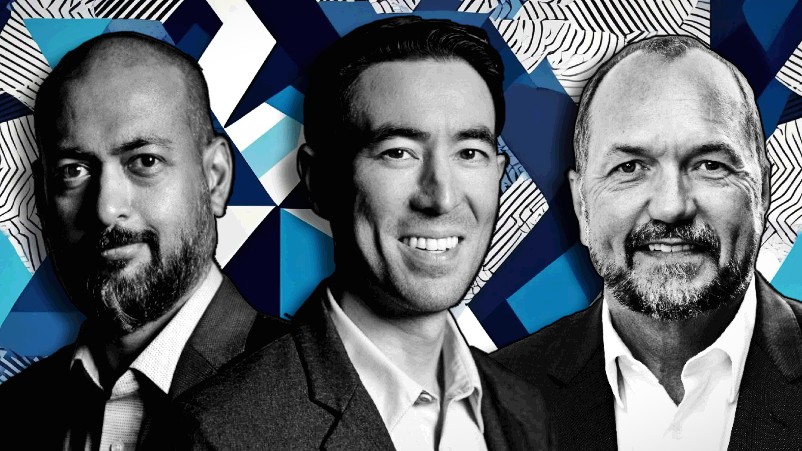
Ideally's George Robertson and TBWA's Michael Hogg

You may need to think twice before you show them how the sausage is made. New research by TBWA\ Australia and Ideally finds that telling consumers an ad was made using artificial intelligence tanks trust in the brand, and the more you disclose, the worse it gets. They have dubbed this a “synthetic authorship penalty” and it’s measurable. Trust, purchase intent, and even recognition scores all fall when audiences think a machine wrote the script. While earlier research out of NYU and Emory found GenAI ads outperformed human-made ones in performance metrics like click-through rates, the TBWA and Ideally study focuses instead on trust and finds a sharp drop when audiences know (or even suspect) a machine made the message. In sectors where trust is existential - think banks and airlines - the effect is especially pronounced. The study looked at well-known national and international brands. That included an airline, which saw trust scores plummet when ads were perceived as AI-made. AI-led executions struggled to convert emotion into action. One of the major banks fared little better, while a QSR found that even perceived artificiality carries a cost. One in two people thought AI was used even in human-made ads, and once AI involvement was confirmed via watermark, trust dipped sharply. In an era of cost-cutting and pressure to scale creativity with machines, the study sounds a clear note of caution: AI is not just a production decision, it’s a power brand signal. The trick for marketers will be determining when the trust penalty is too high to ignore.
What You Need to Know
- New research from TBWA and Ideally finds advertisements created using generative AI reduce consumer trust in brands. Worse, explicitly disclosing AI use makes that trust drop even further.
- Their paper provides real-world examples. For instance, the results for Airlines, Banks and QSRs saw significant trust and intent drops when the creative was perceived as AI-led – especially if disclosed.
- The study reveals a measurable trust deficit when consumers believe creative is machine-made. AI-only ads score lower on trust, purchase intent, and recognition compared to human-made ads; hybrid ads soften but don’t eliminate the effect.
- Labelled AI-generated ads performed worse than unlabelled ones, putting brands at odds with increasing regulatory pressure to be transparent.
- Video ads suffer a greater trust penalty than static formats. High-trust sectors like airlines and finance are hit harder than transactional categories like QSR.
- Contrary to common belief, younger consumers show equal or greater sensitivity to AI authorship, engaging faster with human-made creative and disengaging faster from automated work.
- The findings arrive as brands chase AI-led production savings. TBWA’s Matt Keon and Michael Hogg warn marketers risk trading long-term brand trust for short-term cost wins, often under pressure from outside marketing.
- The study challenges 2025 research from NYU and Emory that showed AI ads outperforming human ones on clicks, but also noted performance collapses when AI origins are disclosed. TBWA focused instead on brand trust across formats and sectors.
- Hogg and Ideally’s George Robertson stress this isn’t a rejection of AI, but a prompt for marketers to use it deliberately. That means asking where, not whether, it belongs in the creative process.
- What's next? The team will next track real brands over time to explore whether greater AI usage leads to long-term brand trust erosion in-market.
Explicitly labeling ads as AI made depresses trust and a behavioural response. And it's that interesting thing. If we go from a regulatory perspective, it will either be enforced or people expect it. There's lot of risks around that, especially if you're in a financial services industry and [other] heavily regulated industries, transparency acts as a penalty.
Telling consumers that an advertisement was made using artificial intelligence can reduce trust in the brand, according to new research by TBWA\Australia and Ideally, complicating growing calls for transparency and disclosure around AI-generated content.
Omnicom’s findings contrast with those of an NYU and Emory study last year that found generative artificial intelligence-created ads outperformed both human-made and human-AI hybrid ads, boosting click-through rates by up to about 19 per cent when left entirely to the machine. That study also suggested human interference can actually weaken effectiveness, especially when audiences are told the creative was AI-generated.
The NYU/Emory data offers an uncomfortable counterpoint for marketers searching for easy answers about where the balance between human and code-based creativity lies. John Wanamaker would be thrilled: It turns out the answer to which 50 per cent of your budget you wasted remains as elusive as ever.
The TBWA and Ideally study, led by TBA's chief creative officer, Matt Keon and chief strategy officer, Michael Hogg, and Ideally's Lindsay Bennett, found ads made with AI consistently performed worse on brand trust than human-made ads, and that explicitly disclosing AI use made the effect stronger, not weaker.
“Disclosing makes it worse,” Hogg said in an interview with Mi3 Australia, to discuss the findings.
The research tested roughly 2,500 respondents across about 3,500 ad evaluations, exposing consumers to human-made, AI-made and hybrid advertisements across multiple categories and formats.
The results of the study emerge as brands battle with whether and how AI-generated content should be labelled, and as marketing departments face increasing pressure to cut production costs by automating creative work.
Specifically, the paper titled The synthetic authorship penalty: Emerging evidence that AI-executed brand communication depresses consumer trust across categories found: "Across brands and formats, how communication is executed systematically shapes trust, independent of message or channel. Fully AI-executed communication carries a clear trust penalty, while hybrid execution reduces but does not remove that cost. In practical terms, this means marketers can dial trust up or down through execution alone, without changing creative strategy, media spend or targeting."
Per the report: "Adding an AI watermark does not simply inform audiences; it actively erodes trust further, turning transparency into a measurable liability rather than a neutral safeguard. For marketers, the usefulness is twofold. First, it reframes AI adoption as a portfolio decision rather than a binary one.
The study also suggests hybrid execution offers efficiency gains with lower trust risk, "... while full automation should be reserved for contexts where trust is not a primary driver of value. Second, it warns against treating disclosure as a box-ticking exercise. How AI involvement is communicated has brand impact, not just regulatory relevance."
A measurable trust penalty
The TL:DR version of “synthetic authorship penalty” is that it's a measurable decline in brand trust that occurs when audiences perceive advertising as being authored by AI rather than humans.
According to Hogg, "Explicitly labelling ads as AI-made depresses trust and a behavioural response. And it's that interesting thing. If we go from a regulatory perspective, it will either be enforced or people expect it. There are a lot of risks around that, especially if you're in a financial services industry and [other] heavily regulated industries, transparency acts as a penalty."
The findings held true across categories, though the magnitude varied depending on the level of trust typically associated with the industry. Airlines and financial services, sectors where trust is closely tied to safety and security, experienced a larger penalty than quick-service restaurants, where consumer trust is more habitual and transactional.
Brand outcomes
The report offers practical examples based on the experiences of from the airline, banking and QSR sectors
The airline recorded the sharpest penalty when creative was perceived as synthetically authored. Human-led video delivered purchase intent and consideration scores of 69 per cent, with brand recognition reaching 89 per cent. By contrast, AI-led executions struggled to translate emotional response into behavioural intent.
According to the paper, "Among under-40s, purchase intent reached 89 per cent, likeability 83 per cent and distinctiveness 74 per cent for human execution. Among over-40s, trust protection remained but behavioural uplift narrowed. Qualitative responses showed strong emotional drivers around animals and care, with AI intensifying resistance among non-pet owners concerned with welfare and reassurance."
For the bank, removing branding did not neutralise bias. Instead, stripping out clear brand cues made audiences more likely to assume the work was AI generated, subtly weakening trust even as likeability and distinctiveness held up. In effect, the absence of human or brand signals became a signal of its own, prompting audiences to read the execution as machine-led rather than deliberately crafted.
And finally, for the QSR , human-produced video delivered the strongest purchase intent at 65 per cent, followed by AI executions without a watermark at 59 per cent and AI executions with a watermark at 52 per cent, according to the report. Likeability and distinctiveness were broadly comparable between human work and AI that was not explicitly disclosed. Trust, however, dropped sharply once AI involvement was signposted. Notably, the study found that 43 per cent of respondents believed AI had been used even in the human-made execution, suggesting that perceived artificiality alone can trigger a trust penalty, regardless of how the work was actually produced.
Disclosure deepens the problem
One of the most striking outcomes was the impact of disclosure. Ads that were labelled as AI generated performed worse on trust than AI-made ads where no disclosure was provided. That finding places brands in a difficult position as disclosure norms tighten.
From a regulatory and ethical standpoint, transparency is increasingly seen as unavoidable. From a commercial standpoint, the research suggests that disclosure itself currently acts as a negative signal.
Hogg said this mirrors findings from other domains, including medical decision-making research, where people judge machines more harshly than humans even when outcomes are identical.
The study did not directly test consumers’ ability to detect AI-generated creative, but the researchers noted detection is becoming harder as tools improve, increasing pressure to disclose, even though disclosure appears to reduce trust.
The research also challenges the assumption that younger consumers are more comfortable with AI-generated advertising: Digitally savvy younger audiences are no more forgiving than their analogue antecedents.
While younger audiences are more digitally fluent, the study found they showed similar sensitivity to AI authorship. In some cases, they reacted more quickly, engaging faster with perceived human craft and disengaging faster when they sensed automation.
That volatility, Hogg said, suggests familiarity with AI does not necessarily translate into tolerance when it comes to brand communication.
Hogg positioned the work as a response to a growing body of AI advertising research that focuses primarily on performance metrics such as click-through rates and conversions.
He pointed specifically to the study published by New York University and Emory University, arguing its scope was narrower than often assumed. As Mi3 Australia previously reported, that study published late in 2025 found synthetic ads outperform human and hybrid ones, but the moment you disclose they are AI-made, effectiveness drops sharply. What looks like a creative breakthrough quickly becomes a governance headache.
“They acknowledged the limitation that it was a single vertical, it was a beauty vertical paper,” Hogg said. “They didn’t acknowledge the limitation that it was performance, ads only.”
By contrast, the TBWA research focused explicitly on brand trust rather than immediate performance outcomes, and tested across multiple categories and formats.
"So the broad hypothesis we wanted to explore - it's not entirely new, it's been explored in other areas - was about AI’s relationship with trust. And then, tied to that, the idea that we as an industry are so attuned, for better or worse, to the tension between short-term and long-term thinking."
It shouldn't be about short term versus long term, Hogg said, although he acknowledged such tension is often at play. "But that dynamic really just is one of the things we should be thinking about when it comes to the long term impact of using AI on brands."
Hogg added, "We use AI as much as anyone within the Omnicom group. We're probably pushing it as hard as anyone. But the goal is to push it in the right ways, in the right circumstances."
"The other thing to consider is that just like there are high-trust categories, there are also high-trust brand moments. So at what point do you want human authorship and human intent to be clearly signaled?"
The study also found format amplified the effect. Video advertising, which carries higher emotional weight and demands greater attention, magnifies both the upside of human authorship and the downside of synthetic execution. "We also tested different assets to see whether format had an impact, and yes, it did. Video, in particular, amplified the damage. It amplified the penalty."
Lower-engagement formats such as display ads showed a smaller trust penalty, suggesting that the cost of AI authorship is not uniform across the media mix.
Pressure suits
A recurring theme in the interview with Hogg and Robertson was that decisions about AI adoption are often driven by cost pressures originating outside marketing departments.
Production savings from AI can be dramatic, particularly in video, where budgets can fall from millions of dollars to a fraction of that amount. Hogg said the research was designed in part to help marketers respond to those pressures with evidence rather than instinct.
The risk, he said, is that brands trade long-term trust for short-term efficiency without realising it.
While the debate on the efficacy of AI in advertising ramps up, there is a valid question to be asked. How long will it matter, and at what point will AI be so good that the debate will descend into little more than a distinction without a difference?
Both Hogg and George Robertson, Ideally's Global Agency Lead, acknowledged the research reflects a specific moment in the evolution of AI and public attitudes toward it.
According to Robertson, "It is absolutely temporal, and that pendulum, how fast it swings, can be wild and quick. I think what we've been finding across this, more than probably anything I've seen, is that trend, the uptake of AI in our lives, and how rapidly that's happening. It's almost like Moore's Law in effect, and it's impacting brands.
"It's somewhat of a cautionary tale."
Robertson and Hogg both conceded AI tools are improving rapidly, and cultural acceptance may change.
"For all the benefits it offers, such as speed, efficiency, and cost, here absolutely is a [new] cost. We don’t know what that looks like in three years, but right now, it’s having a massive impact on brands and makes having some sort of robust, substantial, real consumer data essential."
Per Hogg, "The idea around the temporal nature of trust is interesting, because trust takes a long time to build, and it’s much faster to lose. It’s an asymmetric characteristic that a brand has.
"So whether this is still relevant in three or four years, honestly, who knows? But the damage that can be done in the long term by chasing short-term efficiency and scale gains is what we’re raising the flag about."
Marketers like Valiant Finance's CMO Alex Concannon are across the debate, and understand they might just be navigating a messy interstitial moment in time. His advice? "Make hay while the AI sun shines".
"I'm very much in the 'fill your boots' camp when it comes to talking to marketers about AI right now. There's a lot of discussion about what the next three years are going to look like, but I don’t think AI will ever be the way it is right now again. It’s going to follow a curve, first getting significantly more expensive, then becoming significantly cheaper," he commented. "But in the short term, we're in the perfect environment to be experimenting with AI, using it, maximising it, especially if you're a small team."
Concannon told Mi3, "We're a small team. We made an origami-style transitional AI video. We don’t have the budget to hire a CGI 3D animation designer to do that, but now, we can. Our potential has gone from using Canva templates to being able to create almost anything we imagine. That’s really exciting. As a marketer, I think there’s never been a better time to be sourcing ideas and turning them into reality."
For TBWA and Ideally, next phase of the project will be a longitudinal study, tracking real brands over time to examine whether higher volumes of AI-generated advertising correlate with changes in brand trust in-market.
We don't know what that looks like in three years' time, but right now, it is having a massive impact on brands and [it's helpful] having some robust, substantial, real consumer data.
Eyes wide open
Hogg and Robertson repeatedly stress the risk facing marketers is not the use of artificial intelligence itself, but the failure to understand what is being traded away when AI is adopted primarily for efficiency.
“There are huge efficiency and scale gains to be had,” Hogg said. But the danger is that marketers “trade efficiency and scale for credibility and trust without knowingly doing that.”
That risk is heightened, he said, because decisions to automate creative production are often driven by pressures outside the marketing function. Cost reductions are immediate and measurable, while damage to trust is slower and harder to attribute. “The motivation to be more efficient and scale more efficiently often comes from outside of marketing,” Hogg said.
Robertson said the research is intended to help marketers develop the confidence and evidence needed to navigate those internal discussions. He described the findings as grounded in real consumer data rather than instinct or ideology. "We don't know what that looks like in three years time, but right now, it is having a massive impact on brands and [it's helpful] having some robust, substantial, real consumer data."
For both executives, the issue is not whether AI should be used, but where and when it is appropriate.
“There will be a lot more of it in the near term because those efficiency and scale gains are too hard to ignore,” Hogg said. “The question is where is it most appropriate to use this, and where is it not?”
He added marketers must also distinguish between low-stakes and high-stakes moments, even within the same category.
“There are higher trust categories, and there are higher trust brand moments,” Hogg said.
Robertson added the solution is not rigid rules, but greater curiosity and testing. “As you build your understanding through curiosity, you can then start to solve for it and build a bigger picture,” he said.
Ultimately, Hogg said, the research is meant to make marketers more deliberate, not more fearful.
“This is about making marketers conscious of what the trade-off might be,” he said. “It lets you make a more informed decision about how and when to apply AI, because it is inevitable in so many circumstances.”
The central message, Hogg suggested, is that AI is not merely a production choice; it’s also a powerful signal.
Editor's note: This story has been updated following requests