A Ted Lasso star, World Cup Watchers Rights Association and a mission to get more Aussies watching football at work: SBS’s FIFA World Cup 26 campaign debuts

SBS acting director of marketing and audiences, Uma Oldham
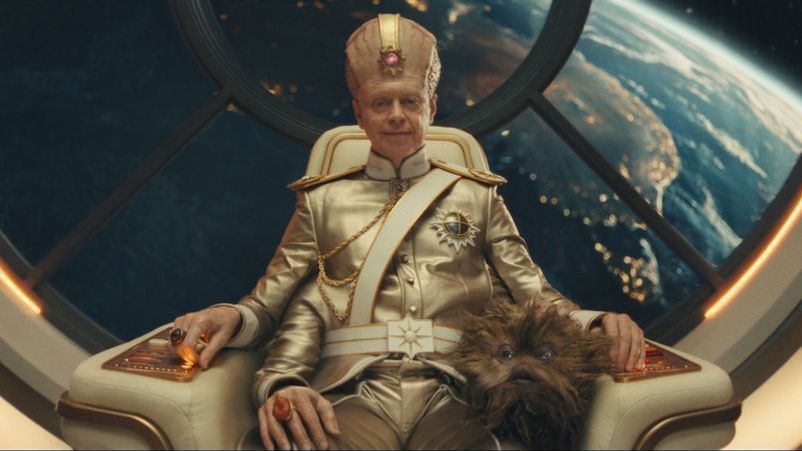
SBS is going for talkability and shareability with its new tongue-in-check FIFA World Cup 2026 campaign fronted by Ted Lasso star, Nick Mohammed, debuting today. Faced with two in three live games this tournament running in business hours, the comedian / actor is fronting a ‘Watchers’ Rights Association’ that’s directly tackling that viewing challenge by encouraging more workers and employers to come up with creative ways to watch the games at work. Grounded in its ‘We Go There’ positioning, there's a mix of paid mainstream channels, including digital video, out-of-home and radio / audio being leveraged, as well as earned efforts in the game plan. The knowledge that half of the viewing audience could be new to SBS this time around means there’s also a strong audience retention play running in complement, acting director of marketing and audiences, Uma Oldham, tells Mi3.
SBS acting director of marketing and audiences, Uma Oldham, describes it as a serious problem requiring an attention-grabbing response from the broadcaster’s marketing team: Two-thirds of upcoming FIFA World Cup 2026 matches are being held during Australian business hours.
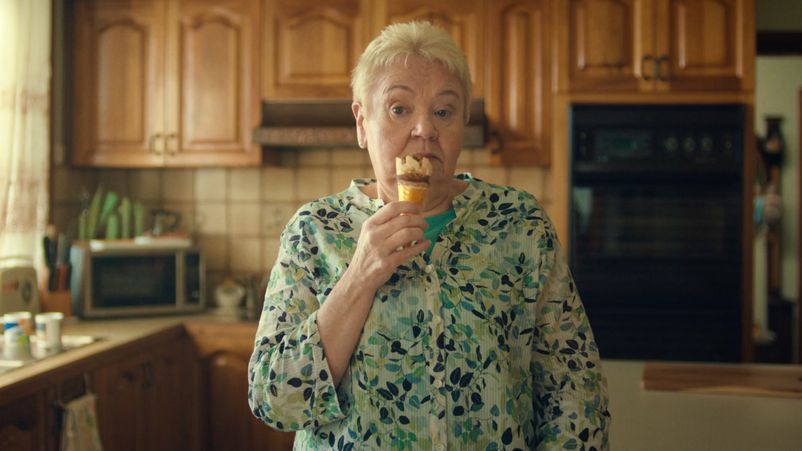
Cue the central creative thread of SBS’s new tongue-in-cheek campaign for its FIFA World Cup 2026 broadcast offering: ‘SBS World Cup Watchers’ Rights Association’ (WRA) fronted by Ted Lasso star and comedian, Nick Mohammed. Four local influencers are then peppered through other executions: Matt Okine, Mel Buttle, John Cruckshank and former Matildas goalkeeper and footballer, Lydia Williams.
The campaign has been created in partnership with creative agency Droga5, which came up with the strategic concept and also worked on SBS’s ‘We Go There’ campaign, plus Poem on talent recommendations, and longstanding media agency, Hearts& Science.
As well as the quirky creative, which takes some of its positioning cues from that ‘We Go There’ work, SBS is pitching up a bunch of insights, 'commissioned’ by the WRA, showing three in four Australians planning to watch the World Cup this June. One-third have reportedly booked a meeting specifically to watch sport, 38 per cent admit to watching sport while on a work call. And notably, 71 per cent agree employers should simply let staff watch the World Cup while at work. And they have support from about half of Aussie bosses. The WRA is SBS’s answer to attempting to convert the rest.
SBS is also deliberately airing the new campaign in the six weeks leading up to this year’s tournament broadcast during business hours to hammer in the point.
“If we want to reach those consumption targets, we need people to switch on while they work, they need to switch on on-demand, and so that was really at the heart of it,” Oldham says. “That's where the World Cup Watchers' Rights Association was born.
“We wanted to be ambitious with this campaign … it’s once in a four-year moment for SBS, and unprecedented audiences. For marketing to drive the audiences, we wanted to aim high.”
SBS’s new campaign is putting plenty of channels into play, including TVCs, BVOD and digital video, along with social cut downs of the 90-second hero film and 30-second slices. SBS will also be leveraging out-of-home and radio / audio, and Oldham points to integrated activity with Southern Cross Austereo and the Triple M network as well as a selection of podcasts to bring WRA’s personality and idea to life including We Got the Chocolates. Clubby Sports is another partner in the mix.
“Most importantly, it's about talkability, it's about participation, it's about earned, and that is why we've gone for this star-led constellation approach when it comes to talent,” says Oldham. “So the social side of things is going to be really key, as well as mass media. You're going to start seeing out-of-home that will start saying ‘ is your job making you work’.
“Out-of-home delivers scale. The challenge is how you make people look, and that’s where this broader idea comes in. We have a headline saying ‘Is your job making your work during the World Cup’, which is attention grabbing – that’s the key across all channels. Even with social, it’s about stopping people with the scroll. That’s where your famous faces come in, that provocative nature comes in.”
Winning over mainstream audiences for SBS
SBS has held the rights to the FIFA World Cup for 40 years. This year, the broadcaster is betting on at least a 25 per cent swing of the viewing mix from linear to digital after the 2022 tournament hit a 50/50 linear / on-demand split. The tournament is being played across three countries – the US, Canada and Mexico.
Being an increasingly mainstream, culturally diverse sporting event, SBS is also expected a massive uptick in new users to its platform coming in this year. Oldham notes about 50 per cent of audiences that came in to watch the last World Cup hadn’t been on SBS before, per previous tournament figures.
“It's probably similar to what we used to with The Handmaid's Tale, which had a similar impact. So, therefore, from a marketing perspective, you can see what a great opportunity that is to then really try and hold on to that audience to grow it, drive our brand, drive commercials and so on,” she says.
“We refer to the audiences as new laps, and then new and lapsed audiences that come in tend to represent broader Australia – they are the people watching NRL and AFL, and probably watching MAAFS [Married At First Sight]. That's something that we really thought about with the tone of this campaign.”
Against this, Oldham recognises many of these audiences may have pre-conceived notions of what SBS has to offer more broadly.
“There is a certain perception of SBS which obviously we tried to break through with our ‘We Go Their’ campaign, which we launched last year … It was something we also considered here. You really want something that allows broader Australia to participate in. Yes, it's a sporting moment, but it's also a cultural moment.
“The fact there is going to be a Socceroos game that's going to be playing at midday on a Friday is a perfect opportunity to galvanise around and really draw in all walks of life to come in and enjoy the beautiful game.”
And of course, leveraging SBS’s own platform will be a key part of the plan, not only to lift viewing consumption during the tournament, but also as part of the audience retention strategy.
“Three Socceroos games are going to be on in the first one to two weeks of the World Cup, and those are the Super Bowl moments,” Oldham says. “So we are thinking about every ad break of those games, and carefully curating spots that reflect the best of SBS – so the best of SBS On-Demand, drama, and things that have broad appeal.”
In addition, SBS is embarking on a significant retention campaign as well, and has extended its partnership with Adobe to onboard Adobe Journey Optimizer to help do the job.
“That will allow us to make the most of these new audiences coming in, creating a login, so then we can retarget by looking at their consumption and serve them with relevant messaging to keep them coming back,” Oldham says. “So the combination of those big Super Bowl moments, those retention spots, plus our CRM strategy, that's some of our ways we're going to try and retain those audiences. You'll see things like the next season of Alone, but also hidden gems on SBS On-Demand, because a lot of people haven't watched it before – there’s 15,000 hours of content there.”
Key measures of success for Oldham and the team for the FIFA campaign are led by consumption of the World Cup content on linear and digital, social engagement – including talkability, shareability, whether SBS sees workplaces engaging in the content and creative.
“It's double the games than it was in 2022, so the [marketing] targets reflect the fact that it's double the games,” adds Oldham.
On a personal level, having acted in the director of audiences and marketing role for 10 months and with eight years at SBS, Oldham is also proud of how it’s been able to galvanise the team and agencies to deliver this piece of work to market.
“This is definitely one of the things I'll be most proud of from this time being the acting director of marketing and audiences,” she says. “It's exciting as well when it's not innovation for innovation's sake: We did recognise a real business problem – that we need people to switch on at work. This is a really creative and fun way to tackle that, and that's what I love about it.”