
Tourism and Events NT CMO on why she needs a director of global storytelling - plus why difference is the key to brand positioning
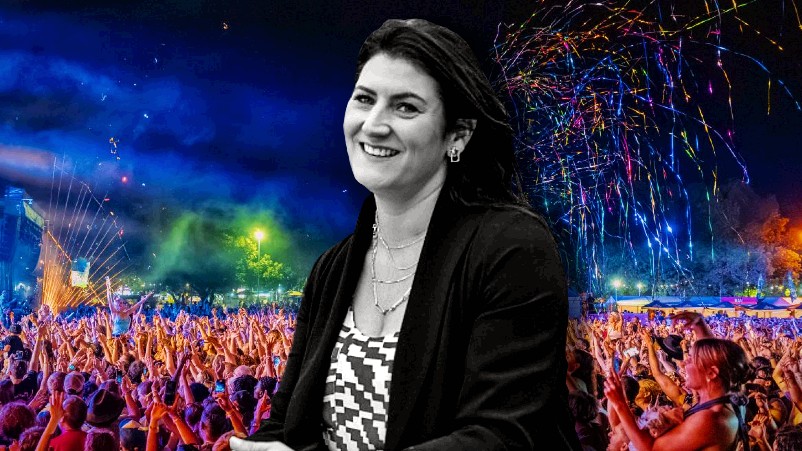
“Sanitising” the destination story to try and fit what data tells you visitors want is definitely not the way to meet the NT’s ambitious target of growing its visitor economy by 30 per cent to $3 billion by 2032, says CMO Staci Mellman. Instead, she’s looking to evolve the territory’s brand storytelling platform to build better awareness of the distinctive differences in experiences both domestic and international travellers are likely to encounter when they come to visit the top end and central Australia. And to do this, she’s recruiting the tourism body’s first director of global storytelling. Twelve months in after taking up the CMO reins and following the integration of the tourism body with major events, Mellman unpacks the NT’s latest visitor strategy, her integrated marketing team restructure, and the latest insights into traveller wants and needs in a crunching economy.
Reshaping how the NT tells stories about its distinctive offering to international and domestic travellers is so important to the territory’s CMO, Staci Mellman, that she’s recruiting her first director of global storytelling to oversee it.
Tourism and Events NT is restructuring its marketing team to build a dedicated storytelling function, bringing together PR, social and content under one team to gain more strategic focus on how it tells the stories of the NT through all channels and formats. In addition to this, Mellman has been on the hunt for an integrated marketing manager and integrated marketing executive to join the team she took over 12 months ago.
For Mellman, stories in the NT are remarkable and are ripe for the plucking. The new-look roles see focus across global and domestic markets, integrated campaigns, content, storytelling, major events and partnerships.
“So much of the value that needs to be communicated for the NT, and why people are attracted to this destination, is through the stories of what is happening here,” Mellman tells Mi3. “You can't just show this. It’s part of the biggest challenge we have: There's no one sunset; there's no one landscape; there’s nothing you can just take a picture of that gives people the real feeling about being here. So it requires a way to tell a story to really give the essence of this place, so people say, ‘I want that’.”
Pitching a new narrative for the NT is part of a hefty strategic shift for the destination. One of the triggers: The tourism bureau, Tourism NT, merged with its NT Major Events Company officially on 1 January, bringing tourism and major events together for the first time. Mellman’s appointment as CMO last October coincided with the announcement of the news, and she’s now leading global marketing, major events and screen tourism, covering brand, integrated marketing, digital, trade and partnerships.
It’s also been informed by the launch of the Northern Territory Visitor Economy Strategy 2032, and the ambition to grow the visitor economy by over 3 0 per cent to $3 billion and 17 million in the next six years. That represents annual growth of 4.2 per cent, higher than the projected growth rate of the NT economy (3.2 per cent to 2028-2029). According to the 2025 Tourism Research Australia data, NT visitation was up 17 per cent year-on-year to December 2025, with 1.2 million visitors, including 995,000 domestic and 255,000 international travellers, delivering $2.3bn in visitor economic impact.
The latest visitor strategy was co-designed with industry over a 12-month period and involved 350 participants. It lays out a roadmap to grow year-round visitation, strengthen connectivity, secure infrastructure investment, expand experiences, and elevate the Territory’s global perception.
Per these plans, the first horizon to 2028 is about building momentum across its five strategic priorities: Perception, experiences, people and workforce, infrastructure and investment, and access and connectivity. Horizon two then becomes a continuation phase, with further future action priorities. To help, NT has been working to build aviation links, and news of a direct flight from China is expected to open the door to greater international access.
Within these near-term strategies are intentions to refresh the Northern Territory brand and how it’s promoted, as well as using research and insights to better understand traveller journeys. Improving visitation access, growing the business events pipeline and leveraging major events and screen opportunities have additionally been earmarked as ways to grow further awareness of the Northern Territory.
To help, Tourism and Events NT went to tender for a new brand strategy and creative services partner line-up earlier this year to lead its Brand Refresh Project. It appointed Rick Barry to the project, and is now deep in the weeds of the work.
“Being part of a team is not just about my internal team. It's around building the extensions of my team, and selecting the right agency partners is really important to doing great work and doing great work together,” says Mellman. “We went through a very big procurement process, as government organisations do, to find the right agency partner. We selected them [Rick Barry] not only because of past experiences and their creative ability and pedigree, but mostly through the mentality of bringing the right people into the group and into this moment to do the best work. Their philosophical approach was right in line with where I wanted to take the team.”
The brand plan is about strengthening and evolving the tourism body’s ‘Different in Every Sense’ brand platform, which first launched in 2019, replacing the slogan, ‘Do the NT’. That last brand review also saw a broader shift to more human-led storytelling. Tourism NT’s creative agency is KWP+Partners, while its media agency is Atomic 212.
The group is now working through positioning, then into creative expression, with a consumer launch planned in Q1 2027. “We want to make sure we're there for people who are thinking about travel during our peak season, and that we have the opportunity to be top of mind,” Mellman says.
I also feel many destinations around the world are sanitising themselves for what they think that visitors want. I don't think the NT can do that because that wouldn't be true to what or who the NT is. So it's about finding out … Where we can own it.
Marketing the territory
Mellman’s no stranger to marketing destinations, with a wealth of experience in the tourism space. Her resume includes CMO of Brand USA for two years, and she also spent nearly 12 years with Visit Florida, working her way up from brand planner to CMO. In seeking out her latest CMO gig, Mellman had four things on the list: Be part of a team wanting to do great work that holds each other accountable; make an impact on the organisation; have a seat at the table in terms of driving the strategy; and take a role where creativity can thrive.
While the US-born marketer had been hoping to come back to Australia, the NT certainly wasn’t on the radar. But Mellman also points to renewed energy coming from the renewed NT Government, in place about six months prior to her joining, as another input into why she was keen to take on the challenge of putting NT on a bigger stage.
“The work the team had been doing was great, but I think there is more potential in terms of what NT offers the world,” comments Mellman. “I’ve consistently seen this team and the work punch above its weight, and it felt like it was the right time for a creative breakthrough. We were launching a visitor economy strategy, the merger with major events, creating a new organisation. I felt I could make an impact, that creativity is important and there is a desire to drive longer-term strategy.”
The ultimate destination is landing a holistic brand for the NT. “This is not a Tourism and Events NT brand. This is a destination NT brand, and really, the biggest point of success for me is when Territorians embrace it,” Mellman tells Mi3. “I recognise a lot of pressure – I’m an American who's new to the NT, trying to tell the story. That's why it's really important to have this larger contingent of people part of the process.”
And Mellman is all too aware of the major differences between marketing destinations like Florida and Australia’s NT.
“I don't think I appreciated or realised how much of a developing destination the NT is in a very first-world country,” she says. Constraints for travellers include the distance between points, access and the connectivity. While for investors who want to build, there's extra headwinds around infrastructure, water and electricity.
“But on balance, this place is so special. This is what I'm also seeing from the traveller side: Those who are willing to be brave, those who are willing to go the extra journey, know it pays off in the long run,” Mellman says. “That's what you hear from everybody who lives in the NT. The people who live here love it and wouldn't imagine any other place … There is like an essence and spirit in the NT. What also blew me away was just the kindness of people.”
Unlike Florida, which didn’t need help in terms of awareness and where Mellman’s work mainly focused on consideration and conversion piece, awareness building is very much the job at hand for the NT.
“People are not necessarily as clear about the value proposition, and that value proposition is intentionally shifting with what we are doing with the visitor economy strategy,” Mellman says. “We don't want to be just a one or two-dimensional destination known for Aboriginal culture and outdoor experiences. Those are very key to who we are, and we’re fully embracing them. We also just launched our first Dark Sky Sanctuary. We're the only Australian experience included in the best of travel for Lonely Planet for this year.
“For Central Australia, immersive art fishing is very big, and I don't think that's on the top of people's minds. So we have some work to do from a marketing perspective to showcase that. We are much more than just one or two quintessential experiences, which we know are drivers for visitation. There's so much more breadth of experiences that can happen in the NT. So we have to drive that awareness.”
Travel macro forces
There’s nuance to how NT approaches international versus domestic travellers in this too.
“With Uluru and Kakadu, people know those places, but what they don't know is that those places are part of the NT,” continues Mellman. “That's part of the brand challenge we have to solve for. We're well known for our icons, which is amazing. But there's so much more about the NT in terms of that spirit I was talking about. It's just a very different Aussie experience than what you might get in Queensland or New South Wales or even if you visit Melbourne, which is a lot of how people think about quintessential Australia.
“We have a marketing job to play to connect the dots for travellers.”
Domestically, Mellman points to its recent integrated campaign around the NT’s peak season between May and July, under the title ‘None of a Kind’, built on the ‘Different in Every Sense’ platform, reinforcing NT’s position in a category of its own. The campaign was also designed to respond to changing consumer behaviours that include travellers becoming more deliberate about where they holiday and increasingly seeking experiences that feel meaningful, memorable and worth the investment. It was equally a response to Australians looking for closer to home locations to travel versus overseas.
“With all the geopolitical uncertainty, we feel like a very far away place for many Aussies, but you don't need a passport; we're really close to home,” Mellman says. “I think distance is a constraint, but there's an opportunity for us to lean into that constraint, particularly when the world feels a lot less safe.”
What Mellman and the team also have to contend with is the growing crunch on wallets. She acknowledges the economic constraints on Aussies, with the cost-of-living playing into how they choose to travel – and where to. While Aussies are known for protecting spend in order to still have a holiday, Mellman notes the impact of the economy sees some potentially downgrading accommodation options, or staying one or two fewer nights in response to fewer dollars for travel.
“But what they don't want to do is shift from the experience,” Mellman argues. “Some people may create more space in their day, or do less experiences. We’ve seen that a bit in terms of the selections people are making from an experience perspective in slightly contracted stays. But the big lesson for us for during Covid is people believe travel is a fundamental right. That’s particularly the case for Aussies. I've heard this so many times, my friends talk about: We go abroad, we're travellers. We're an island, so if you want to see the world, you have to travel. That mentality is built-in through generations. But I think there's also a place for us to see Australia within that scope as well.”
Mellman further cites recent research diving into the value people associate with a travel experience they have for the same monetary value to make the point.
“I could spend $8000 on like a flop and drop destination. Or I'm going to take the same money, and I'm going to spend that on a more immersive drive journey. Which one do I feel I get more value out of? Over and over, it's the journey-based one, the immersive experience. Same money, but they get much more out of it,” she says.
It’s here Mellman again brings this back to storytelling. “That's an opportunity for us from a marketing standpoint. Not only in those event experiences. But when you come here, what is the quintessential NT experience going to be? You can go see an AFL game in lots of other places, but when you come to the NT for an AFL game, that's going to be a different kind of experience. And that's our opportunity,” she says.
“If we own those events and we can create the operations and experience on the ground, why wouldn't we make it as NT as we possibly could? And that should have come through the marketing. So connecting the brand work with our integrated marketing team, and the new roles we have, are about doing that.”
Which is why a chief storyteller is so important in the mix – regardless of background. “As long as you're thinking more broadly about how to tell stories through different formats,” Mellman says. “But the stories are going to be relatively universal … There are all these different ways you could tell those kinds of stories. You just have to have the right mindset to be able to put those pieces together.”
Mellman is also keen to encourage boldness in NT’s differences to other destinations as a way to cut through. “We've spent a lot of time promoting the difference. That difference and that distinctiveness needs to continue,” she says.
“I also feel many destinations around the world are sanitising themselves for what they think that visitors want. I don't think the NT can do that because that wouldn't be true to what or who the NT is. So it's about finding out … Where we can own it.”
