Every dog has its day: Cam Luby pursues incremental brand spend, market segmentation, trust - but no dog tropes - as Lyka secures another $67m
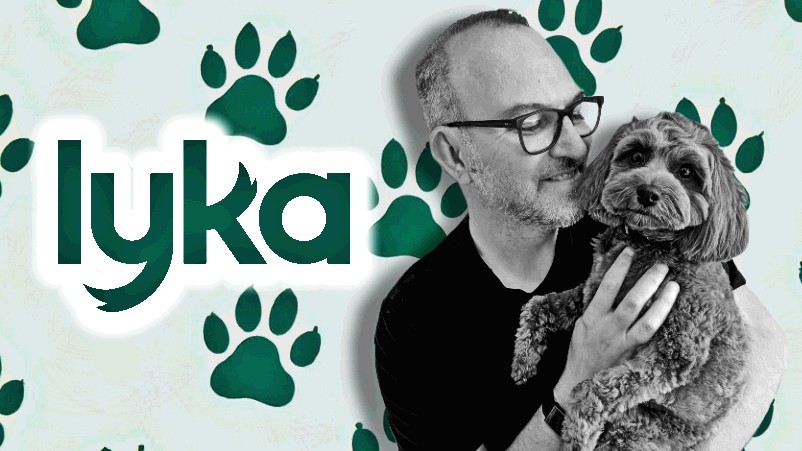
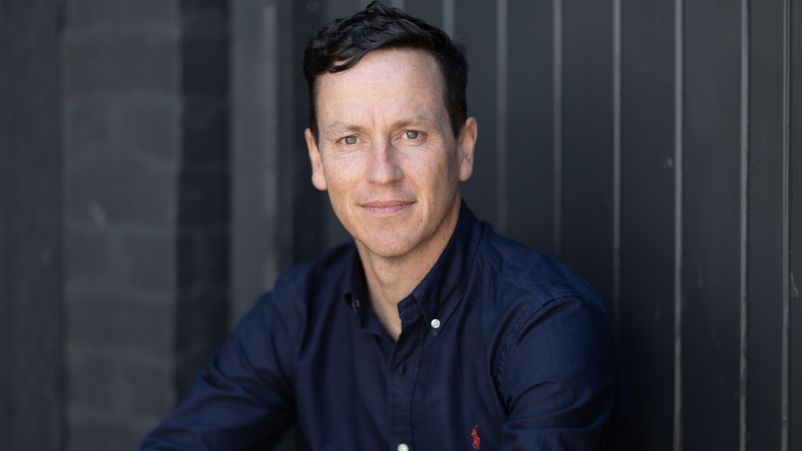
Cam Luby, CMO Lyka with pet dog, Sunny

Customer segmentation was a first priority, tipping incremental spend into brand to recalibrate a current a 90:10 performance | brand ratio, and trust are all musts for Cam Luby as he sets up as the inaugural CMO for Australian fresh pet food scale-up, Lyka. Flush with another $67m off the back of Series C funding announced this week, the company sees nothing but growth and greenfield in its near future, and Luby is firmly on for the ride. “There are certain things big marketers do take for granted that do need discussion and do need convincing here, and I'm actually quite comfortable with that,” Luby tells Mi3. “It pushes me not to just lean on the old, tired, traditional things you might do.” Here’s how this former Optus marketer is tackling a founder-led, scale-up growth opportunity.
What You Need to Know
- He’s six weeks in, and already Lyka’s new CMO, Cam Luby has begun the process of building new marketing and brand fundamentals as the Aussie organisation gears up for its next growth phase.
- The dollars are behind him: Lyka this week confirmed it’s secured $67m in Series C funding, led by New York VC Left Lane Capital (LGVP), following $55m raised in 2023 and $30m Series B funding in 2022. The capital will fuel new product lines, market expansion and go-to-market investment.
- Luby joined after four years at Optus, where he oversaw marketing across consumer and enterprise during a turbulent period marked by a cyberattack, network outages and regulatory penalties. Prior to this, he spent over nine years with Google. The combined experiences have given him a key focus on building and maintaining consumer trust as core to the brand proposition.
- There’s plenty of upside on brand opportunity in a performance-heavy model: Lyka’s marketing spend currently skews roughly 90:10 toward performance over brand, but Luby says the priority is to build brand investment – using incremental spend.
- But ‘dog marketing’ clichés are definitely out: The new CMO says the brand will avoid tired pet advertising tropes, instead sharpening Lyka’s core proposition – a winner in a market that’s ever-more health conscious – that fresh, real food improves dogs’ health and longevity.
- As a scale-up, Lyka lacks some traditional marketing infrastructure such as long-term consumer insight studies and formal segmentation, which Luby is now implementing to guide strategy. Per Luby: “We don't have the huge Nielsen study that goes back five years on market preferences and all those kind of things. You’re having to be immediately creative and resource orientated to make sure you're finding out these things the right way.”
In the Lyka office, there are dog beds in each meeting room. And the love of these furry friend customers is evident in every other part of the business too, from brand name to founders and now its new CMO, Cam Luby. Just don’t expect him to pull out those usual dog marketing tropes in the next brand campaign.
Luby is six weeks into the newly created gig at Lyka, after spending the last four years with Optus, most recently as head of marketing across both consumer and enterprise sectors.
And what a time to join the business. Lyka this week confirmed a fresh $67 million Series C funding round led by New York-based venture capital firm, LGVP, making it clear there are plenty of dollars and interest in this eight-year-old Australian scale-up. The latest investment injection comes on top of $55m raised in 2023, and $30m in series B funding the year before. The funds are being put towards new product lines and geographies – and clearly, go-to-market.
Lyka was established in 2018 by former Bain & Co consultant Anna Podolsky, in partnership with veterinarian Dr Matthew Muir, and is named after her border collie cross, who experienced illness at four years old. Recurring revenue now sits at about $200m, and it has more than 100,000 dogs on its platform, with fresh meals for dogs ranging in cost from just over $100 per month based on breed and diet. It’s also B Corp certified.
Luby comes into this wealth of opportunity after experiencing a tough 18 months prior to the switch at Optus, as Australia’s second-largest telco experienced a cyberattack, then multiple network breaches that led to the fatal Triple Zero outage last September. It was also fined $100m last September for predatory sales practices.
Despite the broader challenges, Luby was recognised for his and his team’s efforts as one of Australia’s Top Marketers at the CMO Awards in 2025. Last year, Luby also led an extensive agency review, announcing a new line-up of creative, media, B2B, and production partners following a process he believed was “respectful of agency time”. As a consequence, Accenture Song’s media unit secured its first blue-chip contract, Droga5 took on creative, and Apparent became Optus’ first dedicated B2B agency.
But even with this backdrop, taking up the new Lyka gig was prompted more by opportunity than what’s now ended up in the rearview mirror. The decision to join a digital-first scale-up isn’t so surprising either, given Luby’s tech and digital experiences. Prior to Optus, Luby spent over nine years with Google, lastly as marketing director of apps and platforms. He previously worked in communications strategy for agency, Goodby Silverstein & Partners in the US.
“As soon as we started having the discussion, it was one of the things I couldn’t stop thinking about,” he says. Being an actual customer helped: The Luby family has a one-year-old dog, Sunny, they are “besotted” with.
“Talking more with the founders about the mission of the company and how important it is to set a new standard of pet nutrition so that pets can live on into their 20s really struck a chord,” he says. “Especially coming from the world of tech and telco, the chance to work on something so emotionally powerful, where there's so much love, was really something that resonated with me. The more I spoke to the team, and the more I got to know the people here, the more I saw the tremendous potential.
“While it is a scale-up, they've created an incredible business; there's incredible infrastructure behind it. There's only opportunity going to the future, and marketing is going to be an incredible part of that story. The chance to be on board with something that's going to grow so significantly and be a part of that narrative is tremendously exciting for me and something I know I’ll look back on in my career as an absolute highlight.”
That’s the good. The ‘bad’ – although Luby doesn’t believe that’s the right word – is Lyka as a scale-up doesn’t always have the processes and capabilities at hand that a mature business would.
“There are certain things big marketers do take for granted that do need discussion and do need convincing here, and I'm actually quite comfortable with that,” Luby says. “It pushes me not to just lean on the old, tired, traditional things you might do. How are we going to do this in a different way? What is the opportunity to shape and create this thing? As opposed to just going into what might be a big foundational role, where a lot of those things are already well established. It's creating and shaping what I'm hoping will be a marketing team of the future, more so than the one that's already well established now.”
What that means is there aren’t those “fundamentals” to lean on either. Customer segmentation and longitudinal consumer insights, for instance. “We don't have the huge Nielsen study that goes back five years on market preferences and all those kinds of things. You’re having to be immediately creative and resource-oriented to make sure you're finding out these things the right way,” says Luby.
This journalist has heard plenty of examples over the years of senior marketers going in almost too early to organisations that haven’t yet solidified their pitch and position in the market or simply aren’t ready for the infrastructure and process required to make marketing sing. Luby agrees that can be an issue, but it’s not one for him at Lyka.
“I've landed at the absolute perfect time for a marketer of the scale I'm used to, because this is what the business is ready for. All the growth signals are there, all the opportunities there. It's wonderful to be a part of something where people are asking, how are we going to do this? Show us the right way to move forward.”
We don't have the huge Nielsen study that goes back five years on market preferences and all those kind of things. You’re having to be immediately creative and resource orientated to make sure you're finding out these things the right way.
The burden of digital-first: Performance versus brand, avoiding the troupes
Meanwhile, one of those common situations marketers coming into digital-first businesses do find themselves faced with is a heavy skew to performance over brand. Lyka has started finding its brand voice, releasing prominent out-of-home (OOH) campaigns, television commercials (TVCs), and gaining a mention on ABC’s advertising show 'Gruen'. Lyka has also received the Good Design Award for 'Communication' and 'Branding and Identity'.
Yet it’s still “closer to 90:10” spend skewed to performance over brand. “As you start to see some of those channels cap out, the question is, how do you diversify your channel mix? What is the right audience for us to be chasing? What's the message that's going to resonate the most? Then how do we differentiate ourselves in a market that tells a pretty tired old story about your best friend? There are a lot of dog marketing tropes that exist. It's really about breaking out of that,” Luby says.
“Certainly the ambition and the potential is to really demonstrate that brand is going to be an incredible growth driver here. That's the mission we're on right now.”
That growing brand spend is incremental too – and represents growth in the company, Luby adds. “It's not just spending more money on marketing, we’re growing the customer base and really demonstrating that brand is a growth driver. Now is the time to supercharge that.”
Trust and value exchange
Trust is another key part of this brand equation for Lyka. If there’s one thing Optus taught Luby about brand and customer trust, it’s that “trust goes down by the elevator, and up by the stairs”.
“One of the things we used to say when I was at Google is that the number one job is protect the brand. The brand is an incredibly valuable asset; make sure you're always doing the right thing by the customer and the right thing by the brand,” he continues. “Unfortunately, Optus is an example where we did let customers down, so we have to rebuild trust over time.
“This [pet care] is a category where trust is incredibly important. We are providing a product for a much-loved member of the family. Like a lot of marketing, I think with everything we do, trust is going to have to be paramount. Building trust and doing that by showing respect to the customer is going to be incredibly important.”
What’s more, Luby says the business has a very simple proposition: “When dogs eat real, fresh food, their health improves, and when their health improves, they have more energy, their poo is better, their code is shinier, they're happier, and they live longer lives. It's as simple as that.
“That proposition in the market, when articulated in growth marketing tactics, and when articulated in through more recent brand work, really resonates. So I think it's about sharpening that. Yes, obviously, there's complication in how the food is formulated, and the logistics, shipping and all that stuff – there is an incredible amount of infrastructure behind being able to deliver the simplicity that this business really does deliver for customers. But for me, it's about understanding and maximising that simplicity. It's not reflecting the complexity of how you actually do it out to our customers as well.”
One halo Lyka state Luby brings in here is that 96 per cent of all dog owners who switched to its products experience improved health outcomes.
“What matters more than improving the health outcome of a family member? When you hear a stat like that, and you know there's nothing but room to grow, that's just going to be such a positive, wonderful story to be able to write and tell. It means that people are going to feel wonderful things about this brand, and they should, because it's doing something really valuable for them.”
This [pet care] is a category where trust is incredibly important. We are providing a product for a much-loved member of the family. Like a lot of marketing, I think with everything we do trust is going to have to be paramount. Building trust, and doing that by showing respect to the customer is going to be incredibly important.
Team make-up and customer segments
To support its operations, Lyka has established autonomous factories in Sydney and Melbourne and developed a comprehensive software platform and marketing tech stack – the latter was also a surprise for Luby upon landing.
“Data is readily available; people are sharing it and oriented around the right things. They’re supportive of one another. This is not a startup vibe where it’s all scrappy and move fast, break it. This is a well thought out, structured organisation, and it will grow on the back of that foundation,” Luby comments.
Which turns the conversation to team make-up. “Good, strong intuition” is what Luby has seen so far. “This is not a come in, rebrand it and do all my own things job. It's a take a look at what has worked really well, then let's build on those things to go even faster,” he says.
“But there are some of those basic things we're able to put in place really quickly that have already been really helpful to the team. For example, doing a market segmentation and understanding where we've been successful and where we haven't been, then using that as fuel within the entire company to frame how we talk about the customer.”
Team-wise, Lyka does have an internal creative team that’s been behind a lot of that growth marketing work thus far, and Luby says it’s transitioned more towards brand marketing. He wants to grow that team, and is also reviewing how Lyka works with partners to make sure “we can live up to the potential of what the category presents”.
Founder-led businesses can present their own unique challenges, but Luby says Lyka “is not a business where the founders make all the calls from their chair”.
“I very much feel empowered to take this brand in the direction that it needs to go,” Luby continues. “But equally, it is a business with strong founders who have strong personalities, so it is a little bit of a mix of what's the vision that they have. What I then bring is what is right for the customer, who the customers are, and where the category is potentially going.
“One of the first things I said was, I think we need to have a better understanding of the customer here, so we can make more informed decisions. Straight away, the appetite across the whole business to understand that is huge. If this really was a top down, founder-led startup, that's not the kind of decisions it would make. That appetite to learn, and frankly, bring someone like me on, demonstrates a desire to grow and a desire to grow by understanding the market more.”
At the time of Luby’s appointment, Podolsky cited a real shift in how Australians think about dog nutrition, and he connects this to the wider health-conscious trend we’re seeing across consumers.
“We are reading more labels, understanding where food is sourced, so the jump that needs to be made for people to understand that's true for dogs as well, is not that big a jump,” Luby points out.
He also doesn’t believe the cost-of-living or higher price tag of a fresh food service like Lyka is a hugely onerous issue to overcome, either. “I wouldn't call this a luxurious product. This is a product that is really formulated for dogs. It's what they need,” he says.
“As dog ownership increases, we know the relationship that people have with their dogs is that they're more like children than they have ever been. This is a product that's really fundamental to their health. Those things together are what are really driving a lot of organic growth, then we're going to maximise that to market.”
Nevertheless, there were a few assumptions Luby has learnt quickly to move past. “When you do a segmentation exercise, you find out that in some places, you weren’t too far off, and in other places you're a little bit more surprised,” he says.
“I will tell you, I had made the assumption there was a group of people out there - let's just call them ‘It's just a dog segment’, who thought, don't worry about it, this food's not that important. Those people do not exist. Everyone out there who is a dog owner cares about their dog. They show it in different ways. But that shows the strength and potential of this particular category and this particular brand is those people don't exist. That was a big surprise for me. I think that's very much a generational thing.
“It also won't be surprising to you to know that there are a group of people who care about their health, who treat their dog like a family member, and don't view this product as a luxury. They view it as something that's an important part of being a responsible pet owner. When you pull all those things together, it shows you there is nothing but upside.”
Podolsky has been quoted previously saying 85 per cent of dog owners are still buying tinned dog food, meaning there’s a lot of greenfield for Lyka. Then there are the other pet categories to conquer – Podolsky, in her AFR Rich list profile, has indicated these are in her sights.
“Our sweet spot is not at all tapped,” Luby agrees. “Working in previous businesses, the way it usually works is you say, right, well, we're tapped out with these two segments. Where are we going to move to next? But this is the joy of being in a scale up means there's a monstrous amount of headroom to grow.”