‘The answer is no’: Amazon's Jassy dismisses immediate threat from outside AI shopping agents as Zuckerberg plots transaction fees, Google admits AI search monetisation gap
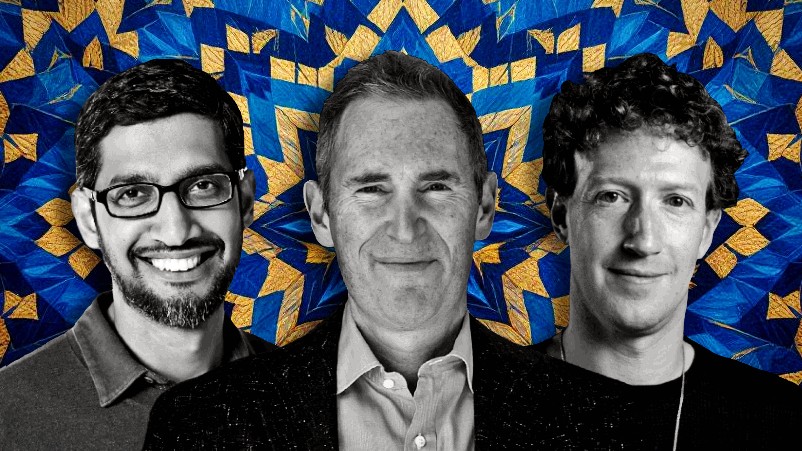
Sure, the world's biggest digital advertising machines are still printing money, but Meta, Alphabet, and Amazon are already squabbling over who gets to collect the next toll. As AI agents graduate from recommending products to buying them, Mark Zuckerberg wants a slice of the transaction, Google is figuring out how to keep the advertising gravy train running, and Amazon reckons shoppers have little reason to leave its empire. For marketers, the prospect is deliciously complicated: Three platforms that already command enormous advertising budgets are now jostling for control of the customer relationship itself.
What you need to know:
- Meta, Alphabet and Amazon collectively banked US$164.7 billion in Q3 advertising revenue, up 16 per cent year over year, adding US$22.7 billion to their combined quarterly haul.
- Search queries are growing at their fastest rate in five years, but Google acknowledges AI Mode currently generates less advertising revenue, creating a challenge as consumers embrace conversational search.
- Meta's Muse personal agent attracted more than 10 million sign-ups in six weeks, with shopping its most popular use case. Meta plans to charge businesses fees on transactions facilitated by its AI agents.
- Amazon CEO Andy Jassy says external AI shopping assistants are having no meaningful impact on Amazon's advertising business. Meanwhile, more than 400 million customers have used Amazon's own Alexa for Shopping assistant over 12 months.
- Meta, Google and Amazon are automating campaign planning, creative development, targeting and optimisation, potentially reshaping agency responsibilities and advertiser control.
- The three companies forecast combined 2026 capital expenditure of roughly US$550 billion to US$570 billion as they compete to control AI infrastructure, consumer discovery and the increasingly valuable journey from recommendation to purchase.
For most people, the product should be free, and we will build commerce tools so we get paid a fee based on the transactions that we help facilitate. We expect this will be paid for by businesses.
Meta, Alphabet, and Amazon are making a killing from AI-powered advertising, but their next big payday could come from agentic commerce, as the tech giants jostle to control who gets the sale, according to a review of their earnings call comments and their regulatory filings.
The digital advertising trilopoly collected $US164.7 billion in advertising revenue in the third quarter, even as their executives laid out competing plans to put artificial intelligence agents between brands and their customers.
The three companies increased their combined advertising sales 16 per cent from a year earlier, underscoring the strength of the businesses funding an increasingly expensive race to reshape search, shopping and digital media. Their October earnings calls also exposed the commercial uncertainty surrounding AI-driven discovery, including Google's acknowledgement that queries in its AI Mode currently generate less advertising revenue.
Meta led the growth, increasing advertising revenue 26 per cent to $63.1 billion. Alphabet's Google advertising business grew 11 per cent to $82 billion, while Amazon reported approximately $19.6 billion in advertising sales, an increase of about 11 per cent (12 per cent excluding foreign-exchange effects). Together, the companies added $22.7 billion in quarterly advertising revenue compared with the same period last year.
For Meta CEO, Mark Zuckerberg, the emerging opportunity extends well beyond improvements to Facebook and Instagram advertising. His company has launched Muse, a personal AI agent that it hopes will eventually connect consumers directly with businesses and take a share of the transactions it facilitates. More than 10 million people in the United States and Canada had set up Muse within roughly six weeks of its launch, Zuckerberg told analysts.
According to Zuckerberg, "Growth continues to be strong and we have been #1 in the App Store almost every day. Engagement and retention are also off to a strong start. About 25 per cent of people who have set up Muse use it on any given day.' For our earliest adopters, the longer that they use Muse, the better that retention seems to get. To put this in perspective, this is more than twice the level that Threads started at or where we believe that other AI apps started at as well."
About a quarter of those users were active on a typical day. Shopping was the most common activity, with average purchase values exceeding $200 among users engaging in it.
"Plaid [and ecommerce connectivity business] told us they hadn't seen activity like they're seeing with their connector on any other service before," said Zuckerberg. "And in the first week we had to work with Stripe to raise credit limits since the volumes were above what any of us expected."
As to who foots the bill for the infrastructure in the agentic age, Zuckerberg was clear. "For most people, the product should be free, and we will build commerce tools so we get paid a fee based on the transactions that we help facilitate," he said. "We expect this will be paid for by businesses."
Meta also envisages subscriptions for consumers seeking more advanced AI and for businesses using agents to help operate their companies. Its proposed network would allow personal agents to communicate with agents representing merchants, potentially changing the way brands reach shoppers.
Lower monetisation
Google, meanwhile, is adding AI to the search engine that remains central to its advertising business. Alphabet CEO, Sundar Pichai told investors that AI was encouraging people to search more often and in more complex ways.
"Our AI investments are driving increased usage and overall query growth, including commercial queries," Pichai said. "In fact, our year-over-year query growth rate is the highest it's been in the last five years."
Search advertising revenue rose 12 per cent to $63.35 billion. Google said searches in AI Mode were three times longer on average than conventional queries, while one in five involved voice, images or documents.
But growing usage has created a near-term problem for advertising yields. Asked why Search revenue growth had slowed despite accelerating query activity, Google chief business officer, Philipp Schindler acknowledged that AI Mode was a factor.
"To the next part of your question, it's worth noting that the strong growth in AI Mode queries had an impact because of the lower monetisation we were seeing in AI Mode," Schindler said.
He identified foreign exchange as the largest contributor to the slowdown compared with the previous quarter. Google is expanding advertisements within AI Overviews and AI Mode, including international placements and multi-turn ads in the United States. It has also introduced shopping capabilities intended to let consumers compare products and check out through AI-assisted experiences.
Amazon: External versus internal debate
Amazon CEO, Andy Jassy offered a contrasting assessment of the immediate threat from independent shopping agents, arguing that external services had yet to provide a compelling alternative to shopping directly with retailers.
"The natural question is whether agentic shopping from external horizontal agents is meaningfully impacting Amazon Ads. The answer is no. Few customers are doing much shopping this way yet, as the experience is still not great nor more convenient than coming to a retailer directly to research or one-click order there," Jassy said.
The firm, however, is investing heavily in its own assistant. Jassy said more than 400 million customers had used Alexa for Shopping in the preceding 12 months, with interactions up 570 per cent. US customers using the service spent 50 per cent more per order than those who did not, but it's important to note that's a comparison that does not establish the assistant caused the higher spending.
Amazon's advertising growth slowed from 26 per cent on a constant-currency basis in the previous quarter to 12 per cent in the third quarter. Jassy cited timing effects, particularly Prime Day moving into the second quarter, and forecast a return to growth in the high teens in the fourth quarter.
The Big Three are also turning AI loose on the advertising process itself. Meta said nearly 10 million advertisers used its generative AI creative tools during the quarter. Google reported that Gemini helped advertisers produce more than 1.5 billion campaign assets, while Amazon introduced an AI-powered system that can plan and optimise campaigns spanning sponsored listings, display, video and streaming television.
And all are backing their ambitions with substantial infrastructure spending. Meta forecast $135 billion to $145 billion in 2026 capital expenditure, Alphabet $195 billion to $205 billion, and Amazon about $220 billion, although their definitions of spending differ.
Their strategies now point toward a contest over who controls product recommendations, advertising opportunities and the eventual sale. Zuckerberg wants transactions flowing through a network of personal and business agents. Google is building advertising and checkout into AI search. Jassy is betting customers will continue to value the convenience of Amazon's established shopping and payment system.