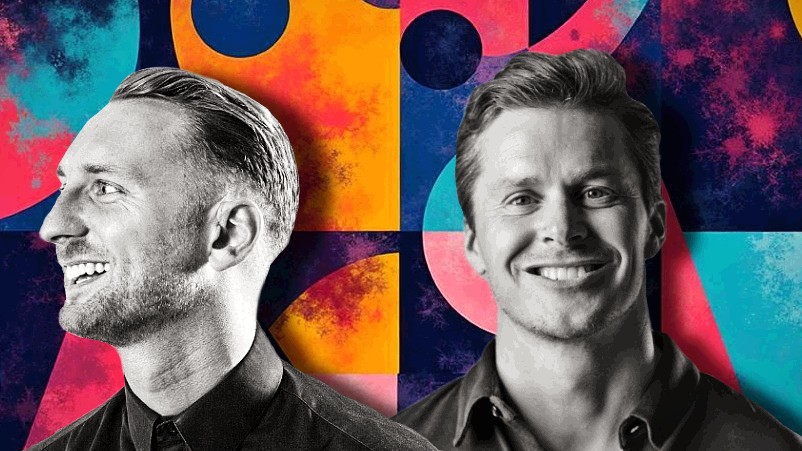
Marketing moves from choreography to improvisation with rigid planning cycles eclipsed by dynamic systems that learn, adapt and respond: Iterable chiefs
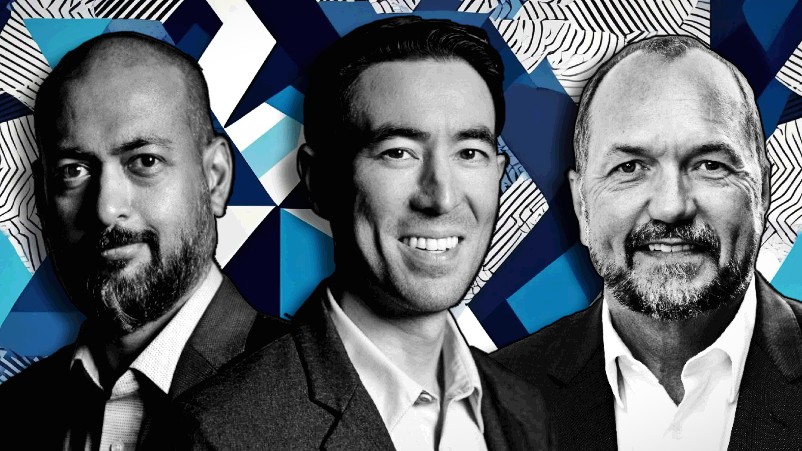
The chiefs: CTO Samya Dassarma, founder Andrew Boni and CEO Sam Allen
In a world where data and AI allow marketers to speak to a segment of one, the very idea of a “campaign”, fixed in time, planned in quarters, blasted in bulk, sounds anachronistic, at least to a growing segment of the martech industry. And it's certainly the view expressed by Iterable’s leadership across a series of interviews with Mi3 between April and July. The founder Andrew Boni, CEO Sam Allen, and CTO Samya DasSarma argue that marketing is being fundamentally restructured by machine-driven, real-time interventions that respond to individual behaviour, not media calendars. Campaigns are being replaced by systems that are dynamic, self-optimising, always-on. But while AI challenges traditional marketing architecture, it’s also exposing a more fundamental bottleneck: trust. Boards are demanding AI strategies. Tech teams are rolling them out. But consumers, and even marketers themselves, are still catching up. . For CMOs, it means moving from episodic campaigns to perpetual orchestration. For agencies, it means confronting outcome-based pricing and the automation of creative workflows. And for creatives? The machines are now absorbing brand guidelines, generating assets, and testing performance at scale. The craft is still critical, but it's no longer immune. Marketing, in short, is hitting its algorithmic moment.
What you need to know
-
AI is dissolving traditional campaigns, and Iterable’s leadership argues that the classic, calendar-driven marketing campaign is dying, replaced by real-time, AI-driven micro-interventions tuned to individual behaviour and context.
-
CMOs must rewire for ‘always-on’ systems. That means transitioning from episodic campaigns to perpetual orchestration challenges the structures of brands, agencies and media players alike, many of which are still built around quarterly rhythms.
-
Trust becomes the limiting factor. With boards demanding AI strategies, Iterable’s execs warn that speed must be balanced by transparency. Trust, not tech, is now the scarcest commodity.
-
Orchestration replaces point solutions: Iterable says its AI engine, Nova, promises to align marketing efforts with broader business goals, optimising actions across channels to deliver outcomes like conversions or product sales.
-
Creative roles are under pressure, they warn. Agencies and creatives will need to embrace AI tools that can absorb brand guidelines, generate creative, and test performance at scale, or risk being sidelined.
-
Outcome-based pricing looms: The future may see marketing platforms charging per result (like conversions), not per message sent, potentially upending media and agency compensation models.
-
Marketing faces its algorithmic moment: Just as algorithmic systems reshaped finance and logistics, AI is set to remake marketing, from calendar-based coordination to continuous, personalised orchestration.
-
The winners will blend tech with craft and Success will favour those who integrate AI’s speed and precision without sacrificing creativity, brand voice or consumer trust.
If you’re sending out a message that’s bespoke to one person, can you really call it a campaign?
Marketers once worshipped the calendar. Campaigns marched to quarters and seasons; the funnel was liturgy. Iterable’s chiefs say that era is elapsing. AI-driven systems, they argue, will dissolve the set-piece campaign into something mutable and continuous, marketing as an always-on learning machine rather than a timetable.
Iterable bills itself as a customer engagement engine built for the omnichannel age, one that stitches together email, SMS, push and in-app into one programmable fabric, so marketers can design, automate and continuously optimise campaigns at scale, without watching the seams split.
To praise, and to bury
Andrew Boni, Iterable’s founder, sometimes sounds like a man scripting a eulogy: “The traditional campaign is very rigid." It doesn’t really meet customers where they are, he tells Mi3. Campaigns, Boni explains, were efficient in the way assembly lines are efficient: one message, stamped out a million times, dispatched to audiences defined by blunt demographics. Even as segmentation and cohort models became more sophisticated, the rhythm stayed episodic: plan, build, blast, repeat.
But now, as data analytics has become more sophisticated, and with the rise of generative and agentic AI, those old heuristics are breaking down. “If you’re sending out a message that’s bespoke to one person, can you really call it a campaign?” The question is rhetorical but the implication is clear. Marketing becomes less about choreography, when to drop the next piece of creative, how to sequence a launch, and more about improvisation. It's marketing as jazz, it demands responsiveness, nuance, and constant attunement to the moment.
For executives schooled in media planning and agency retainers, this creates both opportunity and turmoil. Messages tuned precisely to customer preferences should, in theory, eliminate waste and increase returns. But organisations built around the campaign calendar, complete with creative briefings, production schedules, and quarterly sign-offs, must rewire for continuous operation. Agencies, accustomed to selling big ideas in 30-second spots or seasonal activations, must justify their value when the system itself generates thousands of micro-variations of creative.
Media companies, long adept at selling slots in linear schedules, must adapt to an environment where timing is personalised to the nanosecond. In that world, the “primetime slot” may become a relic. The consumer, not the broadcaster, decides when the message lands.
The obituary for campaigns
The obituary for the marketing campaign has been written many times. But the corpse refuses to listen, it keeps staggering back, held aloft by planners, agencies and software vendors who find comfort in its familiar cadence: brief, segment, push, measure, repeat.
But also, importantly, because it works.
That put the onus back on people like Sam Allen, Iterable's newly minted chief executive, to more precisely make the case for change.
Allen argues that Iterable's vision is right, not because marketers have grown tired of campaigns, but because AI stitched deep into business processes makes the whole exercise look like a lumbering ritual from a slower age.
“If that’s what you were doing, you are going to get left behind,” Allen says. The firms that embrace “marketing moments that matter” will “make you feel like you’re the only customer that company has”.
He illustrates the shift with a simple anecdote from Pete’s Coffee, his American café of choice. Each afternoon the Pete's app prompts him with a gentle nudge: a discount on the maple scone he habitually orders. Never a tea, never a lemon cake. The system has learnt his rhythm. The message is neither campaign nor blast but a micro-intervention where AI agents anticipate desire and encourage loyalty.
In aggregate, these micro-interventions describe the chimeric new face of marketing: mutable, continuous, learning from each click and swipe, updating strategy in near real time. The role of the marketer, once to launch discrete campaigns, shifts toward the orchestration of perpetual systems.
Such approaches are not without risk, as brands have learned in recent years, to their discomfort. Forrester, in its latest round of research into the CX sector found that in their rush to AI-driven efficiency, many firms automated low-touch experiences, stripping out emotionally resonant human interactions. CX scores retreated. It's an adjacent discipline to the kind of marketing activity Boni and his colleagues are agentifying, and the finding is not directly at odds with what firms like Iterable are saying, but it's a cautionary note about not allowing automation to overwhelm emotional connection.
Forrester’s Martin Gill says “trust and emotion are the keys,” with emotion most strongly linked to outcomes like retention, advocacy and customer enrichment. Gill's contention was supported by ad effectiveness research by James Hurman, which analysed 1.7 million online shoppers from multiple ANZ ecommerce players. That study, commissioned by Iterable's competitor Klaviyo, found emotion and CX were indeed core competitive advantages in those cases where the experience did indeed trigger a positive emotional response.
Brands like Australia Post are already heeding to warning. The organisation captured a 30 per cent efficiency by automating processes around lower funnel creative, freeing up marketing team members to work on higher value tasks, and freeing up cash to help their agency, BRX, provide additional services.
How many of you [are] getting pressured by your board… to have an AI strategy? 100% hands raised. How many know what to actually do? Almost no hands raised
If speed is the first axis of this new order, trust is the second. Allen notes the pressure coursing through executive suites. “How many of you [are] getting pressured by your board… to have an AI strategy? 100% hands raised. How many know what to actually do? Almost no hands raised”.
Boards demand urgency, but haste collides with consumer trust, regulatory scrutiny, and reputational risk. Allen argues for elevating what he calls the “trust argument”, making clear that data will be used responsibly, auditable, and in service of better experiences. Trust is not a “nice to have,” but the scarce currency that determines whether personalised interventions feel like service or surveillance.
From point fixes to orchestration
Until recently, AI in marketing was a scatter of point solutions. Send-time optimisation ensured emails arrived when recipients were most receptive. Frequency controls stopped brands from badgering prospects into unsubscribing. Next-best-action engines nudged customers toward offers. Useful, yes, but piecemeal.
DasSarma, Iterable’s chief technology officer, sees the next phase as orchestration. “What Nova (Iterable's agentic offering) is doing is… talking about how to think about higher-level goals, and then it can use the agentic framework… to solve for a higher-level objective”. The metaphor is less dashboard of knobs, more autopilot for commercial outcomes. A marketer might state the objective for instance, "boost conversion by ten per cent, migrate trial users into paying ones, or sell 4,000 pairs of shoes by Saturday," and allow the platform to orchestrate the means.
The path is not frictionless. DasSarma identifies three preconditions. First is data: without clean, structured, accessible datasets, AI agents are blind. Second is clarity over the human-machine divide: executives must decide what tasks they will own and what they will cede. Third is trust. No CMO will risk a million-dollar campaign on a black-box suggestion. Instead, adoption will come in increments: test an AI-driven variant on ten per cent of the audience, measure the lift, then expand. Trust, in other words, is earned iteratively.
Knowledge as fuel
Data alone is insufficient. Knowledge, tacit insights buried in quarterly business reviews, brand bibles, or simply in the heads of experienced staff, matters just as much. With the rise of language models, that barrier is falling. A CMO could feed a 40-page brand guideline into an AI system and ask it to rate and rewrite draft campaigns against house style. Human wisdom, once trapped in slides and memory, becomes consumable fuel.
This rebalancing challenges the agency world too. Creative directors who believe their craft immune from automation may find themselves joined, if not replaced, by machines that can generate ideas and test them against the brand’s own canon. Agencies that integrate such tools intentionally will flourish. Those that sneer may see clients drift.
Even pricing is up for revision. Today, firms like Iterable charge by the number of profiles stored or messages sent. Tomorrow, outcome-based pricing may beckon: pay per conversion, or per shoe sold. DasSarma is cautious, seeing value-based frameworks as the north star but declining to predict the route. For CMOs and procurement chiefs, the shift could be profound. Paying for results rather than impressions would align incentives neatly, while upending agency compensation structures.
Parallels and perils
The parallels with other industries are instructive. In finance, algorithmic trading supplanted human floor traders; in logistics, dynamic routing reshaped supply chains. Marketing now stands on the brink of a similar transformation. What was once episodic becomes perpetual. What was once managed through plans and calendars becomes mutable, shifting in response to every click, swipe, or purchase.
Yet dangers abound. Marketing, always a blend of art and science, risks tipping too far toward the latter. Efficiency is seductive; creativity harder to measure. Consumers may benefit from reduced noise, but the industry must ask whether efficiency is the same as effectiveness.
What endures
The elapsed century has offered marketers four revolutions: the web, the cloud, the smartphone, and now artificial intelligence, a convulsion both familiar and alien. Unlike past shifts, today’s upheaval does not merely graft a new channel onto the old order. It reconfigures the order itself.
Boni, Allen and DasSarma differ in emphasis but converge on one point: the campaign, as marketers knew it, is dissolving. In its place comes orchestration, improvisation, and systems stewardship. For CMOs, agency heads and media executives, the task is to walk the hardest path, embracing AI’s speed while defending trust, creativity and human judgement.
The winners will be those who blend machine efficiency with human craft. Those who cling to campaigns may comfort themselves with familiar structures but risk irrelevance. Those who leap headlong into automation may discover efficiency without soul. The middle path, adopting learning systems while preserving brand integrity, will prove hardest to walk, and most rewarding for those who succeed.