Avoiding the efficiency trap: How marketing shifts from precision to prediction
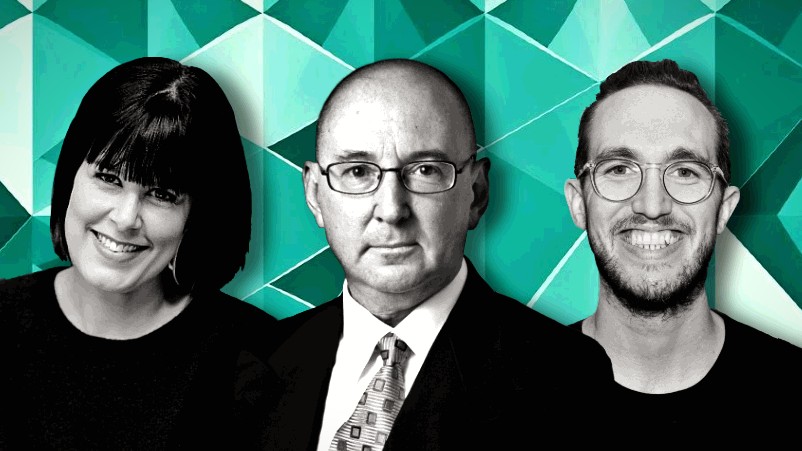
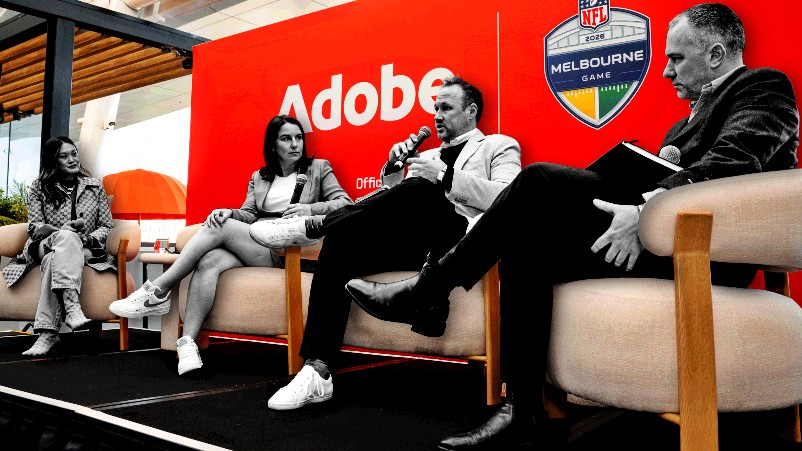
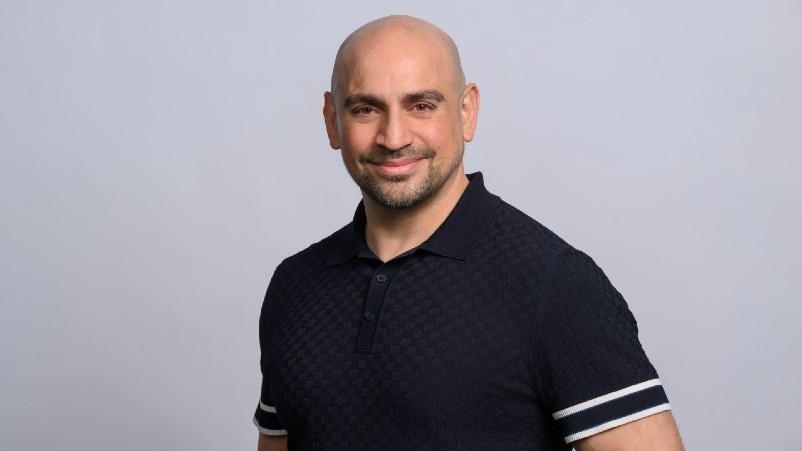
From left: David Jones' Melissa Polglase, The Right Customer's Ross Honeywill and OMD's Rob Frost
Marketing teams have become vastly better at optimising campaigns and communications through ever-more precise data and measurement tools. But for the likes of Les Binet, Mark Ritson and James Hurman, such precision puts brands in danger of losing sight of how we generate future demand. How we identify which customers are worth winning longer term is a key piece of the value intelligence puzzle, says social and behavioural scientist Ross Honeywill – and he’s pitching his 5.5m new economic order (NEO) consumers as the predictive bellwether for early adoption as well as less price-sensitive customer mindsets. For David Jones’s GM of marketing and retail media, Melissa Polglase, escaping a short-term, channel-led view is a tough ask in an economic climate where growth is hard to come by. But when you’re tenacious enough to do it, it pays off, she agrees. For example, focusing on a more affluent customer who identifies with experiences and quality was a critical step in designing the retailer’s customer loyalty program – and such care has paid dividends, including a +40 per cent better transaction value than non-member shoppers. Meanwhile, while he doesn’t want to see us narrowly targeting brand building anytime too soon, Omnicom’s chief strategist, Rob Frost, does believe ‘brand brains’ driven by customer intelligence could just help us improve the odds of predicting business outcomes better than we ever have done before.
What you need to know:
- Ever-more granular measurement and ROI optimisation risks trapping marketers in short-term efficiency and optimisation precision at the expense of future demand and growth, a trio of industry leaders from David Jones, Omnicom and The Right Customer agree.
- For David Jones’ Melissa Polglase, marketers need to put customer strategy ahead of channel optimisation – balancing immediate performance with a view of who the business needs to win next. And it’s a tough ask, she admits, given the current retail climate.
- Prediction, not just measurement, has to be the goal, argues social scientist and founder of The Right Customer, Ross Honeywill. While tools such as Marketing Mix Modelling are powerful for explaining past performance, marketers also need complementary intelligence to predict where customer value is heading.
- His pitch is a predictive lens: Australia’s 5.5m+ ‘next economic order’ consumers (NEOs), which he’s spent years identifying through psychographic modelling around value, influence, curiosity, advocacy and future demand. Their behaviours signal what may move into the mainstream next, he says.
- Appealing to premium customers was critical in David Jones’ loyalty design, and it’s now paying off. In its first-year, the loyalty program has attracted 650,000 customers, with members generating around 40 per cent higher transaction value than non-members.
- A critical piece of this was elevating experience over price-led promotions. Polglase says David Jones designed its loyalty proposition around status, exclusive access and “wow” moments to build emotional connection and longer-term lifetime value rather than relying solely on points and price incentives.
- Over at Omnicom, chief strategist Rob Frost says focus has turned to building a “brand brain”, which combines customer intelligence, historical campaign data and real-time signals to create more informed briefs and improve the odds of predicting future business outcomes.
- Yet even with this, Frost cautions against excessive targeting, particularly in the top of the funnel, arguing distinctive brands still need to reach broad audiences. Where he sees predictive segmentation offering greater potential is in the mid- and lower-funnel.
- For Polglase, the emerging model is “two-speed” marketing: The challenge is to keep delivering weekly and quarterly results while simultaneously focusing on which customers, behaviours and cultural shifts will drive the next wave of growth.
- Tune into the full podcast here.
Have modern marketers been pursuing precision and ROI to the point where they’ve optimised and measured themselves into oblivion?
That’s a key question that lies at the heart of the latest Mi3 podcast episode. And the second question sitting immediately alongside it, is this: If modern measurement tools are telling us what worked in the past, how do we find the complementary intelligence that’ll help us to predict the customers and trends that might drive effective strategies for future growth?
There’s no doubt the rise of digital media and performance marketing has brought marketing teams extraordinary advances in accountability. We’ve gained unprecedented visibility into customer behaviour, conversion rates and media performance, we can identify which channels worked, which segments are responding and which investments are generating returns.
The downside, as marketing effectiveness godfather Les Binet brought home at Google Marketing Live earlier this year, is that it’s been leading the marketing and media industry into an efficiency trap. Binet’s argument: We’ve ended up with a planning mindset that rewards precision but often neglects scale.
What we need to be doing instead, Binet and others such as James Hurman and Mark Ritson are urging, is this: Growing brand and creating future demand. And to do that, we need to get better at understanding which customers are worth winning next.
It really comes down to putting customer strategy ahead of channel optimisation and having the leadership in place to be bold, and to be able to continue driving short-term results while asking long-term questions.
From channel to customer mindset
Given the challenging economic situation many are facing, the imperative to find net new sources of growth is palpable. Yet for so many, the focus is so short-term, they’re struggling to keep their eyes on any medium term horizon. The optimisation trap is real.
“I think in retail, particularly, you're really exposed because you've got daily, weekly, hourly results coming through,” admits David Jones GM marketing and retail media, Melissa Polglase. “The digital world has allowed us to track ROAS conversion at a really microscopic level, and that can be quite addictive, particularly in a very choiceful economy now, where customers are really being quite prudent in how they’re spending.”
What’s more, platforms are great at “driving an outcome to an audience within a platform”, continues Polglase. “In marketing, it’s not just reporting on those metrics and getting sucked down that hole, but remaining true to your customer strategy, having that balance and having that voice in a room where often it's just about how do we replicate last year – it’s the same week, we did X, Y, Z and got this result, so let's just do that again.”
Going bigger than that firstly means staying true to the strategy. But it also means adopting a more customer-oriented mindset, says Polglase. “Rather than asking if that audience is working or not working, and optimising within that, what choices are we making for the future customer that might not actually be picked up in that cohort?” she asks.
For Polglase, getting to this point takes bravery, as well as a commitment to being the custodian of the customer from a marketing standpoint. “When there's parts of the business that want to be really product focused and drive that, there has to be a balance, of course,” she says.
“But I do think that it's art and science: The artfulness of understanding what's next, understanding your demographic modelling, your psychographic modelling, and thinking about that.
“And it really comes down to putting customer strategy ahead of channel optimisation and having the leadership in place to be bold, and to be able to continue driving short-term results while asking long-term questions,” adds Polglase.
OMD chief strategy officer, Rob Frost, agrees there was a turning point with digitisation that’s tipped the scales too far into optimisation over outcomes.
“It was so much easier to go and put a metric on the desk for someone to send that out to a CFO, CEO, or even a board, and then that reliance on that data started to become something that everyone expected,” he says. “But I think the two things that have carried on from there quite drastically for us: First of all, we got into a point where we started to choose that as a substitute for business outcomes.
“What we were doing is taking any metrics we could get and saying this was a proxy for something else that happened; I know I was guilty of it back then … But I think at the same time, what we started to do is apply those metrics to any piece of activity beyond direct response as well. So we started thinking, how can we do this for our brand? Then we fell into this trap of short terms.”
Frost says he “doesn’t ever see us getting out of being able to track that long and short term through econometric modelling, or through what we’re doing from in-channel reporting”. “It’s just the dynamics of how we use that to report on business outcomes will hopefully change and get better.”
For social scientist and founder of The Right Customer, Ross Honeywill, advancements in marketing measurement, including the democratisation of Market Mix Modelling (MMMs), have brought ever-greater levels of precision into being.
“We’re in a very rapidly evolving consumer landscape, and what’s happened with measurement in the marketing world in this landscape is MMM has become the go-to model for measuring and analysing past performance,” he says. “I think one of the problems I have to talk about what's happening and what's changing and what's coming is that it's a devotion, if you like, to measurement precision. What that completely misses is the whole prediction piece.
“We've long heard past results are poor determinants of future performance, and I think that's really true for MMM as well. Now, I'm not bagging MMMs, so let me get that out of the way. I think it's a really, really important, powerful and necessary metric. Particularly with CFOs, who want to know where the money is going, how it's being spent, what kind of results are we getting from it, and where it's doing best. As Mark Ritson wrote recently, he's even come to the belief that it actually helps a little bit into the future to take some of the things that worked.
“But what we need is a model and a mechanism – a mechanism is a really important word in this – that gives some sense of prediction about where value is heading, not where value has been.”
We’re in a very rapidly evolving consumer landscape, and what’s happened with measurement in the marketing world in this landscape is that MMM has become the go-to model for measuring and analysing past performance. I think one of the problems I have to talk about what's happening and what's changing and what's coming is that's a devotion, if you like, to measurement precision. What that completely misses is the whole prediction piece.
Customer intelligence lens
Honeywill’s answer to this is to up the ante on customer value intelligence. And the proposition he’s spent years building out: NEOs, or ‘new economic order’ consumers, a set of 5.5 million+ high value consumers identified through psychographic modelling based on where value, influence, curiosity, advocacy and future demand are concentrated. This population classification has been employed by Roy Morgan for many years to identify a specific group of consumers whose behaviour and preferences can predict where the rest of the market is heading.
Importantly, NEOs defy the logic that consumers are driven purely by price, and instead represent consumers who choose what matters to them, explains Honeywill. Unlike traditional consumers, they’re also socially progressive, independent minded and curious about what comes next – and importantly, “are more ready to spend and spend more frequently and pay more for a difference they believe in”.
Even in today’s downturn, NEOs remain persistent. “I used to call them constant consumers once, because they read and chomped and drank their way through two recessions I’ve seen so far,” Honeywill comments.
“But importantly, as they’re doing it, they make their choices for a wider market possible. Think about the iPhone released in 2007: For the first three or four years, the Apple iPhone was snapped up and loved by NEOs. Within less than a decade, it had become one of the widest-selling products in the world. This is where the predictive mechanism in practice comes in.”
What’s also critical here, per Honeywill, is that people don't switch mindset lanes. “While the mindset itself endures, it's important to say that its expression … keeps changing. What earns their trust, what feels desirable, and what they expect from a business does not stand still. Just when a business believes they've got them nailed, NEOs have already moved on,” he says.
“So how can it be new? It's because it keeps moving, and that makes the NEO a lens on emerging demand, not a portrait to hang on the wall.”
What we're looking at is how to not just look at the different cohorts or audiences in play, or even their different behaviours or attitudes towards a brand or a product, but to start to build that within a brand brain. This would allow us to pull in real-time signals and understand not just what's happened previously in all of your campaigns through your modelling, results and metrics, but to start to get an idea of how those real-time signals are starting to impact what happens in the lives of consumers or within your categories.
Loyalty as identity
Polglase came across the NEO approach and Honeywill before joining David Jones. The retailer hadn’t specifically employed the NEO framework – Mosaic categorisation is what’s typically used for customer segmentation – but it’s clear it overindexes on these consumers. Many of the attributes and attitudes exhibited by NEOs have also informed how it’s built out its loyalty program. Polglase explains first understanding who those potential premium retail customers are, then designing its first loyalty offering around them, has proven to be particularly fruitful for the retailer.
In its first year, David Jones has attracted 650,000 loyalty customers, now accounting for 61 per cent of total sales. Importantly, members spend about 40 per cent more than non-members, while Qantas point earners – its tentpole loyalty partner – spend about 30 per cent more than standard David Jones points earners.
From the grandeur of the runway launch event, to selecting Qantas as a partner, member-only masterclasses and exclusive access to ‘trunk shows’ to view the very latest merchandise collections, David Jones’ loyalty program is developed around winning over consumers who are not only more affluent, but who identify with the offers and positioning the loyalty program exudes, says Polglase.
“We are a premium department store, so there’s that affluence, but it’s also around those wow moments, falling in love and doing something first because it’s interesting to me – it’s not just a typical department store doing price product, it’s standing for something more and aligning with other brands that appeal to that similar cohort,” she explains. “That program was designed really beautifully around that premise. Yes, it's a broad program, and we'd love everyone to join. But as we know, the next economic order goes first, and the rest follow.”
In developing and building out the program, what David Jones has sought to do is add that value to drive longer-term customer demand. “The program isn't just points and rewards and discounts, it’s experiences, plus big earned media moments that allow us to show up in places that that customer will see as … giving me a reason to pay attention,” Polglase says. “It’s clearly that status and emotive connection we want to make with those customers long term to build lifetime value – that is one of our goals.”
Reporting internally clearly has to follow suit. As well as metrics such as ROAS, Polglase says the retailer has broadened its approach to look at customers who are new to the brand, where that customer is coming from, and other metrics that speak to customer lifetime value.
“There are definitely the short-term, week-to-week measures of the tag rate and what proportion of spend came from that base, but then we’re looking at the tiers and what is the frequency of purchase across the year, where the ATV [average transaction value] sits on a member versus a non-member, and really helping the business to understand that even when performance might not be where you want it to be top line, what is being driven by something like that,” she says. “Recognising the customer lifetime value is a really important part of sustained success – both short-term success, but also into the future.”
Segments versus mindsets
At Omnicom, consumer segments are built into its Acxiom end-to-end audience ID solution and leveraged to tailor communications and campaign work, although Frost is quick to warn against “oversegmenting” for the sake of it.
“I still have some hesitation to do it in branded comms,” Frost says. “If we know that speaks to 95 per cent of your out-of-market customer base at any point, we should be thinking about building up that distinctive brand for the long term, however possible. But there seem to be really interesting use cases for any segmentation, especially when we start to look at that predictive element of how we do that in the mid and lower funnel.”
One of the things the Holdco has been looking at is how to not just look at the different cohorts or audiences in play, or even their different behaviours or attitudes towards a brand or a product, but start to build that within what Frost dubbed “a brand brain”.
“This would allow us to pull in real-time signals and understand not just what's happened previously in all of your campaigns through your modelling, results and metrics, but start to get an idea of how those real-time signals are starting to impact what happens in the lives of consumers or within your categories,” he says.
“What we're starting work on now is ways to utilise that to initiate a brief for the future. That’s to say actually, for this use case or moment, while you have your always-on base layer of what you're doing for a brand, this is a brief we can do and start to test to see how we drive different results for certain growth audiences or products that could drive a change in that middle or lower funnel.”
Frost admits it isn’t quite the level of predictability Honeywill pitches with NEOs, but it’s clearly a new way of thinking about driving demand.
“The thing with predictability is it's taking the best of every bit of data you have around you and trying to make the most informed decision about what you should or shouldn't do going forward,” Frost continues. “But it's a lot closer to fitability than anything we've had in the past, and that I think is quite exciting. And if we do look at something like NEOs, that becomes one of those levers within there you can utilise to do that.
“If we have a way of building these brand brains and repositories of that kind of data and information, and can find smarter ways of asking the right questions and pulling from that, we can get closer to doing something different – and that hopefully better predicts a potential outcome than we ever have done before.”
Over at Roy Morgan, agentic AI engines and agents are increasingly being used to identify what NEO consumers are buying now and using that as an indicator of what’s going to become mainstream tomorrow.
“If we're able to identify those, we're able to identify the things that have ‘NEO characteristics’ – the brands, the campaigns, the way people are doing it – we can look at a future zeitgeist,” claims Honeywill. “We can look at what the culture is going to change towards in the future by all of those cues.”
Meanwhile, Honeywill points to two examples of brands using NEO classifications right now to target their campaigns as proof points of its effectiveness. One example is the Indagare Natural Beauty skincare range, which split its audience targeting into two buckets: NEO classifications and Meta’s own algorithmic targeting. On the same spend and using the same creative, the NEO audience delivered an ROAS of 46.8 per cent versus 11.7 per cent using Meta’s. In addition, the average order value was $106.95 versus $74 on a conversion rate of 5.75 versus 2.08.
A second undisclosed global financial services brand dropped all its other audiences to target only NEOs. According to Honeywill, in the first 60 days, its national campaign recorded a 75.7 per cent lower acquisition cost compared to previous campaigns, and 68 per cent higher activation. Over nine months, retention was up 34 per cent, and its LTV to CAC ratio was 4:1.
Marketers as customer bellwethers
Taking such a mindset-based approach comes back to marketing leaders focusing on attracting the right kinds of customers, says Polglase.
“As I said, we don't practically use the NEO audience as a lens, but we know we are doing things that are attracting that kind of customer,” she says. “As a senior marketing leader in a business, it is your job to be figuring out what's coming next. We have our buyers in merch, and they're looking at cool products and brands that are coming. My job is to figure out how we're going to tell the right audience about that, and recognise that audience will be shifting and changing. We need to keep acquiring new customers, driving cross-selling across our categories, particularly in a department store.
“You can't excuse terrible short-term performance because you're going after some bigger goal. But it is about making sure you don't get so into the weeds that you can't zoom out and remind the business of that customer obsession, where you’re going and where the next audience is.”
That takes tenacity and influence, Polglase agrees. “Being passionate and understanding different ways you can come at different audiences and what they're looking for is key,” she adds.
“Staying on top of that and understanding what the next thing looks like is really the job of the marketer, then to marry that back with the other priorities of the business. It is that two-speed thinking in a two-speed economy and with two groups of customers.”
All this and a lot more wisdom through the mics – tune into this reflective new Mi3 podcast here.