Knicks win, then a rare brand opportunity slips away: Braze CEO Bill Magnuson on closing the execution gap, keeping human judgment, and why prompts still need an editing room
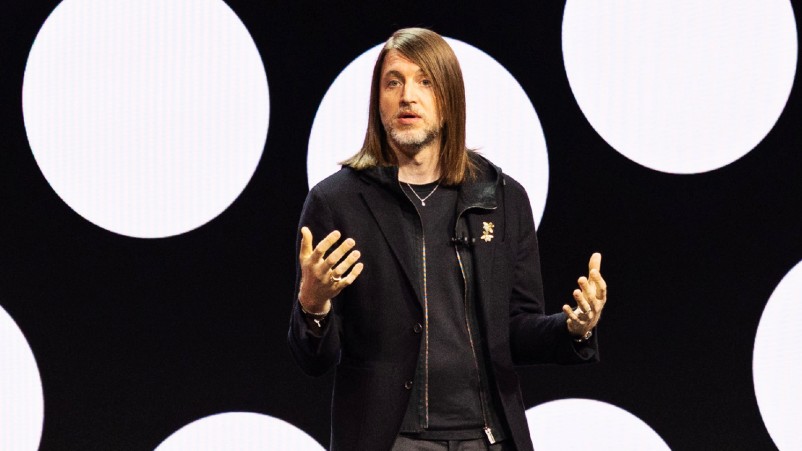
Pay day: Braze CEO Bill Magnuson

AI is helping marketers build campaigns faster than their organisations can check them or agree on what they should achieve, Braze CEO Bill Magnuson says. But as automated systems take on more decisions, he warns that quality assurance must become continuous and teams must resolve competing goals around revenue, margins and customer relationships. He used the missed opportunity for shoe brand Skechers to have built a campaign around a viral American cultural moment from June this year to illustrate the potential for faster execution. But Magnuson argues capturing those moments also requires human judgment, distinctive ideas and detailed tools to review work before it reaches millions of customers.
What you need to know:
- AI accelerates campaign building but shifts the bottleneck towards quality assurance, with evolving, interconnected systems requiring continuous checks.
- Marketing, finance and product teams must agree on what AI should optimise. Revenue, margin and long-term customer relationships can demand different decisions.
- Magnuson questions the ambition to create a marketing team of one, arguing that teams preserve creativity, institutional knowledge and judgment.
- Braze backs specialised agents and access through external AI tools, while retaining detailed interfaces for designing, editing and reviewing campaigns.
- Token pricing remains unsettled, particularly when agencies consume clients’ allocations and marketers need predictable annual budgets.
We obviously know that discounting can drive additional revenue, but it can also train bad long-term customer behaviours. And so, if you were going to have a decisioning system that had a tool in its toolkit to offer a discount, you want to align on actually how much of a punishment it should get in its reward function if it needed to use a discount, or discounts of a certain level.
After half a century of NBA championship disappointments, New York Knicks fans finally had something to celebrate. Skechers, meanwhile, had the shoes and the moment - but unlike the team's British-born forward, Ogugua 'OG' Anunoby, couldn't convert.
For Braze CEO Bill Magnuson, a generic 20 per cent discount pop-up on the retailer's website the next morning neatly captured a marketing opportunity left on the bench.
When Anunoby executed that sensational at-the-death tip-in to complete an extraordinary 29-point Knicks comeback in Game Four of the NBA Finals this year, he placed himself and the Skechers sneakers he wore squarely in the cultural spotlight. The Knicks closed out the San Antonio Spurs in the next game with a 94-90 victory at the Frost Bank Centre, ending a 53-year title drought dating back to 1973.
Opportunity knocks, departs
In a neat piece of retail industry symmetry, Anunoby became the first NBA player to win a championship wearing the brand.
The morning after Anunoby's genius, Magnuson, who is a rare bird among martech leaders since he often speaks as passionately about marketing as he does about tech, envisaged how the shoe brand could have responded in the moment.
"Imagine this," he said. "Blow this thing up hundreds of feet high on the biggest towers in Times Square. Everything black and white except those one-of-a-kind sneakers – the first Skechers ever to win an NBA championship, popping off the screen and making everybody ask, ‘What shoes are those?’ Then you light it up: The homepage, every email inbox, every SMS and WhatsApp subscriber, every social feed, and everything else on pause. Because for the next 96 hours, nothing in culture mattered.”
Alas, that campaign, as he told Braze’s customers at the firm's Forge customer event in Las Vegas, never happened. Indeed, when a curious Magnuson checked an archived version of Skechers’ homepage, there was nothing to show from that extraordinary opportunity, except for that boilerplate 20 per cent discount offer that interrupted his browsing.
Magnuson told the room that had the idea existed, the tools could have brought it to life. A team can now be reached instantly, he said, but sadly, the chance to amplify the moment with edge and urgency passed unnoticed.
The episode illustrates the gap between having an idea and getting it into the world. In an interview with Mi3 at Forge, he described the challenges emerging as AI helps marketers close that gap: Checking more work, agreeing on commercial objectives and preserving judgment as execution accelerates.
Confidence becomes the bottleneck
“As the system moves faster, the challenge of having confidence in it gets harder,” Magnuson said.
The Braze co-founder said he saw a parallel inside the firm's own software teams. Agentic coding accelerated development, only for pull-request review to become a bottleneck. Developers also became further removed from the details of work they had previously built themselves, increasing opportunities for unintended consequences.
Marketing faces similar pressures, with the added consequence of amplification. "When you work with Braze, and when you design a program in Canvas [the firm's visual customer journey builder], it might get sent out to 50 million people the next day, or the next minute … it’s of consequence because it's both a giant megaphone, and it drives revenue outcomes. Plus there's the downside risks of harmed customer relationships and brand integrity.”
The systems themselves are also changing. As automated programs adapt and make decisions that influence one another, quality assurance extends beyond inspecting initial settings.
“The systems are evolving and adapting, and they're making decisions that actually impact each other,” Magnuson said.
He argued that multiplying the work while delivering continuous quality assurance creates a need for intelligent, autonomous assistance.
He told Mi3, "If you just do the simple math and multiply the amount of work being done, and now make the quality assurance problem always on, it very quickly becomes clear that you need an autonomous helper, right? And you need that helper to be intelligent because what defines governance are usually complicated topic areas. We’ve invested heavily into that, and we’ve been working really closely with customers on it as well to make sure that the systems are able to both adapt to the evolving ways they are working and also cover all the bases … technical, legal, regulatory requirements, brand safety, budget controls.”
Agreeing on what success means
Another constraint emerges before a system begins optimising: Whether the business agrees on what it wants.
"At a basic level, AI is really good at optimising for a target. Colloquially, it's referred to as 'number goes up', right? And they’re really good at that. But in order for that to be aligned with your business goals, you need to have everyone agree on what number and nuance behind that number the AI should be optimising for," Magnuson continued. "You go and optimise for something in a certain way, but it turns out that marketing, finance, and the product teams all looked at it in subtly different ways.”
Departments may disagree on customer lifetime value, for instance, or even what constitutes an active user, he noted.
He used quick service restaurants as an example. "Food QSR is an interesting example where we quickly understand that all the different food items have different margin profiles. Also, all the different ways people order have different margin profiles, whether it comes through a delivery app, directly through the app, or through takeout or delivery," Magnuson said.
“Sometimes the thing they’re really worried about is GMV [gross merchandise value], and they don’t actually care if it all comes through a delivery app channel because they’re trying to push activity into the stores. And even though the margin profile is lower, it’s not as worthwhile. Others can then shift gears and be like, ‘Okay, the delivery app traffic is a sugar high for them because they’re not actually getting the first-party customer relationship.’ That’s a business that’s actually optimising for margin and for long-term, first-party data and first-party relationships."
Magnuson added some of his own marketing team had conducted experiments and found their out-of-home advertising was driving traffic towards delivery platforms rather than their own apps. They changed their strategies to direct spending towards first-party relationships.
Configuring different brands’ decisioning systems identically could therefore miss their commercial objectives, even within the same corporate group, he said.
Discounting poses another question.
Per Maguson, "We obviously know that discounting can drive additional revenue, but it can also train bad long-term customer behaviours. And so, if you were going to have a decisioning system that had a tool in its toolkit to offer a discount, you want to align on actually how much of a punishment it should get in its reward function if it needed to use a discount, or discounts of a certain level.
"If you can onboard a new customer without training them to wait for the next sale, that customer is worth so much more to you. But aligning on just how much more worth you are [as a customer]? A lot of times that’s not actually a question they’ve even worked through as an organisation before.”
Resolving those questions requires education and collaboration, often between colleagues who already have the necessary expertise, he said.
Keeping room for judgment
Accelerated execution also compresses the time to consider the implications of change, Magnuson acknowledged. And he stressed the importance of teams in an era when there is a temptation to reduce marketing to minimum headcounts while upping the role of agents.
Magnuson said institutional knowledge and intuition remain important.
“I still think that actually teams drive better creative outcomes,” he said, noting that teams provide judgment checks, durability and opportunities for reflection. Some ideas need time to develop, even as cultural opportunities demand overnight action, he said.
At Forge, he also warned shared AI models could encourage creative convergence, producing “a regression to the mean where everything is optimised, nothing breaks through, and it's all just fucking boring."
That's a topic Magnuson has previously discussed with Mi3, when he argued that while AI promises to make marketing faster, sharper and more personal, it could also make brands virtually indistinguishable, as companies armed with the same models and optimisation tools are pulled towards the same data-driven answers.
Agents still need an editing room
Earlier this month, Mi3 reported on how Salesforce executives, including CEO, Mark Benioff and Slack CMO, Ryan Gavin, are arguing that a lot of typical martech and related functionality is set to slip beneath the prompt.
Magnuson has some sympathy with that view in particular circumstances, but refutes the idea that it makes sense in the environments where Braze typically operates. Instead, he expected detailed interfaces to retain a role alongside conversational agents, particularly when work is being published at scale.
“The publish step I think demands detailed authoring and like review tooling,” he said.
That requirement extends to creative composition. People need to convey a vision, inspect details, make changes and debug work that falls short.
Magnuson nevertheless said Braze agreed “wholeheartedly” with Salesforce on providing composable intelligence and headless infrastructure, allowing capabilities to be accessed outside a vendor’s interface.
"I would go further and say that software companies basically don't have a reason to exist unless they have a differentiated intelligence that is tied to their product offering. By that I mean the Braze Operator needs to be way better at using Braze than Claude, which is just reading our documentation and trying to navigate our dashboard."
Paying the bill
New pricing models also introduce uncertainty. Magnuson said Braze’s consumption-oriented model broadly aligned with its direction, while marketers still wanted to plan annual budgets.
Token-based charging raises practical questions, he said. "Imagine if we charge Operator usage by the token, like Anthropic does, and then you come in, and the agency that you hired came in over the weekend and spent all of your Operator tokens, right? Now you’re fighting with your agency about it. Do they have to have their own account?
“We just haven't answered these questions yet as an industry,” he said.
The promise of faster building is already visible, according to Magnuson. At a Sydney hackathon, he said Braze's Operator helped a team construct interactive survey follow-ups in minutes, including a sentiment agent, routing and a responsive conversation. But the Knicks example remained his illustration of what speed should serve: A distinctive idea reaching customers while the moment still mattered.
“The fate of great work isn't decided at the idea stage anymore,” he said. “Ambition and career-defining risk meet their fate in the gap between the idea and execution.”
Andrew Birmingham attended Forge as a guest of Braze.