‘Being seen is not the same as being felt’: BrandSpace Media says digital advertising over-optimised for cheap reach; shopping centres pitched as media’s new emotional advantage
RMIT lecturer Nadja Dollisson arguing for the importance of the "third space"
The digital advertising industry spent two decades perfecting the science of precision. Find the right consumer, deliver the right message, measure the click, and then claim all the credit for the sale. In that worldview, context became little more than a delivery mechanism – a backdrop for algorithms optimising attention at industrial scale. But at its first upfronts presentation, BrandSpace Media, the retail media arm behind Westfield’s shopping centres, advanced a more uncomfortable proposition for the digital ad economy: Algorithms may be very good at predicting who should see an advertisement, but they are remarkably poor at manufacturing atmosphere. That argument goes well beyond a defence of shopping centres as advertising real estate. It is an attempt to reposition physical retail environments as something closer to emotional infrastructure – places where consumers are socially engaged, psychologically receptive and, crucially, more open to influence. In an era of fragmented feeds, commoditised impressions and endless digital noise, BrandSpace is betting that the next battle in advertising will not be fought over reach, but over the quality of human attention.
What you need to know
- Scentre Group's BrandSpace Media used its first upfronts to argue that retail media effectiveness is shifting from pure targeting and scale toward “quality attention” and emotional connection inside physical environments.
- Its new trade positioning – The World of Wonder – centres on delivering immersive, emotionally driven brand experiences at scale.
- Executives claimed algorithms can identify audiences but “cannot create atmosphere,” positioning shopping centres as premium advertising environments where consumers are more socially engaged and purchase-ready.
- At the heart of the pitch is the argument that digital advertising’s obsession with efficiency, impressions and low-cost reach risks sacrificing deeper consumer engagement and long-term brand influence.
- Academics commissioned by BrandSpace Media framed shopping centres as modern “third places” – social environments between home and work where consumers feel connected, relaxed and more emotionally receptive to brands.
- RMIT lecturer and consumer psychologist, Nadja Dollisson argued physical retail environments drive stronger brand processing because messages are experienced “more fluently and less defensively” than interruptive digital advertising.
- BrandSpace Media is betting retail media’s next battleground will centre on the quality of attention rather than targeting precision alone, as retailers expand beyond owned digital channels into experiential and commerce-linked media ecosystems.
- Attendees were told that Westfield's properties recorded 540 million visits in 2025 and has more than 5 million active members, but executives stressed that scale only matters when paired with emotional connection and mindset-driven influence.
In pursuit of that efficiency, we heard that optimising for the right kind of connection has become not only harder to find, but it’s also harder to prioritise.
For years, the digital advertising industry has operated on a foundational assumption: If you can identify the right consumer at the right moment with enough precision, the environment barely matters. Algorithms would do the heavy lifting. Attention could be bought, optimised and scaled.
At this year’s BrandSpace Upfronts, the operator behind Westfield’s retail media and out-of-home business delivered a more provocative argument. Algorithms, executives and researchers suggested, may be very good at predicting who should see a message. But they cannot manufacture atmosphere.
That distinction sits at the heart of BrandSpace’s evolving strategy as it attempts to reposition Westfield shopping centres from retail infrastructure into premium advertising environments built around what executives repeatedly described as “connection,” “context” and “emotional presence.”
“Being seen is not the same as being felt,” Mike Shore, BrandSpace Media’s head of strategy and marketing, told advertisers and agency executives gathered at the event. “Being everywhere is not the same as being remembered, and it’s certainly not the same as being able to change or influence behaviour.”
The argument reflects a growing tension inside modern advertising. Digital platforms have become extraordinarily efficient at delivering targeted impressions at scale. But marketers are increasingly questioning whether highly measurable exposure necessarily translates into deeper consumer engagement or commercial influence.
“In pursuit of that efficiency, we heard that optimising for the right kind of connection has become not only harder to find, but it’s also harder to prioritise,” Shore said. “The most defendable plan today is often the one that delivers more impressions, more coverage, at the lowest possible cost.”
BrandSpace Media's counterargument is that physical environments, and particularly shopping centres, create qualitatively different forms of attention because consumers arrive in a different psychological state. Rather than distracted scrolling or passive exposure, the company is betting on what Shore described as “hot connections,” moments where consumers are socially engaged, emotionally open and close to making purchase decisions.
“Most connections today are cold,” Shore said. “They’re passive, they’re fleeting, they’re incidental, they’re seen, but they’re not fully processed.”
By contrast, he described environments such as Westfield as “rich in influence.”
The company enlisted academics and consumer psychologists to provide intellectual scaffolding for that thesis. This added research impetus comes incidentally, less than two months after the long-awaited arrival of MOVE by the Outdoor Media Association (OMA), delivering an unprecedented millions and millions of new audience data points across the entire out-of-home ecosystem. It's a step change that importantly, brings a wealth of new data to areas that didn't have so much previously, including shopping centres, gyms and cinema.
Frances Farrelly, a professor of marketing and strategy at RMIT University in Melbourne, said BrandSpace Media commissioned research around two core ideas: The shopping centre as a “community engine” and as a “media engine.”
Farrelly said the work draws on the sociological concept of the “third place” – environments that sit between home and work where people gather, linger and socially engage.
“The role of place has never mattered more,” Farrelly said. “Across social, cultural and political research as well as commentary, there is consensus that we are living through increasingly polarised times. In that context, people everywhere are actively seeking environments where they can come together, be social, be themselves, and feel they genuinely belong.”
Shopping centres have traditionally been analysed through the lens of retail economics: Foot traffic, tenancy mix and sales productivity. BrandSpace Media is attempting to elevate them into something closer to emotional infrastructure.
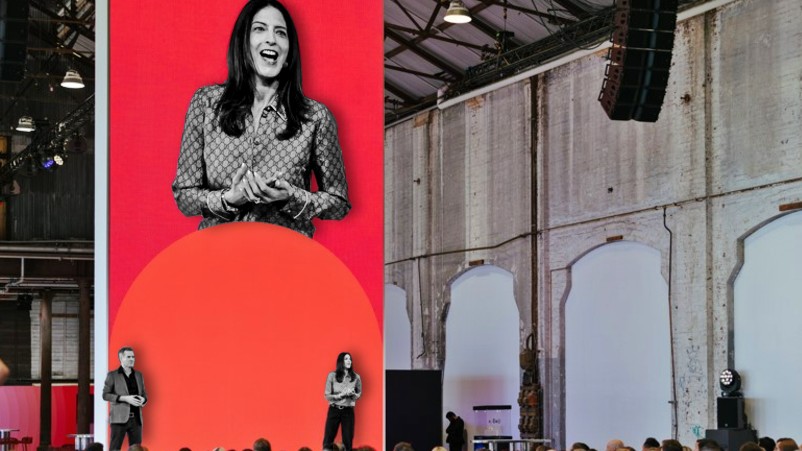
Nadja Dollisson, an RMIT marketing lecturer as well as a consumer psychologist and market researcher, argued that context changes not only whether consumers see advertising, but how they process it.
“The insight is whether a commercial media environment can produce the same quality of presence in a genuine third place,” Dollisson said. “People are relaxed, socially engaged and approach motivated. That is a psychological condition under which brand meaning really forms, not surface level awareness, but the deeper kind of brand meaning that is also known to facilitate things like loyalty, price premium and advocacy.”
Dollisson argued messages in those environments are processed “more fluently and less defensively,” while brand encounters become “socially embedded and experienced as a shared moment rather than an interruption to a private one.”
The critique embedded within that argument is subtle but significant. It challenges one of digital advertising’s central assumptions: that targeting precision alone creates effectiveness.
“In digital communication, we rely heavily on algorithms to match messages to consumers, and we do that really well,” Dollisson said. “But algorithms can only predict who should be a good fit for message. They cannot create a state of mind or an atmosphere.”
That framing arrives as retail media networks globally race to expand beyond owned digital properties into physical environments, experiential activations and commerce-linked media ecosystems. The sector has become one of advertising’s fastest-growing categories because retailers possess two assets increasingly prized by marketers: First-party customer data and proximity to purchase. But BrandSpace Media's pitch suggests the next phase of competition may revolve around something less measurable and more psychological: The quality of attention itself.
The company repeatedly contrasted Westfield’s environments with what executives described as increasingly fragmented and cluttered digital experiences. Shore argued consumers are now exposed to “thousands of messages a day,” making simple visibility less valuable than emotional resonance.
The strategy also reflects broader changes in the role of physical retail following the pandemic. Rather than disappearing under pressure from e-commerce, many major shopping centres have repositioned themselves as mixed-use social destinations built around dining, entertainment, wellness and events.
“Growth doesn’t come from more impressions,” Shore said. “It comes from more quality bonds.”
We’re living in a world where we’re constantly being pulled in every direction, more noise, more content, more demands. “Yet brands are still expected to cut through all of this chaos.
Kicking off Brandspace Media's first ever Upfronts earlier in the session, Jacquie Waine said Westfield’s value to advertisers extended beyond scale and foot traffic into something more emotional and culturally embedded. Framing Westfield as a place where “life happens in the moments that matter,” Waine argued the company’s strategic advantage came from how consumers feel inside its environments, not simply how many people pass through them.
“That’s what makes Westfield so powerful,” Waine claimed after recounting personal milestones tied to the shopping centre environment. “Because alongside our scale, Westfield is a place where life happens in the moments that matter.”
She added: “For the marketers and agency partners in the room, what matters isn’t just how many people come through our doors, it’s how they feel when they’re with us, because that’s what ultimately drives behaviour.”
Waine said Westfield recorded more than 540 million visits in 2025, with 21 million people living near its destinations, while its membership program had grown to more than 5 million active members. But she repeatedly emphasised that scale alone was insufficient. “You need both,” she said. “You need the volume and the mindset to really drive behaviour.”
That positioning was reinforced by Adam Sadler, who argued the advertising market had become overwhelmed by digital overload and commoditised attention. “We’re living in a world where we’re constantly being pulled in every direction, more noise, more content, more demands,” Sadler said. “Yet brands are still expected to cut through all of this chaos.” He argued physical retail environments had regained strategic importance after the pandemic as consumers sought real-world connections and community. “The impact doesn’t come from how many people you actually reach,” Sadler said. “It actually comes from the quality of the connection.”