
Microdramas, macro ambitions: Fantastic Furniture, Are Media, Sydney Water and Tag test entertainment’s pull on brand, behaviour and ROI as YouTube builds for the binge

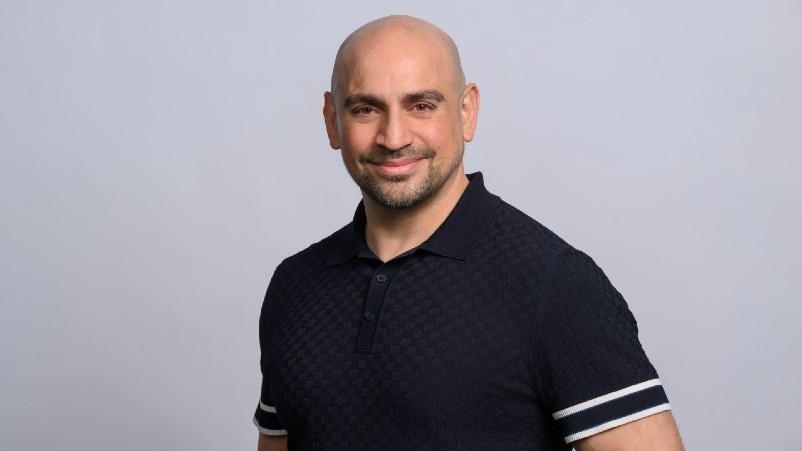
L to R: Are Media’s, Megan Osborne, Forrester’s Mike Proulx, University of Auckland’s Dr Johnny Chan, Vertical Studios Australia’s Rebecca Andrews, Fantastic Furniture’s Kate McGrath, and Tag’s Claire Hoyle.
Microdramas - or “verticals” or “microseries”, as Vertical Studios Australia co-founder, Rebecca Andrews describes the evolving terminology - are projected to generate US$14 billion globally in 2026. Ampere Analysis data supplied to Mi3 shows half of Australian internet users aged 18–64 watched a microdrama in the past week in Q3. The viewers aren't just Gen Z or women either: Forrester’s US research reveals women and men watching at similar rates, with millennials leading regular viewing at 19 per cent. Fantastic Furniture is testing the brand proposition of microdramas with Are Media, giving its editors creative freedom to turn a living-room styling competition into an episodic rivalry. Early results include a 52 per cent lift in weekly Instagram engagement, while print “shop the look” QR scans ran 161 per cent above the issue average, encouraging signals across the partnership, with sales and brand-perception effects still to be established. Meanwhile, Sydney Water and Tag are deploying soap-opera theatrics against a problem costing almost $24 million a year in wastewater blockages. “We can’t just educate an audience. We need to very much entertain them,” says Tag’s Claire Hoyles. And while YouTube builds for episodic viewing and brands weigh their next move, Forrester’s Mike Proulx supplies the reality check: “Let’s not get too far ahead of ourselves with regard to ROI just yet".
The biggest misconception is that microdramas are just soap operas for women.
Advertisers have spent years trying to stop the scroll. Now they’re trying to hook consumers in seconds, then leave them on a cliffhanger. Make them crave the next episode. Repeat. The addictive proposition behind microdramas has gone mainstream.
University of Auckland senior researcher in information systems and operations management, Dr Johnny Chan, has developed a conceptual model to examine what drives micro-drama consumption. And he may have a simple answer for what keeps audiences coming back. The microdrama episodes he's examined typically run for 60–90 seconds and follow a “sensational” formula: A power imbalance, a reversal, and a cliffhanger. A servant challenges a king. A subordinate turns the tables on a boss. The resolution is another episode away.
“At first, you feel like it’s just a minute thing. So you don’t feel that you are highly invested,” Dr Chan told Mi3. Its the “lack of friction and natural breaks”, he hypothesises, that makes people want to overconsume.
Micro might be part of the name, but these ‘bite-sized’ soap operas are projected to rack up US$14 billion globally in 2026, with platforms, streamers, and Hollywood all putting big bucks down and nosing out to win viewers on their own platforms. China, the birthplace of the format, remains the dominant market, accounting for a projected US$11 billion of that $14bn forecast. Outside China, the US is expected to contribute half of the rest, per Omdia figures.
Australian audiences have also shown an appetite for microdramas. Ampere Analysis data supplied to Mi3 shows 50 per cent of Australian internet users aged 18–64 watched a microdrama in the past week in Q3 2026, up from 40 per cent in Q1. Viewing is concentrated on social media, with a few subscribing to dedicated microdrama apps such as DramaBox and MyDrama. The local audience extends well beyond Gen Z, as 57 per cent of Australian microdrama viewers are aged 25–44.
A separate Forrester-commissioned US research study has further busted stereotypes about who watches and what gender dominates the content. It revealed 11 per cent of online adults watch regularly, and another 22 per cent have watched a few times. Millennials lead regular viewing at 19 per cent, ahead of Gen Z’s 15 per cent, with men and women watching at similar rates.
“The biggest misconception is that microdramas are just soap operas for women,” Forrester VP and research director, Mike Proulx tells Mi3. While romance remains the dominant genre, the category is maturing into comedy, crime, action, thrillers, fantasy, science fiction and horror.
Episode I: ‘Brands can become entertainment’
But despite tempestuous growth worldwide, Rebecca Andrews, co-founder of Vertical Studios Australia - the media production and distribution house behind these vertical dramas - says many brand conversations in Australia are still focused on explaining, “what on earth is a microdrama?”
Andrews says the terminology is evolving alongside the format. “You’ll hear ‘microdramas’, ‘verticals’ and now ‘microseries’, which is the one that will probably stick; it leaves room for reality, comedy, travel and documentary as well as scripted drama," she says.
“Microdramas aren’t just finding audiences on the world’s biggest platforms; they’re changing how those platforms work. That’s how big a deal this format is. The audience is clearly there, and the pathways to reach it are multiplying, We’re still explaining the format here while the rest of the industry is building businesses around it.”
Ampere’s September analysis tracks vertical-video initiatives from streaming giants including Netflix, Disney+ and Peacock, alongside microdrama commissions from players such as ViX and Peacock. Those range from short-form discovery feeds to original series, but collectively show how the format is accumulating attention beyond specialist apps.
“Even social media has joined the micro-revolution: TikTok launched its microdrama strategy in April [its first show, ScreenTime is currently sitting on 269 million views], and last week, YouTube introduced series with seasons, episodes and sequential playback,” Andrews continues.
Among microdrama viewers surveyed by Forrester, 63 per cent typically watch on YouTube Shorts, followed by TikTok at 54 per cent and Instagram at 53 per cent. Dedicated apps, ReelShort and DramaBox register 16 per cent and 15 per cent, respectively, and respondents can select multiple platforms.
YouTube doesn't want to just take part; it wants to take charge. Microdrama content on the platform cracked 6.5 billion global views in the first half of 2026, with watch time up more than 50 per cent year-on-year. YouTube has also announced its macro microdrama play, Shorts Series, a feature that lets creators organise their shorts with customised thumbnails, seasons, and episodes, with sequential playback across mobile, web, and TV.
“What YouTube is doing is most definitely laying the groundwork for a larger microdrama play. Expect streaming services like Netflix and Disney+ to follow suit,” Proulx says.
The benefit for advertisers is the storylines, character building and episodic nature of the format open up space for brand opportunities involving “more than product placement”, Andrews argues.
“Episodes compound: Characters build familiarity, cliffhangers bring people back, and seasons can build IP the brand owns," she says. "People skip an ad and scroll past interruption. They stay for a story, share it with their friends at midnight, and even come back to it.”
For Andrews, the ambition is pretty straightforward: “Brands don't need a broadcaster anymore. Brands can become entertainment.”
The how? Depends on the objectives and how much creative control brands want. Commissioning an original series lets a brand create the characters, the world, and its role within it from scratch, then distribute the episodes through its own social channels with a supporting social and PR plan.
Partnering with a studio on an existing production (like VSA) offers a lighter integration and, Andrews argues, ‘a quicker way to test the water and be in front of a new audience’. The challenge is making the product belong in the story. A third route is working with a microdrama app, either integrating into its content or commissioning an original for its audience with “much less creative control, but we are still at the start of this industry; negotiation is always on the table,” adds Andrews.
Episode II: Room for rivalry
Several Aussie brands have already dipped their toes in these uncharted waters. One is Fantastic Furniture, which teamed up with Are Media on Fantastic by Design, a social series that turns a living-room styling challenge into an episodic rivalry between personalities from Better Homes and Gardens (BHG), Woman’s Day and New Idea.
For Fantastic Furniture, the starting point was a brand perception challenge. GM of Marketing, Kate McGrath wanted consumers to reconsider the retailer’s range and saw Are Media’s relationship with its audiences as a perfect opportunity to tap in.
“It wasn’t about spots and dots for me. It needed to be collaborative,” McGrath tells Mi3. The partnership gave the editorial team room to develop and own the idea. “The one thing that came from partnering with this editorial challenge opportunity was them being able to own it and really believe in it.”
Better Homes and Gardens editor, Megan Osborne says the competition came first. Microdrama provided a channel to bring its personalities and tensions to life on social.
The partnership also aligned with her ambition to make Better Homes and Gardens relevant to new audiences without alienating its established readership. Osborne puts the audience’s average age at 47, but says its appeal stretches across generations from 22–85.
“So we are actively trying to broaden that brand connection as well and deepen our connection with various generations,” Osborne says. The cross-channel push made sense, with digital video keeping Gen Z and millennials at the heart, while print catered to an older audience.
The product had to earn its place in the story, built from the ground up. Osborne worked with the publisher’s commercial video editor on scripts, then with Fantastic Furniture to incorporate product selling points. The competition gave each participant an incentive to champion their choices, turning furniture features into ammunition for the rivalry.
“Without losing the humour and the relatability of the content, I think it was definitely about making sure that we spoke to the USP of the product,” Osborne says.
McGrath adds it required letting the editors speak in their true voices. She wanted the publisher’s understanding of its audience to shape the work, allowing Fantastic Furniture to try something she felt it did not yet have permission to do alone.
That trust survived the first viewing. After extensive cycles of internal editing, Osborne says initial cuts sent to Fantastic Furniture came back approved. “The steps that we took in the lead-up, like making sure all the sort of alignment happens pre-production rather than post-production, I think is probably the strongest bet to make sure everyone’s happy.”
Early organic results suggest the approach is hooking an audience. Figures supplied by Are Media and Fantastic Furniture show BHG’s launch video ranked second for shares over the preceding 30 days, behind a viral recipe. Fantastic Furniture’s launch video ranked among its September top five for watch time and fifth for engagement rate.
For Osborne, the surprise was seeing that response to branded content. “It’s one thing to have incredibly high engagement metrics on Meta for saves, shares, etc. To have them on a commercial post is actually unheard of,” she says. “That was a real eye-opener for us.”
The partners also report campaign posts lifted weekly Instagram views by 34 per cent and engagement by 52 per cent. Interest extended into the partnership’s print component. Osborne recalls colleagues watching QR-code scans come through within days of the magazine going on sale, with readers looking beyond the chance to win a prize.
“People weren’t just scanning the vote code action to win, which was obviously incentivised. They were scanning the other QR codes, which was shop the looks of the living rooms.”
Subsequent figures put competition scans at 298 per cent above the issue average, while the unincentivised “shop the look” scans were 161 per cent above average.
Those are early engagement and shopping-interest signals across the broader partnership, rather than demonstrated sales or brand-perception effects attributable to the microdramas.
McGrath says longer-term discussions are underway, with more digital collaboration on the table. “We want more of that digital angle and more of that collaborative partnership rather than just appearing here and appearing there.”
“How can I get in there before everyone catches on to the opportunity here that is for me?” McGrath says.
In retrospect, Osborne says the lesson for other advertisers is to give the creative team freedom and “make sure that the story is interesting or unique enough to live on its own, and the product supports it [works with it] rather than retrofitting,” and that needs to be integral.
We want more of that digital angle and more of that collaborative partnership rather than just appearing here and appearing there. How can I get in there before everyone catches on to the opportunity here that is for me?
Episode III: Let’s avoid any pipe dramas
Sydney Water is also betting a little soap-opera drama can help influence what goes down the drain.
Its Pipe Dramas campaign, developed with Dentsu’s production arm Tag, collides everyday disposal mistakes into exaggerated storylines, complete with dramatic characters, plot twists and deliberately over-the-top dubbing. The problem behind the entertainment is substantial: Sydney Water says it spends almost $24 million a year clearing more than 12,000 wastewater blockages.
Working with Sydney Water for the third time, Tag’s client service director, Claire Hoyles says the team stumbled across the microdrama genre through Dentsu’s intelligence research, which helped shape the approach. Its report found that 23 per cent of Australian respondents watched microdramas, compared with 53 per cent in China.
The definition considered regular and frequent viewers, as well as those who had watched and planned to watch more. Across the five markets surveyed (Australia, China, India, Japan, and Malaysia), uptake was strongest among millennials (42 per cent), followed by Gen Z (37 per cent).
After considering the stats, Gen Z behaviour changes, and short attention spans, the team called for broad reach across Greater Sydney, with a particular focus on changing behaviours. Education alone, the team believed, is not enough.
“We had to reach everyone Sydney-wide, being Sydney Water. The biggest kind of behavioural change that we needed to make was in 18 to 25,” Hoyles tells Mi3. “If we need to make a behaviour change, we can’t just educate an audience. We need to very much entertain them.”
But translating that overseas momentum into an Australian campaign still required a leap of faith, as only one brand at the time was experimenting with the category. “There’s a lot of stats and information about how it’s driven from Asia, but how was this actually going to play out in Australia? So I think there was a bit of trust that the client had with us as their partners, to believe in this idea.”
Tag's team launched six episodes and a trailer for TV, BVOD, and online video, alongside lo-fi content shot on iPhones and edited in-app for Meta and TikTok in several languages to reach the CALD (culturally and linguistically diverse) audience, which is estimated at 37 per cent of Sydney.
“We actually have a transcreation team [consisting of copywriters, VO artists] in Singapore; we had all of our static assets, radio ads, and social content created in all of those seven different languages.”
The two production approaches are now being A/B tested on Meta and TikTok, comparing the polished campaign assets with lo-fi social content. “It wasn’t following the same script. It was like behind-the-scenes, reality TV style of content,” Hoyles says.
For Tag, the test also speaks to the economics of sustaining an episodic campaign. “It’s not just one ad that you can produce; it’s a series of content that needs to be created.
“You don’t necessarily have to have a TV-level production quality and budget behind that content. You really can go lo-fi with it. You can go AI with it,” Hoyle says. In this case, considering what the client does and the “negative sentiment” around AI water usage, “it didn’t make sense for us to be running a whole AI-led campaign”.
Episode IV: The ROI cliffhanger
For Sydney Water, the challenge extends beyond whether viewers watch the next episode. Hoyles says early measures include increases in campaign sentiment, unprompted recall, reach, and its Campaign Impact Metric score. Sydney Water’s internal research team will report on the campaign 12 weeks after launch.
Alongside that work, media reporting will track whether viewers stay through individual videos and continue across episodes. “What are the hook rates, the view-through rates, and are people dropping off after a certain number of episodes?” Hoyles says. Those results are still to come.
The two Australian campaigns are testing different ambitions for the format, with returns yet to be established. But Proulx nevertheless sees an early opportunity for brand experimentation. “Microdramas should be tested as part of their content marketing strategy," he agrees.
He argues dedicated apps may lack the distribution muscle of TikTok or YouTube, but could still offer an opportunity for brands whose customers already watch there. “Feed culture is all about serendipitous discovery. Think of them as the gateway into a microdrama series.”
And when it comes to the ROI enigma: “Let’s not get too far ahead of ourselves just yet,” Proulx says. “Brands, no doubt, should pay attention to how and where their audiences consume entertainment, as this informs how and where they, as brands, should show up.”
Episode V: Investment, AI and ethics
Coming to the economics, Andrews says producing a microdrama doesn't require massive traditional ad investments. But there is no “single price”, as linking with an existing studio to build a six-episode series on socials with an original script is a different investment.
“A smaller series might sit in the tens of thousands; a full original series [50+ episodes] will run into six figures. Talent, episode count, production ambition, and marketing spend,” she says, can “change the number quickly.”
Then comes the warning: “You can’t write a microdrama without knowing the structure or understanding how the pacing or format works,” Andrews says. “Short episodes don’t mean simple storytelling. Every episode needs to hook people, move the story forward and leave them wanting the next one.”
AI promises to push production costs lower still - and potentially, the levels of addiction to such content. In his research blog, ‘Where the brake slips: A feedback view of the micro-drama platform', Dr Chan argues the combination AI, algorithms and commercial incentives with built-in reinforcing feedback loops could make such digital entertainment even harder to pull down. While believing regulators should be alert to potential harm, he stops short of calling for new regulation.
As Dr Chan explains it: “They [consumers] might turn off the television because the third episode of a formula is less surprising than the first. In each case, the system had a built-in brake.”
GenAI, he argues, could weaken that brake, churning out new characters, settings and twists fast enough to delay audience fatigue. “The result may be an entertainment system in which the forces encouraging people to keep watching increasingly outweigh those encouraging them to stop.”
AI use in Chinese microdramas has equally prompted backlash over copyright and creative livelihoods. Dr Chan points to pushback over synthetic actors resembling real stars – another warning for brands tempted by the production shortcut. Multiple Chinese news sources have reported on oversupply and lookalike content in the AI microdrama market, where producing cheaply has become easier than standing out.
Dr Chan therefore sees another possible check on the format’s excesses: Advertisers protecting their own reputations. “The advertiser does not want their brand to be untrusted, right?” That could make brands a 'de facto governor' of the content they fund, with an incentive to curb excessive sensationalism," he comments. “Maybe we just need the right organisation with the right incentive to do it the right way". It's a possibility he floats, rather than a finding of his research.
Evidence already shows too much drama can spill beyond the script. Grab Singapore’s I Fell In Love With My Grab Driver, pitched as a “fun, fast-paced” series, sparked concerns about passenger safety and boundaries over its driver-passenger romance storyline. Grab defended the title as deliberately “exaggerated” to fit the genre mould and clarified that the romance developed later in the characters’ personal lives. It nevertheless acknowledged it should have been “much more thoughtful” in how it presented the campaign and reaffirmed its zero-tolerance stance on inappropriate behaviour.
“They need to be very careful about the provenance. How good the reputation of this platform is, and also where all those things are coming from," Dr Chan adds.
