Redundancy repercussions: How Liana Dubois, Katie Dally, Josh Slighting and Amy de Groot navigated job loss – then used rosé and lateral thinking to make their next career choices

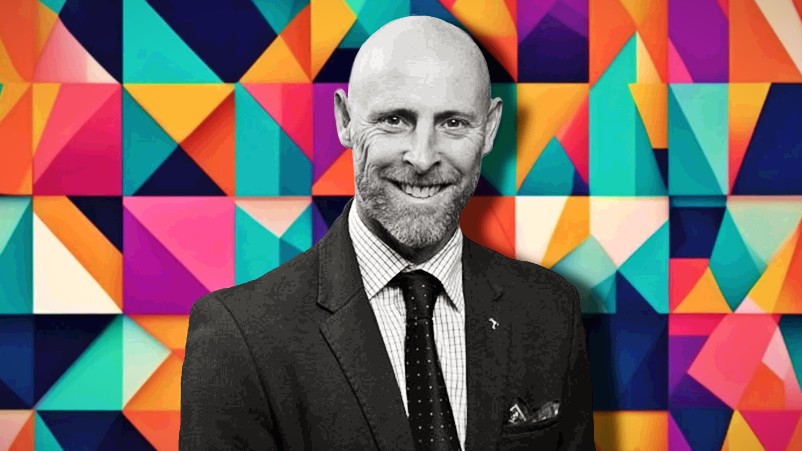
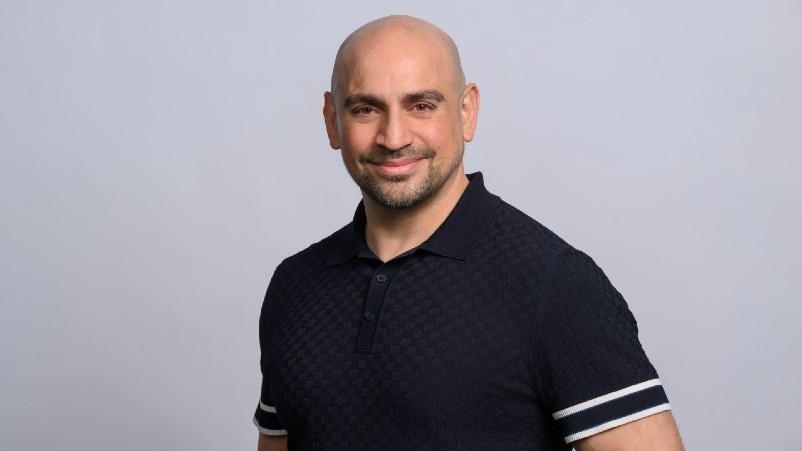
From left: Amy de Groot, Liana Dubois, Katie Dally and Josh Slighting
Some call it being dumped, most take it personally, and all agree you can’t help but experience a crisis in confidence and identity when you’re made redundant from a job. And with cuts rife across the marketing and agency ecosystem right now, more and more of us are having to come to terms with this occupational hazard. Yet no one prepares you for coping with this out-of-your-control curb in career. Commonly, the shame and grief people experience when it happens prevents many from speaking about how they feel and importantly, how they find what’s often a positive – if sometimes lateral – professional move. Four execs with direct experience of getting retrenched – former Nine Group CMO, Liana Dubois, former REA Group head of product, Josh Slighting, former Endeavour Group GM of brand, creative and operations, Katie Dally, and former Cars24 head of brand marketing, Amy de Groot – joined Mi3 on our latest editorial podcast to reflect and humanise the process, and unpack how it’s literally changing how they think about their next career steps.
What you need to know:
- Redundancies have been surging across the marketing, media and agency ecosystem, from Omnicom/IPG’s 4000 planned cuts to waves at Menulog, Endeavour, Nine, Seven, News Corp and more.
- The cuts have had a very personal impact on all four of the senior marketing and media executives on Mi3’s latest editorial podcast: Former Nine Group CMO Liana Dubois, former Endeavour Group GM of brand and creative operations, Katie Dally, former REA Group head of product Josh Slighting, and former Cars24 marketing chief Amy de Groot
- The four revealed the personal and professional impact of being retrenched and the shock, grief, anger, identity loss and confidence hits that come with the process, regardless of seniority or experience. De Groot describes it as “being dumped”, while others agree it’s a trauma that doesn’t come with a manual.
- It’s not linear either. Per Dubois: “You do ricochet between sadness and anger, denial and all of that. It’s a squiggly line – it’s not a straight line.”
- Support networks matter and are critical to getting through a redundancy, but emotional “solutioning” from friends isn’t an answer, they agree.
- Networks meanwhile beat job board scrolling. Each exec found search firms alone don’t deliver either clarity of what you want, or where you fit, and targeted outreach is critical. Being clear on what you want is also critical if people are to provide sufficient support and help, panellists agree.
- Reframing and thinking laterally is another essential part of the process, and all four have panellists reassessed skills, rebuilt confidence, and created clearer “boxes” so others could help them. Sector, role type and organisational structure became key decision filters.
- Listen to the podcast in full here.
Redundancy is rife across the marketing and agency ecosystem right now and you can’t just blame it on juniors being sacrificed to the machines. Senior and middle-level talent are as much in the firing line thanks to economic sluggishness, relentless business transformation and consolidation. In the last few weeks alone, we’ve seen senior exec cuts post Omnicom/IPG merger – Mark Coad, Leigh Terry, Lucy Formosa Morgan – plus Menulog’s CMO, Simon Cheng, among some 120 cuts following closure of the delivery business in Australia.
And cuts can be found in every pocket of the industry. The more overt news came last week from Omnicom global CEO, John Wren, who said 4000 jobs are likely to be shed by the end of the year as the merged Omnicom-IPG structure is bolted into place. Endeavour Group is another that made marketing, experience, digital and CX redundancies this year. Dentsu flagged 8% global headcount reduction in Q2. Nine, Seven West Media, News Corp, and Southern Cross Media have made hundreds of cuts in the last two years.
While it’s hard to get a precise handle on the exact volume of redundancies, a big clue is in the Advertising Council of Australia’s 2025 Salary Survey, which revealed a redundancy rate of 11%, compared to the usual range of 5–7%, in the 12 months to 31 March 2025. The Australian HR Institute quarterly outlook for Sept 25 also showed redundancies are on the rise, with 27 per cent of employers planning cuts, up 3 percentage points since the June 2025 quarter. It’s the second-highest level recorded since collecting data began in May 23.
Over six in 10 employers expect AI to reduce some roles too, and nine in 10 organisations say roles are at risk or set for major change within the next three to five years. ABS figures paint a similar story: Annual retrenchment rate as at Feb 25 was 1.9%, up 0.2 percentage points, and equates to 268,000. More than 12% of people asked about why they left or lost a job blamed retrenchment during this time.
Those are the attempts at hard facts. But the reality is, there are a bunch of marketing and advertising industry colleagues out there having to cope with the fallout and impact of being made redundant.
It’s also led the market to flip as the strong talent pool and conservative choices crunch marketing jobs, according to recruiters speaking with Mi3 mid-year, making it tougher than ever for experienced professionals to find their next gig.
When my news fell, the external market reached out as they do, and most would recognise me as bleeding blue. That actual process when I exited was a huge game changer for me. What the community around me were brilliant in doing was helping me to understand, actually, my identity has absolutely nothing to do with Denison Street. And it has everything to do with how you show up as an individual, how you lead your people, how you work with your customers, how you hold yourself in difficult circumstances, how you've supported industry.
Never the same story; commonly the same feeling
Our latest Mi3 podcast panellists detail very different scenarios when it comes to how they ended up being made redundant. In Dubois’ case, she already had an inkling her job could be cut when management consultants entered the Nine building.
“I could see the train that was coming to pull into the station,” she says. But it doesn’t mean you can just park 12 years of tenure and working with four different CEOs, even if you’re appreciative of “the extraordinary experiences” along most of the way.
“You do ricochet between sadness and anger, denial and all of that. It’s a squiggly line – it’s not a straight line,” Dubois says.
For others, redundancy comes as a complete shock. That’s how Katie Dally felt after surviving a first round of cuts at Endeavour Group only to be hit in the second set. Earlier this year, Endeavour Group overhauled its creative production model, offloading the production of “multiple millions” of owned and paid assets each week to a new AI-powered production unit co-founded by Chris Howatson and his chief data and technology officer, Hoang Nguyen. It was part of a wider strategic decision from the boardroom to consolidate operations around the customer, which sits on the background of the obvious pressures to deliver personalisation at scale – and do so efficiently.
“I genuinely was expecting to be in this position in 2026; I think everyone in the organisation was probably expecting that, because that's the change that needs to happen in order to set that organisation up for its next wave of growth,” Dally explains. “However, I had been privy to and part of a marketing and digital and data reorg in November last year, and I had survived that. I had also been on the other side of having to make a significant number of my team redundant, which in itself is incredibly difficult. So where my head was at was, well, I've survived round one; I've probably got this year to think about what my career looks like next, but I've got a 12-month runway.”
However, Dally – plus her team – were to be made redundant earlier this year. She describes it as a traumatic experience and one that kicks off “the five stages of grief”. She also had to attempt to suspend the shock for 48 hours while helping walk her team through what it meant for them.
“I just don’t think enough people are being quite raw and real about their experience, because when you are in that moment, you need to feel like you're not alone and like you have other people who have experienced their own version of their story,” Dally comments.
Shock was also the first emotion for Josh Slighting when he left a clearly buoyant, growing REA Group in June.
“Hindsight is such a luxury. You look at some of the steps that were happening. We also had consultants, some areas of our business were going on,” he recalls. “There were shifts to move certain roles and skills offshore. REA acquired a business in India some years ago, and it’s become a very strategic part of the growth story. There were transitioning things happening. All that stuff just looked, sounded and felt like healthy business decisions. I was really caught off guard – it grows double digits every year, it’s extremely profitable, and it’s one of the darlings of Australia … One thing that really stands out to me now is it’s successful because it’s done things proactively to stay financially healthy.”
Even experienced client-side marketer Amy De Groot, who’s been made redundant twice, nearly 20 years apart, still felt the shock, upset and grief of this occupational hazard the second time over. The irony wasn’t lost either that she’d just won three marketing industry awards in the lead-up to her most recent redundancy from Cars24 two-and-a-half years ago.
“I'd love to be able to tell you I knew what to do and I had been prepared before. I think they're just completely different junctures in my life,” de Groot says. “But both times, the immediate feeling was, if I was good enough, you would have done something to fight and try and keep me … It's a breakup. You have been dumped. I was dumped. That is always hurtful. Although in that last scenario, a lot of the senior management in the business had been made redundant too.”
What I was experiencing around me was that all the people who knew and loved me were trying to be there in every possible way that they knew how, but they were also trying to solution me out of those feelings and saying, You're Katie Dally, you'll be great, you're really positive, you'll always land on your feet. And I'm sure that is what they thought was the right thing to share at the time. But actually, I just needed to be in those feelings. My advice is don't try and project manage yourself out of feeling a certain emotion in a certain timeframe. It's not how the experience goes everyone. It's not linear.
Identity crisis
What redundancy often triggers is grief, followed by a professional and personal crisis of identity. Dubois says most people in the industry would have thought she’d “bleed blue” given her 12 years with Nine.
“When my news fell, the external market reached out as they do, and most would recognise me as bleeding blue,” she says. “That actual process when I exited was a huge game changer for me. What the community around me were brilliant in doing was helping me to understand, actually, my identity has absolutely nothing to do with Denison Street. And it has everything to do with how you show up as an individual, how you lead your people, how you work with your customers, how you hold yourself in difficult circumstances, how you've supported industry.
“I almost feel as though, because I did a lot of the not nice grieving part while I was actually contained within, that when I came out the other side, I got to experience more of a kind of a positive communal uplift, which was nice … Even if they’re trying to solution you, you can be amazed by the people that will come and support you, take action and try to help you to do what you want to do next.”
Trauma was more acute for Dally. “I was angry, then I was in denial, then I was shocked, then I was sad, and I was all the things. But I actually just had learned that it's okay to let myself feel all of those things,” she says.
“What I was experiencing around me was that all the people that knew and loved me were trying to be there in every possible way that they knew how, but they were also trying to solution me out of those feelings and saying, You're Katie Dally, you'll be great, you're really positive, you'll always land on your feet. And I'm sure that is what they thought was the right thing to share at the time. But actually, I just needed to be in those feelings. My advice is don't try and project manage yourself out of feeling a certain emotion in a certain timeframe. It's not how the experience goes everyone. It's not linear.”
Being left with many questions was where Slighting felt the knock to his confidence exiting REA.
“Because you were in the pool of people that were let go, so someone else got to stay, and you got to leave, it makes you question things,” he says. “I did the dance: What could I have done better? How can I learn? What skills could I develop?”
Having been made redundant with a number of senior management personnel in the business together, de Groot says “We went from shock into trauma bonding and rage as a as a collective”.
It might serve a purpose for some time. “But it can be very dangerous to sit in that,” she warns.
We don't like to admit it, but even the option that sometimes we have to take a sidestep or a small back step, whether that’s titles or money. That's the whole your identity, particularly in a senior management role, and being in that for some time. That’s another level you have to deal with, and one you have to be able to detach from.
What they did next
Unfortunately, there is no consistent set of immediate next steps to follow after being made redundant. Financial circumstances, a more conservative jobs market that’s an inevitable part of a less buoyant economic environment, the seniority of the person made redundant, and their attitude all play a part here.
For de Groot, the award wins actually didn’t work well in her favour. “It made me look very expensive, and I could not get a job for love nor money. I applied for over 1000 jobs on LinkedIn in five months, and nobody would talk to me,” she continues.
“We don't like to admit it, but even the option that sometimes we have to take a sidestep or a small back step, whether that’s titles or money. That's your whole identity, particularly in a senior management role, and being in that for some time. That’s another level you have to deal with, and one you have to be able to detach from. The impact on your lifestyle as well is tremendous. So that was kind of the next problem I had –I wasn't prepared to do this, so from such a place of privilege. For me, the second redundancy, or we'll call it my last one, gave me the biggest kick in the ego. And I think now, a few years later, I so desperately needed it.”
For Dubois, getting the brain break was an absolute must before taking that next step. “I really needed to do nothing, because I was burnt out,” says Dubois. “I did nothing from a business point of view, or a networking point of view, or didn't go looking for jobs or anything like that.
“I had to do that because I couldn't see the wood for the trees … I needed to consciously uncouple from everything I had created and been for all of those years.”
Where the commonalities lie for all panellists is in reframing skills, experiences, and what you know about your own professional and personal strengths, attributes and value, then firing up the network and indulging in coffee, matcha or a glass of rosé or two.
When she was ready, for example, Dubois got back out and started meeting with people. “I introduced myself again, practically to all of the executive search firms, particularly those I didn't already have relationships with, and I got some really great counsel and advice from specialists in those sorts of fields. Pretty much every single one of them talked about the fact that your next role will come from your network; it won't necessarily come out of these executive search firms.”
In Dubois’ case, the role she landed seven months later – MD of Entertainment Partners ANZ – came from a combination of both.
“The other counsel and advice people also gave me was, whether you like it or not, you do have to be put in a box. People need to know that if they're going to actually help you. People need to know where you can fit and what you want to do and what's important to you,” Dubois says.
So she approached this conscientiously by tackling three key career buckets. The first was the kinds of roles she was interested in doing. “It would be unsurprising that I was absolutely open to CMO roles, or chief revenue or chief commercial officer roles, chief customer officer roles. But I have ambitions to lead an organisation as chief executive, and so I recognised there are, and there could be, from a perception point of view, some gaps in the CV that you might want to fill on that journey. So MD roles were right up there in terms of what I was interested in doing.”
The second bucket was the sectors Dubois was interested in working in. Entertainment in the broadest definition was the compelling choice. The third bucket was the structure of the organisation.
“I had just stepped out of ASX, and for all of the pros, there's plenty of cons of being in an ASX-listed organisation,” says Dubois. “I wanted to grow and learn. So I'll try something different. So I'm in a private equity-owned organisation today.”
Slighting agrees he was a bit too open post-redundancy and needed to construct a better box in order to ensure people could help him find his next professional step.
“If you need someone to help open a door, you need to say I specifically want to do that; here's why I'd be good, or here's why I'm interested,” he says, adding that those tapping their network need to be clear on what they’re asking for help with. While serendipity plays a role and timing is everything, Slighting also believes you have to “create the opportunity in that moment”.
“There are thousands of people who look like you in terms of their skills qualifications. There's a lot of people who have really good stories around their growth. And you're competing against more people than ever for a finite number of really good jobs in the market. So you have to just recognise that and get the help where you can,” he continues.
Slighting has landed a new role at Woolworths in the New Year, he’s looking forward to tackling.
There are thousands of people who look like you in terms of their skills qualification. There's a lot of people who have really good stories around their growth. And you're competing against more people than ever for a finite number of really good jobs in the market. So you have to just recognise that and get the help where you can.
Job board scrolling
But attacking job boards too hard ended up “a dangerous thing to do”, Slighting and de Groot agree.
“When you're not getting a lot of positive signals back time it is very disheartening,” says Slighting. De Groot also admits to months of “sheer panic” and soul searching before coming back to the basics of a few key things: What am I good at? What do I like doing? And what can I get paid for?”
It’s led de Groot to build a consulting business as a fractional CMO and marketing adviser. The not-so-subtle quote that helps her here?
“Take a deep breath and remember who the fuck you are,” de Groot says. “I picked myself up and saw there's a market fit for these things. I can go to owner operators who are really good at what they do, and who don't have a lot of time for marketing, but have made enough money to pay for some marketing help. I'm just going to start taking them for coffee or begging them to have a rose with me. I was very fortunate in the fact that my theory kind of worked, and it has been picked up and scaled. Now I'm looking at creating those jobs instead of going back to LinkedIn.”
Dally, meanwhile, held back the crisis in confidence by focusing on what she’d contributed at Endeavour Group.
“I had just delivered a 20 per cent cost saving to the business, and I'd been on stage three weeks before my redundancy, pioneering a brand new model in a creative tech business with plus also studios that didn't exist before,” she says. “I honestly felt like my contribution mattered, and that I had left an imprint and a legacy on that business.
“When I reflect back on my career, I carefully curated every single career move across three continents. I had jobs before I even arrived in the countries, so I think that was probably the biggest jolt and the biggest thing to get over – that there was this one experience where I didn't get to control the outcome. But actually, what it has afforded me is I can now control what comes next, and I don't have to jump at something that might be half good.”
With a recognised love for the industry and 82 coffee meetings later, Dally has joined startup business Manifest as a board advisor.
“What a different hustle,” she says of the startup space. “It’s been really refreshing to be in that environment with get-up-and-go leaders, and to be in a very different context to worrying about share prices for a change. It's really ignited a different fire in me, and has made me consider different avenues and opportunities.
“Someone has seen my background and potential and that's opened a new door. I think this is the joy of what redundancy and that journey can open something that you perhaps hadn't expected previously.”