‘If marketers play safe for fear of losing their job, they will lose it anyway’: McDonald’s, Kimberly-Clark, Philips CMOs on staying alive in marketing, what they want from agencies
An Mi3 editorial series brought to you by
QMS


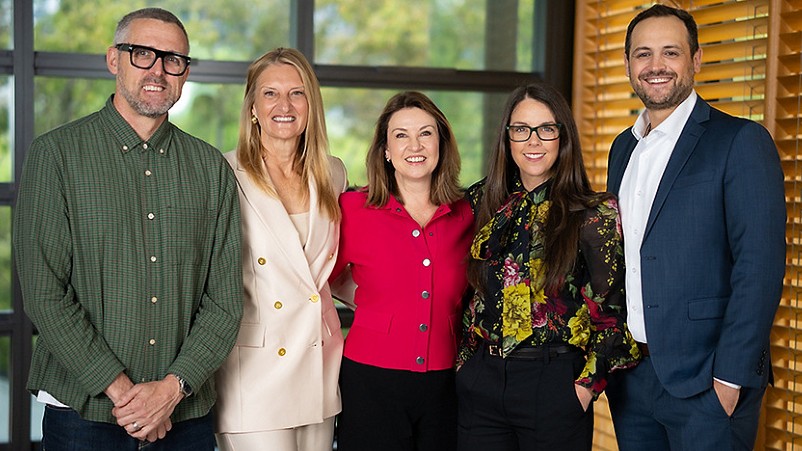
Top tips from marketers on top of their game (left to right): Philips' Josefien Olij, McDonald's Morgan Flatley and Kimberly-Clark's Patricia Corsi.
An Mi3 editorial series brought to you by
QMS
Three top marketers at McDonald’s, Kimberly-Clark and Philips suggest “creative business transformation” is the key to keeping industry alive – and that applies to agencies and consulting firms. Which means some operational and strategic tweaks. Plus the trio offered some tips on what they are looking for from their own teams – and why if marketers are ducking bold choices because they are scared of losing their jobs, they will probably lose it anyway.
Fuller service
Kimberly-Clark’s top marketer, Patricia Corsi, and her counterpart of consumer electronics giant Philips, Josefien Olij, have some succinct advice for agencies and consultants.
Olij suggested the future of marketing is “creative business transformation” – and told Cannes that “It can’t be one versus the other … We need to give a reframe of a new solution that drives impact and growth for an enduring change – and if we don’t do that, this industry is going to die. AI is not going to give that to you – great results come from great ideas”. Hence agencies and partners working with the $24bn firm need to start pitching those ideas in a different way, said Olij.
“Please don’t start your next presentation with your script, but start with what the problem is, and where the solution lies … because you [agencies/partners/consulting firms] think differently … Internally … we are consumed with so much… but you bring a fresh perspective.”
While agency groups are grappling with massive model pressure, Kimberly-Clark’s Corsi underlined that the CPG group sees agencies as “strategic partners” and holds both sides of the table to a “policy of no surprises”. But she thinks the holdcos might benefit from building more bridges over defensive walls.
“The challenge now is that the advertising industry is in a changing moment – and everyone is trying to deal with the changes that are happening in their groups,” said Corsi. “What we need is everyone coming together. Because the consumer does not look at the [agency] brands. They don’t know if it is WPP, IPG, Omnicom, Havas, Publicis – and they don’t care. We do care, tremendously. But it is important to realise that we need media, creative and digital to be together, even if it is two different agencies.”
Top tips
Marketers keen to stay on top of their game should “be the most curious person in the room”, per Corsi. “But curious with a purpose”, she said, or risk “knowing everything about nothing. So pick the topics that you are going to know a lot about”.
Secondly, “be courageous,” said Corsi. “The best advice I got from my father was never stop doing something because you are afraid to lose your job. Because if you don’t do it [out of fear] eventually you will lose your job anyway.”
Philips’ Olij backed that view. She said marketers must take a no regrets approach, and not shy away from ideas that come with risk, but which may being reward. “What is the worst that can happen? Somebody says no … Honestly, that is it – and then you go again for the next one. So pitch your idea and see what happens. It might be scary. But you might be answered with a ‘yes’ – and that is much more scary.”
McDonald’s global CMO, Morgan Flatley, agreed on the need to stay curious, but urged marketers to be selective. “You have to decide what you really want to be good at … and will be known for,” said Flatly.
Equally critical, she said, is to develop “learning agility”.
“I am constantly bombarded with stuff – how do you take it all in quickly and learn? So learning agility is another really important skill.”
Plus, she said all senior marketing people “have to be good at motivating people … at the end of the day, do you build followership, do people want to work for you, be on your team, go the extra mile for you? … How people are going to energise, motivate, lead and build followership is something that I look for [within upcoming marketing leadership] and work to develop.”
AI warning
The marketers were all asked how AI is changing their businesses. Philip’s Olij offered perhaps the most conclusive answer.
Philips has been “driven by technology … for 134 years … But technology was always driving humanity forward in a fairly positive way … Now it is much more negative. It is not necessarily asking you what you need. It is much more saying 'I want everything from you. I want more information, more data, I want to sell you more and more',” said Olij.
“For us as Philips, that is where we need to take a stand. That stand is ‘technology for good’ … and AI is part of that. So it needs to be an enabler, not something that replaces, so that we allow ourselves to continue to drive the right solutions through collaboration and strategic thinking – but always with the human touch.”