‘The big steal’: News Corp chair lashes Atlassian’s Scott Farquhar, tech, AI firms' takedown of copyright law – music, artists, news, film, Australian culture in ‘existential’ crisis
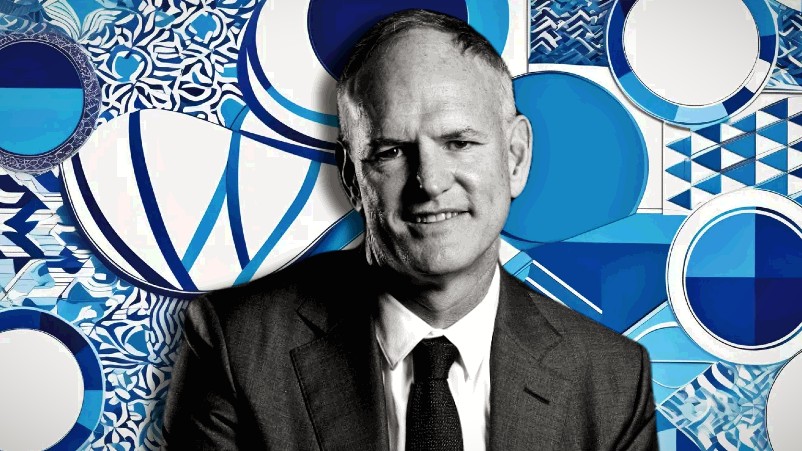
News Corp executive chairman Michael Miller addressed the Melbourne Press Club yesterday with an alarming call-to-action for government, business and society to resist the next wave of “theft” from tech and AI companies wanting to abolish copyright protection on music and content of all creeds to feed and train their AI models in the name of "innovation”. Miller called it an existential moment of surrender or survival for local culture, identity “and ultimately our Australianness” in a blistering but realistic assessment of the assault on IP protection from those in tech and AI standing to gain unprecedented profits and power. Ironically, the same tech lobby – Google and Meta particularly, but now with the added cache of alluring new AI players – were outraged by submissions to the ACCC’s five-year Digital Platforms Inquiry arguing competition, innovation and markets would benefit if the likes of Google and Meta were forced to open up the inner workings of their powerful algorithms. Miller was blunt on the assault from the tech lobby to abolish copyright law: “If it was a video game, it would be called Grand Theft Australia.”
What you need to know:
- Tech and AI firms – local and global – are mounting a campaign for the Federal government to abolish Australian copyright law in order to not pay for IP to develop a multi-trillion dollar AI industry
- “Innovation” is being used as a front by the Tech Council of Australia for a rearguard wrecking ball on the Australian Copyright Act – covering multiple creative industries from film production and music artists to authors and journalists
- Atlassian co-founder and Tech Council chair, Scott Farquhar, told the National Press Club in July that AI was a “productivity revolution…but we need to remove roadblocks. Copyright is one such roadblock”.
- Yesterday News Corp executive chair Michael Miller countered with a blistering address to the Melbourne Press Club warning that the tech industry was with AI, like search and social, again manoeuvring to simply not pay for their business inputs in the name of innovation. They also wanted to ensure “no accountability” on their outputs.
- Miller said the abolishment of the Australian Copyright Act meant AI firms would not have to ask to use the copyright owner’s work, on what terms it could be used and “most disturbingly” would have no say in how much they should be paid.
- It was an “existential moment” in which the Australian government must rule the tech and AI firms, which like any other company, “must pay market rates for inputs to their business”
- He also called on the Albanese government to “move urgently on three fronts”: Deliver the promised support for small news publishers; enact the reworked News Media Bargaining Incentive; and implement a “social license” in which a “package of laws and requirements” would be applied to tech and AI firms to “access Australian consumers”.
If it was a video game, it would be called Grand Theft Australia … we cant afford to repeat past mistakes.
Do as I say...
What would Woolworths do if it were forced to share its purchasing power over suppliers with thousands of local corner stores? Or the same for Atlassian and Canva surrendering ownership and control of their lucrative project management and creative software to build a more competitive, innovative Australia?
Nothing short of a nuclear counter is obvious, yet it’s precisely what global and local tech companies have been prosecuting in the backrooms of Canberra – except their target is the abolishment of copyright laws protecting the IP of Australia’s creative industries. All of them.
Australian copyright protections are the single biggest hurdle for law-bending tech and AI companies to achieve their end game – unrestricted use of anyone’s content to train and ultimately profit from their emerging AI superpowers.
Atlassian’s co-founder and chair of tech lobby group, The Tech Council, Scott Farquhar, went public in July with the tech industry’s renewed – and selective – agenda to eliminate IP protection for those hampering the ambitions of AI’s emerging powerbrokers.
“AI is not just a technology, it’s a productivity revolution,” Farquhar told the National Press Club in July in his role as Tech Council chair. “But to capture this, we need to remove the roadblocks. Copyright is one such roadblock. Without fair use provisions, we risk becoming a backwater for AI development.”
... Not as I do
The real roadblock is that tech does not want to pay for the inputs to the next multi-trillion dollar industry so “innovation” is being used as the front for a rearguard wrecking ball on the IP it needs to gain supremacy.
The campaign by the tech lobby to eliminate Australia’s copyright laws, ensconced in legislation since 1968, triggered the dire warnings yesterday from News Corp’s executive chairman Michael Miller in his address to the Melbourne Press Club.
Those ideologically opposed to News Corp should suspend any resistance on this one, simply because News Corp is saying it. Those with sensibilities at odds with Miller and his news and media organisation should be mindful that the raid on copyright law has implications far beyond publishing and News Corp, as Miller outlined in his address yesterday - there is lethal impact for music, artists, authors, writers, film producers, actors, journalists and even equity market analysts.
“Make no mistake, we are at the dawn of the next new digital landscape and yet we are being challenged to accept another wave of publicly-endorsed theft, and an assault on privacy, our identities and our livelihoods,” Miller said. "If it was a video game, it would be called Grand Theft Australia … we cant afford to repeat past mistakes.”
Rort 2.0
Miller reminded the gathering of journalists – themselves enthusiastically deluded by the early prospect of expanding their reach and impact from social media with prolific personal use and content sharing – that the big tech companies that “shape our world” in previous waves found “extraordinary success” by paying “no money for inputting others' content and accepting no responsibility for their outputs”.
He said the new AI era must not “enshrine the Wild Wild Web” again and that it is vital that sovereign nations “assert their right to decide how this technology plays out in their own societies”.
The tech sector’s gold rush and first “big steal” was based on the free use of other people’s “quality and trusted work and that should never have been allowed to happen. Those who believe we should give up our intellectual property to large language models in the same way we gave it up to search and social cannot be allowed to take us for fools again.”
He described Australia’s Copyright Act as an “exceptional law with an unexceptional name” that is “perfectly able” to deal with AI companies wanting to negotiate with rights holders. “But members of the Tech Council of Australia have got into government offices claiming they need to change the law in order to attract billions of dollars to establish data sheds.”
Could, should, don't
Miller then turned the torch squarely on Atlassian’s Scott Farquhar, and his speech to the National Press Club in July in which he claimed changing copyright laws “could unlock billions” in foreign investment. “The use of the conditional ‘could' is telling,” Miller said of Farquar’s pledge. “How is that the tech lobby has put so little effort into quantifying the benefits to back their claim when the cost they are seeking to impose on us is so high and so quantifiable.”
Farquhar spoke of the need for a “text and data mining exception” to be legislated.
“What this really means is copyright owners would no longer control access to their works,” Miller said. “The owner of the copyright would not have to be asked whether or not someone else could use their work. The owner would not be able to decide on what terms their work could be used, or not used. And most disturbingly the copyright owner would not get to decide how much they should be paid for the use of their work. But the tech advocates have a response to this, they say: “OK, so if you don’t want us to steal your content, then you can opt out. Really?”
Miller called on the Australian government to rule out “one and for all” changing Australia’s copyright law to “benefit these companies”. Like any other company, he said, the tech-AI posse “must pay market rates for inputs to their business”.
Miller said beyond copyright, the Albanese government must move urgently on three fronts:
- Small news publishers have yet to see any of the “promised support” from the News Media Assistance Program
- Enact the reworked News Media Bargaining Incentive and;
- Implement a “Social License” in which a “package of laws and requirements” would require tech companies to meet to “access Australian consumers”
Miller said Optus is “rightly” being held to public account and condemnation over the triple zero failure that resulted in people dying. “But where is the same level of accountability being demanded of social media companies whose algorithms torment our children, prey on the elderly and are responsible for the rise of self-harm and also loss of life?”
Miller said his “own children” are subject to graphic images of Charlie Kirk’s assassination “on high rotation" on social media sites.
“Our laws don’t allow us to do that. How can there be one set of rules for a company like Optus while the tech companies refuse our rules?”
Miller said it was "not too late to set this straight … the time to do so is right now.”
The difference between the news publisher battles in Australia [via the News Media Bargaining Code] and now is that their argument was too late … [and so] Google had all the leverage. Whereas we're still early days today. I still think there's a window where if you have enough publishers to come together and say, ‘this shit stops’ … we can avoid making the same mistakes again.
Heist stakes
Miller's far from alone in urging lawmakers to enforce copyright law rather than weaken it.
Even those who count big tech as paying association members are framing AI scraping as “theft” – like IAB Tech Lab CEO Tony Katsur.
He’s trying to corral a publisher coalition of the willing to force AI giants to the negotiating table via what the IAB calls a Content Monetisation Protocols framework and a bunch of APIs that are intended to help publishers control access to their content, ahead of some kind of collective and individual bargaining with LLM owners to pay to use it. But Katsur admits the LLM owners are highly unlikely to cough-up for IP siphoning without being legally forced.
He told Mi3 in June on the Cannes sidelines that the IAB aims to have the framework live and in market “by Q4 this year.” Per Katsur “let’s not let perfection be the enemy of good … we need to move now.”
In parallel, Katsur said IAB Tech Lab aims to have a publisher Armada – “the ComScore top 100 publishers … in lockstep saying ‘this must stop’", so that the IAB’s lobbying arm can then spearhead legislative change in the US and globally.
It seems a little short of those numbers so far: Per Digiday, the most recent working group meeting last week totalled 35 publishers. The remainder was big tech – and a flotilla of adtech intermediaries likely scoping potential new revenue lines.
Along with APIs, The IAB is also trying to get some basic ground rules in place between LLM owners and publishers.
“There needs to be two simple laws,” per Katsur. “All crawls need to be declared, and all ‘do not crawl’ notifications need to be obeyed. If you're not declaring your crawl, and if you don't obey a ‘do not crawl’ notice you will get fined.” As of now, he said the crawlers are just shape-shifting to get around such notices.
“If the crawlers don't want to do that, I think this has to go to the courts.”
The likes of Google alone has thousands of lawyers to fight such claims, but Katsur is undeterred. “I would not underestimate 100 major publishers banding together. That is one hell of a legal team.”
True, if the IAB can get 100 major publishers onboard. Either way, he said getting the framework live and in market is the first step, enabling publishers – and brands – to measure what is being scraped, and arming them for any future negotiations.
Google and Meta are both IAB members and Katsur said IAB Tech Lab has “had those conversations” with both parties (and both Google and Meta alongside Microsoft and Amazon were at last week’s meeting, though, per Digiday, OpenAI and Perplexity remain conspicuously absent).
But he acknowledged the difference between AI firms engaging with industry bodies and publishers and actually handing over cold, hard cash for content.
“Ultimately, I think very few, if any, will do so voluntarily.”
Hence he said publishers and lawmakers now have a small window to move – or be left trying to negotiate and reverse-regulate entrenched practices.
“This is why we need to get it done. We need to get a position and a solution this year so that we can spend 2026, evangelising, educating, advocating at a state and federal level,” per Katsur.
“The reason why we have to get ahead of it now is I think the difference between the news publisher battles in Australia [via the News Media Bargaining Code] and Canada and now is that their [previous code] argument was too late.
“This is not a dig at Google, because [publishers] would probably not be here today without somebody building a great search engine," he added.
“But Google had all the leverage [in code negotiations, because the index-search-snippets model had been embedded for circa 20 years before lawmakers decided to act]. Whereas we're still early days today. I still think there's a window where if you have enough publishers to come together and say, ‘this shit stops’ … we can avoid making the same mistakes again.”
Get KFC’d
The well-worn analogy for big tech’s LLM scrapers lifting and repackaging IP for profit is that of KFC handing over its secret recipe for free – and then watching McDonald’s eat its lunch.
While the likes of Google, Meta and a phalanx of others are ingesting and recycling as much IP as possible from publishers to train their models and surface content, their own algorithms and ranking systems are kept as secret as the Colonel’s, abetted by thousands of lawyers.
There are examples of companies open-sourcing IP – including plenty by big tech, though these have often also helped them establish industry standards and protocols, thereby netting financial gains and consolidating market power.
There are also genuine benevolent outliers: Volvo in 1959 gave away the patent for the three-point seatbelt so that other carmakers could use it for free – saving millions of lives since.
Elon eons
Tesla in 2014 also effectively open-sourced its patents in the hope of advancing electric vehicle adoption, in sharp contrast to CEO Elon Musk’s aggressive legal pursuit of rival AI firms, particularly OpenAI, which he co-founded, over alleged IP theft.
But in tech, as in politics, 11 years is eons. Now the two are both irreversibly entwined and outside of the US, on a collision course.