Using consideration to build cachet with finance: NAB small business marketing chief challenges commercial marketing mantra, embraces tech and compounding creative

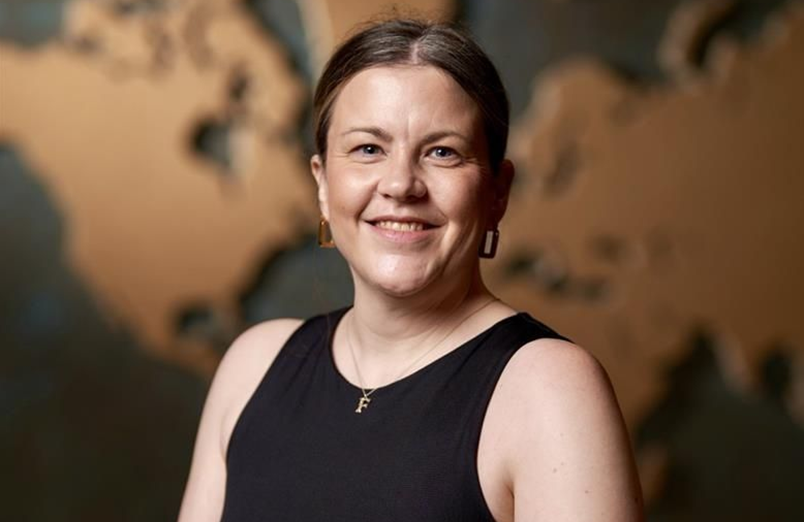
National Australia Bank's head of small business marketing, Katherine Venus
Marketers repeatedly get told the path to commerciality is learning the language of the CFO. But for National Australia Bank’s head of small business marketing, Katherine Venus, being a commercially minded marketer is also about educating the rest of the organisation around the powerful way marketers build consideration that feeds future demand. Here, the committed marketing professional, who was awarded this year’s Future Leader of the Year gong at the Australian Marketing Institute’s Excellence, pitches her views on what commerciality is really all about, how working on NAB’s JAB campaign helped her understand the power of compounding brand and creative platforms, addressing customer need through NAB’s ‘customer brain’ tech advancements, and why she’s more than happy to remain a marketer.
Commercial marketing does not just mean parroting the language of the finance department. It’s as much about educating and influencing other parts of the business so they understand what marketing does to drive future demand as it is about connecting to the P&L, says National Australia Bank’s head of small business marketing, Katherine Venus.
“I would still consider a metric like consideration as a commercial outcome. Because if you can demonstrate why that pulls through the funnel, and how we have done that in potential market value or whatever that may be, so you can relate consideration to another gain,” she tells Mi3.
Venus was awarded the Future Leader of the Year Award at this year’s Australian Marketing Institute (AMI) Excellence Awards. The category rewards a rising star of the marketing industry with at least eight years’ experience in a marketing role, and who’s graduated from the AMI’s Emerging Marketers Mentoring Program.
Venus talks to three key imperatives behind modern marketing effectiveness. Clearly one of these is marketing’s commerciality, something she’s always prided herself on.
“I’ve always been very intentional around spending X amount of dollars and returning Y in revenue, ROMI or whatever the return metric is. That is such a critical skill for a marketing team, and it’s not going away. It will only get more intense as we try and justify future spend,” she comments. That you can understand how to return that back to the business.”
This is also vital if you’re to get stakeholders to understand the importance of marketing, what it delivers for business and the metrics it employs to understand future demand.
“Yes, we have to understand P&Ls. Yes, we have to understand the pressures that are on our finance team or our product team or our distribution team. But equally, those teams have to understand what marketing does for the business through the funnel, why building awareness is important, why consideration is important because it maximises the number of people that are willing to go through the funnel for you,” argues Venus.
“I truly think that it's still a two-way street. Sometimes we forget that when we're talking as marketers outside of the business. We often say it's really important to talk to our CEOs, our CFOs in their language. And yes, that is true. But it's also important to sit down and have a conversation with those people and teach them the importance of marketing and for them to truly understand it. That's where success can be found.”
Venus describes her own journey to explain what it meant to increase consideration with cross-functional peers. “What we explained is this: If there's X amount of Australian businesses in the market, and if we can have two percentage points more of them consider NAB, that translates to X at the top of the funnel and Y at the bottom. It got us to that light bulb moment of okay, so that's why that consideration metric is important,” she says.
“The P&L, the unit economics, and making sure your return is higher than the cost of acquisition is also critical. Or if not, it's because it's the future value of that customer or that product. But I would still consider a metric like consideration as a commercial outcome … So there are heaps of different ways to be commercial.”
It’s a hot topic – at the AMI’s recent CPM Summit, a panel of former CMOs now CEOs discussing how not to screw up marketing’s commercial credibility indicated there’s no clear consensus on how far it too far on advocating for brand and creative versus converting to the language of the CFO. Each, like Venus, also talked to their own direct experiences, good and bad, of trying to build marketing’s credibility with non-marketing executives amid the rise and obsession with short-term digital performance metrics.
Working her own team, Venus has also focused on moving beyond the clicks, the website lands, the inquiries. “When you've got a team ranging in seniority and things like that, that's obviously where you start. But it’s about moving on beyond those,” she says.
Yes, we have to understand P&Ls. Yes, we have to understand the pressures that are on our finance team or our product team or our distribution team. But equally, those teams have to understand what marketing does for the business through the funnel, why building awareness is important, why consideration is important because it maximises the number of people that are willing to go through the funnel for you.
Tech talk and customer brains
The second imperative in marketing is being able to leverage technology in the industry “as well as you possibly can in the moment you're currently in”, per Venus. That’s a nod to technology of today probably not being the technology you’ll be using in 12 months.
“That pace of change is certainly something that is new. And acknowledging that and driving that within your teams, I think is pretty critical,” she continues.
In the case of NAB, one of the key technologies Venue and her small business marketing team are leveraging is what’s been dubbed its ‘customer brain’. Leveraging Pega decisioning and Tealium technology, and as reported by Mi3, the brain orchestrates customer engagement across 530 next-best actions using 10,000 business rules, 1200 customer attributes and 3500 adaptive models that learn from customer behaviour in real time. This works in concert with NAB’s Adobe martech platforms.
But even more broadly, Venus points to two pieces that have driven impactful change in the time she’s been in NAB’s marketing cohort. One is the complementary focus on customer need.
“Our CEO Andrew Irvine would refer to it as ‘customer obsession’, and really trying to break open what might be a business opportunity or a business problem and find the customer need. That skill, I think, has really been refined over probably the first half of my career,” she says.
One of the nuances Venus observed after moving from a six-year stint in NAB’s personal bank and into business banking, is how different those customer journeys look.
“In the personal bank, it's somewhat linear: You go to school, go to uni, you might start a savings account. Then you might look for your first home. Then you might upgrade. Then you might get married, and then you might get an investment property,” she explains.
“In business, one thing we really cracked into was that there is no linear journey. You can start a business; it could be unsuccessful. What happens then? And how do we support you into your next venture? Or you could start it and gain a level of success, and that's where you're comfortable – not every small business wants to grow into a multi-billion-dollar organisation. Or there is the growth and full trajectory into a medium-sized business, then large-scale business.
“Understanding that in business banking and that for our customers, that journey isn't linear, has allowed us to then use the technology we have at our disposal to really connect all of those moments for our customers.”
The more recent obvious tech transformer NAB’s marketers are working through is AI. “That’s probably had more of an impact internally on how we can build velocity, how we can move through the marketing process in a way that is more streamlined, rather than having an impact on the piece of marketing that sits in front of our customer,” Venus says. “I feel like that is still to the same quality, with the same customer insight, with the same strategic intent. We just may have moved from A to Z with a little more streamlined process.”
Unified brand storytelling
Complementary to this has been recent work NAB’s CMO, Natalie Lockwood, has been doing to unify disjointed brand and marketing componentry across the NAB organisation under a customer-first, enterprise-wide approach. As detailed in Lockwood’s CMO Awards submission, it’s driven by the philosophy that “marketing isn’t about making noise; it’s about making sense”.
A key part of this has been unifying brand and creative under a single creative platform, forming cross-functional teams, and establishing its multi-phased, all-in brand campaign, ‘Your Partner for Every Stage’.
“The work that we have out in market now, which is a platform called ‘Your Partner for Every Stage’, really unifies around more than money across the enterprise,” agrees Venus. “We have a big marketing team that are doing different jobs for their business partners. Two years ago, that could probably have seemed a little bit inconsistent in market from a consumer perspective. Through Natalie’s leadership, what we've been able to do over the last 12 to 18 months is really unify that, so there is a consistent message in market.”
How NAB goes about it is by compounding on its 11-year-old brand proposition, ‘More than Money’. As reported by Mi3, the platform continues to deliver measurable gains, including record tagline awareness, +12 per cent brand logo recognition to 76 per cent over the last four years, per brand tracking data, and +20 per cent media efficiency.
“Talk about distinctive brand assets; we certainly value that as one of ours,” adds Venus.
Nor does Venus see the longstanding creative and brand platform blocking fresh thinking. “The ‘more’ in ‘more than money’ allows you that flexibility to talk to different things and different environments and different macro changes,” she says.
For example, it enabled the ‘more’ in ‘more than money’ to mean something pretty specific during Covid, fuelling NAB’s ‘JAB’ work. The 2021 campaign saw NAB replace the letters in its brand to spell ‘JAB’ to encourage Australians to get new Covid vaccination, and was supported by a large-scale paid media campaign covering TV, digital and stadium signage during the AFL finals series. NAB also partnered with Unicef Australia on the ‘Give the World a Shot’ initiative, donating funds for a vaccine to give to those in need across neighbouring Pacific nations for every employee that was vaccinated.
It’s a great example of “a brand that stood behind more than money”, says Venus, who directly worked on the NAB ‘JAB’ work and counts it as an important milestone in her 12 years at NAB thus far.
“The NAB ‘JAB’ campaign was born out of an insight that in order to support small businesses getting back on their feet, we needed to support our communities in increasing vaccination rates so they could open again and start trading again. That was a pretty special piece of work,” Venus says.
“Whereas ‘more than money’ to a business owner today could mean what's the growth journey. We have a brand that allows for flexibility in its nature, being ‘more than money’, and we don't get bored of it. We don't think we need to change it out. We're often talking internally around marketers get sick of it much quicker than the Australian population. Marketers are watching that wear out metric a lot faster than the Australian population, and we keep that in mind.”
Influencer factors
Venus’ third must-have skill as a marketing leader is building influence across the organisation. During her interview for the award, Venus spoke to building genuine, foundational relationships with those in her team and those she works with directly and indirectly, to get the most impact.
“I truly believe that having strong foundational relationships and personal relationships, not friendships, but being able to understand who your kids are or what your dog's name is or what's happening in your life is a really important component of building a strong, high-performing team anywhere,” she comments.
“Influence comes from those relationships. A portion of my team faces into the business, so they’re facing into different areas of the business, and they build marketing strategies on their behalf. Being able to articulate that really well in a language that they understand, and measurement they understand, is really important.”
Marketer through and through
While the marketing community is full of diverse backgrounds – and many individuals who didn’t study or start in marketing itself – Venus is an example of someone fascinated by advertising since she was a kid. She then majored in marketing at university.
“I knew that's where that intersection of creativity, commercial, and science would intersect - because I'm quite mathematically oriented, but creative as well,” she comments. Venus came straight out of uni into NAB as a graduate in 2013, although not in marketing initially.
“I didn't get into the marketing stream, but my sole purpose through the grad program was to find myself a marketing role,” she recalls. Over the last 12 years, she’s worked marketing events for what was then NAB’s wealth function, to the personal banking marketing team and all of its retail consumer products: credit cards, personal loans, the app, home lending. Venus led personal banking as the head of home loans marketing, before joining the small business marketing team six years ago.
She spent her first year navigating a pretty nerve-wracking time for small business owners across the country as we entered the Covid-19 pandemic. Then came all the challenges of the current economic environment, rate rises, challenges and opportunities.
“What I've learnt most about small business customers and owners in the last five years is that they are pretty resilient people,” Venus says. “We run a pretty significant content program focused on customer stories, and finding those really beautiful stories of resilience, capturing opportunity or growth or whatever it may be across the country.
“Being able to demonstrate you truly understand customers and what they may be going through as a small business owner in Rockhampton really resonates with the audience. It can be such an isolating role – really, what those businesses are looking for is partnership.”
Respect your speciality
As to where her career goes next, Venus is happy staying a generalist marketer. When she asked a highly respected mentor for advice on whether she should pivot to product or customer-facing roles, and what to build next, the advice that stuck with her is this: ‘Respect your specialty’,
“It has stuck in my head ever since. That's something I really want to do” Be the career marketer. That doesn't mean closing the door to opportunities to learn from other areas and build those relationships. But that's really stuck with me to respect my specialty. Respect that marketing is a function that has such capacity for change, capacity for growth and innovation, that you can learn so much by staying in it,” Venus says.
“That importance of generalisation has been part of what I would probably attribute to feeling like I can stay here, and stay here for a long time.”