NAB found the customers it wasn't talking to and saw mortgage engagement surge from 20% to 75%; data science leader says agents should design decisions, not make them
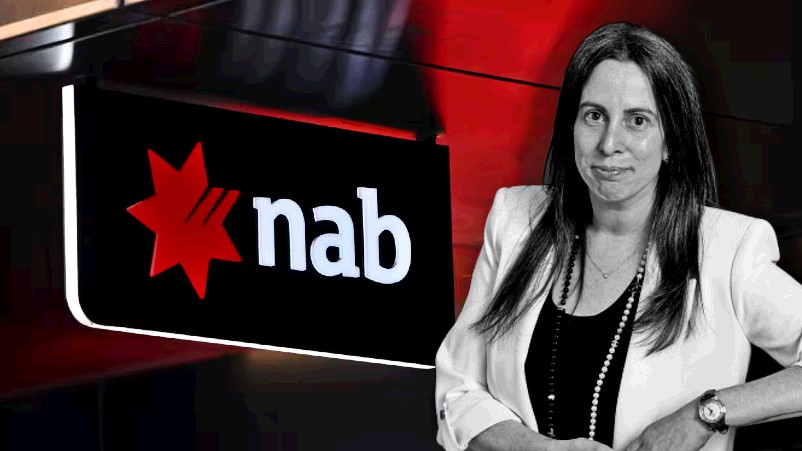
NAB's Jess Cuthberson

When it comes to automating decisioning, the issue for a bank like NAB is not a shortage of information – it's knowing which customer needs matter, when they matter and how to respond without drowning people in irrelevant offers. After spending much of this decade building a decisioning engine powered by thousands of rules, models and customer signals, the bank is now using AI not to make decisions but to uncover the opportunities humans overlook. A review of its home lending customers found that NAB was actively engaging only a fraction of them through much of the mortgage lifecycle. AI-assisted planning helped lift that figure from 20 per cent to 75 per cent, revealing that the most valuable customer moments are often the ones organisations fail to see. There is also a broader lesson in that discovery. AI's most immediate value may not be replacing human judgment, but helping organisations identify where judgment should be applied in the first place. It turns out that uncovering overlooked opportunities can prove more valuable than creating entirely new ones.
What you need to know:
- NAB's 'customer brain' now orchestrates customer engagement across 530 next-best actions, 10,000 business rules, 1,200 customer attributes and 3,500 adaptive models that learn from customer behaviour in real time.
- The bank is using AI less to make customer decisions and more to identify gaps in customer journeys, uncover overlooked engagement opportunities and accelerate planning and deployment processes.
- A review of NAB's home lending portfolio found the bank was actively engaging only around 20 per cent of customers through much of the mortgage lifecycle; AI-assisted journey mapping helped lift that coverage to roughly 75 per cent.
- Executive Customer Decisioning and Data Science lead Jess Cuthbertson says AI's biggest enterprise value may be helping organisations discover the customers and moments they are currently missing rather than replacing staff or generating content.
- NAB has spent four years building a unified data lakehouse and customer data foundation, which Cuthbertson describes as the prerequisite for effective personalisation, decisioning and AI.
- The 'customer brain' acts as a control layer, continuously assessing customer signals and determining the most relevant conversation, offer, service prompt or engagement opportunity across channels.
- Adaptive models feed on customer responses, allowing the system to continuously refine recommendations and switch off underperforming actions based on real-world outcomes.
- NAB is now incorporating unstructured data, including call centre transcripts and web chat interactions, to provide richer customer context and improve decision-making.
- AI-powered tools are dramatically reducing journey mapping and planning effort, turning exercises that previously required workshops and stakeholder sessions into tasks completed in minutes.
- The bank currently takes about three days to build, test and deploy a new customer action, but aims to cut that to hours by using AI agents to automate rule creation and operational workflows.
- Cuthbertson says the goal of agentic AI is not to replace the decisioning engine but to help the bank identify more meaningful customer moments and rapidly convert them into actionable engagement opportunities.
We're starting to understand more deeply what customers respond to and what their needs are. It's built once, it's always on, and it's reusable, and that's really important. Our focus isn't trying to replicate that. It's about how we get from 530 actions to 2,500 actions, to all of these different moments for customers that are really important.
Real-time decisioning, which is increasingly being blended with generative and agentic AI, has helped uncover thousands of overlooked customer moments at a major Australian bank, lifting mortgage engagement coverage from 20 per cent to 75 per cent and reshaping its AI strategy.
Those results have also reshaped how National Australia Bank thinks about AI, and it is now deploying it to uncover opportunities, identify gaps in customer journeys and expand the reach of a decisioning platform that already manages hundreds of customer actions.
The home lending exercise also offers a glimpse into a much larger transformation underway inside the bank. Since the start of the decade, and its investment in Pega's real-time decisioning software, NAB has been building and developing a platform designed to determine the most relevant service message, product recommendation or engagement opportunity for millions of customers. The scale of that operation is substantial, and the challenge has shifted from building the technology to finding enough meaningful customer moments to feed it.
For Jess Cuthbertson, NAB's Executive Customer Decisioning and Data Science, the challenge is identifying the right moments when a customer might benefit from a service, piece of guidance or product recommendation.
That focus on the customer benefit as opposed to a short-term benefit to the bank is important. As Mi3 has reported previously, real-time decision-making platforms are considered better able to take into account calculations like lifetime customer value than traditional marketing technology platforms. It's the difference between 'Will they sign up for a credit card?' and 'should they sign up for a credit card?.'
The bank's decisioning platform sits at the centre of that effort and its capability rests on foundations that were built long before the current wave of enthusiasm around generative AI.
Per Cuthbertson: "The most important layer, I think, is the data layer".
"How do you create a single trusted view of your customers? How do you create a single trusted view of your customers? With all of the new tooling out today, it's really a great opportunity to be able to understand deeper behavioural information about our customers, and their context. I think it sounds obvious, but as I talk to lots of organisations, they sometimes go straight into the one-to-one personalisation, and go, 'Okay. Well, how do I get my data right for this?' We see it as a foundational capability that underpins every everything in our strategy."
NAB has been building a data lakehouse and consolidated customer data environment designed to bring together information from across the organisation. Data warehouses traditionally serve as the structured backbone of enterprise analytics, storing highly organised information optimised for reporting, business intelligence and decision-making. A lakehouse architecture, in contrast, builds on that foundation and enables the storage of vast amounts of raw and unstructured information, with many of the governance, performance and management capabilities typically associated with data warehouses.
"We've spent the past four years building out our data lakehouse, single data warehouse, because I fundamentally believe you can't make good decisions without having the good data foundations at the bottom," said Cuthbertson.
The strategy reflects the bank's belief that personalisation begins with customer understanding. While many organisations have rushed to deploy AI-powered assistants and conversational interfaces, NAB's execs say they have focused first on creating a trusted customer view capable of supporting decisions at scale.
"Data gives you that kind of foundation of truth, and then decisioning gives you that confidence and control layer that you're having the right conversation for customers," Cuthbertson said. "We talk about the right conversation at the right time in the right channel for our customers, and that is our customer brain. For me, that is where all the deterministic rules live. That's where we are going to have key consistency. The same situation leads to the same outcome, no matter how many times you run it. You have confidence that you're going to get that single version of truth, and so you get consistency and explainability. We can stand behind every decision that we make."
The system determines which action should be prioritised among hundreds of competing possibilities. Some actions are service-related while others focus on engagement, education or sales. Together, they form a constantly evolving library of customer interactions.
The scale of that library has expanded steadily. "We've got 530 next best actions that we've built up in our library. We've got 10,000 rules that our system manages. We've got 1,200 data attributes. We've got 3,500 adaptive models running, getting real-time feedback from how customers are interacting with us," said Cutherbertson.
She told reporters and analysts in a roundtable at Pegaworld in the US last week, "We're starting to understand more deeply what customers respond to and what their needs are. It's built once, it's always on, and it's reusable, and that's really important. Our focus isn't trying to replicate that. It's about how we get from 530 actions to 2,500 actions, to all of these different moments for customers that are really important."
She added, "The third layer is agentic, because it would be silly of me to say it's not an important part of our strategy. That's how I'm thinking about activating these decisions and this foundational layer for us. I think it's really exciting because it changes how we're interacting with our customers."
I'm looking forward to a world where agents are building the decisioning rules. For me, they're still deterministic rules, but we can automate that. We can take time away from humans having to build and code those rules by using agents to do it. That means less time managing the system and more time, as I said, on the front end thinking about what we're doing, what we're building, and improving the quality of the decisions.
Continuous learning
Those adaptive models help the system learn from customer responses, elevating actions that resonate with customers while gradually deprioritising those that fail to generate engagement. It's a process that allows the bank to continuously refine how it communicates with customers while maintaining consistency across channels and business units.
"You can ask questions, you can understand the deeper context, and that's been one of the key foundations of decisioning: how you feed that information in. I think it gives us a richer pool of information to understand our customers and helps us tease out more intent," Cuthbertson said.
When it comes to the next-best conversation, those conversations are pulling from that foundation of decisioning. "It helps our agents engage with customers in a different way, but ultimately, I can still trust the decisions that are coming out of it," she continued.
"For us, all the layers have to work together. If one of them is weak, there's going to be a weakness throughout the whole foundation. It never changes how we act, but decisioning determines whether we're acting correctly. That's a really important distinction in the three layers from a decisioning perspective."
But the success of the platform created a new problem for NAB. As the number of actions grew, the bank began asking whether it was identifying enough customer moments to justify them.
The question led to a review of the home lending portfolio. NAB had already invested heavily in helping customers choose the right mortgage product and become established after settlement. It had also built programs designed to identify customers who might be preparing to leave. But the bulk of the customer journey in between those moments was being ignored.
"We were doing a really good job of engaging customers. We'd built a lot of actions, but we were focused on the moments of truth when a customer comes onto our system. How do we help them choose the right product, and how do we get them set up with all their online banking and digital needs? We also did a bunch of stuff at the back end, when we thought they might leave us. Then we realised we weren't really speaking to them in the middle of that journey," Cutherbertson said.
"By being able to step back and look at it from a top-down perspective, we found that we were only engaging about 20% of our customer base. We used a blueprint to take that top-down view and came up with a series of actions to fill the gaps."
The result was a dramatic increase in customer coverage.
"We're now talking to 75% of our customer base. Simple things like little milestones and nudges when they're paying off or paying down their mortgage help keep them engaged throughout the lifecycle," she said.
Some of the new interactions are relatively simple. "It just keeps them engaged throughout the lifecycle."
Smarter team decisioning
Of course, mapping journeys and identifying opportunities can consume significant time and resources, but the bank is finding better news on that front also, as tools mature.
"Where I see agents playing a role is helping us spot those opportunities more proactively, rather than somebody having to go in manually or having to do a workshop with 20 people to map out that journey," Cuthbertson said. "On the front end of planning, it's usually around the number of people involved in coming up with ideas, the quality of those ideas, and the time to market. If you think about a normal marketing ecosystem, when you're planning what you want to design the system to look like, that could be at least a week of workshops with lots of different opinions. Now, you can just pick a Blueprint (part of the Pega toolkit). We did it a couple of weeks ago in a workshop, where we pulled it up and had all of that mapped out in about a minute.
"What you're then doing is having a debate about what's the priority and where we think we want to play, rather than everybody trying to come up with a bunch of ideas."
Cuthbertson sees a future where speed-to-design accelerates, and changes how many people are required to ideate.
"Where we haven't yet done the work, but what's coming in the Pega roadmap, is around time to market. It usually takes us about three days end-to-end - not full capacity, but three days - for building, testing, and deploying actions. I want to get that down into hours."
She also believed AI can help automate much of the operational work involved in maintaining large decisioning environments.
"I'm looking forward to a world where agents are building the decisioning rules. For me, they're still deterministic rules, but we can automate that. We can take time away from humans having to build and code those rules by using agents to do it. That means less time managing the system and more time, as I said, on the front end thinking about what we're doing, what we're building, and improving the quality of the decisions. It's really about automating those routine tasks and elevating the thinking around what we're putting into the system."
According to Cuthbertson: "I think being more customer-obsessed is about being able to take that step back and look at both sides of it: making it more efficient so people can focus on the right things to put into the system. So that's what I'm thinking about now. I do think having agents backed by good decisions is going to be a key differentiator for us."
NAB is also expanding the types of information available to its customer brain. The first generation of the platform relied primarily on structured customer data such as transactions, accounts, balances and product holdings. More recently, as the data lake infrastructure has evolved, advances in AI have made it possible to extract value from less structured sources.
"We started off with our core customer structured data: Who are your customers, what are their transactions, what accounts they hold, what services that they use, that's your core foundation. Now, what we're starting to really be able to discover at scale is your more unstructured data. We are looking at call centre transcripts, web chat, and some of the new tools and techniques make it faster and a lot simpler. Actually, the quality of what you get out is much better," said Cutherbertson. "We look at things like [when] customers have called in lodging something like a transaction dispute. We can kind of get that context right away and feed that back into the engine."
Actions are evaluated based on customer engagement and the outcomes they generate, she says. Those that fail to deliver value can be modified or removed.
"If it's not working, why bother running it? Switch it off."