‘It’s going to take the core out’: David Droga warns agencies must move beyond disposable creative, billable effort and nostalgia; AI-driven media disruption will hollow out HoldCos
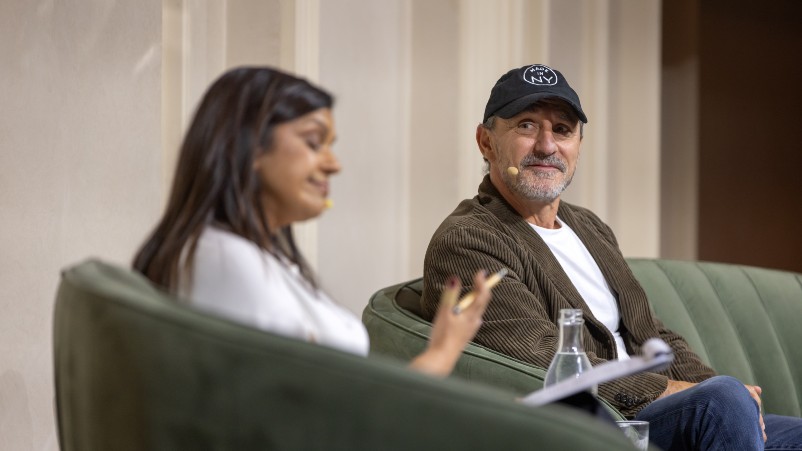
Sunita Gloster and David Droga

Accenture vice-chair and former Accenture Song CEO, David Droga warned yesterday that tech platforms are spending billions to automate media and rip the economic core from holding companies. That will leave agencies fighting over whatever the machines cannot do cheaper. But that last point might not be such a bad thing. The creative industry sage's prescription is equally blunt. Stop giving creativity away, stop billing for effort and stop trying to restore an industry built for another age. Agencies must push into commerce, customer service and digital products, tie their fortunes to business outcomes and put creative thinkers behind the wheel. AI will raise the floor, he argued. The opportunity belongs to the people capable of raising the ceiling.
What you need to know:
- Creative industry sage David Droga has warned AI and technology platforms could strip media revenue from advertising holding companies and dismantle their traditional business models.
- Brands will still need independent advisers that understand consumers, strategy and how to operate between clients and powerful technology platforms, he argues.
- Droga also believes agencies must stop giving creativity away to win media accounts and instead demonstrate its commercial value.
- Speaking at yesterday's Advertising Council AWARD Industry lunch, Droga urged agencies to expand into commerce, customer service and digital products while shifting remuneration from effort towards measurable outcomes.
- AI will automate conventional work and raise minimum standards, increasing the value of emotional judgment, taste and unconventional thinking.
- Creative people should lead companies rather than individual departments because they can simplify complexity, challenge assumptions and redesign businesses.
When everything becomes automated, and more efficiency just becomes the gold standard, then we’re going to go back to... who are the difference makers? Who are the people that are going to think the outrageous and the emotional and the empathetic?
David Droga had quite a few fucks to give during his turn on the stage at yesterday's Advertising Council AWARD Industry lunch. At least nine by Mi3's counting, and that was an early tally. But the advertising legend’s language was considerably less confronting than his message.
The global creative sage and Droga5 founder warned AI-driven disruption of media could hollow out advertising holding companies, forcing agencies to rebuild around independent advice, specialist creativity and measurable business outcomes.
He told attendees, "The business model of the industry is broken or changed, but the necessity of the role we play as creative thinkers is more in demand and more needed now."
According to Droga, the industry’s traditional business model had broken even as companies faced growing demand for creative judgment. Automation would make conventional production and media processes faster and cheaper, he said, leaving agencies to compete through taste, consumer understanding and influence across the c-suite.
"When everything becomes automated and more efficiency just becomes the gold standard, then we’re going to go back to ... who are the difference makers? Who are the people that are going to think the outrageous and the emotional and the empathetic?" he said.
Per Droga, holding companies face a particular threat because they have traditionally made much of their money from media-related activities. That approach starts to fray and will eventually tear as technology companies invest more heavily in systems to disrupt those processes, potentially removing a major source of revenue from agency groups.
"What they don't realise is these tech companies – because I've been in some of the rooms – they're working on things, running billions of dollars, to disrupt the media industry. When that happens, it's going to take the core out of these Holding companies, and they're just going to be disintegrated," he said. "I don't mean they're all going to disappear because there needs to be, no matter what ... there's always going to be a need for a veneer or a distance between platforms which hold power and brand suppliers, because there needs to be someone who understands consumers and understands strategy."
In that context, brands would still need independent advisers capable of operating between themselves and the technology platforms that increasingly control media, data and distribution.
“The platforms have a whole lot of power, but the clients know that the platforms don’t have their best interests at heart,” he said.
Agencies could occupy that position by offering consumer understanding, strategy, taste and loyalty to the client, Droga said. However, their role could no longer be confined to producing disposable advertising or selling creative services cheaply to secure larger media assignments.
“They’re giving the creative away to try and win the accounts,” he said. “So they’re immediately telling clients they shouldn’t pay the price. It’s not worth it.”
Extended reach
Droga said agencies needed to extend their reach into areas including commerce, customer service and digital products while building relationships that touched more parts of a client’s business. Smaller firms could wield significant influence without recreating the headcount and structures of traditional agency networks if they secured access to more decision-makers across the c-suite.
The commercial model must also change, he said. “We need to move away from getting paid for effort and move into getting paid for outcomes,” Droga said.
He acknowledged tying agency remuneration to outcomes was difficult. Agencies would nevertheless struggle to claim a more strategic role if they continued to charge primarily for labour and production volume, he said.
Drawing on his own experience at Accenture Song, he claimed, "I can tell you when I was at Accenture Song, we started moving much more to outcomes, but not 100 per cent. Why did we grow from US$12 billion to $20 billion in four years? Not just because we moved into outcomes, but also because we started offering more things in the market as[other] things shrunk. We grew in commerce, we grew in customer service, we grew in building digital products."
And in case anyone in the audience missed his point, Droga stressed, "You know, people are nostalgic. Success is not. So we have got to stop being fucking nostalgic for the things that got us to where we are."
Instead, he argued that talent should be applied to move in different ways.
Most advertising, most marketing, most music, most journalism, most architecture is fucking mediocre. If AI can do a better version of that and do best practices, knock yourself out. If you raise the floor, you also raise the ceiling.
Don't fear the robot
Droga rejected the idea AI would eliminate the need for creative people. He said the technology could produce conventional work faster and more cheaply, particularly where advertising already relied on formulas, research and compromise.
“Most advertising, most marketing, most music, most journalism, most architecture is fucking mediocre,” he said. “If AI can do a better version of that and do best practices, knock yourself out. If you raise the floor, you also raise the ceiling.”
As companies gain access to similar tools and established practices, much of their output could begin to look alike, Droga said. The most valuable creative work would continue to draw on qualities he described as “irrational, illogical, emotional, context-based.”
He advocated for the idea that creativity should also be understood as a leadership capability rather than a function restricted to communications departments.
"That's where magic happens, and it's always the same. Every time you hear something, you see something, you feel something, it's not linear, and that's what we bring. And that's why I get creative people in positions where you can tether that to business."
At Accenture, Droga was part of an executive team of seven people.
"I didn't understand half of what that was all about. I used to joke that a third of my day was, 'I don't even know what you're talking about'. Another third, I'm madly talking about meetings about meetings about meetings, and the other third was so mind-blowingly amazing. I was like ... if I can get rid of the middle third, and work out which bucket is the first third ... I want to get to the end with everything, and I want to get to the creative people. What is creativity?"
According to Droga, creativity is doing more with what you inherit. "You inherit something, you do something more with it. You turn it into something better.”
Applied to business leadership, that approach could help companies redesign products, organisations and commercial models, he said. Creative thinkers were often able to simplify complicated problems, generate alternatives and continue working when an initial idea failed.
This was the core of his argument: That creative professionals made for effective chief executives or chief strategy officers because they understand consumers, products and how to see beyond established assumptions. He said creative leaders should have greater authority within companies rather than being treated as the operators of a single department.
"I want those people … to be the people with the hands on the steering wheel running the companies. I don’t want them to be running a department… Put creative people who care about consumers; who care about products… You put them in charge of companies," Droga said. “The best thing about creative people is we simplify things. We don’t get caught up in acronyms and politics.”
He also noted large agencies and companies had an unfortunate habit of responding to disruption by adding structures and processes without removing those that had become obsolete.
“Every time an agency or a company reinvents themselves, they don’t go back to basics,” he said. “They just add another layer.”
Droga's principal concern was advertising leaders were trying to restore an industry built for an earlier market. He cited Netflix’s transition from mailing discs to streaming as an example of a company redesigning its system and changing consumer behaviour when its original model became outdated.
“I worry people are busy trying to fix the industry as it was,” Droga said. “They’re trying to restore the industry.”
It's an approach that ultimately leads nowhere, he argued, because it would not prepare agencies for a market in which the historical relationships between marketing expenditure, consumer behaviour and commercial returns had become less reliable, he said.
Businesses once operated with greater security, certainty and predictability about the results of their investments.
“That does not exist anymore,” Droga said. “Certainty and predictability don’t exist as much.”
Arise, creatives!
Creative people are also valuable in that environment because they were accustomed to ideas failing, conditions changing and the need to find another path, he said. They were trained to use lateral thinking and did not assume that a single proposed answer would succeed.
Droga also described trust as an essential but demanding part of the agency-client relationship. Agencies sometimes found it convenient to blame poor work on clients who did not trust them, he said. A client who gave an agency genuine trust removed that excuse and increased the pressure to deliver.
“When a client trusts you, you sit there, and you’re thinking, ‘OK, I have to live up to those expectations, and I don’t want to lose that trust,’” he said.
That responsibility required a level of care that could not be fully captured in contracts or statements of work, Droga said.
“I’ve always said caring’s out of scope; I care anyway,” he said.
Technological change had also created a shared learning challenge for people at different stages of their careers, Droga said. Experienced professionals and newcomers were learning about emerging AI tools at roughly the same time, giving both groups an opportunity to influence how the technology was used.
Agencies, he said, would need people with distinct perspectives rather than teams assembled around agreement. People could share values and a destination while holding different views about how to reach it.
And he urged emerging creatives to aim beyond finding a position within the industry’s existing structure. “Students shouldn’t be thinking about how to break into the industry,” Droga said. “They should be thinking about how to break the industry.”