Tackling marketing's infamous 'Ferrari problem': RMIT's new martech lab will equip next-gen marketers to confront messy integrations, privacy, data plumbing and suite versus stack
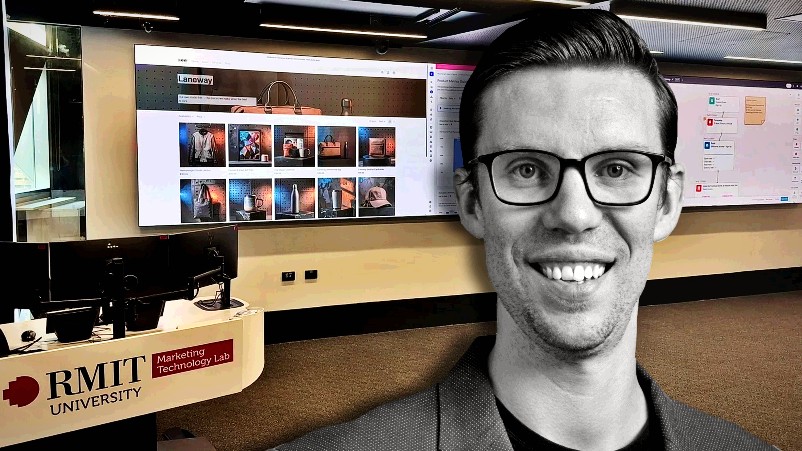
RMIT's Jason Pallant

It is perhaps marketing's most famous, and frequently referenced exasperation with the technology that sits at the core of how brands operate: 'I've got a Ferrari in the garage but nobody to drive it.' Partly that’s because marketers often fail to comprehend what they are getting themselves into; partly it's because corporate business plans treat skills and capabilities as an afterthought. And if we are being honest, it's also because not everybody needs a Ferrari when a ute will do just as well. Now RMIT's Jason Pallant wants to plug an SF90 Spider-shaped hole in the knowledge gap, start issuing licences, and help brands to build qualified pit crews. He and his team are taking aim at martech’s expensive failure loop: Organisations keep buying more software while struggling to marshal the people, data and internal cooperation needed to make existing platforms deliver. Starting in August, the University's new Martech Lab - powering one of only three undergraduate Martech majors in the world - will put students through the harder work that follows the sales pitch, from stack design and implementation to privacy, change management and cross-functional execution, while testing whether suite-led buying habits can survive direct comparison with composable alternatives
What you need to know:
- RMIT’s soon-to-launch Marketing Technology Lab argues martech maturity should be judged by how well organisations turn customer strategy into coordinated execution – not by the size or sophistication of their tech stacks.
- Lab director, Jason Pallant says the biggest barriers are people, skills, ownership and cross-functional alignment, with implementation often harder than buying the technology.
- RMIT has built a three-year martech major, postgraduate elective and purpose-built lab covering customer data, automation, personalisation, adtech, privacy and implementation.
- Students will work with platforms including Salesforce, Adobe, Iterable, Amplitude and others, comparing integrated suites with composable stacks using a simulated Shopify business.
- The curriculum pushes beyond stack design into change management, phased rollouts, training, governance and collaboration across marketing, IT, finance, privacy and legal.
- The lab will use cameras, digital screens and a 7.5-metre analytics wall to make data flows, automation and privacy trade-offs visible in real time.
- With the first cohort yet to graduate, RMIT is betting the next lift in martech returns will come from organisations learning to operate what they already own before buying the next shiny platform.
Salesforce is in there. So is Adobe. So is HubSpot. So is Iterable. So is Amplitude, and many more are coming. People have to play nicely with their competitors. We are giving students and the industry a comparative ecosystem.
Spending a bomb on marketing technology does not guarantee success, and might, in fact, presage an awkward alternative. Instead, martech maturity should be measured by an organisation’s ability to turn customer strategy into coordinated execution, instead of by the number, cost or sophistication of the platforms in the stack, according to the RMIT executive heading up its new multimillion-dollar martech lab.
The lab, in a first-of-its-kind, combines a live tech stack with a physical and digital store, plus other immersive technologies, and supports the Uni's three-year undergraduate martech major, one of the first of three such courses in the world.
Jason Pallant, director of RMIT’s Marketing Technology Lab, said the university’s new facility and three-year undergraduate major were designed around a longstanding industry weakness: companies have invested heavily in software without building the skills, processes and cross-functional capability required to use it effectively.
“I discovered from my research that the biggest problems in martech are people, skills, and a lack of knowledge,” Pallant said, referring to earlier work with Swinburne University and martech consultancy, The Lumery.
The lab, due to be formally launched in August, will give students access to simulated retail environments, e-commerce systems, analytics platforms, automation tools and competing martech architectures. Its curriculum extends beyond software operation to implementation planning, training, privacy, change management and collaboration with finance, technology, data and legal teams.
RMIT offers marketing technology within its Bachelor of Commerce, with its first undergraduate cohort now in its second year. A postgraduate version currently runs as a one-semester elective. The Martech Lab will help bring theory to life and expose the students to the kinds of challenges marketers face when martech steps off the pages of the glossy sales pitch and into the messy and frustrating world of real things.
According to Pallant, even before the lab, students were expected to understand how martech operates across an organisation, including the failures that can occur after a platform has been selected and purchased. Indeed, the course is designed to push students beyond the comparatively tidy exercise of drawing boxes around a martech stack.
“One of their assignments was to design a martech stack for a case study company. Then their final assignment was talk about how you would implement it,” he said. “They had to talk about change management, phased rollouts, training, etc.”
Pallant cheerfully acknowledged the market is littered with platforms purchased on the promise of unified data, seamless orchestration and out-of-the-box connectivity, only for the implementation to collide with legacy systems, inconsistent definitions, internal turf wars and connectors that prove considerably less magical outside the sales deck.
The final undergraduate course, Strategic Martech Implementation, is designed as a cross-disciplinary capstone in which marketing students will work with students from areas including finance.
The approach reflects a broader industry problem. Martech projects frequently falter because ownership is unclear, staff are undertrained, data is unreliable or teams cannot agree on customer use cases. Internal access controls, procurement decisions and competing departmental priorities can undermine systems that are technically capable of delivering the intended result.
Pallant said RMIT was not trying to turn marketing students into data engineers. The aim was to ensure they understood enough about data collection, event design and system dependencies to communicate effectively with technical specialists.
“I’m basically training end users, right? So the marketers need to know enough about how data is captured and stored for their use cases,” he said.
Familiar bugbears
Students will encounter tag managers, event structures and automated communications, while a specialist RMIT computing group will support the lab’s data warehouse and teach the deeper engineering components.
"We’re also partnering with our computer science and programming departments. They will teach the actual data engineering component, but our marketing students will need to work with those people to simulate how you, as the marketer, explain your use case and communicate that to a data engineer so that you get the right aspects."
The Lab is also intended to challenge the way marketers learn technology. Many practitioners become proficient in the platform their employer already owns, which can encourage suite-led purchasing and make familiarity appear equivalent to suitability.
RMIT plans to place competing vendors and architectures in the same environment, including enterprise suites and composable combinations of specialist platforms. Pallant said the lab was designed to be technology agnostic and non-exclusive. To that end, his team has created a simulated business called Laneway, supported by a live Shopify site and several connected martech stacks. Students will be able to compare how different platforms collect customer activity, build segments and trigger automated journeys.
"The lab can also run a composable stack, a kind of Franken-stack, right? The whole idea is that we can then expose students to how these technologies work in a live way. So when people come to my Shopify site I can trigger automated activities, but I can also do that across different platforms. I can see what it looks like if I had everything in the Adobe or Salesforce suite versus if I did my own composable stack. I can do GA versus Amplitude, and I can do Shopify built-in comms versus Iterable and others."
RMIT has attracted strong industry support for the endeavour. “Salesforce are a major partner of our courses. So is Adobe. So is HubSpot. So is Iterable. So is Amplitude, and many more are coming,” he said. “People have to play nicely with their competitors. We are giving students and the industry a comparative ecosystem.”
The Uni is also in conversations with other well-known martech, CX, and ecommerce brands
He has also corralled some of the best-known martech experts beyond Australia, like Chiefmartech's Scott Brinker whose writings are prescribed reading for students, and Martech Tribe's Frans Riemersma, who has given guest lectures and spent time with the students
Pallant said the environment was deliberately flexible rather than commercially realistic, allowing it to represent a retailer, agency, health provider or other business depending on the teaching requirement.
A 7.5-metre analytics wall will display activity moving through the connected systems. A student interaction on the ecommerce site could be shown becoming an event in an analytics platform and then triggering an automated email or other customer communication.
The lab also includes a configurable physical experience zone, responsive digital advertising screens, retail-grade cameras and an immersive projection room that can hold 10 to 15 people in a shared virtual environment. The cameras will allow students and researchers to examine movement, dwell time and physical customer behaviour. Pallant said their inclusion was deliberate because it allowed the university to teach privacy, facial recognition and consumer communication alongside the technical use case.
There's also a subject called Consumers and Technology that includes a module on privacy, examining regulation, consumer psychology and the trade-off between data sharing and personalisation.
Pallant said the program was intended to move privacy earlier in the design process, before customer journeys and data practices were locked into production systems.
“Our positioning is regulations are not enough,” he said. “As good marketers, we should be providing consumers value from their data, even if we legally don’t have to.”
RMIT’s law school and central privacy office have also been involved in modelling consent mechanisms for the physical and digital environments.
Industry involvement
Industry partnerships are central to RMIT’s strategy for keeping the curriculum current as technology changes faster than a degree can be completed.
Pallant said close to 30 industry guests participated in a recent 12-week introductory martech course. Vendors, business leaders and consultancies were used to explain how durable marketing concepts such as personalisation were being implemented at that point in the market.
“Last year, that might have been rules-based personalisation, and this year it might be AI-driven hyper-personalisation, and then it might be agentic something something,” he said. “What is not changing as quickly is still consumer behaviour, consumer value, why does personalisation work, or when or how?”
Vendors are also providing education licences and have committed to updating their technology and training material as products change.
Brands are expected to play a role through project briefs, student presentations and internships. REA Group has already given students an automated marketing challenge, while Pallant said RMIT was working on a potential internship pathway with Medibank.
The same industry involvement that keeps the course current also creates a governance challenge. Vendors and consultancies may provide software, teaching, research support, events, client training and recruitment opportunities, increasing the importance of academic oversight and transparent commercial relationships.
The first undergraduate cohort has not yet completed the degree, and the simulated environment cannot reproduce every problem students will face inside organisations with legacy systems, internal politics and production risk.
"What we're trying to do is bridge some of the gaps," said Pallant. "Previously, undergrads didn't finish their courses thinking about CRM, CDPs, or automation. We're trying to at least expose them to some of those issues so that they get a bit of a running head start when they do it."
The goal ultimately is to help break the cycle where the answer to martech's problems is always "more martech”, as former Commbank CMO, Andy Lark once famously observed. Instead, RMIT is looking to produce marketing graduates who can help companies convert their existing technology investments into coordinated customer experiences, rather than adding another generation of software specialists to already crowded stacks.