The future of marketing is not precision. It is prediction.
We're good at measuring precisely what worked yesterday. Marketing Mix Modelling can even guide how we allocate tomorrow's budget. But precision isn't the point. The real question is what we choose to predict in the first place. In this companion piece to Mi3’s podcast, social and behavioural scientist, Dr Ross Honeywill, explores how to get out of the efficiency trap through a distinctly customer-oriented approach.
Precision tells you who bought, who clicked, who converted and which channel got the response. Predicting customer value asks something harder: Which customers are worth winning next, what they’ll value, what makes them act, and what they’ll become worth over time?
In room after room, I’ve watched senior marketers work through exactly the first list – the results, the channels, who delivered the numbers off their enterprise segments. I’ve yet to hear one of them ask the second: Who is delivering the value, and who will deliver it next?
That is what NEO-OS does. It predicts whether a brand, product, or proposition will attract, motivate, and convert high-value NEO customers – and shows what makes them choose, spend, stay and advocate.
I’ve founded and written a small library about the new economic order (NEO), a typology that sets apart free-thinking, creative high spenders from the masses. In a nutshell, these ‘socially progressive’, premium consumers drive the higher-margin spending economy. They earn more, but more importantly, they spend more.
The customer the data couldn’t explain
Not long ago I sat in a meeting with the senior team of an Australian supermarket. The brand had fallen hard, from trusted to distrusted, and someone asked the obvious question.
“So who are our distrusters?”
The executives assumed the answer would be the people hurting most in the cost-of-living crisis. The Roy Morgan data said otherwise. The strongest distrust sat with the 5.5 million Australians with a NEO mindset: Future-oriented, socially progressive, drawn to quality, meaning, innovation, and experiences they can believe in. They sit alongside 11.5 million Traditionals, who lean more towards familiarity, continuity, price promotions and functional reassurance.
These NEOs weren’t necessarily watching every price on the shelf. They were troubled that people under real financial pressure were being treated unfairly.
That was commercially important to the brand, because NEOs are disproportionately valuable supermarket customers. Their distrust hadn't yet reached their spending, so the numbers showed nothing wrong. It was an early warning about the customers the business could least afford to misread – and least afford to lose.
That moment is the marketing problem of 2026 in miniature. We've become remarkably precise at recording behaviour after it happens. NEO predicts what customers will come to value, expect, and distrust – before any of it reaches the numbers.
While the NEO mindset itself endures, its expression keeps changing. What earns their trust, what feels desirable and what they expect from a business doesn’t stand still. Just when a marketer believes they’ve got them nailed, NEOs have already moved on. So that makes NEO a lens on emerging demand, not a portrait to hang on the wall.
What’s changed, and what hasn’t
The economy around that meeting is very different from when the NEO classification began. Cost pressures are changing how people spend. A vast transfer of wealth is moving between generations. Distrust is being stoked by synthetic content and AI. Media keeps fragmenting, while creators and retail platforms gain more say over what people see and believe.
None of this leaves NEOs untouched. But it doesn’t change the mindset underneath. When behaviour shifts, the mindset holds its lane.
For example, a NEO might start noticing price when the essentials get more expensive. That doesn’t move them from the consumer economy’s fast lane. It changes the categories and the moments where elective spending still feels worth it. They’ll put off this year’s iPhone upgrade and still spend freely on dinner at Gimlet, or on a beautifully made object that touches their spirit.
The wealth transfer works the same way. Age tells you who’s likely to receive the money. It tells you nothing about what they’ll do with it. A 30-year-old heir and a 70-year-old retiree can share the same NEO disposition toward quality, beauty, agency, and what’s next. What’s more, two people from the same generation can view wealth in completely different ways.
While the NEO mindset itself endures, its expression keeps changing. What earns their trust, what feels desirable and what they expect from a business doesn’t stand still. Just when a marketer believes they’ve got them nailed, NEOs have already moved on. So that makes NEO a lens on emerging demand, not a portrait to hang on the wall.
The efficiency trap
When Les Binet spoke at Google Marketing Live in Sydney this year, he described an industry getting more efficient while producing less incremental profit. Narrower audiences and short-term returns lift the metric while weakening what drives future demand. He called it the efficiency trap.
I got to the same place by a different road, through decades of studying the customers who pull categories forward. These are the people who snapped up the iPhone in 2007, years before it became one of the best-selling products in the world. I call it the wrong-customer trap: A business becoming superbly efficient at reaching and converting people who bring less margin, less future demand and less energy to the brand.
Both roads end at the same awkward question. Efficient at what, and for whom?
MMM has come back, and deservedly so. It links investment to outcomes across the whole system, allowing for price, promotion, competition and seasonality, and the modern models can run scenarios and guide future budgets too. Any chief financial officer should welcome that discipline.
Mark Ritson’s decision to apply MMM to his $20m MiniMBA business makes the point nicely. His MMM work exposed some neglected CRM activity and told him to move paid media closer to the enrolment deadlines. The timing change lifted the next cycle, and Ritson concluded that targeting is often about when, not who. It’s a fair correction. But when someone is ready to buy, and what makes them worth having as a customer, are two different questions. Better timing just makes the relationship worth a closer look.
And prediction is only as good as the thing you’re predicting. MMM can tell you how a different media split will move sales. It can’t tell you what those customer relationships will be worth. That is the customer question. It is the one NEO answers.
The customer-value layer marketing has been missing
Good marketing starts before the tactics. Ritson is right that segmentation closes off diagnosis and targeting opens strategy. The question is the map you hand from one to the other. Did it carve the market up by convenient difference, or did it find customers by the part they play in creating value?
Many enterprise segmentations rank customers by their current value in first-party data. Even the good ones stay trapped inside the business. That’s fine for describing the customers you already have, hard to target through outside media, and impossible to compare cleanly with a competitor who segments differently.
NEO starts from the other end. It reveals where value is concentrated, what form it takes, and which customers will create it next. The NEO lens gives you a population-level read on mindset; Roy Morgan Single Source ties it to observed attitudes, behaviours, categories, brands and media. After two decades and more than 800,000 respondents across three continents, this is not a hypothesis to be tested. It is a proven prediction, borne out in company after company’s own results.
It also exposes the weak spot in platform optimisation: The signs arrive early, but the value arrives late. Indagare Natural Beauty saw that gap up close. Its Meta algorithm was trained on conversions inside a seven-day window. That window finds the person most likely to buy right now – the lowest-hanging fruit – but not the person most likely to come back, recommend you, or grow valuable over time. Left to itself, the algorithm chases whoever converts most cheaply and declares victory before the relationship has even begun.
In July 2025, Indagare put a NEO audience up against the Meta machine. Same spend, same creative, with one audience built from the NEO classification, and the other left to Meta to find whoever it judged most likely to convert. The NEO audience returned four times the return on ad spend (46.8 per cent against 11.7) at a cost per purchase of $228 rather than $633.
What happened after the sale mattered more. Customers Indagare had won before the NEO campaign rarely came back – there was almost no repeat buying over the following 12 months. The customers won through NEO returned at a markedly higher rate. That is the customer value the acquisition metrics never capture. The platform had been trained to find a conversion. NEO finds a customer.
Prediction in a fragmented trust economy
AI has made competent imitation cheap. When every rational feature can be compared in seconds, and any brand can generate polished copy, proof becomes part of the product. Provenance isn’t decoration under the buy button anymore. It’s the evidence that lets desire go ahead without regret.
Fragmented media makes it harder again. Advertising isn’t experienced as a tidy sequence of messages. It turns up as fragments, interruptions and encounters the platforms shape for us. Attention isn’t the finish line for marketing. Retrieval is. For example, whether an encounter leaves behind a cue, a feeling, a proof point or an association you can pull back when a real choice arrives.
A creator can make an unfamiliar idea make sense to people long before a brand tracker registers broad recognition. So the useful question isn’t just how many saw it or clicked. It’s which customers learnt something, what they’re now more likely to consider, and whether those customers carry more than their share of the category forward. NEO tells you which ones do.
The agency strategist, G Douglas-Kilgannon makes the creative version of this point. Marketing science, he argues, is ‘a compass, not a route’. It can tell you to reach category buyers and build memories that last, but not what those memories should be, or whose. That’s the gap NEO closes from the front. Reach still has to be broad, but NEO predicts which emerging expectations are worth building the brand around, and which customers will carry them into the category first — so the creativity that follows is aimed at a destination the compass alone can’t name.
Increasingly, the go-between won’t even be human. A customer’s AI agent will compare, interpret and shortlist before the person sees an ad or visits a site. We’ll have to make our offers legible to the machine without making them meaningless to the human. The agent will care about claims it can verify. The person who set it going will still care about meaning, beauty, trust and pleasure.
Precision and prediction working together
The choice was never MMM or customer-value prediction. It’s whether you let the two inform and challenge each other.
NEO tells you which customer to build a relationship with, what they’ll be worth, and what will earn their choice. Customer Value Modelling sizes the prize. MMM shows how the investment lands. Put together, they turn prediction into growth.
MMM stays useful. But the future of marketing won’t be won on measurement precision. The future doesn’t arrive everywhere at once. It shows up first in the expectations and behaviour of the people already there.
The future of effectiveness isn’t smaller targeting or sharper measurement. It’s smarter prediction, at real scale.
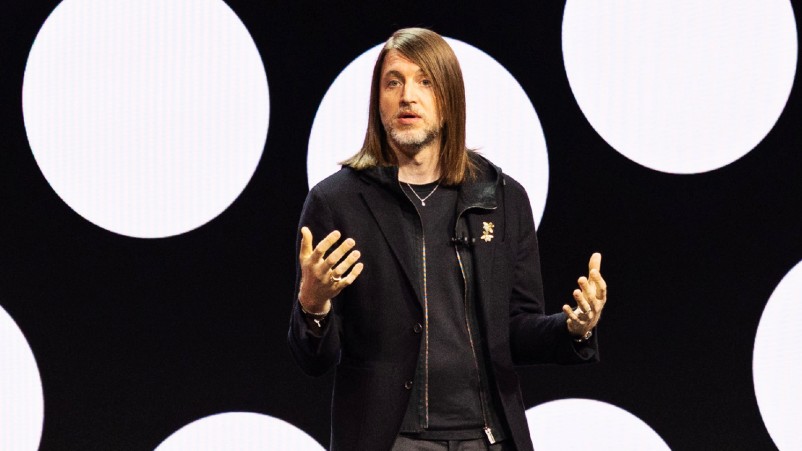
Dr Ross Honeywill is a social scientist, founder of The Right Customer, and the originator of the NEO mindset.