‘What am I doing for the machines?’: WPP Media’s GEO influencer playbook tackles LLM citation mood swings as AI fuels a new race for fandom
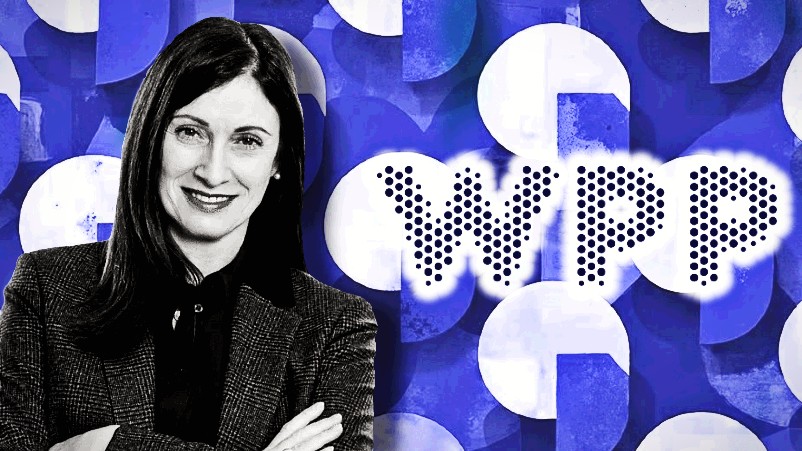
Reddit experts, long-form YouTube creators, and even dermatologists are becoming part of a new GEO influencer playbook (although TikTok not so much), one designed to sway not just consumers, but the AI chatbots that recommend what they buy. Speaking to Mi3 at WPP Media's Future of Media 2026 event in Sydney, WPP Media’s chief creator officer, Shivani Maharaj said the agency is already “tailoring” creator strategies for AI discovery, even as LLM citations swing wildly and brands struggle to determine what works. Maharaj said brands need to take a more holistic approach to creator marketing, considering "What am I doing for the machines? What am I doing for the humans?" With 75 per cent of Australians using AI to guide purchase decisions, the stakes are rising. Meanwhile, WPP Media is pitching another AI-powered opportunity: Spotting emerging cultural moments and helping brands move beyond sponsoring fandom to joining the conversation in real time.
I don't think brands are doing enough in this space for us to go and assess what's performing and what's not
From creators buying bot followers and likes to optimising content for chatbots, talk about a full-circle moment.
As AI increasingly shapes what consumers discover and buy, brands are rethinking their influencer playbooks - not just which creators can sway consumers, but which ones can sway the machines making recommendations.
As we have reported previously, the shift comes as WPP Media's Agentic Discovery: The Hidden Pathway research finds that 75 per cent of Australians use AI search to help decide what to buy, while 26% said AI completely changed their mind about a purchase. That figure rose to 34.8 per cent in automotive, 33.3 per cent in fashion and 32.6 per cent in finance.
A separate Creator Connect report from IAB Australia confirmed consumer "appetite" for AI recommendations that include creator reviews, finding that "credible creator reviews" would give 58 per cent of Australian respondents who had used AI for shopping research greater confidence in AI recommendations.
Sitting down with Mi3 after WPP Media's Future of Media 2026 presentation in Sydney, Shivani Maharaj, Chief Creator Officer at WPP Media, confirmed the agency is already "tailoring" its creator recommendations to account for differences between platforms.
"Who works on Instagram and TikTok is not who works on Reddit. So we are trying to find completely different creators there," Maharaj said. "We are adapting, but it's all complementary."
And strategising isn't a piece of cake, as these language models already appear to have some favourites. WPP Media's analysis of about 15 million citations across circa 40 categories points to a divide between the platforms commonly cited in AI-generated answers and those traditionally associated with influencer marketing. Daniel Benton, MD of Digital Solutions at WPP Media, said Reddit and YouTube appeared frequently in the analysis, while "walled garden" TikTok was "not particularly influential".
"I think the mental model is anything that's open internet with text is filtering in. We are seeing Instagram filter in, but it's sometimes kind of weird in that there's not a lot of text surrounding the videos. But if it's open, it is filtering in." Benton argued that brands need to coordinate messaging across creators, paid media, public relations and owned assets rather than treating each channel independently.
“This is a significant audience and when they use it, the brands that show up, they trust them more. So it's inferring authority and building brand equity.”
‘Early learning stage’
But as AI citation patterns shift seemingly overnight, Maharaj reckons brands face a bigger threat: many aren't approaching creator marketing strategically in the first place. "They're going in with campaign-specific, or it's like I've got this great creative idea. Let's brief the creators on that and do something," she said, describing what she sees as the most common brand approach.
Instead, Maharaj argues brands should take a more "holistic" approach to strategy, asking: "What am I doing for the machines? What am I doing for the humans?"
"You also need that layer for the LLMs. I need to do some long-form YouTube. I need some experts on Reddit. I need some UGC [User-Generated Content] ratings and reviews because that's going to do really well for my CPG products or whatever it might be."
That means looking beyond traditional influencer partnerships to consider subject-matter experts, long-term ambassadors and smaller creators who can generate reviews and word-of-mouth at scale.
WPP Media says it is putting that thinking into practice with L'Oréal Group, integrating NYX, Garnier, L'Oréal Paris and Maybelline into Australian creator Bridey Drake's comedy series Pure Average, which was originally conceived for YouTube before making its way to Stan. Beyond product integration, Maharaj said the appeal was the "YouTube multiplier effect" - long-form creator content capable of engaging audiences while potentially influencing LLM discovery. "We knew that this would be great for LLMs," she said, adding that the partnership extended across Drake's social channels and a wider content ecosystem.
For Reddit in particular, Maharaj said expertise is proving more valuable than the conventional influencer playbook. While Reddit blocks AI bots from its site, it has a licencing deal with ChatGPT which gives it out sized influence, although at least for citations that inclfuence has decayed -along with other social media - in recent months.
"What we're finding for some of our brands is that experts work really well there. So if we send in a dermatologist or we send in a dentist or we send in a healthcare professional, that is working quite well from that perspective."
She referred to an unnamed skincare brand client that identified inaccurate information circulating on Reddit about appropriate SPF protection for children. Rather than inserting an advertisement into the discussion, the brand drew on an existing dermatologist ambassador to help correct misconceptions and provide expert advice.
"As a brand, we didn't want to just go in and put an ad," Maharaj told Mi3. "We've had some really great results, and that's one part of a broader campaign. I can't necessarily say it's attributed to that one thing. It's a whole heap of things we did together."
But the distinction isn't just between platforms. Maharaj suggested that the creators LLMs surface can also depend on how broad or specific a consumer's prompt is. "If you're asking the LLMs around ratings and reviews ... it's going to go to the nanos and micros and the very smaller creators to get that sort of information, just based on what's available online."
By contrast, broad prompts asking for the "best beauty creator" or leading personalities in another category are more likely to surface “mega-creators" - the MrBeasts of the world.
Yet despite promising early signals, Maharaj flagged that the industry remains in an "early learning stage", with little evidence of which creator strategies actually deliver returns through AI discovery.
Asked how brands could measure the effectiveness and ROI of influencing LLM recommendations - another layer of complexity for an industry already solving the effectiveness puzzle - Maharaj replied: "I don't think brands are doing enough in this space for us to go and assess what's performing and what's not."
She pointed to long-form YouTube content, Reddit and some Instagram activity as showing encouraging early signs, while TikTok hadn't demonstrated the same performance. "But we're not in a position to say this is the answer. We have to test, learn, and then measure because there's not enough scale there at the moment."
The uncertainty echoes Mi3's earlier reporting on research from AI search firm Petra Labs, which found ChatGPT citations from YouTube plunged 88 per cent and Reddit 81 per cent in a matter of days, yet the brands recommended remained largely unchanged, highlighting the difficulty of connecting AI visibility to meaningful business outcomes.
"In three months, six months, we'll have different data or more learnings to be able to see where it's going," Maharaj said.
We believe that AI really will change the game in this space, galvanise the ability to provide that insight, understand those signals at speed, and when fan moments become cultural moments as brands, it gives us the ability to jump on this.
WPP’s AI-powered fandom pitch
While brands and creators grapple with influencing AI search, WPP Media sees another opportunity: Using AI to spot cultural moments and help brands join the conversation before it moves on.
The industry is already heading in that direction. News Australia's recent 'Lives, Not Live' pitch found that 54 per cent of sports engagement happens outside the live game. The NFL and Seven are building fandom beyond match day, Disney+ is betting on fandom-based ad targeting, while YouTube is combining creators with AI-powered advertising tools.
Spotify's latest move, Culture Next: The Fan Edit, adds to the case. Three in five Australian Gen Zs say fandom is central to their identity, while two in three say Spotify makes being a fan more engaging. The platform found streams of a reunited legacy band's music surged to 4.5 times normal levels before Australian tour dates were even announced, and remained more than 30 per cent above baseline for over 19 months.
WPP Media's pitch called Fandom in Motion, Chris Hitchcock, chief of sports and entertainment at WPP Media, argued brands need to move beyond sponsoring sport and entertainment to actively participating in the conversations surrounding them.
"Fan moments become cultural moments incredibly quickly," Hitchcock said, pointing to how sporting highlights, memes and unexpected incidents can spark widespread conversations within minutes.
WPP Media cited TikTok research showing 75 per cent of sports fans find content surrounding a live moment more enjoyable than the event itself, while engagement across Australian sports subreddits has grown 35 per cent over the past year.
Hitchcock added that 62 per cent of sports fans tune into major sporting events simply to join the cultural conversation. "Which is crazy to me as a sports fan."
He pointed to Nike's campaign around Collingwood star Nick Daicos and the Brownlow Medal, which extended across outdoor and print advertising, merchandise, retail activations and fan meet-and-greets. "They didn't just sponsor that event; they didn't just show up at that event. They created an entire cultural ecosystem around their star player," Hitchcock said.
"They really owned that moment at the speed of sport, and this type of marketing is becoming more and more prevalent and is working really well." WPP Media's research found 67 per cent of fans believe advertising would be more effective if personalised to their fandom in real time.
The catch is speed. Tracking conversations across sport, entertainment, music and gaming, spotting moments worth joining and producing content before the conversation moves on requires significant resources. "But of course, there is a game changer out there, AI," Hitchcock said. He argued AI could help brands spot emerging fan signals and respond at scale, letting them move "from sponsoring culture to moving with it".
The broader opportunity is "moving from campaign-based to continuous participation in fandoms for brands. Moving from planned content to real-time content, and there's the opportunity to use AI to help drive that speed."
"We believe that AI really will change the game in this space, galvanise the ability to provide that insight, understand those signals at speed, and when fan moments become cultural moments as brands, it gives us the ability to jump on this."
But speed alone won't guarantee a welcome reception. WPP Media found 66 per cent of fans believe brands should participate in their communities only when they add genuine value, while one in five have stopped supporting a brand because they felt it had exploited their fandom.