
Upfronts: Foxtel Media headlines gaming, content commerce, retail media, new ad formats – and a peace summit as broadcasters, streamers edge closer on joint business outcomes, attention measurement breakthrough
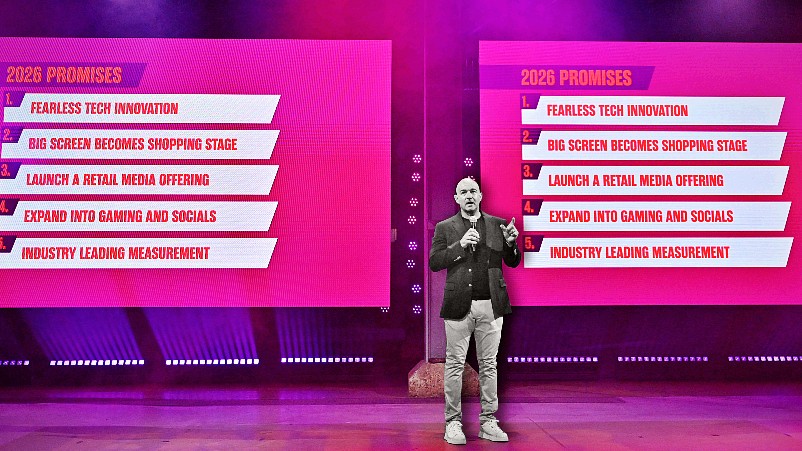
Foxtel Media boss Mark Frain: Shift happening.
Sydney’s White Bay Power Station was heaving with media and marketing types last week for Foxtel Media’s first upfronts under new global owners Dazn – a handful of big content announcements and commercial initiatives ensured the group paced broader market developments and, in some areas, nudged ahead. But it was a notably more conciliatory and careful tone around audience measurement and Foxtel Media’s fractious relationship with broadcasters and their measurement body OzTam that was most telling – and for good reason. In recent weeks global streaming platforms including Netflix, Amazon Prime and Samsung have met via the Video Futures Collective with Nine, Seven and Paramount to quietly scope renewed appetite for an industry-wide measurement system designed to report on premium video’s business impact and outcomes – rather than audience metrics and ratings alone. All sides appear to be mindful of blowing up a potential breakthrough between often fierce, sometimes bitter rivals.
If the TV and video industry doesn't grab the collective outcome opportunity, we will once again emphatically grab leadership defeat from the jaws of victory.
It's been a vexing and still possibly terminal prospect for local publishers and broadcasters for more than a decade – deals and alliances with the global platforms that are white anting their business models are more palatable to strike than joining forces as a local market collective to counter on scale and smarts.
So after two years of clashing swords between Foxtel, OzTam and its TV owners on audience reporting discrepancies – it ultimately led to Foxtel Media underwriting a breakaway TV measurement alternative with Kantar and leading the formation of the Video Futures Collective by most of the global streaming services – the heat at this year’s Foxtel upfronts was all but gone.
Foxtel Media’s Director of Customer of Engagement Toby Dewar told the crowd he was “excited to say that along with Seven, Nine and Paramount we are exploring ways to collaborate and focus on shared research projects to better understand the outcomes across screens” and that his business was “going all-in moving beyond reach and frequency towards real outcomes”.
The first attention results from Amplified Intelligence for the Video Futures Collective were released, backing long-form professional content over “digital formats” with 13.5x more consumer attention and 30.5x more “active attention seconds”. Amplified’s CEO Karen Nelson-Field said just 12 per cent of ad impressions were not seen in streaming environments versus 94 per cent for broader digital ad formats.
Amplified shared the stage with measurement firm Adgile which signalled it was ready for the next phase of outcomes-based media measurement for broadcasters and streamers which was “real time, actual insights that will help marketers make smarter, more effective decisions.”
The catalyst for the new collaborative sensibilities between streamers and broadcasters came from a panel at The Future of TV Advertising forum in April in which Nine, Foxtel, Adgile, OMG and Mediabrands backed a proposal floated on stage to develop a real-time streaming-TV business outcomes reporting system within 12 months to counter the market ubiquity of reporting dashboards from the tech giants, including Meta, Google and Google-owned YouTube.
YouTube vs u-turns
YouTube has signed on to the Video Futures Collective but arguably remains the biggest unknown for what could emerge jointly in premium long form video measurement. At its upfronts last week, YouTube fired a number of shots designed to distinguish the creator economy and user-generated content as distinctively different from long form professional content – and the future of mass video consumption, period. Last month YouTube pulled its membership from the UK TV measurement body BARB, after it was hailed earlier as a step change in a decade-long standoff on audience measurement.
Still, wherever YouTube’s lands, the softer tonal shift from Foxtel Media towards its broadcast rivals was reciprocated post its upfronts.
“Definitely it's true that we are all engaged in this conversation,” Nine’s network sales boss Nikki Rooke told Mi3. “And we all agree that it would be a great thing to get off the ground but we are still in the discovery phase, if you want to call it that. That's why they’re being careful, why we are. There's still a lot to work through before we get there. The sentiment is really strong across the board, which is why we’ve all got to be respectful that we’re in consultation together as a group.”
Foxtel Media’s CEO Mark Frain, who avoided any contention with broadcasters during his Upfronts address, was equally upbeat, at this point.
“The progress of the last few weeks has probably been the most I've seen in years,” he said. “Right now, I think we're starting to see a quantum shift on how the industry could work together. There's obviously, historically, been a lot of talking about what we could do together. I think there is growing alignment of what's really important for the future.”
Adgile’s Chief Customer Officer Craig Service was unusually restrained when asked about the progress and likelihood of an outcomes-based dashboard by April, when the 12 month Future of TV timeline pledge is up. “There’s a lot of conversations going on,” he said, acknowledging the ultimate result would be a “full analytics offering and outcomes are a big part of that.”
For Frain and others, a collective move now is critical for competitiveness and survival but two decades of talk, less walk remains real: "If the TV and video industry doesn't grab the collective outcome opportunity we will once again emphatically grab leadership defeat from the jaws of victory."
