YouTube pitches scaled creator footprint, living room dominance, $1.1bn economy contribution, fandoms and effectiveness in fight against social platforms, TV
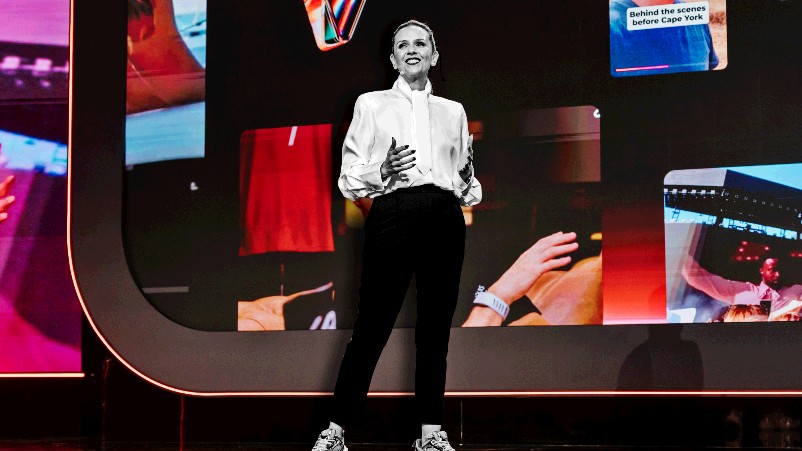
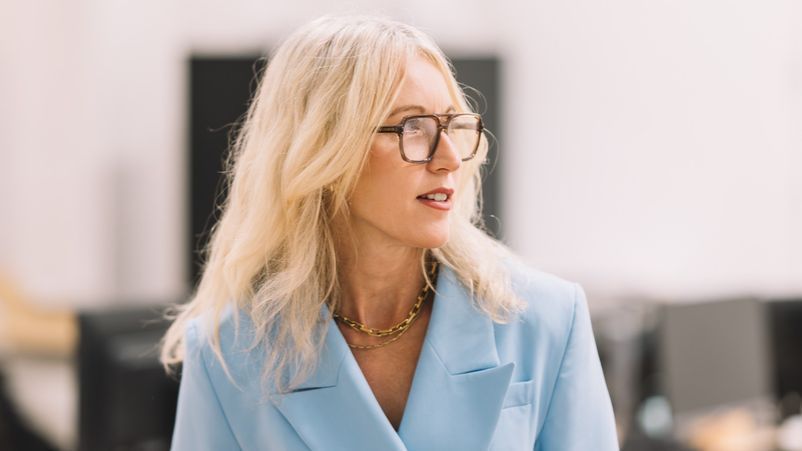
Google Australia MD, Mel Silva, at YouTube Festival 2026
Fandoms, creator supremacy and flashpoints of effectiveness took centre stage at yesterday’s YouTube Festival as the video platform sought to place itself at the epicentre of consumer culture right now. While YouTube’s stake out for a differentiated position against both the social platforms was clear – take the claim 54 per cent of YouTube Shorts users don’t use TikTok and 65 per cent of them don’t use Instagram Reels – as well as against traditional TV, BVOD or SVOD – 13.7m 18+ viewers per month watching YouTube on connected TVs every month – the tropes of this year’s upfronts season were in also evidence as the video platform giant spun a story of creator might, consumer attention and trust in a heavily contested battleground for audiences.
What you need to know:
- YouTube used its annual Festival upfronts to position creators and fandoms at the heart of its media pitch, arguing that influencers have evolved into scaled media businesses with highly engaged communities.
- The platform is leaning into its reach beyond social video and into living rooms: Per Ipsos iris data, its platform reaches 20.4m Australians, while 13.7m adults over 18 years of age watch it monthly on connected TVs. Kantar data also cites YouTube as Australia’s largest streaming platform for a second year. Data also pointed to distinct audiences not currently on TikTok or other social platforms.
- In a pitch designed to reiterate scale, attention and trust that brands could benefit from full-funnel, Google Australia MD, Mel Silva detailed a range of ad and AI innovations from awareness to commerce, as well as a run of effectiveness figures to prove out YouTube’s impact.
- These included new data from Rob Brittain using the Effies database, which showed campaigns using YouTube had 33 per cent stronger overall business effect versus those that did not.
- Also featured on stage was Nestlé Oceania marketing and communications director, Anneliese Douglass, who reported YouTube delivering strong long- and short-term ROI. Her example: creator content for its KitKat/F1 work on the platform generated 4.2 times the engagement of brand content.
- YouTube also made connected TV the key battleground, citing Analytic Partners data across 30 Australian brands showing its highest overall ROI versus BVOD, SVOD and linear TV, and 8.3 times higher long-term ROI than paid social.
- New ad products debuted at the upfronts are pushing further into commerce and conversion, including Instant Checkout Links, shoppable formats, regional pricing and creator partnerships through Google Ads and DV360.
- AI is also central to YouTube's advertising proposition, with Gemini-powered tools aimed at identifying viewer intent and helping brands ideate, storyboard and generate video campaigns.
- Meanwhile, founder of the Glitch Productions Australian animation studio that’s grown off the back of YouTube, Kevin Lerdwichagul, predicted a creator-led future for television, arguing the TV experience could ultimately become a YouTube search interface for accessing creator content.
The buzzword of this year’s upfronts season is undoubtedly clear: Fandoms. The second trend already in evidence: The creator’s might as a media powerhouse. That’s triggering a situation where media operators from traditional TV to streaming and social are leveraging connections into the most influential creators they can around the tentpoles of sports, entertainment and cultural moments. Why? Because these are where consumers are, and what’s garnering audience attention.
YouTube, arguably one of the first platforms to directly facilitate both fandom and creator growth, is all over it.
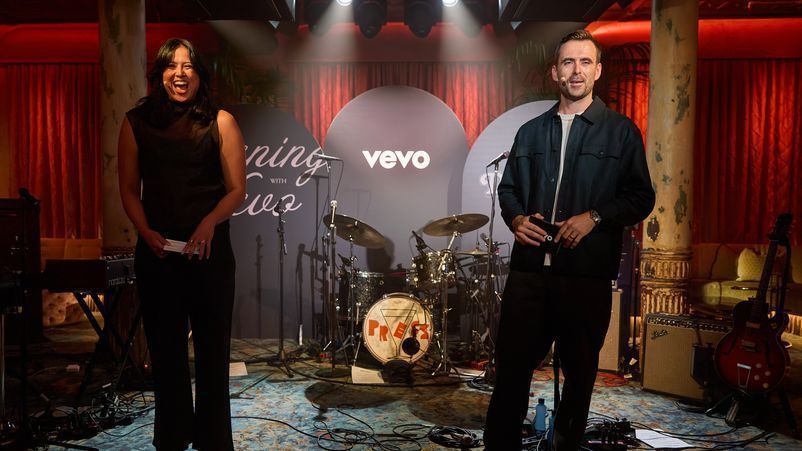
Last night, the Google-owned video platform gave over upfronts moderation reins to the creators, reiterating their key role in content differentiation and their scale. Event host and YouTube comedian creator, Lyanna Kea, who boasts of 5.1 million followers herself, repeatedly stressed the role of the platform in culture and how it’s been able to reinvent how brands and creators connect with fans across sports, music, animation, comedy, obsessions and hyper-niche interests.
Then, in a bonanza featuring everyone from homegrown animation studio Glitch Productions to Dan Does Footy, Nestle’s local marketing chief, Anneleise Douglass, Analytic Partners APAC lead, Paul Sinkinson, marketing effectiveness consultant, Rob Brittain, the well-used Effies database and musical double act Pamela, YouTube’s big annual showcase sought to prove that out.
For Google Australia MD, Mel Silva, it’s a story of “scale, attention and trust”. YouTube cited fresh Kantar research showing it’s the top streaming platform in Australia for the second year running. Per Ipsos figures, it’s reaching 13.7 million Australians over the age of 18 on connected TV screens each month (64 per cent of the population) and 20.4 million Australians overall, representing 96 per cent of the population. Per 2026 Oxford Economics data, YouTube’s creator ecosystem poured $1.1 billion into Australia’s GDP and is behind 18,000 jobs.
A significant contributor here is Glitch Productions, which now has 350 staff, 23 million subscribers and has generated over 3 billion views on YouTube.
“I think a lot of us are redefining how entertainment is consumed,” said Glitch Productions CEO and co-founder, Kevin Lerdwichagul. His prediction for content consumption, and one that should definitely worry traditional media: Entertainment is moving into a new cycle where media brands disappear, and TV becomes a YouTube branded search bar accessing an ecosystem of creator content.
“I do believe that in the future, five years from now, when you turn on your TV, there won't be apps anymore. It'll just be a search bar. It'll be a YouTube search bar,” Lerdwichagul told attendees. “You type in what you want, or what you're feeling, and you're going to see immediately the content you're going to get. I do believe that entire engine is going to rely on the creator; people like you and me. Like the people in this audience.
“You can already see the industry trends emerging, where there are literal YouTube and entertainment giants like Mr Beast, like Marques Brownlee, that are taking over entire genres and verticals. Mr Beast – Jimmy – he’s taking the unscripted vertical. Marques is taking tech. We're taking animation.
“You're seeing that industry move to YouTube, and now we have media empires, media companies, and we're creating content at scale and globally.”
The second trend Lerdwichagul pointed to: A rising desire for human connection. He cited several US shopping malls contacting the animation company, looking to do in-person activations and stunts.
“They want to do pop-ups, they want to do retail events, they want to take our characters, and they want to put them in these interactive experiences,” he said. “People just really want authenticity at the end of the day, and that is what the creator brings. They bring that level of authenticity. Being able to couple that with brands, and with retail businesses … it's going to create events, but it’s also going to bring that authenticity. It's going to give more value at the end of the day for audiences everywhere.”
For WPP Media OpenEra head of implementation and activation, Samara Baglin, there was no doubt YouTube boasted creator scale, content supremacy and consumer connections.
“The standout message from YouTube Festival was that creators have evolved beyond influencers into scaled media businesses, building trusted communities in highly engaged environments,” she commented.
“At a time when attention is one of the most valuable marketing currencies, YouTube's unmatched depth of content across every niche, combined with rich first-party behavioural data and the intelligence of Google's Gemini-powered AI ecosystem, creates a genuinely full-funnel platform for brands. This powerful combination enables marketers to influence consumers at every stage of the journey, from awareness through to conversion, within a single ecosystem.”
Five years from now, when you turn on your TV, there won't be apps anymore. It'll just be a search bar. It'll be a YouTube search bar. You type in what you want, or what you're feeling, and you're going to see immediately the content you're going to get. I do believe that entire engine is going to rely on the creator; people like you and me.
Effectiveness pitch
YouTube still has to continue to prove all this works for brands investing in the platform. No upfronts would be replete without a marketing effectiveness story and some fresh numbers to back it up, and YouTube attempted this too. And as has become increasingly clear, those proof points have to go beyond sheer reach and into full-funnel impact.
YouTube this time chose marketing effectiveness consultant Rob Brittain, and nearly 500 campaigns out of the Australian Effies database from between 2018-2025 to make the point it can deliver both the long and short of it. For the study, Brittain separated online video out from broadcast TV, BVOD and SVOD, as well as videos running on social platforms.
His finding: Campaigns that include YouTube delivered 33 per cent stronger overall business effects than those that don’t. He also claimed campaigns that included YouTube showed strong brand equity-building effects compounding over time.
An example showcased last night was Meat & Livestock Australia’s (MLA) work lamb campaign work, which used YouTube as a primary destination. “The platform acts as a powerful reach multiplier. It allows them to optimise reach with a well-planned balance between paid views and organic amplification, fuelled by earned content like reaction videos that amplifies total reach and drives repeat viewing,” Brittain explained.
The results led MLA to shift 22 per cent of its campaign budget to YouTube, a fourfold increase from previous years. ‘The Generation Gap’ campaign, which took home six Effies, drove record-breaking views, a 19 per cent increase in purchase volume, and propelled MLA's core brand equity metrics to their highest levels in nearly a decade.
Another example cited was Samsung's ‘Flipvertising’ campaign, which took home gold, silver, and bronze Effies with YouTube as the lead channel. That work drove 185,000 unique searches and 32 per cent more pre-orders than the prior launch.
“Brands who used YouTube enjoyed significantly higher profit growth than those who didn't,” Brittain continued. He cited data showing campaigns under $1 million that shifted budget away from social and into YouTube saw effectiveness increase by 30 to 65 per cent – but that such effects are visible across the spectrum, from small brands up to category leaders, and across verticals.
Cultural Currency: Nestle
Speaking on stage, Nestle Oceania marketing and communications director, Anneliese Douglass, said its Marketing Mix Modelling data, supplied by Analytic Partners, showed the FMCG gets the best long and short-term ROI when it uses mass audiences and targeted audiences on YouTube.
“But that’s all under the proviso that we have great creative that is right for whether it’s long term or whether it’s short term,” she said.
Douglass talked about the results from its KitKat campaign work tied to its global sponsorship of the F1 as an example. “We have sponsored F1 globally so we can be in those culturally relevant moments like the pit lane and break corner, and elevating those moments to give cultural currency,” she said. “We don’t want to just be alongside the conversations; we want to contribute to them, provoke them and if we can, create them.”
To do this, Nestle created the ‘Kit crew’, who traversed the event giving people a ‘break moment’ with KitKat. Content was captured from them, and it also employed creators and elevated the combined content on YouTube. “We have longform content, demand gen content, YouTube Shorts and in-stream,” said Douglass.
The 10-second shorts were most successful in terms of brand uplift, while creator content delivered 4.2 times more engagement than brand content. The 15-second clips had a completion rate close to 20 per cent.
“If you go deep with events and you create content that is really relevant to broader audiences but also the fans, you end up with a campaign that really has effectiveness,” Douglass added.
Another effectiveness data point referenced on the YouTube stage – and again, a growing favourite with media companies – was attention. Per Silva, a recent Adelaide study on attention commissioned by Google showed YouTube ad placements ranked number one in attention versus ad placements on streaming, social and linear TV in Australia.
YouTube also pitched up MMM data from Analytic Partners, including the fact that YouTube delivered the highest ROI overall and specifically on connected TV when compared to BVOD, SVOD and linear TV – another jibe at its strength in the living room. That study covered 30 Australian brands running commercial mix modelling, and three years of data ending December 2025. The shot across the bow on social meanwhile: YouTube delivered 8.3 higher long-term ROI than paid social.
Then there’s the trust inherent in building better engagement in the first place. Again, per Silva, citing figures from Kantar, 79 per cent of people surveyed said YouTube is the most trusted video platform, and three in four said it boasted the most trusted creators. In addition, when users viewed an organic video on YouTube about a brand, they were 13 times more likely to make a branded search and 5 times more likely to make a purchase, according to internal YouTube data across 63 brands.
We have sponsored F1 globally so we can be in those culturally relevant moments like the pit lane and break corner, and elevating those moments to give cultural currency. We don’t want to just be alongside the conversations, we want to contribute to them, provoke them and if we can, create them.
New advertising products
But where the rubber hits the road for advertisers is ad innovations increasingly using AI to drive better impact, as well as ones connecting through to conversion and commerce. The arrival of Instant Checkout Links allowing viewers to tap a product in a video ad and purchase it immediately, including buying via Google Play, drew the comment of “finally” from one retail brand in the audience.
Baglin also saw YouTube's new shoppable formats as a compelling example of its full-funnel might. “These give retailers the ability to move audiences seamlessly from connected TV exposure to purchase in a single experience,” she noted.
A carousel of masthead ads with a curated shelf of complementary videos on TV screens was also introduced, alongside Short Ads Actions for video view campaigns to enable direct optimisation and reporting on engagement metrics such as clicks, likes, comments and shares.
In addition, YouTube is debuting dynamic regional pricing in videos, allowing retailers to show location-specific pricing and stock in video feeds back on local availability.
In terms of creator facilitation, YouTube joined the throng of media companies now endeavouring to more directly manage the relationship between brand and creator end-to-end, and has enabled creator partnerships via Google Ads and DV360. This means brands can find, create and boost creator content – which YouTube claimed yielded an average 20 per cent per cent performance lift.
AI capability also made its appearance, and Google said it had coupled YouTube’s AI tools with Google’s Gemini AI to help brands run and scale campaigns based on increasingly sophisticated ways of understanding “context signals” that uncover “viewer intent”, said Silva. The tech giant then offers up “multi-modal media creation” so brands can ideate, storyboard and generate video campaigns.
Finally, YouTube said it will launch YouTube Insights later this year, bringing together audience insights, cultural trend discovery, creator intelligence and a more holistic view of a brand’s paid and organic presence within one UI.