“An operating system for advertising itself”: Amazon extends full-funnel play - CommBank cites +15% increase in credit cards added to wallet; L'Oreal chalks up +25% brand uplift
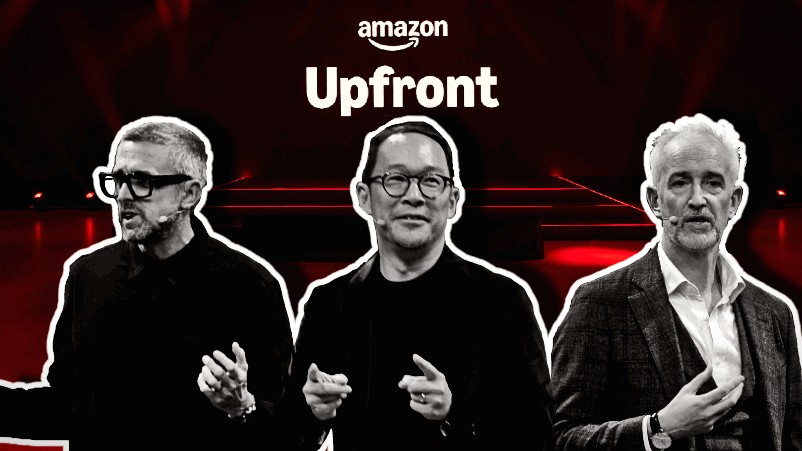
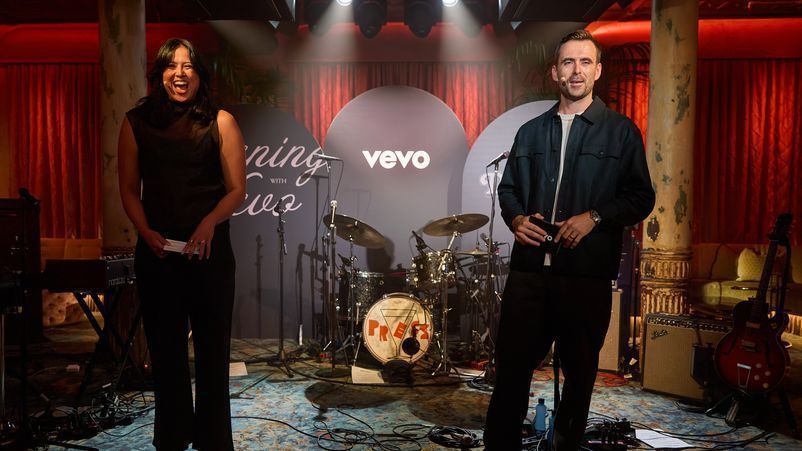
From left: CommBank's Pat Crowley, Amazon Ads' Willie Pang and Omnicom Media's Kristiaan Kroon
Last night’s Amazon Upfronts event was a clear demonstration that the company’s ambitions go way beyond a content to commerce hookup, or a land grab for brand and demand budgets. Its full-funnel play at scale around advertising is no less than a bid to operate the entire connected ecosystem, from entertainment and connected media to ecommerce, audience insight to AI innovation, programmatic buying and marketing cloud management. For agencies speaking to Mi3, it was an impressive, all-encompassing narrative that could finally bridge the gap between top and bottom funnel outcomes – although some still need to be convinced it’ll all pay off in the same way for non-endemic advertisers. The debut of an MCP server to hook up the platform into other AI and agentic solutions was met with excitement, meanwhile. And the slate of content on offer, including both premiere sporting events plus a page to screen strategy that sees Prime developing content that already has fan bases based in, also indicates to many there’s a new hefty competitor for rights in town that linear and traditional TV should be very wary of.
The broad scope of Amazon’s play for data-driven, full-funnel advertising was on display at last night’s upfronts, as the company’s advertising innovations, client case studies and fresh AI capabilities took it that leap closer to delivering connected media through to commerce at scale.
For the first time, Amazon put a figure on the reach of its ad-supported Prime Video Australian audience: 5.5 million, up 10 per year-on-year, with global ad-supported reach of 315 million viewers per month. In addition, 89 per cent of Prime Video viewers in Australia are shopping on Amazon.
But on top of that are trillions of signals Amazon has across its brands, from Prime Video and Amazon shopping to Audible, Kindle and more. And it’s increasingly putting these to good use, leveraging such signals in its advertising stack and audience targeting – including in an Australian-first predictive audience model for Commonwealth Bank.
Amazon’s is a big, bold bet. Last year at its inaugural upfronts, Amazon stressed its full-funnel advertising pitch so adamantly, it said it 17 times. This year, the tally was 22. Speaking to Mi3 and asked just how much more full-funnel this year’s proposition could be to last year, Amazon Advertising MD, Willie Pang, pitched a “deeper and wider” narrative, leveraging partnerships across publishers, media owners and technology companies. There’s also growing AI capability across those trillions and trillions of consumer signals to simplify buying, trading, campaign management and reporting. Amazon is also positioning its play as an extension of full-funnel advertising to the open internet.
“It’s a connected system of entertainment, intelligence, technology, working for every brand, agency and partner in the room,” Pang told attendees at last night’s upfronts.
To Mi3, Pang also positioned Amazon’s approach as addressing a couple of key themes that keep coming up with marketers and agencies. The first: “How to get their brands into spots where cultural conversations happen”.
“The second thing we hear a lot is, ‘Hey, we have to find a way to do more with less, more efficiently, more effectively and more, more, more,” Pang said. “Coming back to last year, full funnel was basically the answer for it … As a marketer, I’ve been chasing this full funnel thing for the better part of two-and-a-half decades. Everyone, every CMO has been on that journey and will tell you some version of that right?
“But what we’ve seen in the last 12 months, and as we’ve deployed AI technology, is strong results. We’ve seen CPMs on campaigns running that are deploying full funnel in the US down by 18 per cent, and there’s been a 16 per cent decrease in cost per acquisition.”
Amazon also claims adding Prime Video to a search and display plan was associated with a 32 per cent higher new-to-brand purchase rate, while US advertisers using its Ads Agent offering reported a 65 per cent improvement in delivery rates. Per Pang, this scaled, double-digit level of efficiency hasn’t been seen since “2005, when paid search went nuts and transformed the industry”.
“The superpower of the Amazon proposition is that we know what you’re watching all the way to the end, we know what you’re buying, we know what you put in the cart but don’t buy, we know the types of things you’re listening to on Amazon Music or Audible, or reading on kindle, and we’re able to stitch these things together,” he said.
The upfronts pitch certainly impressed WPP Media implementation and activation group director, Stewart Hansen.
“Amazon has yet again looked to showcase that their ambition extends well beyond being another streaming or ecom platform; instead, positioning as an operating system for advertising itself: The convergence of premium video, audience intelligence, as well as AI powered commerce into a single ecosystem,” he commented. “My immediate impression is that Amazon has continued to develop and refine a smarter, data powered full-funnel ad offering few other media partners can match.
“For years, Amazon's proposition has been built around the idea that it can connect media exposure directly to commerce outcomes. This year's announcements suggest that vision is becoming much more real.”
Hansen saw a bigger picture of the next phase of Connected TV emerging as a result. “The conversation is not about just reach and attention, but increasingly making premium programming more addressable, measurable, and accountable when it comes to business outcomes,” he said. “Amazon’s continued investment in interactive formats, AI-powered campaign tools, and expanded DSP capabilities certainly reflect where the wider industry is heading.”
Audience group director and head of investment, Aimee Gossage, had a similar takeaway. “It’s the shift about taking media from an individual format through to a whole ecosystem across multiple channels,” she told Mi3. “That’s something we talk about all the time. The idea of discovery, through to engage, research, and transact across their ecosystem, with data and measurement closing the gap. It sounds like status quo, but it’s not for a lot of these tech providers.
“The opportunity is less about another channel specifically, but more about connecting the top and bottom of the funnel, and really turning those audience insights into audience signals into action. We often talk about chasing faces, not just places. So the ability to do that across the Amazon ecosystem, and to follow that customer the whole way through just helps with your dedicated budgets, making them more fluid.”
Sandbox Media head of strategy, technology and growth, James Sparkes, joined the chorus. “Amazon has come out fighting. They’re going to start buying more and more properties, more and more sports. As they said, that’s what Aussies love,” he told Mi3. “If they can start to get more of that live entertainment, they’re going to be a real challenger for your linears eventually.”
The math is everything we know about media effectiveness. So this is the reach, frequency, the efficiency. The magic is the cultural moment, the disruptive placements and the innovation that makes people feel something ... It was an emotional connection with really measurable outcomes, all in one place … and it is a story about self-confidence and building your self-esteem. For us, that’s worth it.
Content play: Pre-made audiences from page to screen
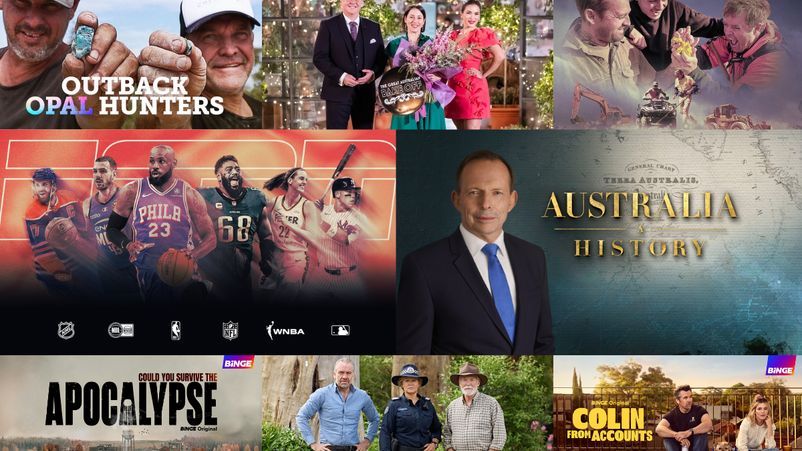
All of this connected tech and insight is helping Amazon with the content program slate it’s developing. As part of last night’s upfronts, the company detailed its ‘Page to Prime’ strategy, which sees it identifying then turning highly popular books into screen productions.
“Three of the five most socially engaged series premieres across all of TV were Prime book to screen, and 60 per cent of Prime Video’s most watched titles started on the page,” Prime Video head of content, Alexandra Gilbert, told attendees. “That’s not luck. That’s a signals-based approach to content and for advertisers, it means built-in audiences before the title even launches.”
In 2027, such returning titles include Fourth Wing, based on Rebecca Yarros’ bestselling fantasy franchise, plus season two of Off Campus, which reached 36 million viewers globally and also comes from a book originally by Elle Kennedy. In addition, 2027 will feature season two of Elle, the prequel to the Legally Blonde franchise, plus We Were Liars and Sterling Point.
Prime Video also has its share of sports, including all four ICC Cricket Events in 2027 and NBA coverage.
“We know the best stories start in culture, in the games people play, the books they read, the characters they’ve grown up with,” Gilbert added.
L’Oreal and Elle integration
Up on stage to demonstrate how this full-funnel integration can pay off was L’Oreal’s chief marketing and digital officer, Georgia Hack. The brand was the global partner for series one of Prime Video’s Elle program. Under the deal, Amazon signals were used to identify beauty audiences across browsing, shopping and streaming behaviours L’Oreal could target, but also extended into product placements in the content as well as in-person activations. L’Oreal then built the target audience in Amazon Marketing Cloud and continues to use it to optimise sponsored campaigns.
“At L’oreal we talk a lot about the math and the magic,” Hack said. “The math is everything we know about media effectiveness. So this is the reach, frequency, the efficiency. The magic is the cultural moment, the disruptive placements and the innovation that makes people feel something. For us, Elle gave us both with global IP. 1990s beauty. Nostalgia. Who doesn’t love that?
“It was an emotional connection with really measurable outcomes, all in one place … and it is a story about self-confidence and building your self-esteem. For us, that’s worth it.”
The campaign reached over 1 million unique viewers on Prime Video, hit a 95 per cent completion rate, and drove over 5000 branded searched on Amazon and 1600 purchases. Hack also cited a brand lift stud showing a 25 per cent uplift in unaided brand recall versus control groups.
“That is proof that it’s not about choosing reach or outcomes – you can have both,” said Hack.
Using the Amazon DSP, you start to look at the big screen, which starts conversation and conversion. We know that. Then the message fires the customer again: Mobile, web, open internet – even if it is slightly dead with AI now – and the context of what they actually did. That drives a media plan in silo into one connected system that's following a consumer. That is a much stronger conversation to have within your team, within marketing, and more broadly within a client's business.
Omnicom’s Kristiaan Kroon: “Why wouldn’t we lean in”
Another Prime ads convert on stage was Omnicom Media chief, Kristiaan Kroon. The agency executive said the opportunity to better prove out how premium video builds brand was incentive enough to get in early with Amazon’s full-funnel promise and start using interactive video ads.
“The top of the funnel and the bottom of the funnel are disconnected … Sometimes it's two teams, two measurements, two different ways of working together. That disconnect is real and has been there for a long time. So when the team saw interactive video ads launch, rather than a format, we saw a mechanism that would potentially connect the two,” explained Kroon. “And because it’s Amazon, that action is tied to real purchase signals at the end.”
Kroon cited a campaign with endemic advertiser, Logitech, combining Amazon’s first-party data signals with Omnicom’s Acxiom data and Logitech data with Amazon Marketing Cloud to create high-value segments, that were then activated via interactive ads.
“The ROAS doubled, add to cart went up 140 per cent and then there was also an interaction rate of 6.6, which shows that it worked for consumers too,” said Kroon.
A second non-endemic advertiser example was Belong, which chalked up a +60 per cent above average click through rate. Having undertaken such test-and-learn at scale, Omnicom said it is enabling Prime interactive Ads across all its agencies.
“A viewer responding to a premium ad has in itself been around for a long time. The difference now is using the full Amazon stack and being able to follow them across their consumer journey,” said Kroon, “Using the Amazon DSP, you start to look at the big screen, which starts conversation and conversion. We know that. Then the message fires the customer again: Mobile, web, open internet – even if it is slightly dead with AI now – and the context of what they actually did. That drives a media plan in silo into one connected system that's following a consumer. That is a much stronger conversation to have within your team, within marketing, and more broadly within a client's business.”
CommBank: Australian-first audience propensity model
A cutting-edge pilot advertising example put on stage – and one that appeared to do Amazon a number of favours in shoring up its non-endemic advertiser story – was Commonwealth Bank. Amazon offered up its Amazon Ads and AWS tech to build Australia’s first predictive audience model for the launch of its new credit card portfolio, leveraging first-party data signals including Amazon Wallet insights, browsing and purchasing behaviour online, Prime Video viewing and listening signals across Alex, Amazon Music and Audible. That then informed a view of who was likely to consider a CBA credit card in the sweet spot age bracket of 18-39-year-olds. The campaign was activated via Prime Video, interactive video ads, display, online video and a customer microsite for CBA’s credit cards on Amazon.com.au.
Among the results: 2.15x lift in consideration, +14.9 per cent brand consideration, +13.5 per cent ad recall, and a +15 per cent increase in Amazon customers adding a CBA card to their Amazon Wallet over a six-month period – 3 per cent ahead of CommBank’s peer set.
“With the cost of living that we're all facing, we wanted to show that a credit card can be an enabler; it can help customers make more of their spending, and it can certainly support the goals that they're all working towards,” commented CommBank's general manager of marketing, paid and owned media, Pat Crowley. “But every customer is different, so some want rewards, some are focused on values, some want rates, a whole lot of people want cash back. So the challenge was really to understand both the moment and the need … then show up with the relevant proposition, and in environments where those needs naturally occur.”
For Crowley, the big question was whether the model could genuinely find the right customers more likely to recognise a credit card at that point in time and the point of purchase across a suite of assets.
“Importantly, we had to find out once we worked the model out if we could scale that approach. It's no use a business like ours reaching a couple of thousand people,” he said. “We've got to drive a lot of scale, so we wanted to see if we could do that across all the video formats … The results have been super encouraging.”
Outside of these examples, Pang told Mi3 thousands of advertisers now leverage Amazon Ads, including a growing non-endemic list across payments, travel, insurance, government, QSR, auto and entertainment, such as Doordash, Geely, Airbnb and Lexus.
The superpower of the Amazon proposition is that we know what you’re watching all the way to the end, we know what you’re buying, we know what you put in the cart but don’t buy, we know the types of things you’re listening to on Amazon Music or Audible, or reading on kindle, and we’re able to stitch these things together.
Amazon’s ad innovation slate
As was seen at this year’s upfronts, Amazon’s ambition to take a bigger share of advertiser spend across both brand and performance buckets continues to extend into providing marketers with tools to buy across other platforms and channels. As Mi3 has previously reported, the rise of Amazon's DSP has long been signalled as a ‘Trojan horse’ with advertisers, particularly those selling on Amazon, initially channelling broader BVOD buys through it to get the measurement.
And Amazon has been steadily building its reach through its DSP even further. This year, it’s into audio, and Amazon has teamed up with Southern Cross Austereo, ARN and Nova Entertainment to bring more streaming audio, podcasts and radio advertising into the mix. It’s also announced a direct integration with Spotify Ad Exchange. In addition, Amazon has extended Amazon Audiences to Netflix, formed by collating trillions of Amazon shopping, streaming and browsing signals.
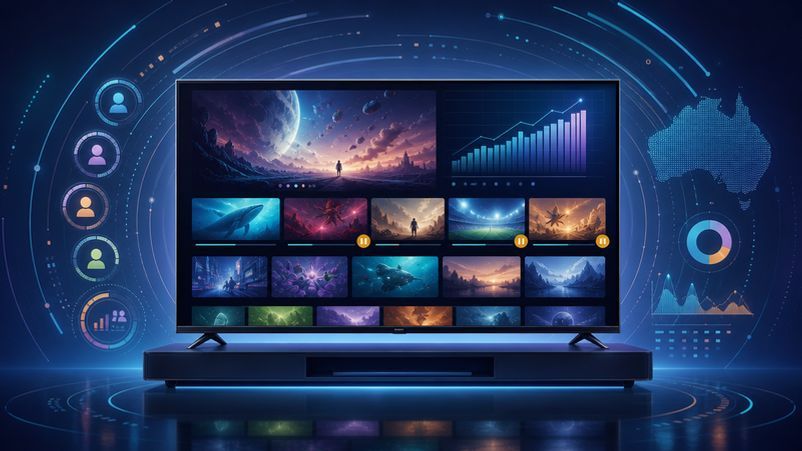
The big AI news is Amazon’s efforts to bring Agentic AI to work firstly via Ads Agent, which combines it with first-party insight so self-service advertisers can build, optimise and analyse campaigns using natural language. Also debuting in open beta is Amazon Ads MCP Server, allowing users to connect in AI tools into their advertising solutions for campaign creation, reporting and account management. The MCP server was welcomed by several agencies, one telling Mi3, “that’s really exciting, as it’ll plug into our agency AI”.
Among the slew of ad innovations on stage were location-based interactive video ads enabling brands to tailor streaming TV creative by geography within a national campaign, such as through regional offers, pricing or local business details. Dynamic TV creative is also coming online from early 2027 locally, and will customise interactive video ads based on viewer shopping behaviour, adjusting product imagery, call-to-actions, headline copy and product details.
A next up ads unit is additionally being introduced for brand messaging to serve once a viewer finishes an episode and queues up the next, and will be offered to brands with Prime Video sponsorships first later this year in beta.
What the agencies thought
While no one doubted the power of the tech behind Amazon, several media agencies speaking to Mi3 saw some gaps in the play, notably for smaller clients from a platform and management perspective, as well as user interface. The AI integrations were welcomed as a result.
“The integration of AI into everything was an impressive slate of content, and not just rehashing old stuff,” said IMAA CEO, Sam Buchanan. He also saw dynamic, creative geotargeting capabilities being “well received by the indies”.
WPP Medias Hansen agreed. “Amazon is looking to empower advertisers’ use of AI as a campaign management layer capable of helping them plan, build, analyse, and optimise media activity through natural language interactions. It’s an exciting refinement when it comes to streamlining workflows and human decision making across campaigns,” he said.
For Sandbox Media’s Sparkes, Amazon’s lower ad clutter automatically fed into higher attention metrics, greater brand recall. “Those type of things have always appealed to us,” he commented. “You want a brand format opportunity when you’re buying the big screen, something that is going to be more memorable. It will give you a little bit more space compared to your competitive set, so less clutter. The premise of that right now is still it’s an early mover in this market, which is always where you want to be … We already are recommending [Amazon] because one of the big things we try to do is find some clear airspace.”
Havas Media Network Sydney MD Michael Kay saw the location-based ad unit as a powerful offering, but said it's ultimately about the combination of advertising formats Amazon has on offer, and their connection through to consumer signals, that's the differentiator. "It’s not necessarily the fact that they’ve got interactive ads or pause ads. Most of the publishers do. It’s what they can do with it based on the signals they can give you, and then it’s the follow-through," he said. "Amazon can make an example of how they can stretch that through all the platforms, even onto retail, where you wouldn’t traditionally think of a credit card advertiser going on dot-com."
For WPP Media’s Hansen, the advertiser opportunity is clear. “As marketing budgets remain under pressure, platforms that can demonstrate a stronger link between media exposure and commercial outcomes will continue to attract investment,” he said.
“However, the focus should remain on proving incremental value, not simply consolidating activity within a single ecosystem. Identifying where and how these new capabilities can create genuinely incremental value remains as important as ever - Dynamic Creative on CTV, sequential storytelling through Next Up Ads, shopping audiences/signal activation across Netflix, and cross-platform audio (SCA, ARN, Nova, Spotify) buying capability all represent credible opportunities for testing.”
But ultimately what impressed many wasn't any one announcement. “It was the evidence of a long-term strategy coming together - Prime video generates attention, Amazon's audience signals drive relevance, interactive formats create action, commerce data provides measurement, and AI simplifies execution,” said Hansen.