With consumers eating out less, and switching brands more, Oporto finds value, convenience and flavour now pick the meal; It's using analytics to drive delicious insights and innovation
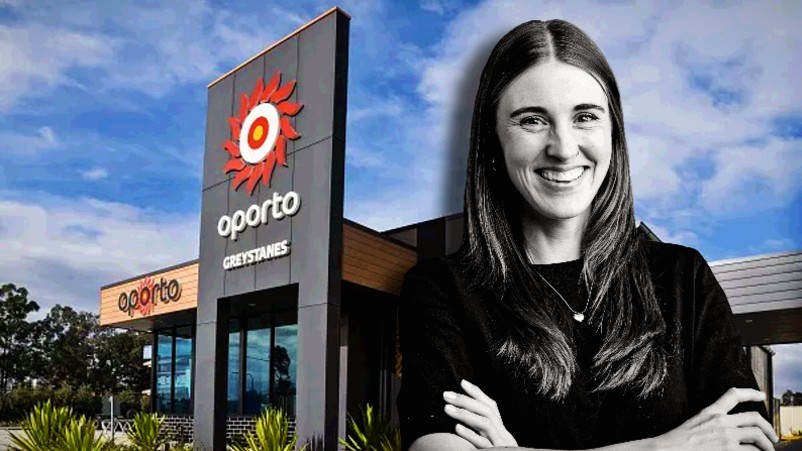
Oporto marketing manager Jasmin Clements

Australians may not quite be falling out of love with fast food, but they are certainly eating less of it. Cost-of-living pressures are shrinking the category, consumers are becoming more selective about where they spend their money and brand loyalty appears increasingly fragile. In that environment, growth depends less on getting people to eat more and more on convincing them to choose you when they do. For Oporto, understanding those changing consumer calculations has become a strategic priority. Research involving more than 6,000 Australians has reinforced some long-held beliefs about the Portuguese chicken chain's strengths in flavour, freshness and quality, while uncovering unexpected barriers around convenience, value and brand perception that are now shaping everything from product development to media investment and long-term growth plans.
What you need to know:
- Oporto is leaning heavily on rapid consumer research to guide product innovation, brand strategy and growth planning as Australia's fast-food sector contracts amid cost-of-living pressures.
- The QSR has used consumer insights platform Ideally to test 37 product concepts, ask 100+ research questions and gather feedback from more than 6,000 consumers over the past 10 months.
- Research is helping Oporto validate new product ideas earlier, reducing innovation risk and shaping its future new product development pipeline.
- Consumer feedback reinforced Oporto's positioning as a premium quick-service brand, with strong associations around flavour, fresh ingredients, flame-grilled chicken and a healthier fast-food experience.
- The findings suggest value is about more than price, with customers weighing quality, satisfaction and perceived worth alongside affordability.
- A surprise insight revealed many consumers still see Oporto as less convenient than larger rivals, citing limited accessibility despite the brand's expansion to around 225 stores nationally.
- Oporto says category data indicates fewer Australians are regularly buying fast food, with more consumers cooking at home or turning to alternative prepared-food options.
- Research also found the brand remains strongly linked to its Bondi Burger and chilli heritage, creating a perception among some consumers that most menu items are spicy.
- The company is now focused on broadening awareness of its wider menu, including wraps, bowls, salads and non-spicy options.
- Consumer testing played a key role in the launch of the Portuguese Crispy Burger, helping validate demand, brand fit and even the final product name. The burger has become one of Oporto's best-performing limited-time offers, reinforcing the value of testing ideas with consumers before investing in rollout.
How do we tackle value? Value is not just price, it's that whole value equation. What do I get for my money? How do I feel when I eat it? The quality, is it worth it? That's what it comes down to: when people come to Oporto, is it worth it?
I'm the wrong person to write this story. This was 24 years ago, and the circumstances of my life then meant I had only really experienced fast food through the bland pastiche of a Clown, a King, and a Colonel. Yet when coupled with the exhaustion of chasing a toddler round a one-bedroom flat in North Bondi, and the urgent need to quickly convert calories into burnable sugars, it was perhaps inevitable that afternoon that I'd find myself venturing into Portuguese chicken brand Oporto's famous first store,
Now sadly relocated, the OG outlet was near the spot where the 333 bus deposits you, just beyond the suburb's storied RSL. More importantly, it was a prammable distance from my front door.
I still remember that emotional punch in the face - fast food could be awesome, and not just fuel. It could have flavour.
More than two decades and 225+ franchise stores later, it's clear I wasn't the only one who felt that way.
For Oporto founder, Antonio Cerqueira, there was nothing especially complex about the problem he wanted to solve when he first launched the business in 1986 - make a tasty burger that doesn't tax the wallet too much, serve with awesome chips, rinse and repeat.
These days, the caretakers of his brand face a more complicated environment in what is now a highly competitive, very diverse Quick Service Restaurant (QSR) marketplace.
A global pandemic, followed by surging inflation that outpaced earnings growth, has punted the average punter's purchasing power back to 2011 levels, according to a study by Victoria University. That's led to a shrinking fast-food market where consumers are eating out or ordering in less often.
Oporto's marketing manager, Jasmin Clements, knows better than anyone that those chicken burgers won't eat themselves, which is why she and her team have turned to rapid consumer testing to help them make faster and better bets on new products, sharpen the firm's value proposition and differentiation, and challenge assumptions about what customers really think of the brand.
The Portuguese-style chicken chain has spent the past year interrogating market research platform Ideally to test dozens of new product concepts, evaluate brand perceptions and identify growth opportunities as cost-of-living pressures reshape Australia's quick service restaurant sector.
Clements told Mi3 the company had tested 37 concepts over the past 10 months, asked more than 100 research questions and gathered feedback from more than 6,000 consumers.
"The main thing we run is testing innovation and new product development early, at that concept stage, to help validate those concepts and know which ones we can use to map out our NPD pipeline," Clements said.
The research has become increasingly important as fast-food operators contend with more selective consumers and intensifying competition. One of the biggest advantages, according to Clements, was speed: the consumer perception deep dive delivered results in 48 hours – far faster than traditional research agencies.
"The time it took us to submit the survey to the platform and get the results was 48 hours. Normally, it's an overnight read, but we chose to do a double sample size, about 800 consumers, and because it was double, it doubled the time as well. But in 48 hours, we got a read on all the survey questions, which was phenomenal. That speed is something I don't experience with other tools I've used in the past or with research agencies."
Oporto which sits within the Craveable Brands portfolio alongside Red Rooster, Chicken Treat and Chargrill Charlie's, found that many of its assumptions about customers were correct. But the research also surfaced insights that are now influencing business planning for the coming financial year.
One of the most significant findings concerned how consumers think about value.
Like many restaurant operators, Oporto is navigating a market where customers are scrutinising discretionary spending more closely. Yet the company's research suggests value extends beyond price promotions and discounting.
"It's given us clear areas to focus on to grow the brand, like value," Clements said. "How do we tackle value? Value is not just price, it's that whole value equation. What do I get for my money? How do I feel when I eat it? The quality, is it worth it? That's what it comes down to: when people come to Oporto, is it worth it?"
The findings reinforced Oporto's positioning as a premium quick service restaurant brand that sits above traditional fast-food chains on quality perceptions, but still has an issue with the perception of accessibility.
According to Clements, consumers increasingly associate the brand with fresh ingredients, flame-grilled chicken and a healthier fast-food experience.
"What comes out clearly in the research is flavour," she said. "It's also back to what I said before, around feeling better about eating it, because our Bondi Burger has a grilled chicken fillet, so it's not fried, it's a fresh grilled fillet, so there are a lot of quality cues that, when you know about them, make you perceive it to be higher quality and better value."
The consumer perception study also highlighted a challenge that was not receiving significant internal attention. While Oporto has continued expanding its footprint and now operates across multiple store formats including drive-throughs, food courts and shopfronts, many consumers still perceive the chain as less convenient than larger rivals.
"A lot more consumers than I thought said it's not convenient, they don't have an Oporto near them, they can't access us easily," Clements said.
The finding was particularly notable because it emerged alongside a broader industry trend. According to Oporto's tracking and category data, fewer consumers are participating regularly in the fast-food category as economic pressures alter purchasing behaviour. People are still buying prepared meals, but many are eating fast food less frequently, cooking more at home or turning to convenience retailers with expanded food offering
"It's a very competitive environment at the moment, and our data tells us there are fewer people in the fast food category, it's shrinking," Clements said.
It's an environment tailor-made to up the pressure on a brands to remain visible and relevant at the moment consumers decide what they want to eat.
To that end, insights from the platform are, naturally, feeding the media plans. "We have an agency that helps plan our paid media strategy. If one of the opportunities is to tell our fresh credentials story, talk more to our core, get people to know we're accessible, and increase our share of voice, that feeds into our paid media plans and what channels we use.
We've started using linear TV. We did a TV ad for our recent Portuguese Crispy Burger that's in market now, and we hadn't been on free linear TV in years. It was really exciting ... So more TV. Radio is a key channel, along with out-of-home, buses, and paid social, and then more conversion-focused channels like CRM, in-app, and SMS. We're trying to test different media channels as well.
"It's a very competitive environment at the moment."
Managing perceptions
The data also suggests Oporto remains defined by its Bondi Burger and chilli heritage. While those associations are valuable assets, they can also narrow perceptions of the broader menu.
"One of the key insights pulled out of the Ideally research is that we're perceived as a spicy food brand, a spicy burger brand specifically, because the Bondi Burger with chilli is our hero core item," Clements said.
"Some people perceive that we've got chilli on everything, that it's super spicy, which isn't true."
The company is now looking for ways to educate consumers about the breadth of its menu, which includes wraps, bowls, salads and non-spicy options, while continuing to reinforce the products that built its reputation.
Research has also become an important tool for reducing innovation risk. One example was the launch of Oporto's Portuguese Crispy Burger. The concept had been discussed internally for years, but management wanted to understand whether customers would view a crispy chicken burger as a natural fit for the brand.
"We tested a bunch of concepts, including a crispy burger, and it tested really well for desire, purchase intent, brand fit and distinctiveness," Clements said.
The company subsequently used the platform to test product naming before settling on Portuguese Crispy Burger, a decision informed by research showing consumers responded strongly to the word "crispy". The burger has since become one of Oporto's strongest-performing limited-time offers in recent years.
The experience reinforced a broader lesson for the company. While consumer research does not eliminate uncertainty, it provides confidence that investments in product development, marketing and operations are grounded in customer demand rather than internal assumptions.
"There are some product concepts we tested where I thought 'they're going to love this,' and it kind of fell flat," Clements said. "And then some things over-performed."
As Australia's fast-food market becomes more competitive and consumers become more selective, that ability to test ideas quickly may prove increasingly valuable. For Oporto, the goal is no longer simply understanding who its customers are. It is understanding how their expectations are changing, and moving fast enough to respond with new product.
“For us, sense-checking with the Ideally platform allowed us to back ourselves and launch,” Clements said.