
Edelman Trust barometer reveals deepening trust crisis as 62% of Australians hold grievances against government, business and the rich
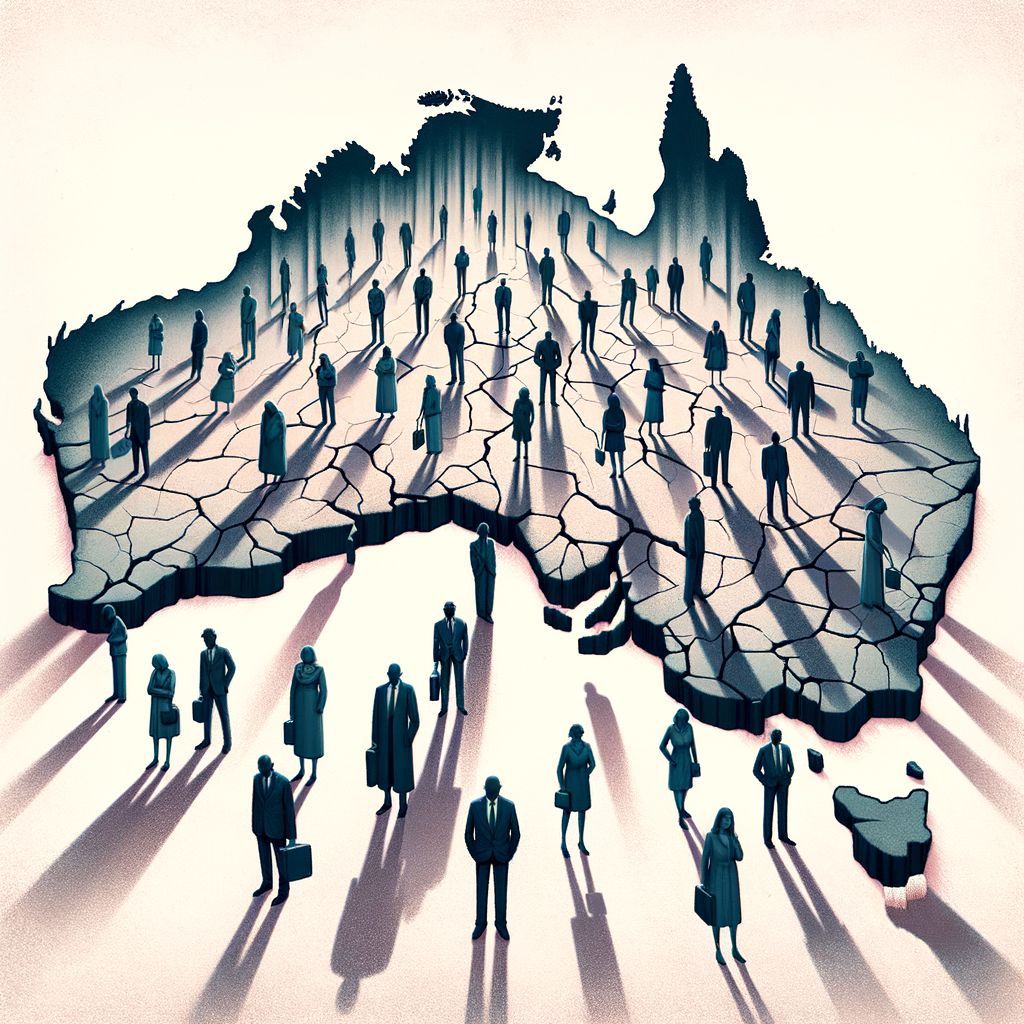
Image by DALL·E
The 2025 Edelman Trust Barometer has revealed a significant trust crisis in Australia, with the nation's Trust Index standing at 49, indicating a general distrust in business, government, media, and non-governmental organisations (NGOs). This study, which surveyed over 32,000 respondents across 28 countries, highlights a...
The 2025 Edelman Trust Barometer has revealed a significant trust crisis in Australia, with the nation's Trust Index standing at 49, indicating a general distrust in business, government, media, and non-governmental organisations (NGOs). This study, which surveyed over 32,000 respondents across 28 countries, highlights a growing sense of grievance among Australians.
Key themes from the report include a crisis of grievance, with half of Australians fearing discrimination and viewing hostile activism as a legitimate means for change. The data shows that 62% of Australians hold grievances against government, business, and the wealthy, believing these entities serve narrow interests and make life more difficult for ordinary citizens.
Australians perceive NGOs as the best positioned to combat divisiveness and mend societal fractures, although they acknowledge that broader institutional support is necessary. Despite this, only 17% of Australians express optimism that the next generation will be better off, reflecting a lack of confidence in future prosperity.
The report also notes that nearly one in three Australians, and more than half of those aged 18-34, consider hostile activism a viable method to drive change. Globally, the study identifies a mass-class trust divide, with low-income respondents trusting institutions 13 points less than their high-income counterparts.
A significant 69% of global respondents express concern that government officials, business leaders, and journalists deliberately mislead them, while 63% find it increasingly challenging to distinguish credible information from deception. Business is perceived as outperforming government globally in terms of competence and ethics. However, in Australia, there is an expectation for businesses to address societal issues more effectively.
NGOs emerge as the most trusted institution in Australia, viewed as best placed to tackle divisiveness and repair the societal fabric. Yet, Australia ranks as the third least trusting of media among the 28 countries studied, with most Australians believing that media prioritises commercial interests over the public interest.
Concerns about misinformation are prevalent, with 64% of Australians worried that government leaders are lying, 66% concerned about business leaders, and 68% about journalists. Additionally, 51% of Australian employees express anxiety over job insecurity due to factors such as international trade conflicts, foreign competitors, a looming recession, and automation.
The fear of discrimination has notably increased, rising by 14 points among women and 13 points among Australians aged 55 and older since last year. Furthermore, 72% of Australians believe the wealthy avoid paying their fair share of taxes, with 60% attributing societal problems to their perceived selfishness.
CEO of Edelman Australia, Tom Robinson, said: "The 25th anniversary of our trust study is an opportunity for us to mark this moment in time and consider the next 25 years." He continued, "With an impending Australian Federal election, our data presents a warning sign to our leaders. Australians are simply not feeling optimistic about our future prosperity and this lack of hope is one of the key factors driving a sense of grievance. Only 17% of Australians believe that the next generation will be better off compared to today.
"With trust, economic optimism grows, and grievance dissipates." Concluding the findings, Robinson said, "The 25th Edelman Trust Barometer points to how we can create a future where trust in institutions isn’t necessarily the antidote but rather act as the proverbial canary in the mine; pointing to whether we as a country are heading in the right direction. The antidote lies in Australia’s sense of equity and fairness, that economic prosperity is available and accessible to the many."
