
B2B buyer, beware of yourself: Corporate tech buyers want self service, but rep-free sales lead to more buyers' remorse, finds Gartner
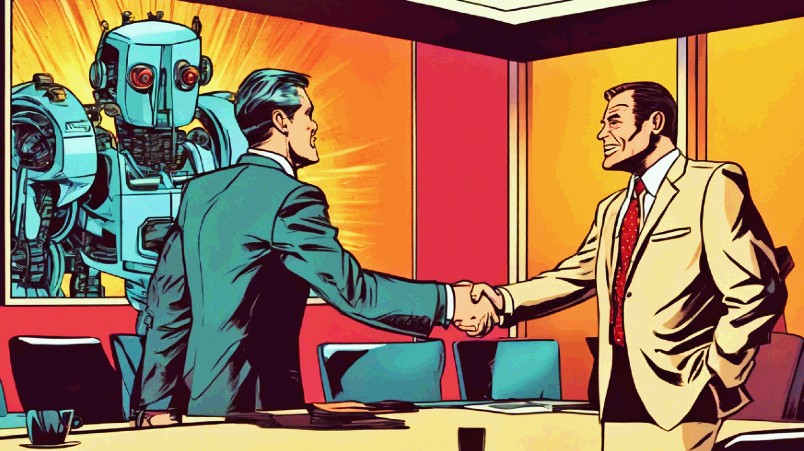

B2B buyers want to do their own research and ideally fly under the radar until they are ready to purchase. But for sales and marketing managers, getting visibility over the demand - and getting your account execs involved in the process - is likely to deliver something even more valuable than a sale: Customer success. That's because buyers are almost twice as likely to report a high-quality deal from their perspective when they work with a sales rep, instead of flying solo on the digital tools.
What you need to know
- B2B buyers often want to cut B2B sellers out of the loop, but adding the human touch into a collaborative approach actually builds better deal quality, according to Gartner's new B2B Buying Report.
- In fact, buyers are 1.8 times more likely to report a high-quality deal involved supplier-provided digital technologies in concert with an account executive.
- On the flip side, buyer remorse is 1.65 times more likely when buyers purchase using digital tools alone.
It used to be so easy in B2B sales and marketing. Find the one key decision maker — that executive warrior god that for a long time in technology purchasing was the CIO — build a rapport, pay for lunch and occasionally a few fizzy drinks in Las Vegas at the annual customer conference, then send the contract.
If you were in enterprise software in the days before software-as-a-service (Saas), or even better, if you sold tin* such a mainframe tape storage, you could live high on the hog off just a couple of sales a year.
But that world evaporated years ago. With the rise of SaaS, business general managers started making their own decisions. At one point, CMOs were said to be outspending CIOs on technology. And with the rise of cloud computing and infrastructure-as-a-service (IaaS) or platform-as-a-service (PaaS), hyperscale sellers suddenly had a lot more leverage.
The B2B world has witnessed a further important buying change - the emergence within businesses of buying ecosystems. According to research firm Gartner, the average enterprise B2B buying group consists of five to 11 stakeholders, representing an average of five distinct business functions. That makes for a highly complex and uncertain buying process.
Gartner's B2B Buying Report said meeting the needs of multiple stakeholders and building a consensus across the purchasing ecosystem can be challenging. The firm's figures show 77 per cent found their latest purchase very complex or difficult.
"Adding to the challenge, 99 per cent of B2B purchases are driven by organisational changes, such as a digital transformation or operational changes, and 66 per cent of B2B buyers say the amount of change in their organisations is overwhelming," the latest report stated. "Value framing and value affirmation simplify the process. Two-way interactions that integrate both digital and human assistance contextualise value for the buyer. This helps reduce buyer uncertainty and improves the quality of deals."
What's more, buyers don't want to talk to sellers. Gartner found three-quarters of customers expressing a preference for a sales rep-free experience. But there's a big problem with that preference.
Caveat Emptor
"Self-service digital commerce purchases are significantly more likely to result in purchase regret," Gartner continued. "Revenue and retention leaders must be able to identify the right mix of digital and human assistance in the modern B2B buying experience to close high-quality deals."
In fact, rep-assisted digital commerce generates the lowest levels of buyer regret. Traditional, rep-led approaches can also minimise the snafus, and save buyers from themselves. The gap in outcomes is significant, with buyers who insist on a digital self-service approach being 1.65 times more likely to regret a purchase than traditional, rep-led buyers.
On the flip side, when the seller works with the prospect to maximise the value of digital tools, those B2B buyers are 1.8 times more likely to complete a high-quality deal.
Gartner's advice to all those B2B sales and marketing managers on the digital side is to deliver value-framing and value-affirming content across channels.
"Value-framing and value-affirming content can and should be applied across a range of digital channels, especially on a brand’s website. Illustrate how a brand might offer both value types through website content and features aligned to key tasks along the buying journey."
And as for those pesky, unloved, much-maligned flesh and blood account managers, Gartner recommended equipping sellers to enhance digital engagement by leaning on the strengths of both.
"Buyers are 2.3 times more likely to experience value affirmation from supplier reps than from supplier digital channels. But sellers often struggle to help buyers feel confident and in control of their purchase," the analyst firm said.
Gartner concluded "an added layer of expertise is required to contextualise key solution details for individual buyer situations. Good sales enablement tools can help address this gap."
*Tin is what the IT sales reps used to call the computers they were selling.
Self-service digital commerce purchases are significantly more likely to result in purchase regret.
