No longer business as usual: Why the advertising industry can be the tool for sustainable growth
Siloed thinking and overconsumption have landed us in a global polycrisis, writes Head of the EY New Economy Unit, Nadia Woodhouse. But the advertising industry is uniquely positioned to be part of the solution.
Poll after poll shows Australians want bold climate action. In one of the most comprehensive recent studies in the Nature Climate Change journal, 83 per cent of the population wanted more political action on climate change, alongside broad willingness to adopt pro-climate behaviours. In addition, 56 per cent said they would be willing to sacrifice a small percentage of their income to support these changes.
The Federal Government has set more ambitious emissions targets, but targets alone won’t deliver change. Business leaders can’t sit back and wait for others to move first – the future of our economy and our planet depends on what we do now.
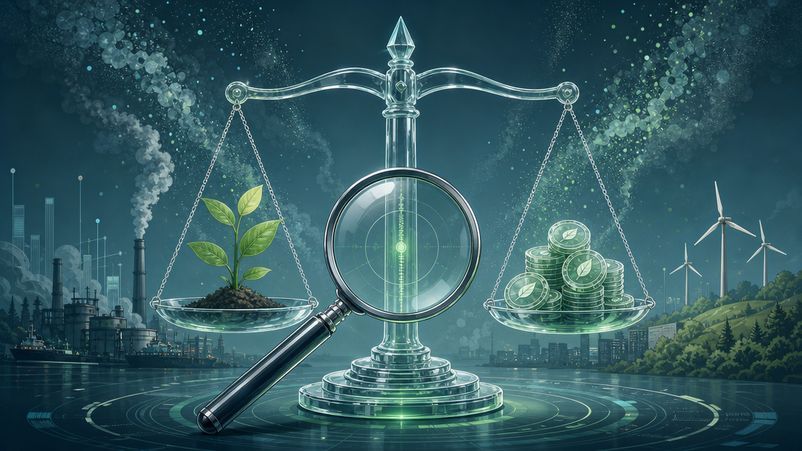
Our current system has delivered prosperity, but at a cost: Rewarding short-term gains over long-term stability, financial capital over human and natural capital, and endless consumption over sustainable growth. The result is environmental degradation, rising inequality, and societies living well beyond their ecological means. No wonder experts now speak of a “polycrisis” – multiple, interconnected challenges compounding at once.
The challenge is clear: We must build a future-ready economy with sustainability at its core. This was the message I shared with Ad Net Zero supporters at a recent gathering in Melbourne.
From growth at all costs to sustainable prosperity
If we’re serious about building a future-ready economy, we must rethink the fundamentals. That means moving away from unsustainable growth, overconsumption and siloed thinking, and instead embracing the principles of:
- Sufficiency: Living well within planetary boundaries
- Circularity: Aligning production and consumption with nature
- Systems thinking: Connecting the dots to drive real change
Above all, we must prioritise putting human and planetary flourishing at the centre of decision-making, and addressing inequity to create shared, lasting prosperity for all.
Our polycrisis economy exists because we’ve been thinking in silos – chasing growth at all costs and failing to collaborate. We need to shift toward sustainable, purposeful growth, guided by systems thinking.
Systems thinking recognises that no organisation can solve sustainability challenges alone. Our economy is made up of interdependent systems – energy, transport, finance, production, communications – all nested within the ultimate ‘system of systems’: Nature. Real progress comes from understanding these relationships and nurturing them to create positive tipping points and feedback loops.
Going it alone rarely shifts the system. True impact comes from collaboration across industries and sectors – influencing supply chains, consumer behaviour and policy together.
The advertising and media industry provides a powerful example through Ad Net Zero, uniting agencies, media owners and advertisers to tackle emissions collectively. By treating sustainability as a shared challenge, the industry is proving how collaboration amplifies individual action and opens up new opportunities for all.
Putting principles into practice
What does sufficiency look like in practice? It could mean shifting to new revenue models for products or services that meet consumer needs with low or no environmental impact. It could mean collaborating with partners to create greener alternatives – such as subscription-based services for products (think cars, luxury fashion, furniture and electrical appliances) – or working with policy makers to offer price incentives to make sustainable choices more attractive, even when less convenient.
Circular products align production and consumption to nature and treat waste as a design flaw. Turning our historically linear production systems into loops presents huge opportunities for transformational innovation in Australia. As products are built to last longer, they are designed to be cycled back into the system as high-value goods.
Embracing the circular economy doesn’t only have a huge benefit to the planet; CSIRO estimates that circular products from waste resources could provide a $210 billion economic boost to Australia by 2050 in new market opportunities. In other words, a relatively untapped source of future revenue for organisations willing to adapt.
Why this matters for marketers and agencies
Consumers are demanding sustainability, even when clients aren’t. That puts agencies in a unique position to be able to guide clients with smart, forward-looking advice that aligns with consumer expectations. And where consumers themselves are uncertain, agencies have the ability – and the duty – to help shift habits in the right direction.
The uncomfortable truth is that advertising has helped fuel overconsumption. But as the architects of desire, this industry also holds the power to shape solutions: Promoting lifestyles of sufficiency so it's enough for a good life, within planetary boundaries.
For brands, sustainability is less a direct sales lever and more a long-term brand lever. It builds affinity and long-term loyalty, strengthening both brand and business over time. Kantar data shows that perception of sustainability contributes up to 10 per cent of brand value across the global top 100 brands, a potential $600bn in value.
Employees expect it too. In a creative industry such as media and advertising, the brightest talent is drawn to organisations that act on sustainability. And globally, 62 per cent of people feel strongly that business is not going far enough to address climate change, according to the latest Edelman Trust Barometer. A genuine commitment is not just a market imperative, but a cultural one.
Crucially, this is a business imperative. Systemic risks – from climate disruption to resource scarcity – threaten the stability of the very markets in which we operate. Transitioning to a regenerative, low-carbon economy isn’t just a moral choice; it’s a commercial necessity.
This is the moment for bold ideas and real innovation; don’t be left behind. As the new economy takes shape, future-proof your business – and your industry – by breaking out of siloed thinking and leading the change through collective action.
Nadia Woodhouse is Head of the EY New Economy Unit — a research and insights team that is part of the organisation’s Global Climate Change and Sustainability Services practice.
The views reflected in this article are the views of the author and do not necessarily reflect the views of the global EY organisation or its member firms.