With $40bn in annual procurement and 230M transactions, NSW shifts buying power from agencies to Treasury, platform owners and whole-of-government technology deals
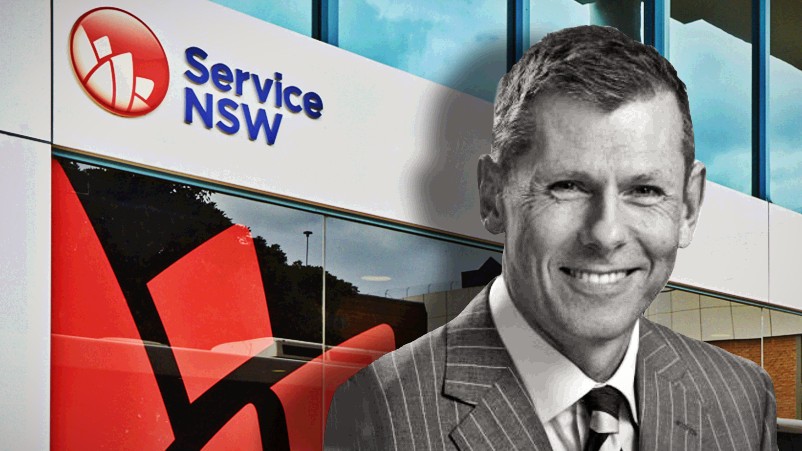
NSW Treasury Secretary - Michael Coutts-Trotter

NSW is preparing to turn Service NSW into the front door of a government-wide payments network, using its scale to pull transactions, identity, debt recovery, refunds and customer communications onto shared infrastructure. The plan could shift power from individual agencies to Treasury and central platform owners, reshaping how banks, fintechs and technology suppliers sell to government. But NSW has yet to explain how it will fund the overhaul, compel agency adoption or protect the more sensitive data created by bringing those systems together.
What you need to know:
- NSW plans to make Service NSW the front door to a government-wide payments network connecting transactions, identity, debt recovery, refunds and customer communications across dozens of agencies.
- The three-stage strategy would introduce modern payment methods, consolidate payments and back-office systems onto shared platforms, and ultimately give customers a single view of their financial dealings with the state.
- With 230 million domestic payments annually, $40bn in procurement and 9 million Service NSW accounts, the government has the scale to reshape how banks, fintechs, software vendors and systems integrators sell into NSW agencies.
- Central platforms already have significant reach: the Customer Payments Platform handles more than 60 million transactions and $19bn annually across 50-plus agencies, while myWorkZone is intended to standardise systems across more than 80.
- But the blueprint leaves major gaps around funding, deadlines, mandatory agency adoption, privacy, security, digital inclusion and customer-experience standards, all of which are critical to whether the promised unified service can be delivered.
The payments landscape is changing rapidly. The shift to digital and real-time payments, increasing cyber threats and scams, and the rise of artificial intelligence and digital currencies are reshaping how payments are made and managed.
NSW plans to turn Service NSW into the front door of a government-wide payments network linking transactions, identity, debt recovery, refunds and customer communications across dozens of agencies.
The strategy would move the state away from a fragmented model in which agencies manage separate payment systems and banking relationships, using shared platforms to standardise how people, businesses and suppliers pay the government and receive money from it.
NSW Treasury says the shift could produce faster transactions, stronger security, lower technology costs and more consistent customer experiences. The plan, however, does not specify the funding, deadlines, privacy architecture or agency mandates required to deliver the transformation.
According to Michael Coutts Trotter, the NSW Secretary of the Treasury, "Payments are the quiet engine of the NSW economy. They enable essential services to operate, businesses to grow, and communities to thrive."
Writing in the new Payments strategy document, Coutts Trotter noted, "Each day, millions of transactions ensure workers are paid, families access essential goods and services, and enterprises of every size move money safely and efficiently across the state. The payments landscape is changing rapidly. The shift to digital and real-time payments, increasing cyber threats and scams, and the rise of artificial intelligence and digital currencies are reshaping how payments are made and managed."
Formal industry reaction has been limited so far. However, Carolyn Breeze, CEO of Scalare Partners and a non-executive director with a long heritage in the payments sector, suggested on LinkedIn that the NSW Government was sending a very clear signal about the future of payments in Australia.
"Having spent much of my career in payments from PayPal and Braintree through to GoCardless, Zepto, Azupay and now advising fintechs ... I read the new NSW Payments Strategy with one overwhelming takeaway, that A2A, real-time payments have officially moved from innovation to government infrastructure."
"Australia has been quietly building one of the world's most advanced real-time payment infrastructures," she said. "This strategy suggests we're now entering the next phase: mainstream adoption at government scale."
Leveraging scale
To that end, the NSW Government has enough scale to influence the broader payments market.
According to the strategy document, "The NSW Government processes the largest payroll and transit files in Australia, manages $40 billion in annual procurement and handles around 230 million domestic payments each year. We support 8 million citizens, 896,000 businesses and 65,000 registered suppliers, and work closely with banks and industry partners across the payments sector."
That purchasing and transaction volume gives Treasury and central platform owners leverage over banks, payment processors, fintech companies, enterprise software vendors and systems integrators. Suppliers accustomed to winning separate agency contracts may increasingly have to demonstrate that their services can operate securely and consistently across government.
The strategy sets out three stages of reform. The first would encourage agencies to adopt modern payment methods, including PayID, PayTo and electronic invoicing. The second would shift payments, debt management and back-office systems toward common platforms. The third would create a more unified experience through which customers could view and manage their financial dealings with the state.
The approach reflects a wider move away from legacy payment methods. Non-digital payments accounted for less than 3 per cent of payment volumes in the past financial year, according to the strategy. Cards represented 74 per cent of payments in fiscal 2025, while New Payments Platform transactions accounted for 8 per cent and had grown 34 per cent since fiscal 2020.
The most consequential part of the plan is its proposed centralisation of infrastructure.
NSW’s Customer Payments Platform already supports more than 50 government agencies and processes more than 60 million transactions and $19 billion in annual flows. Treasury says a change made to the platform can be applied across participating agencies, reducing repeated maintenance and allowing security, compliance and new payment functions to be introduced centrally.
The Government also plans to use its myWorkZone enterprise resource planning program and shared-services model to standardise back-office systems across more than 80 agencies. State Debt Recovery Services, which supports about 21 agencies and manages an estimated 16 per cent of NSW Government debt, is another component of the common infrastructure model.
A diagram in the strategy contrasts the present system, where individual agencies connect their platforms separately to banks, with a future model in which agencies access banks through centralised government platforms.
The shift could move the commercial centre of government payments away from individual departments and toward Treasury, platform owners and central procurement authorities. Vendors may need to design services around the Customer Payments Platform, myWorkZone, debt recovery systems and Service NSW infrastructure rather than treating each agency as a separate customer.
Universal adoption is not mandated. Agencies that remain outside the central payments platform can meet the strategy’s objectives by applying security, compliance, change and innovation consistently through their own systems.
That flexibility may help agencies with complex or specialised requirements, but it could also preserve the duplication and uneven customer experiences the strategy is intended to remove. Treasury acknowledges that the benefits of common platforms depend on continued government investment and agency adoption.
Customer Experience
The plan also makes payments a larger part of the government’s customer experience strategy.
More than 9 million people have Service NSW accounts secured with multi-factor authentication. Treasury identifies those accounts as a potential common entry point for payment information, supported by refund tracking, real-time notifications and a Bank Connect service that allows customers to store and update bank details for reuse in online forms.
The document says the state’s vision is “a unified, customer-centric payments experience that ensures simple, safe and secure payments for people and businesses transacting with the NSW Government.”
Delivering that experience would require finance, technology, communications and service-design teams to coordinate payment reminders, confirmations, refund notices, hardship communications and fraud warnings. Delayed payments, unclear notices and uncertain refund status can affect public trust as directly as the underlying service.
The strategy does not provide shared customer-experience measures, communication standards or evidence from customer research. It also leaves unanswered how people without reliable digital access, suitable devices or confidence using online services will participate as more transactions move to common digital channels.
Centralisation creates a further tension around privacy and security.
A unified service becomes more useful as it connects identity information, bank details, refunds, debts, notifications and other obligations currently held in different systems. Combining that information also increases the consequences of unauthorised access, incorrect matching, fraudulent bank-detail changes or inappropriate secondary use.
The strategy says customer data, payment data and funds must be protected. It also says organisations should receive and retain only the information essential to provide a service.
There are still plenty of blank spaces to be filled in. Missing from the strategy are detailed rules covering consent, data access, correction, retention, delegated authority, customer opt-outs or recovery after an account or platform is compromised.
NSW has substantial foundations for the proposed payments layer, including transaction scale, mature central systems and millions of authenticated Service NSW accounts. Whether those assets become a unified statewide platform will depend on funding, agency cooperation and safeguards that the strategy has yet to define.