‘The engine is way out ahead of the carriages’: Forrester’s Sam Higgins says AI forces operating model overhaul; CMOs and CCOs must decide where humans and agents deliver the brand
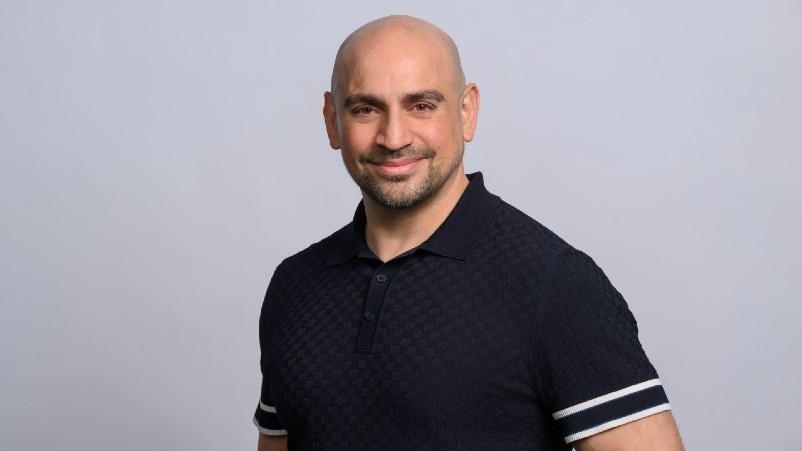
As companies scatter copilots and software agents across the business, Forrester’s Sam Higgins warns they risk turning the next great operating model overhaul into the same dog’s breakfast that defined early martech. For CMOs and customer chiefs, this is where the efficiency pitch meets the brand promise. Automating the wrong work can strip empathy from the customer experience, while automating the right work can free people to provide more of it. Getting that call right means redesigning how technology, operations and employees work together, including deciding where agents act, where humans lead and who carries the can when the machine gets it wrong.
What you need to know:
- AI is driving the biggest corporate operating model overhaul since digital transformation, forcing companies to redesign how people, software agents and departments share work.
- Forrester’s Sam Higgins warned that scattered copilots and automation projects could create another “dog’s breakfast” unless businesses establish a common architecture and clear accountability.
- CMOs and customer chiefs will play a central role because automation decisions directly affect customer experience, trust and the brand promise.
- Higgins said companies should keep humans “in the lead”, with employees setting objectives, limits and responsibilities for AI agents.
- HR faces its own major transformation as routine work disappears, skills become the basis for allocating tasks, and companies invest heavily in training people to handle more complex cases.
- And as for the rise of the chief AI officer - the jury is out on whether the function is temporal.
AI is pushing companies towards their biggest operating model overhaul since digital transformation, collapsing boundaries between customer experience, technology and workforce design as employees and software agents begin sharing the work.
Forrester Research principal analyst, Sam Higgins said businesses would need to move beyond scattered copilots and automation projects to connect customer strategy, technology architecture, employee skills and operational delivery. The shift places chief marketing and customer officers near the centre because decisions about where AI operates will directly affect service quality, trust and the brand promise.
Higgins, who is one of the speakers at next week's Forrester Sydney AI Forum, called on an example from one of the speakers at last year's CX forum to illustrate the point.
"Suncorp automated the middle office, but that was because what they wanted was to pay people to be empathetic to clients on call, so that was a brand decision," Higgins said. "Again, this comes back to this: If the CMO says our brand is about showing empathy, the people leader and the IT leader need to say, 'Then don’t automate that front line'. Don’t put a bot – a 20-year-old IVR – in front of the customer because that doesn’t align.
"What we actually want is to train people to be more empathetic and work with the IT people to help automate the middle office and the escalations."
Forrester has combined its previously separate customer experience and technology, data and security events into a single AI Forum in Sydney and Singapore this year. Higgins said the decision reflected growing interaction between CX and technology leaders as AI spreads across customer-facing and internal operations.
“Consumers have access to AI, and they’re using it to change the way they interact with brands, interact with platforms, interact with each other, interact with their work and their day-to-day lives,” Higgins said.
Evolving landscape
Digital and mobile technologies have shifted influence over corporate technology from the server room towards the customer over the past 15 years, giving CMOs and chief customer officers greater control over technology budgets and investment decisions. Higgins said AI was producing change in several directions simultaneously as consumers adopted the tools, employees brought them into their work and companies automated internal processes.
That convergence means customer experience can no longer be managed solely as a front-office discipline. AI used in a customer journey depends on the organisation’s data, processes, escalation pathways, security controls and workforce capabilities, requiring decisions across marketing, customer experience, technology, operations and people functions.
Higgins compared the present phase with the fragmented early years of marketing technology, when companies accumulated CRM, email and direct-marketing platforms without a common architecture or operating model.
"Remember all that fragmentation back in the early sort of 2000s of the marketing tech stack? It was a dog’s breakfast. And until we started to see people harmonise the vision and understand outside-in versus inside-out, we couldn’t get there. We really needed that operating model, and clarity around the architecture?"
Per Higgins, “There is a new type of operations coming, a new cognitive-oriented operational environment, a new operating model coming that will be the next S-curve after digital business,” he said.
"There is a new type of operations coming, right? A new cognitive-oriented operational environment, a new operating model coming that will be the next S-curve after digital business. We don’t know what to call it yet. We’re calling it the cognitive operating model."
"But until we have that new vision laid out for what a modern AI-enabled business looks like, and the role of people and technology, marketing and experience, finance and operations is clarified as it relates to this technology, we’re not going to get the outcome," he cautioned.
Instead, he argued that companies risk repeating the earlier fragmentation by attaching assistants and agents to existing applications without determining how work should move between systems, employees and departments.
According to Higgins, meaningful adoption will require businesses to decide which tasks agents can perform, where people must retain authority and who carries responsibility when automated work fails. “The engine is way out ahead of the carriages here,” he said, contrasting speculation about artificial general intelligence with the reliability problems companies encounter using current tools.
The organisational goal should be to put humans “in the lead,” he said. That would require people to establish objectives, assign work, set limits and remain accountable for agents, rather than acting only as a final checkpoint in an automated process.
Higgins said skills could provide a common framework for allocating work between people and AI. A skills-oriented agent architecture would identify the tasks employees perform, compare them with the capabilities of available agents and determine where human judgement remains necessary.
The approach would require involvement from people and culture teams, which manage workforce skills, development and employee systems, as well as technology and customer leaders. Higgins predicted that HR would experience a technology-driven transformation comparable with the changes CMOs and chief customer officers faced during the 2010s.
"The people that need to transform the core of their operations in 'burn-down-the-house mode' are HR professionals in people and culture. People and culture are about to go through the transformation that CMOs and chief customer officers went through in the 2010s."
People functions would retain their traditional responsibility for managing employment risk while assuming a larger role in growth, augmentation and employee development, he said. Their technology systems could eventually rival the influence of marketing and CX platforms as companies seek visibility over the capabilities of both employees and agents.
Remember all that fragmentation back in the early sort of 2000s of the marketing tech stack? It was a dog’s breakfast. And until we started to see people harmonise the vision and understand outside-in versus inside-out, we couldn’t get there. We really needed that operating model, and clarity around the architecture.
Staff skill-up
The reallocation of work also creates a problem for staff development. Automation is likely to absorb routine tasks first, leaving employees to handle the most complicated cases. However, workers have traditionally developed the judgement required for difficult work by spending years dealing with simpler problems. Higgins said organisations would have to replace that lost experience with extensive formal and workplace development.
“Shitloads of training, and not just training, but on-the-job training,” he said.
It's already happening. As Mi3 reported earlier this year, it's an issue tech giant, Canva is already dealing with in its call centres.
According to Canva chief customer officer, Rob Giglio, that started with a commitment to hiring differently. In the past, customer support hiring focused on communicators who could resolve tickets quickly and move on. Now, he said, the emphasis is on discovery-oriented skills, such as asking thoughtful questions rather than simply resolving or deflecting issues.
"You need to have people who are going to be deeply engaged with customers. They have to have those skill sets. You then expect them to be good, and you have to give them a lot of training, " he said.
For his part, Higgins said employees could learn by observing automated work, reviewing cases and working with experienced specialists, rather than completing every routine task themselves. He compared the change with engineers using modern calculation tools while still receiving the training required to judge whether the results are safe and credible.
The challenge is particularly important in customer service, where automation may reduce the volume of basic inquiries while increasing the complexity of the work retained by people. Higgins said those human roles could become more valuable because they would demand greater expertise, empathy and judgement.
He also expected AI operating-model decisions to become a shared c-suite responsibility. CMOs and customer chiefs must define the experience and brand attributes worth protecting, while technology, security, operations, finance and people leaders determine how those outcomes can be delivered safely and economically.
Higgins further questioned rose of the chief AI officer, "There are a lot of organisations who are even mandating the creation of a chief AI officer. I think the jury’s out on whether that is a is a real role for the future, or like a chief digital officer which in many organisations, proved to be temporary, or a proxy for something else."
The more durable change will come through cross-functional leadership and a shared architecture for human and automated work, he said. Companies that add agents without making those organisational changes could find themselves with another fragmented technology stack, unclear accountability and customer experiences that fall short of the efficiencies promised.