Google says AI-generated answers, not keywords, will define the future of advertising as search undergoes a huge overhaul; agentic commerce incoming
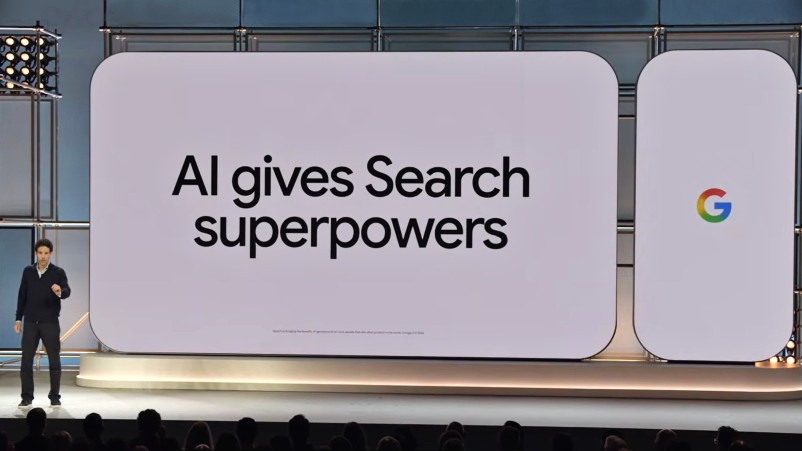
Google's Phillip Schindler on stage at Google Marketing Live, ushering in a new era in search and search advertising
At Google Marketing Live 2026, Google has signalled the two-decade bargain of humans typing keywords into a box and advertisers paying to intercept them is at an end. The future Google described at its tentpole event looks less like search and more like delegation, with artificial-intelligence systems researching products, comparing options and increasingly steering consumers towards decisions before they ever visit a website. That shift carries profound consequences for the digital advertising industry that Google helped build. In the AI era, the company argues, the most valuable commercial asset is no longer the keyword but the answer itself. The firms that win will not simply buy attention, they will train machines to trust them.
What you need to know:
- Google says AI-generated answers are fully replacing keyword-based search, with conversational AI now embedded across Search, Shopping and YouTube.
- Google’s AI Overviews now reach 2.5 billion monthly users, while AI Mode has surpassed one billion users, with usage doubling every quarter since launch.
- Executives declared “Google search is AI search”, signalling a major shift away from manual keyword targeting toward automated AI-driven advertising systems.
- New ad formats will appear inside AI-generated responses, including conversational ads and AI-powered “custom explainers” that justify product recommendations in natural language.
- Google is pushing marketers toward AI Max and Performance Max, claiming AI Max campaigns deliver 27 per cent more conversions than manually managed campaigns.
- The company outlined an “agent ecommerce” future where AI systems monitor products, track prices and help complete purchases across Google services on behalf of consumers. To this end, Google is rolling out new shopping infrastructure including a Universal Cart and AI shopping assistants that compare products and explain recommendations using retailer data.
- YouTube is also being repositioned as a commerce and discovery engine, with new conversational search product Ask YouTube launching in the US this summer.
- Google said AI search will increasingly reward expert, experience-led and multimodal content, while advertisers are being asked to trust automated systems to manage targeting, bidding and optimisation.
When a YouTube creator talks about your product, viewers are 13 times more likely to search for your brand and five times more likely to buy.
We no longer have to talk about traditional search versus AI search on Google because after today, everything is AI search.
That was the unmistakable message from executives at Google during the company’s annual Google Marketing Live 2026 event on Wednesday, where the search giant laid out an aggressive vision for the future of online discovery, advertising and ecommerce. It's one where AI-generated answers increasingly replace keyword-driven search results and AI agents help consumers make purchasing decisions on their behalf.
In a sweeping keynote that blended product announcements with an overt defense of Google’s dominance in digital advertising, executives argued that search is evolving from a system designed to retrieve information into a conversational engine that can reason, recommend and act.
“We have made a decade's worth of innovation in the last year alone ... AI gives search superpowers,” Google chief business officer, Philipp Schindler told marketers gathered at the event. “We have been on a journey to bring together the best of a search engine with the best of AI.”
Schindler said Google’s AI Overviews product now reaches more than 2.5 billion monthly active users, while AI Mode, the company’s conversational search experience, has surpassed one billion monthly users. Searches in AI Mode, he said, have been “doubling every quarter since launch.”
Google also announced what Schindler described as “the biggest update to the iconic search box in 25 years,” allowing users to submit longer, more complex prompts using text, images and video.
Profound shift
The changes signal a profound shift for the digital advertising industry, which for decades has revolved around keyword targeting and link-based search results. Google executives repeatedly told advertisers that model is rapidly becoming obsolete.
“So it’s time to acknowledge a fact,” Schindler said. “Google search is AI search through and through.”
For marketers, the implications are enormous. “Longer and more conversational searches mean richer signals of intent for us to better match what you offer with what people are looking for,” Schindler said. “You can’t think in terms of simple keywords anymore, and you definitely can’t manually choose them.”
Instead, Google is pushing advertisers toward AI-driven campaign systems which automate targeting, creative optimisation and ad placement using Google’s Gemini AI models.
The company also unveiled a broader overhaul of search advertising designed specifically for conversational AI environments. Sponsored recommendations will increasingly appear inside AI-generated responses and conversational search experiences rather than alongside traditional lists of blue links. Google has also introduced a new “custom explainer” ad format that uses artificial intelligence to justify recommendations in natural language, and said consumers will be able to interact directly with brands through conversational ad units that answer questions using information pulled from advertisers’ websites.
Google’s advertising and commerce chief, Vidhya Srinivasan framed the transformation in even broader terms. “We are not just bringing ads to AI search experiences, we are reinventing what an ad is,” Srinivasan said.
Her presentation focused heavily on what Google called “agent ecommerce,” describing a future where AI systems continuously search, monitor and evaluate products on behalf of consumers.
Schindler demonstrated examples in which Google Search could track apartment listings matching a user’s preferences or monitor sneaker releases from favorite athletes across blogs, shopping sites and online stores. “Search doesn’t just help to find information, it gets things done for you,” he said.
Today's news also heralded a major expansion of Google's shopping and commerce infrastructure. The company said it is building a more “agentic” retail platform that can guide – and eventually help complete – purchases across Search, YouTube and Google Shopping. New features include a Universal Cart system that lets shoppers add products from multiple Google services into a single checkout flow, alongside AI shopping assistants that can compare products, monitor prices and explain recommendations using retailer data and merchant feeds.
The strategy reflects the escalating competition between Google and AI-native platforms such as OpenAI, whose conversational interfaces are increasingly shaping how consumers discover products and information online.
Google executives sought to reassure advertisers that the company’s scale and infrastructure give it a decisive advantage in the AI race.
“We don’t rent our intelligence, we build the entire engine, from the chips to the research to the models to the ad platform,” Schindler said.
He added Google expects capital expenditures to rise from US$31 billion in 2022 to as much as $190 billion this year as the company invests heavily in AI infrastructure.
The link between Search and YouTube is also tighter, with executives repeatedly positioning the latter as a commerce and discovery engine rather than simply a video platform. Schindler announced a new conversational search product called Ask YouTube, allowing users to ask complex questions and receive AI-curated video recommendations with follow-up conversational prompts. The feature is scheduled to roll out broadly in the United States this summer.
“When a YouTube creator talks about your product, viewers are 13 times more likely to search for your brand and five times more likely to buy,” Schindler said.
Lead with what your brand can uniquely say. Be specific, stay away from generic commodity information.
Ask Advisor
Next up was 'Ask Advisor', a Gemini-powered AI assistant designed to work across Google Ads, Analytics, Merchant Centre and Display & Video 360. The system gives marketers a conversational interface for diagnosing campaign issues, analysing performance and generating recommendations without manually navigating multiple products and dashboards.
Executives repeatedly argued AI-driven search will improve advertising performance by giving Google richer contextual signals about consumer intent. Per the firm: AI Mode searches are already “three times as long as traditional searches,” Schindler said, while brainstorming-style searches are growing 30 per cent faster than AI Mode searches overall.
Srinivasan described the new search experience as removing the “tax” traditionally associated with online research. "We called it research, but it was still work: 15 open tabs, cross-referencing reviews, many, many videos to watch, comparing prices, all of this while dealing with the lingering fear that you might be making the wrong choice. This gap between wanting to do something and actually doing it was full of friction, but now something really new is taking shape.
“The age-old trade-off between making a smart decision and a fast decision doesn’t really hold up anymore. With Google search, deep, thoughtful, and personalised research is now possible at the speed of impulse.”
Google also used the event to formally begin winding down Dynamic Search Ads, one of its oldest search advertising products, replacing it with AI Max. The company said AI Max will automatically replace Dynamic Search Ads, automatically created assets and campaign-level broad match settings from September. Google said campaigns using the full AI Max feature suite delivered an average 7 per cent increase in conversions or conversion value at similar acquisition costs compared with search-term matching alone.
Brand visibility
There was also advice for brands, publishers, and ecommerce companies about how visibility in AI-generated search results will work. Srinivasan said the pages surfaced by Google’s AI systems tend to demonstrate “expertise and experience,” while emphasising that content should include unique perspectives, reviews, images and video.
“Lead with what your brand can uniquely say,” she said. “Be specific, stay away from generic commodity information.”
The guidance suggests Google’s AI systems will increasingly reward authoritative, structured and multimodal content as AI-generated answers compress traditional click-based search journeys.
One search to rule them all
Today's news also highlighted the growing concentration of power inside large AI platforms, as advertisers become more dependent on automated systems they cannot fully inspect or control.
Google’s AI advertising products already automate large parts of campaign management, including targeting, bidding and optimisation. The new announcements push that model further, asking advertisers to trust Google’s AI systems to interpret conversational intent and determine which ads users should see inside AI-generated responses. The company framed automation as necessary because modern searches are becoming too complex for manual optimisation.
“The only way you can win in this age of AI is with AI,” Srinivasan said.
For Google, the bet is that conversational AI will expand search volumes rather than cannibalise them.
Schindler invoked the economic principle known as Jevons Paradox, arguing that making search more efficient will ultimately cause people to search more often, not less. “As AI makes it more efficient to find what you want in Google search, you search more,” he added.