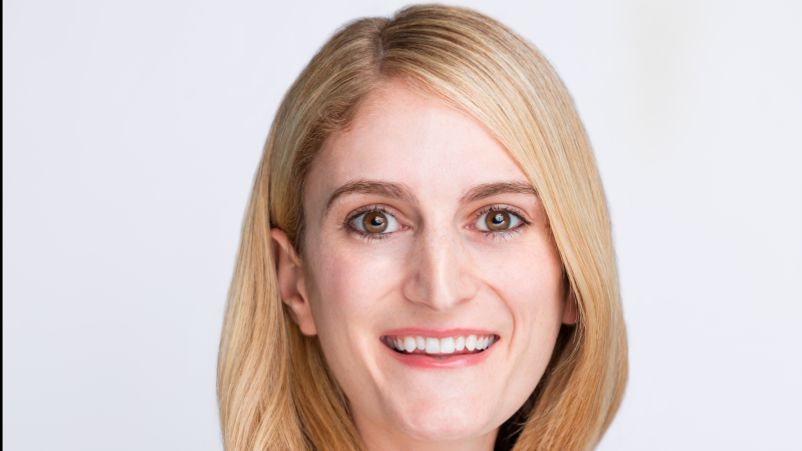
Global template: Omnicom confirms major restructure – creative, media, PR, performance, production – rolled into Omnicom Oceania under Nick Garrett

Nick Garrett swaps Deloitte Digital to lead Omnicom Oceania – and head upstream: "There is a huge amount of white space to grow into."

Omnicom has confirmed a massive restructure in Australia and New Zealand, with all of its business units across media, creative, PR, performance marketing and production being rolled into Omnicom Oceania under Nick Garrett. The model appears to be a pilot for the global business as holding companies and consulting rivals race to consolidate. Tellingly, Garrett will report directly to global Chairman and CEO John Wren, with the top boss monitoring closely how the move plays out – and what happens next.
Oceania omniarch
Omnicom is pushing all of its ANZ business units into a single structure under Nick Garrett, who will report directly to global Chairman and CEO John Wren, rejoining the holdco from Deloitte Digital.
After a series of smoke signals, the group confirmed the news to employees this morning via an all-staff memo.
The first region to adopt the model, Omnicom Oceania appears to be a pilot for the global business as holding companies race to consolidate.
Omnicom last August moved to bundle all of its ad agencies into a single entity – Omnicom Advertising Group (OAG). The next logical step is to roll OAG and media business OMG together into regional combined units, with Wren closely monitoring how the Oceania restructure progresses before lifting the template to apply globally.
“Increasingly, clients in this market are looking for deep specialism and seamless integration. Recent Forrester wave reports have proven that Omnicom is the unrivalled leader across key marketing specialisations. We have successfully deployed these specialisations with many leading clients in the market, and this organisational shift accelerates our ability to deliver this model to more clients across the region,” said Wren.
Garrett returns to the holdco after almost four years at Deloitte Digital, latterly as global CMO where he was tasked with driving upstream consulting services spanning creative, tech and transformation – an approach he’s tasked with emulating at the helm of Omnicom Oceania. Garrett sees major gaps in the market.
“My time in the consulting world showed me just how big the opportunity is to add creative problem solving and brand thinking further upstream into business strategy, and how agencies can positively influence more of the customer eco-system beyond marketing and comms,” said Garrett. “There is a huge amount of white space to grow into and I am absolutely thrilled to be returning to the Omnicom family to continue to drive growth at an accelerated pace.”
Garrett spent almost a decade at BBDO agencies Clemenger and Colenso before heading to Deloitte. He also spent seven years at TBWA in Sydney and New York. Wren backed him to make the restructure work:
“Nick’s deep knowledge of Omnicom and his advisory experience make him the ideal leader to orchestrate these capabilities and drive the growth ambitions of our clients.”
Integration race
The move comes as a major rival, Accenture, is likewise undertaking a significant reorganisation, consolidating Song, Strategy, Consulting, Technology and Operations into a single integrated ‘Reinvention Services’ business unit. While the consulting firm has confirmed top-level leadership under the new model, what that means for its agency businesses and downstream reporting lines is not yet clear.
While Publicis and Havas have been the most aggressive of the holdcos in moving to a unified structure, Dentsu in recent years has likewise been collapsing brands.
Analysts have suggested that the medium-term pain of transformation may ultimately pay off.
Madison & Wall principal, Brian Wieser, last year told Mi3 that both unified and traditional models can work, “but I think the fewer silos, singular, mono-line businesses are far, far more efficient and more likely to thrive,” he said.
“Keeping a lot of different agency brands, hundreds of people with a CEO title and thousands of staff who work for those people – the cost structures are higher, the politics are more significant. The bureaucracy can make it harder to execute on changes, to evolve and adapt to the market. So there's definitely a lot of advantages to the serious consolidation we've seen with Publicis, Dentsu and Havas,” added Wieser. “We have not seen anywhere near as much as probably needs to happen at WPP and Interpublic."
Given Omnicom has since opted to take the consolidation route, that may yet accelerate at Interpublic Group, should the US $13bn Omnicom-IPG merger clear remaining regulatory hurdles around the world. Last week Australia’s competition regulator gave it the green light, following approval last month by the US Federal Trade Commission. UK and EU regulators are still weighing a decision.
Omnicom’s Wren has previously indicated the merged business could deliver $750m in cost savings.