‘A huge role in LLMs’: IAB flags creators’ AI opportunity; WPP and Fabulate warn infrastructure and measurement must catch up
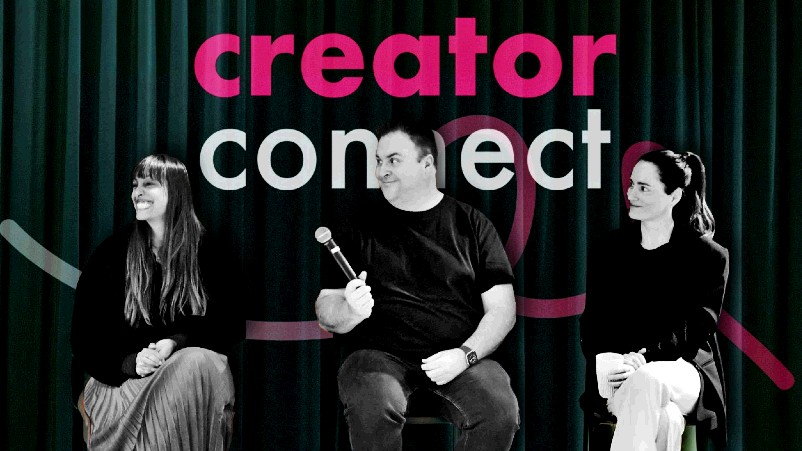
WPP chief creator officer Shivani Maharaj, Fabulate co-founder Nathan Powell, and YouTube head of YouTube and programmatic sales AUNZ Caroline Oates.
Creators already shape brand discovery for six in 10 Australian online shoppers. Their next opening: Influencing what AI recommends. More than half of respondents in IAB’s five-market study wanted AI recommendations to include creator reviews, while 58 per cent of Australians using AI for shopping research said credible creator reviews would boost their confidence in its answers. But the industry’s capacity to manage and measure creator activity is under pressure. At IAB Australia and AIMCO’s Creator Connect event, WPP’s Shivani Maharaj revealed one brand worked with 77,000 creators last year, yet many marketing teams still struggle to decide who owns the strategy. Fabulate’s Nathan Powell warns of an “infrastructure problem” and says talk of engagement rates in 2026 “scares the hell out of” him. YouTube points to stronger search and purchase behaviour, but measuring creator content’s lasting impact remains unfinished business for everyone.
Creators now shape brand discovery for 61 per cent of Australian online shoppers and 85 per cent of those under 40. And the next biggest opening: Influencing LLM recommendations.
But the brand behind the recommendation still carries the most weight. IAB Australia’s Creator Connect report found 86 per cent rated brand reputation as at least somewhat important before acting, ahead of creator expertise and authenticity, both at 84 per cent, and entertainment value (74 per cent).
Speaking at the Creator Connect report launch at WPP Media’s Barangaroo campus, held in partnership with AIMCO to mark IAB Australia’s first Global Creator Week, IAB CEO, Gai Le Roy pointed to growing possibilities for creator content to inform large language models.
“There will be caveats on that, obviously, as we’ve seen with trust and credibility. But the appetite for that sort of information to go into LLMs is strong," she said.
More than half of respondents across IAB's five-market study (Australia, US, UK, Mexico, and India) wanted AI recommendations to include creator reviews. Among Australians who had used AI for shopping research, 58 per cent said ‘credible creator reviews’ would boost their confidence in AI recommendations.
Everyday experience topped the list of creator types consumers wanted AI to prioritise. Everyday creators were selected by 52 per cent of respondents, followed by professional product reviewers (43 per cent) and subject-matter experts (37 per cent). Celebrities and public figures trailed at 13 per cent.
“It's real experiences again, going right to authenticity of people feeding into the models. The product reviews are then getting to the pointy part - what’s really in a product, does it work, [while delivering] the comparison pieces as well," Le Roy said. "But there are a whole lot of areas where the creators can play a huge role in LLMs and making sure it’s feeding through."
Creator credentials
Credibility and consistency were the leading factors underpinning trust in creators, while follower numbers ranked last. Creator reviews also edged ahead of journalism and editorial reviews among the sources consumers wanted AI to use for product recommendations, at 22 per cent versus 18 per cent. Consumer ratings and reviews led at 53 per cent.
“Press, journalists, editorial reviews, are still incredibly important. But from a consumer point of view at large, creators are sitting around that level or slightly above,” Le Roy said.
The findings measure consumer preferences for AI sources, rather than actual citation rates. And consumers want visibility: 70 per cent said it was very important for AI to explain where its recommendations came from.
“It’s something important to think about - that longevity of brand partnerships, where it’s going and where it might be cited later,” Le Roy added. From a measurement and content point of view, it “could have some interesting implications in a positive way”.
The money is following creators. IAB’s US data estimated creator advertising spend at US$37.1 billion in 2025, with US$43.9 billion forecast for 2026. Creators ranked among the top three essential channels for US brands, behind social media and paid search but ahead of connected TV.
For media owners, Le Roy sees an opportunity to package creators alongside social and search. “If you look at those three must-haves together as a package, it's an unbeatable package," she claimed.
The findings set up a panel discussion on creator marketing’s next phase, featuring WPP chief creator officer, Shivani Maharaj, YouTube head of YouTube and programmatic sales AUNZ, Caroline Oates, and Fabulate co-founder, Nathan Powell. Oates framed the opportunity around four consumer behaviours: Streaming, scrolling, searching and shopping. YouTube, she argued, plays a role across all four.
“When we look at it from a search perspective, we see that somebody who has watched a creator-based asset is 13 times more likely to do a branded search and five times more likely to go onto purchase,” she said.
Oates also cited uplifts of about 20 per cent across different campaign stages when a creator asset was included in the mix, arguing that creators could contribute across awareness and consideration.
We don’t have a creator problem, we don’t have an engagement problem, we don’t have a viewership problem. We’ve now just got an infrastructure problem.
Creator economy’s biggest challenge
But demand for more brand discovery and stronger results is pressuring the businesses managing that activity. “Every brand I speak to wants more creators. They want it faster. They want bigger. They want better,” said Powell.
“We don’t have a creator problem, we don’t have an engagement problem, we don’t have a viewership problem. We’ve now just got an infrastructure problem.”
Powell said tackling that constraint would be a major task for agencies, brands and platforms over the next 12 months as advertisers seek more content from more creators.
Maharaj offered a sense of the scale already involved. “One of our brands worked with 77,000 creators last year,” she said. “You need to have so much infrastructure.”
Maharaj said that starts with organisational structures inside marketing departments. Managing creator relationships, content workflows and approvals takes resources, yet responsibility remains scattered.
“A lot of our marketing teams still don’t know where creators sit. Sometimes it’s in the PR department, sometimes corporate comms, sometimes it’s media, sometimes it’s brand, sometimes it’s product end," she commented. “There isn’t necessarily one person inside a brand owning creators.”
That leaves marketers to decide who owns the creator strategy, who leads it for the business and where that responsibility sits.
Connecting creator activity to paid distribution is another priority, particularly as proposed government changes could reshape organic discovery.
“Obviously, connecting it to paid is a big part because organic is going to only take you so far with the government changing the laws with digital safety and 'My Feed, My Way',” Maharaj said.
As Mi3 previously reported, the proposed ‘My Feed, My Way’ measures under the Federal Government's new Digital Duty of Care legislative reform would let social media users choose a feed of accounts they follow instead of algorithmic recommendations. If significant numbers opt out, brands and creators could find it harder to reach new audiences organically, potentially increasing their reliance on paid distribution.
“We’ll see what consumers do, but that is going to be a challenge. And if we’re going to reward behaviour based on paid, then even more so, organic will have less of a role, or advocacy will have less of a role,” Maharaj said.
Alongside those distribution challenges comes the “sophisticated tech stack” needed to scale creator activity, measure performance and optimise delivery.
“You need people. You need to have someone on your side owning it, but then you need to be able to have tech that can scale. Do your analytics. Do your reporting, optimisations and be able to do that for brands on an ongoing, always-on basis," Maharaj advised.
‘Metrics that matter’
The case for looking beyond immediate engagement is building. IPA research cited by WPP Media, across 220 econometric studies, £133 million in creator investment and 144 brands across 28 markets, found creators delivered a short-term ROI index of 99, compared to linear TV at 97 and ahead of paid social at 86. Creators delivered the strongest long-term effects among the digital channels studied.
For Powell, justifying those ad dollars means moving towards “the metrics that matter” and questioning what engagement rates actually prove.
“Any time someone talks to me about engagement rate, it scares the hell out of me because what does it actually tell you? That’s more a signal for the algorithm than it is anything that a human’s done,” he said.
Fabulate is working to connect activity across platforms to better understand what happens after someone encounters creator content - moving towards what Powell calls a “closed loop”. That need not mean a conversion or acquisition, he said, but is more about whether creator engagements are driving the audience towards consuming more content about a brand, he said.
“As this evolves, it becomes more ingrained and people are more sophisticated, those are the types of data points I think we'll start to use to prove a creator is more than just the like, the comment, the share, and whatever immediate click you have within that particular boosted or organic activity," Powell said.
On the YouTube side, Oates said brands continuing to invest were already testing standard brand assets against creator assets to assess which delivered against campaign objectives. But understanding how the two work together is another part of the equation.
“Nothing exists in a silo. So what is the role of having that brand asset alongside that creator asset, and what does that mean in terms of the halo uplift?” she asked.
She also argued established tools, including search-lift studies, could bring greater rigour to creator measurement. “I do think there is a lot in the standard measurement toolkit we can more consistently be applying to the space," she said.
The harder question is how to capture value that builds after a campaign ends. Creator content can continue attracting views and engagement, while video’s emerging role in AI search adds another measurement dimension to its potential lifespan.
“But we often talk on YouTube about the compounding impact of your creator activity because it’s not about a campaign; it lives forever,” Oates said.
She pointed to the continuing accumulation of views and engagement, adding, “But it’s still a question of how to measure it.”
Maharaj said WPP Media is already incorporating creators into marketing mix modelling and building dashboards to help clients understand their monthly contribution. But the work is becoming more sophisticated.
“Some of the issues with the data are still not resolved,” she said. “Are we there? Absolutely not. Are we getting there? Yes. I think some of our bigger brands that have seen the impact are ready now to invest. To understand how we continue to evolve and even just think creatively.”
The creative remit is stretching too, from microdramas to longer-form brand work. Yet Maharaj returned to the research’s finding that brand reputation remains central to whether consumers act on a creator recommendation.
“I think brand matters more now," she said. “And if you are a strong brand and work with creators, you’re going to have a compounding impact. But if you are a small brand that potentially doesn’t have a brand presence or people don’t know you,” it is harder to attain the same level of success. Yet Maharaj echoed Powell’s view that even imperfect execution can still deliver results.
“The funny thing about creator marketing is even the brands that do it poorly see results. That gives them that little bit of a glimmer of hope," Powell said.