A tale of two interfaces: Salesforce buys Braze for $US5.66bn; One sees martech slipping beneath the prompt, the other isn't ready to surrender it; Token pricing remains a puzzle
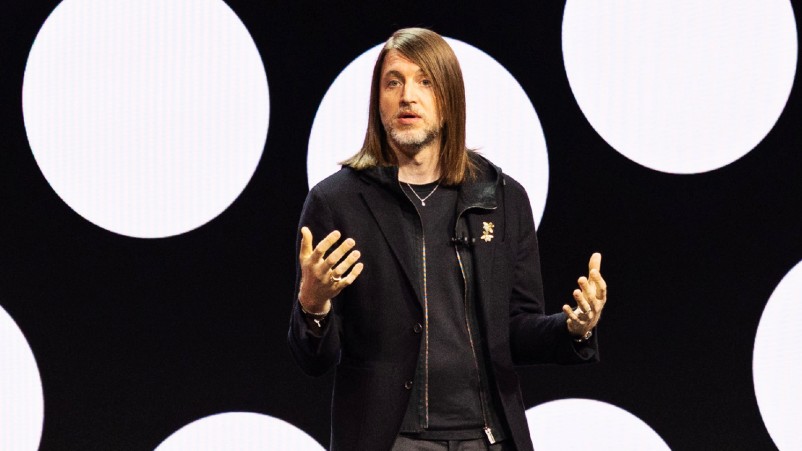
Pay day: Braze CEO Bill Magnuson
The battle to control how brands communicate with consumers is moving into the milliseconds between a customer taking an action and an AI agent deciding what happens next. Salesforce is spending $US5.66 billion to acquire Braze, bringing its real-time customer engagement technology and AI decisioning capabilities into Marketing Cloud as the software giant accelerates its push to automate marketing across millions of individual customer interactions. But the deal also brings together two companies with subtly different visions of how marketers will work in an agentic world. As reported by Mi3 Australia, Salesforce is preparing for a future in which its software increasingly disappears beneath AI interfaces such as Claude and ChatGPT, while Braze believes the complexity of creating, managing and approving campaigns will preserve an important role for traditional visual interfaces. Both agree that the intelligence and infrastructure beneath those interfaces will become increasingly valuable.
What you need to know:
- Salesforce is acquiring Braze for $US5.66 billion, paying $47.50 per share in cash, in a deal designed to strengthen Marketing Cloud's real-time customer engagement and AI decisioning capabilities.
- Braze brings scale and consumer marketing expertise, with approximately 2,770 customers and technology that personalises messages, offers, channels and timing using live behavioural data across mobile, web, email and messaging.
- The acquisition accelerates Salesforce's agentic AI ambitions, combining Braze's autonomous marketing decisioning with Salesforce's customer data, CRM applications and Agentforce platform.
- The companies - in part - share a vision of AI agents operating through third-party interfaces. Both are opening their software to assistants such as Claude and ChatGPT, allowing marketers to execute work without navigating traditional applications.
- But their approaches reveal an important difference. Salesforce increasingly sees its value in the infrastructure beneath AI interfaces, while Braze argues that complex marketing campaigns still require visual tools for creative development, inspection and approval. Reconciling those approaches will be an important consideration as the companies integrate.
There are also interesting challenges around who uses stuff in the marketing world. Imagine if we charge Operator usage by the token, like Anthropic does: You come in and the agency you hired over the weekend came in and spent all of your Operator tokens. Now you're fighting with your agency about it, and if they have to have their own account. We just haven't answered these questions yet as an industry.
Was it something we said? Four weeks ago, Mi3 was at Salesforce's Dreamforce conference in San Francisco. Two weeks ago, we were at Braze's Forge event in Las Vegas. Now one is buying the other. You're welcome.
Salesforce has agreed to acquire customer engagement software provider Braze in a transaction valued at approximately $US5.66 billion, expanding its ability to respond to consumer behaviour in real time as artificial intelligence reshapes how marketing campaigns are created and delivered.
The companies have some interesting philosophical differences about whether a lot of martech functionality will slip beneath the prompt. Unlike Salesforce, Braze also has a settled view of how to charge for software in the agentic age.
The enterprise software company said Tuesday that Braze shareholders would receive $47.50 in cash for each Class A share. The $5.66 billion figure represents enterprise value, and the proposed deal requires shareholder and regulatory approval. Salesforce expects it to close in its fiscal 2028.
The acquisition would bring Braze's high-volume messaging and AI decisioning technology into Salesforce Marketing Cloud, which coordinates companies' communications with customers. Braze processes live behavioural signals to adjust messages across mobile apps, websites, email, text messaging and WhatsApp, an area where Salesforce sees an opportunity to connect consumer engagement more closely with sales, service and customer data.
“Braze was built to turn live customer behaviour into personalised engagement at scale,” said Patrick Stokes, Salesforce's president of applications and marketing. “Bringing that capability together with Salesforce Marketing Cloud, CRM, and Data 360 will deliver that wow moment in every customer interaction.”
Braze, led by co-founders Bill Magnuson and Jon Hyman, counts about 2,770 customers, including Canva, Instacart, Venmo and Urban Outfitters. Its AI products optimise the content, timing and channels for marketing messages, using customer responses to improve subsequent decisions.
Beneath the prompt
The purchase also brings together two software developers adapting to a shift in which marketers increasingly direct work through AI assistants rather than navigating the traditional interfaces of business applications, a theme Mi3 explored in our coverage of both events.
As we reported, Salesforce executives said at their Dreamforce conference that the company's value increasingly resides in the data, workflows, permissions and security beneath the software interface. Salesforce is opening those capabilities to systems such as Anthropic's Claude and its own Slack service, allowing AI agents to perform tasks on users' behalf.
“The UI is not actually our product,” Stokes told journalists at Dreamforce.
Braze has been pursuing a different strategy. At its Forge conference, the company introduced Operator Connect, which allows users to issue instructions through Claude, ChatGPT and other tools while its own AI agent executes the work inside Braze under established permissions. It also unveiled Decisioning Studio Go, which automatically selects approved messages, timing and frequency, and Agentic Standards, which checks campaigns against a company's own rules.
However, the companies have placed different emphases on the future of traditional software interfaces. Braze executive, for example, argued marketers still need visual tools to design, inspect and approve complex campaigns, sometimes spanning dozens of steps and multiple markets.
“Our UI is just way better for you to review that stuff,” Hyman told Mi3 Australia.
Magnuson has argued specialised AI intelligence must remain valuable even when customers use another company's assistant. “I would go further and say that software companies basically don't have a reason to exist unless they have a differentiated intelligence that is tied to their product offering. By that I mean the Braze Operator needs to be way better at using Braze than Claude, which is just reading our documentation and trying to navigate our dashboard."
The firms also have different experiences charging for software in the agentic age. Speaking to media at Salesforce Dreamforce recently, its CEO Marc Benioff said the software giant is already having those conversations with customers who were seeking combinations of user, named-agent, consumption, transaction and outcome-based pricing.
“We’ve had to throw away our price point, basically, and come up with a whole new pricing mechanism,” he said.
How to charge
Braze is in a much more comfortable position - at least for now.
In an interview at Forge with Mi3, Magnuson said, “I think that broadly, the big price levers in Braze are all in a great spot. They're all consumption-oriented, and that's all aligned with the direction of travel of where things are going. I do think there are some other open questions still, though, and we're working through those.
“We've always been focused on trying to align our pricing with our value creation as much as possible. Our pricing has always been consumption-oriented, but also still matching the way marketers want to buy and budget, because they want to be able to plan a whole year budget. There's a bunch of things around that.
“But I do think we're still in the early days of figuring out how to price things that use tokens as a raw commodity. I actually am in line with the school of thought that Benedict Evans has written about. This [AI] reminds him a lot of the early days of mobile networks, where you were being charged for kilobytes of data, but the value that you got out of a kilobyte was wildly different depending on what you were doing.
“We gyrated back and forth between metered and bundled, and eventually we ended up effectively bundled once the capacity got to a point where it was trading as a raw commodity. Even though we thought that maybe everything would be metered in the early days, what ended up being overriding was the consumer preference for predictability once it traded as a commodity."
Still, Magnuson appears to have sympathy with the complexities of pricing that companies like Salesforce are experiencing. “We're still in the early days where we don't actually have enough tokens. They're not reliably available. They're not trading as a bulk commodity yet, and we're trying to work through our own business economics to be able to manage through that," he said.
“Operator is a great example. There are also interesting challenges around who uses stuff in the marketing world. Imagine if we charge Operator usage by the token, like Anthropic does: You come in and the agency you hired over the weekend came in and spent all of your Operator tokens. Now you're fighting with your agency about it, and if they have to have their own account. We just haven't answered these questions yet as an industry."
What's next
In announcing the deal, Magnuson said Braze would continue investing in its product and community of customers and partners. The companies insisted it would also maintain an open approach to other data platforms and software tools.
"Braze was built on the conviction that marketers and their creativity are a brand’s ultimate competitive advantage,” he said. “This past year, we shipped at the fastest pace in our history, and BrazeAI is helping marketers get their best ideas live faster. Salesforce shares our commitment to marketers, and we’ll continue building as Braze and investing in the Braze community of customers and partners who built this company with us. Salesforce’s platform will help us innovate faster, and together we’ll help marketers around the world build deeper, more lasting relationships with their customers."
Later, on LinkedIn, he wrote, "The entire industry of software is changing faster than at any point in history, with AI pushing every part of it forward. Customer engagement keeps expanding along with it, drawing in more teams and commanding increased strategic importance inside every business. Once the transaction closes, Salesforce's technology, reach, and partner ecosystem will help us bring more of our vision to market sooner, and we'll welcome more brands than ever into the Braze community."
Salesforce said the proposed purchase would not affect its fiscal 2027 financial guidance. It provided no update to long-term financial targets.