Why we are missing the point if we think quotas are going to be the lifeline for local media
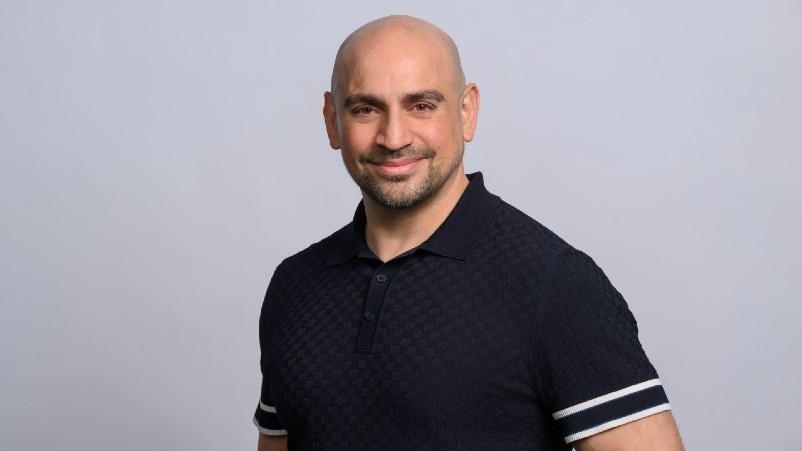
Commercial Radio & Audio’s Helena O’Dowd says Australian adland has been grappling with two dual discussions: One over proposed Digital Duty of Care legislation and the other over quotas and whether marketers should be made to invest in local media and support the health of the wider media ecosystem. In this piece, she asks if the bigger question needs to be about the responsibility of advertisers to reset the marketing mix and hold their agencies and themselves to account on how their investments are made.
When you pose a question around the future of media and what the Australian advertising industry looks like, you get one of two answers. The first is, I don’t know, everything is moving at pace and we aren’t sure what the impact of AI in the workplace will be.
The other is a somewhat dystopian image of an advertising ecosystem driven almost entirely by the big platforms Meta, Google and Amazon, where local media is part of a long tail of channels with decreasing investment. This is a model that will have a profound impact, not just on the advertising industry, but to the consumers we want to attract every day.
The recent debate over local media quotas asks whether marketers should be required to spend a percentage of their budgets locally. But before we debate what advertisers should be compelled to spend, perhaps we should ask whether their existing budgets are working hard enough.
How much is reaching customers? How much is tied up in fees? And how much continues to flow into platforms without enough scrutiny of what that investment actually delivers and where it turns up?
These are questions marketers should be asking their agencies. Where spending isn’t delivering value, the next question should be where those dollars could work harder, including in trusted Australian media.
Digital accountability
This past week, we have seen Australia follow the EU with proposed Digital Duty of Care legislation going to Parliament. Just last year, Australia led the world becoming the first country to introduce national restrictions preventing under-16s from holding accounts on major social media platforms.
The UK has since announced plans to follow with its own restrictions. And in the United States, a New Mexico jury found Meta liable for harming children’s mental health, awarding US$375 million in damages before a judge added a further US$567 million into an abatement fund and ordered Meta to overhaul how Facebook and Instagram operate for younger users.
Social media is beginning to lose its social licence. Governments are questioning it. Parents are questioning it. Courts and regulators are questioning it. And as a parent of two young children, so am I.
Which leaves me to ask the advertising community an uncomfortable question: If society is increasingly concerned about what these platforms are doing to people, why are we still so willing to fund them? And more to the point, do marketers, who are funding these platforms, have a duty of care themselves?
Add this to the recent debate which happened in the Australian ad market over the question of local quotas and whether marketers should be required to spend a percentage of their funds with local media.
If the answer is about the survival of local media industries, then perhaps this needs to be reviewed. But what would be a far more admirable solution is a marketplace that celebrates local content, local talent, values journalism and understands that investing locally has never mattered more than it does right now.
Somewhere along the way, marketers haven’t just invested heavily in social media. We’ve handed it an extraordinary amount of control: Control over who sees our advertising, how often they see it, the quality of that view, the content our brands appear alongside and, increasingly, the widening gap between your knowledge of the customer versus what is told to you.
Consumers are no longer in the dark about the true value exchange of access to social media. Over time, it’s caused users on these platforms to be on high alert; not sure if they are being scammed or if the news is real. They’re being sold products they don’t need, or seeing content that is triggering. In amongst that scroll, there is your brand. No matter how sophisticated the targeting might be, this is not necessarily an audience primed to trust you.
Perhaps advertisers need to spend less time asking, “How do we get more out of this platform?” and more time asking: where else could these dollars work harder especially when you consider the percentage of the budget no longer allocated to working media, but tied up through fees. Last I checked it was sitting at about 30 per cent. What would 30 per cent of your budget look like reinjected back into channels where every dollar is utilised getting messages to your customer? Where we have greater control over reach, frequency and context?
Trusted voices
For years, marketers have quite rightly thought about the media environment through the lens of brand safety. Australian media channels are held to strict content standards not shared by social media platforms, which can duck and weave around ‘user-generated content’ and leave advertisers in the dark of exactly where their brand appears.
Rather than pure metrics, should we be asking where people are informed rather than overwhelmed, entertained rather than enraged, engaged rather than endlessly scrolling? Where does advertising show up in an environment people have actively chosen to spend time in?
That is where I believe platforms like audio have an increasingly compelling story. People choose the radio stations, presenters and podcasts they spend time with. Those trusted voices accompany them while they drive, work, exercise, cook, do the school run or simply move through their day. The relationship is earned through entertainment, information, personality and companionship.
That isn’t an argument for radio because it is nostalgic. Nor is it an argument that every social dollar should suddenly become an audio dollar. It demonstrates a much broader point: The environment matters, the medium is the message. Human, trusted environments can make advertising work harder.
I’ve spoken to marketers recently who have started breaking up with parts of their social relationship. They looked closely at what some of that investment was actually delivering, and discovered the promise wasn’t matching the performance. And guess what happened when they pulled some of that money out? Absolutely nothing.
Their businesses didn’t collapse. Sales didn’t fall off a cliff. What did happen was far more interesting: They started asking where those dollars could work harder.
Now is the time to take some control back and return to the brilliant basics. Challenge your agencies on where your investments will work hardest, the environments you appear within and most of all, the human connection you should aspire to make. Think about where your customer is, what they are doing and how they are feeling when your brand turns up, because media isn’t simply where your advertising appears. It shapes how your brand is experienced.
Social media isn’t going away. But its dominance in media plans should be re-evaluated. At a moment when governments, parents, regulators and courts are reconsidering their relationship with these platforms, marketers should be willing to reconsider theirs too.
Not because it is the socially responsible thing to do alone, but because rebuilding marketing around context, creativity, trust, reach and human connection might just turn out to be better for our customers, better for business and better for Australia.