Narrating brand moments: Switch from performance-heavy to social-first content play leads Aussie furniture brand Lifely to +417% organic social traffic, +3000% engagement, 10-12X ROAS
Emily Greehill, head of brand marketing, Lifely

A social-first, content-laden approach to brand building has seen Australian furniture brand, Lifely chalk up a 417 per cent increase in organic social traffic to its direct-to-consumer website. Tipping the scales away from product-led, paid-for performance campaigns that were increasingly straining the P&L was a business imperative and a must for the business to get away from the vicious discounting and sales cycles eating profits. But as the retailer’s first head of brand marketing, Emily Greenhill says, consciously connecting the dots with a narrative that orients around customer pain points and social engagement hasn’t just helped the owned media play; such content is also delivering double-digit ROAS through paid channels. But it all comes with a different price: The algorithms demand a constant stream of fresh content, and "feeding the beast" is a marketing team's latest challenge.
What You Need to Know
- Lifely’s first head of brand marketing, Emily Greenhill, was brought in to counter a performance-heavy marketing mix and combat heavy discounting and rising paid media costs squeezing margins and build organic brand growth.
- To do this, Greenhill pivoted to a social-first, owned content strategy with Melbourne Social Co, focusing on storytelling over sales-led messaging.
- The shift has delivered a 417% increase in organic social traffic in 18 months, alongside +3000% engagement growth and +62% Instagram follower growth to 150k+.
- In complement, the Australian-owned online furniture retailer has moved away from constant product drops and discount cycles to prioritising “category killer” products that only benefit from emotional storytelling tied to customer pain points.
- Lifely’s core target market has also adjusted from younger first-time furniture buyers to millennial mums with young families. Viral success with these buyers has come from relatable, problem-solving content such as toddler sleep challenges, not product aesthetics.
- It’s also about owned content and influencers: Social strategy now centres on owned narrative (70%) vs influencer (30%), with controlled collaborations and a growing brand ambassador program to extend reach.
- High-performing organic and UGC content is amplified via paid channels, delivering ROAS of 10–12x, significantly above typical benchmarks, per Greenhill.
- But it’s a challenge “feeding the beast”, admits Greenhill: Always-on content production is intensive: 120–150 posts per month are common, with constant optimisation required to maintain algorithm visibility and sales impact.
When Emily Greenhill joined Lifely as its first head of brand marketing, she was squaring up to a conundrum many, many digital-first businesses have had to face: Spend tipped overwhelmingly into performance activity (90+ per cent) with the odd influencer collaboration, and there was no brand awareness or owned narrative to speak of. Lifely had also become a direct-to-consumer business addicted to discounting and stuck in a vicious cycle of frequent product launches, pushing in a world where the cost of paid search and digital media activity was ratcheting up, putting strain on the P&L.
Given a mandate to grow brand organically, Greenhill set out to up the ante on brand storytelling, increasing spend on owned content and choosing social media as her channel of choice with the help of external agency, Melbourne Social Co. Fast forward just over 18 months, and thanks to this combination of social-first approach and efforts to inject brand personality into content, the Australian furniture brand has seen organic social traffic to the site grow 417 per cent.
Instigating a social-first approach to campaigns and content creation was a no-brainer for Greenhill. More than three-quarters of Australia’s population is active on social media, and they’re spending 15 hours per week surfing content and short videos on platforms such as Instagram, TikTok and Facebook, Meltwater’s recent Global Digital Report 2026 tells us.
Of those, 43 per cent claim they’re actively seeking out brands to learn more about them and see their content. And it’s millennial females – Lifely’s sweet spot customer – who lead this charge globally (56.7 per cent). What’s more, 77.5 per cent of females aged 25 – 44 globally use social media to research brands and products they’re considering buying. Instagram leads this list globally for brand research (62.8 per cent), although Facebook dominates as the number one source of web traffic referrals from social media (75.6 per cent, or 66.72 per cent in Australia), followed at a distance by Instagram (8.6 per cent).
Marketing teams are increasingly following suit. The latest We Are Social ‘Think Forward 2026: Building Brands at the Speed of Social’ report found three in 10 brands globally using social media through the full marketing funnel, with 95 per cent of global marketers recognising its critical role in brand building. Per that UK and US survey, social was seen as the leading channel for driving emotional connection and cultural impact, surpassing traditional media such as TV and print.
We were only competing on price, sales promotions, and organic traffic was very low. There was a reliance on paid ads, which was a massive strain on the P&L. The shift was necessary to build an emotional connection with the brand. Lifely was under two years old as a brand at this point. We had to take the next step.
Price battles to owned brand narratives
The burning commercial platform for change was also apparent at Lifely. Formerly known as eLiving, the company launched 8-10 years ago and rebranded about three years ago. The Australian-owned direct-to-consumer furniture brand first focused on budget, flatpack options that were trend-led, pursuing a fast furniture buyer and therefore a younger consumer cohort.
“We were only competing on price, sales promotions, and organic traffic was very low. There was a reliance on paid ads, which was a massive strain on the P&L,” Greenhill tells Mi3. “The shift was necessary to build an emotional connection with the brand. Lifely was under two years old as a brand at this point. We had to take the next step.”
In-line with the rebrand, the 40-person strong company is shifting towards a more innovative, tech-led approach to sourcing home products and how the furniture is made, as well as extending into other categories such as kids furniture.
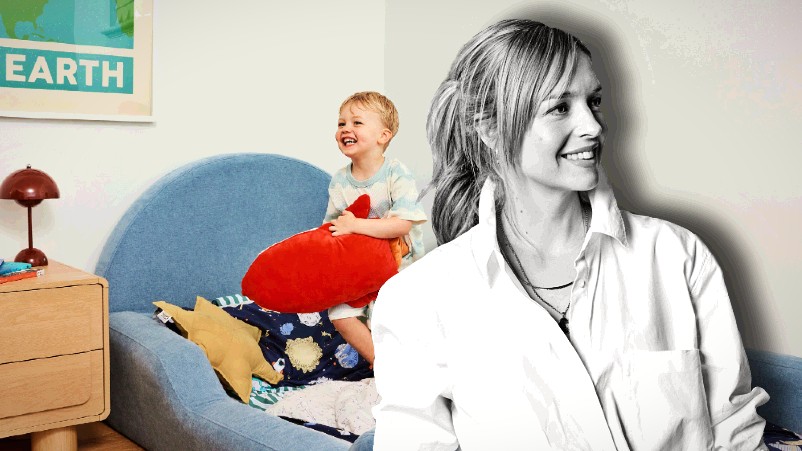
“It’s about products that make life easier, such as products that help children sleep better,” says Greenhill. A big hit has been the Little Lifely Bed – a toddler bed made out of soft foam, with no screws or metal and a machine-washable cover.
“That’s gone crazy since we launched at the end of 2025. So we now know our sweet spot is millennial mums, with kids transitioning from cots to beds,” Greenhill says.
Social-first approach
To help drive social sophistication, Lifely recruited Melbourne Social Co and pivoted to an always-on social strategy, bringing emphasis to building the brand’s own point of view and becoming less reliant on ad hoc influencers telling its story.
Even the two-year journey so far has had evolution. In the first year, the narrative centred around fast furniture, promoting new products every week.
“Our content was shaped around that new arrival; it was very aesthetics-led, showing assembly, styling, then we’d post it,” Greenhill explains. “It did well and grew the platform significantly. But we saw that starting to fatigue, particularly towards the end of 2025. People are getting over it. As a business, it was also harder to find those winning products. A lot of stock was discounted, and we ended up in a vicious cycle of chasing our tail.”
The business strategy shifted to a few core products – dubbed internally as ‘category killers’ – like kids beds, dining tables. It’s about something that is distinct, “not common in the market”, says Greenhill.
“We then honed our socials to focus on these products but not the aesthetics – instead, we’re focused on storytelling,” she continues. “For example, we talk about the customer pain points and how the product solves them. They’re stories to illustrate that ease of use – and generating that aha moment.
“For example, with the Little Lifely Bed, we started doing content around the bed, and what I used previously to go through [as a mum] with a new toddler outgrowing the cot, moving to a bed, that bedtime narrative and how that has changed. This bed eased the bedtime battles. That’s the content going viral now – two videos went viral in January.”
Since Lifely flipped the switch on the new social approach in July 2024, it’s seen +3000 per cent growth in total engagements (January 2026 vs July 2024), bolstered by two viral videos in the month of January.
Overall, organic engagement across all social platforms has seen year-on-year average growth of +37 per cent. It’s also chalked up +62 per cent Instagram follower growth since July 2024, now sitting at over 150,000 followers. Saves and shares are important indicators of consideration and conversion for the team.
Instagram is the core platform for Lifely, with Facebook largely a reposting, SEO channel. “TikTok has not been as much of a success, although we haven’t put as much attention on that. We do have a focus this year on driving TikTok harder,” Greenhill comments. “But we don’t need the brand on every platform.”
Paid isn’t in Greenhill’s remit, but she works alongside the head of performance marketing and says the strategy now is to boost highest-performing owned and user-generated content in paid channels.
When the team briefs in a campaign, the hero creative must be developed with a social perspective, ensuring it engages across all platforms. This is a far cry from the old way of reposting creative assets on social media and forgoing community engagement as a consequence.
“The most successful content repeatedly is user-generated content we produce, versus our static ad – that’s the case any day of the week,” Greenhill says. “ROAS from performance marketing has grown significantly in the last couple of years as the content – organically – performs so well from a paid perspective. ROAS of 10-12X is common for us on UGC and influencer content used on the performance side – I know many brands only get single-digit results.
“For example, we’ll create a reel on Instagram, and it does really well; we’ll then always boost to a paid audience, and we’re clearly seeing that ROAS convert into sales through our store.”
ROAS from performance marketing has grown significantly in the last couple of years as the content – organically – performs so well from a paid perspective. ROAS of 10-12X is common for us on UGC and influencer content used on the performance side – I know many brands only get single-digit results.
Influencers
When it comes to influencers, Greenhill says they’re firstly reach, bringing another audience to the brand.
“We invest a lot in influencer collaborations. But we’re setting the agenda ourselves,” she says. “We invest in select influencers as brand ambassadors, and a hybrid mix of theirs and our content. We do content together – leverage their reach, plus control the content.”
Today, Lifely’s content split is about 30 per cent influencer, 70 per cent owned content. Greenhill’s budget similarly splits: 25 per cent on influencer gifting and affiliate commissions (about 20-25 influencers per month), versus 75 per cent spent on marketing services retainer costs.
Lifely is also building out a brand ambassador bench and has four so far from its target customer cohort: Jayde Couldwell, host of Beyond the Bump podcast; mum and content creator, Lisa De Sanctis; podcast host, Gemma Peanut; and the duo behind renovation advisory, Haaus, Alliera and Rebecca.
Greenhill admits the volume required for this social-first approach only increases. As Mi3 has reported on many an occasion, the platform algorithms steadily uprate fresh content and downweigh the old, meaning the push to pursue ever-greater reams of content on social is very real to brands like Lifely. As Guzman y Gomez’s global CMO, Lara Thom, said on a recent Mi3 panel: “The amount of content we are creating to get our message across, to A/B test, to optimise, to be 24/7 – we have gone from one campaign and a TVC, buses, a radio ad and may a couple of billboards, to now needing 45pieces of content per day being optimised across eight different social media channels that are then going to convert”.
“Just on social, we’d do 120-150 posts per month across platforms for the Lifely brand,” Greenhill says, adding it has just launched a new channel, Little Lifely, as its own brand, adding to the load. Put paid on top, and ad assets go into the hundreds. Then there’s email.
But Greenhill is in no doubt that the content is directly aligned with conversion and sales. “We have to keep feeding the beast. If we stop, notice the flow-on effect to sales quickly,” she says. “Which means we’re always thinking of a new angle, more entertaining, engaging. But yes, it’s a real challenge.”