“Distinctiveness is a commercial requirement”: Experiences, culture obsession see Sapporo drive +11.2 per cent volume growth, build category share in declining beer market
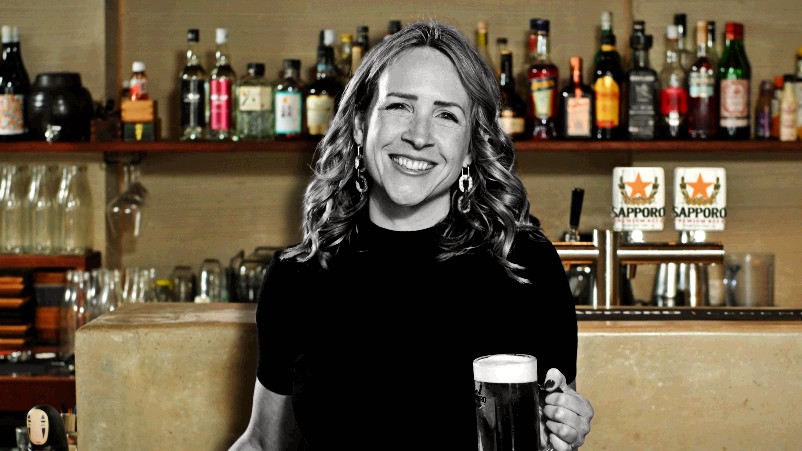
Amy Kearney, Sapporo
“Our goal with everything we do is to sustain preference and demand, not get attention for its own sake,” Sapporo brand marketing manager Amy Kearney tells Mi3. While Japanese beers have been bucking the beer consumption downturn trend, growing +4.3 per cent in the last year while the rest of the market declines -3.8 per cent, Sapporo had to square up to the fact it was swimming in a sea of sameness, she says. Bringing a challenger-led approach in, she’s worked to reshape the marketing strategy and better use a smaller budget to drive distinctiveness and premium positioning. Cue an experience-led strategy that favours quiet Japanese culture, deadly puffer fish and sumos over screaming neon lights, and a positioning on premium that’s ensured it hasn’t had to take the drug of discounting to supersize its share of category growth. Today, Sapporo’s share of the segment has gone from 15.7 per cent to almost 19 per cent – and the sales team can thank a commitment to distinctiveness as commercial value for that, says Kearney.
“Distinctiveness was a commercial requirement” for Sapporo brand marketing manager, Amy Kearney, when she stepped into the gig three-and-a-half years ago.
In joining the Japanese challenger beer brand, she hit a bright spark in a sombre beer industry. While the total beer market remains in structural decline, with volumes down every year for the last four periods, Japanese beers in totality have been bucking that trend. Per Circana data, beer volume has fallen from 464ML litres to 404ML litres over the five years – that’s a drop of almost 13 per cent. It’s also declined by 3.8 per cent over the last 12 months.
By contrast, Japanese beer volume over the last 12 months grew +4.3 per cent. And thanks to this push to stand out, Sapporo is exceeding category growth, increasing volumes by +11.2 per cent over the last year. In recent years, Sapporo’s volume has grown by 46 per cent and its value 67 per cent.
Part of it is the growing Australian fascination with Japanese products and culture, says Kearney. “Australians have a love affair with Japanese beer at the moment,” she tells Mi3. And a lot of that has to do with travel: One million Australians travelled to Japan over the last year, with the capital Tokyo a top consistent destination. The other growing hub is Sapporo itself, which now benefits from direct flights from Qantas via Sydney.
“We’re finding tens of thousands of Aussies are heading there every quarter for its great snow, and while they’re there, they visit the Sapporo Brewery, which has been there for 150 years, fall in love with the brand, come home and want more Japanese beer when they get back,” Kearney says. Sapporo’s drinker sweet spot is a mix of drinkers in their 20s who have experienced the Japanese snow and culture, as well as the 40-50-year-old bracket.
Yet what was clear to Kearney immediately upon joining Sapporo is it had two major challenges to square up to: A lack of distinctiveness within that Japanese beer category, and a smaller media and marketing budget than competitors.
“I immediately knew we couldn’t behave like the market leader and we had to make every dollar work harder,” she tells Mi3. “So the first thing I did was a bit of research, which uncovered that there was no distinctiveness between the Japanese brands in the minds of consumers. Drinkers saw all Japanese brands as one and the same. I knew distinctiveness was a commercial requirement.”
As Kearney puts it, the main strategic answer to this was moving thinking from ‘how do we advertise Sapporo?’ to ‘How do we let people experience Sapporo’s Japan?’ That meant not just reflecting the physical place of its heritage, but “building a world for Sapporo here in Australia”, she puts it.
“Rather than simply claiming Japanese heritage, we’ve been creating unique Japanese experiences people genuinely want to attend, share and talk about,” she says.
Fugu to sumos and Shimo-san
The list of culturally fused experiences is growing. Over the last couple of years, Sapporo has provided drinkers with Tuna Master Classes, plus the opportunity to eat in the World’s Smallest Ramen Bar (for two people) during Melbourne’s Rising Festival, even offering up sumo wrestlers. It also celebrated its 150th anniversary with a Hibachi edition, also ran a Sumo Edition, and struck a partnership with Brisbane’s Night Feast.
Many experiences have found their way into organic TV and radio mentions, and per Kearney, Sapporo increasingly finds people proactively getting in touch to participate and attend.
“It's really helped our budget stretch well beyond the people in the room, and because they are so unique, we do get that great earned reach,” says Kearney. “The experiences are truly like that unique that we do get that end reach, and we're finding that people are asking to attend our events.”
Sapporo’s ‘Win This Fish’ promotion, which gave consumers an all-expenses trip to Japan to handpick a Yellowfin Tuna, was also listed as an Effie nominated campaign at Cannes.
“We know drinkers want to win cash or cars or trips, especially trips to Japan. But we can't afford to be generic in the way we show up,” says Kearney. “So we dress promotions like that in interesting ways. ‘Win This Fish’ gave winners a chance to go behind the scenes of the Tokyo fish markets and meet a fishmonger, participate in the auction, and then go to that fishmonger's restaurant that night to eat a nine-course Fugu degustation.”
Sapporo’s current promotion in market for Fugu is a similar concept, with the big prize three trips to visit to Japan to indulge in the poisonous pufferfish delicacy at a tiny underground izakaya (restaurant). “We're really serving up a part of Japan that's harder to access and more unique than our competitors,” adds Kearney.
Alongside this, the creative platform developed for Australia and New Zealand only is called ‘So Pour A Sapporo’. “We love the alliteration, but mainly it’s a platform we use across all of our emotional and functional campaigns, and it invites people to stop and pause, connect and slow down from the hectic world we all find ourselves in,” she says. “Most of the work we do reflects that same positioning of a quieter side of Japan.
“So while some of our competitors are focusing on the Shibuya Square, or the neon hectic nightlife of Tokyo, the Sapporo experience is to focus on imagining that small izakaya for two down an alleyway that’s off the tourist track. And we know from verbatims and from studies that older and younger consumers seek out those types of authentic Japanese experiences.”
Local face, cultural connection
Another significant step forward in building a stronger cultural identity was bringing Shimo-san out of the company’s operational background and into the market as the face of the brand. When Kearney joined the team, Shimo-san’s role was helping venues get their draft beer systems up and running when they first connected Sapporo on tap.
“I immediately saw him as this opportunity to become the local face of the brand,” comments Kearney. “He’s role has gone from technical expert to a kind of beer sensei, art trainer, and event host. We even use him for personalised retailer videos, where he stares down the barrel of the camera and spruiks the facts of the brand and demands to know why retailers haven’t put it in their stores.
“So it really has rounded out Sapporo as being somewhere from this real place with a beautiful brand story, and this local face that’s helped to make our brand feel as authentic as it really is.”
The team then endeavours to express the idea consistently through the line, across every touchpoint. According to Kearney, Sapporo’s relationship with creative agency, Sunday Gravy, over the past three-and-a-half years has been a strategic input.
“Sunday Gravy brings a really useful discipline to our creative process: Together we ask early, ‘Would the media be interested in this?’ For a challenger brand, that matters because every idea needs to travel further than the media dollars behind it. And when you create something genuinely distinctive and fun to talk about, the sales team wants to rally behind it too,” she says.
If we keep building reasons for people to value Sapporo, we don’t have to discount our way to growth ... We are proud to say we haven’t needed to rely on price to grow support.
Challenger brand mentality
Kearney is no stranger to challenger brands, having built her career working on boutique beer firstly within the Carlton & United Breweries (now Asahi Beverages) portfolio, then for ZX Ventures. In joining Australian Sapporo brewing licence holder, Coopers Brewery, three-and-a-half years ago, she joined a rare bright spot in a tough and challenged category.
She points to a strategy of embracing through-the-line campaigns as critical in a challenger mindset.
“We don't have the budget to commit to two separate ideas above the line and below the line,” comments Kearney. For instance, with only one or two major windows a year for retailer retention, the Sapporo marketing team built one platform, with the ambition of building fame and creating in-store cut-through, “while also giving the sales team a reason to get that forward stock rate while driving awareness above the line”.
“We say that if an idea feels like something we've seen before, or could belong to one of our competitors, we don’t press forward with it,” Kearney says. “And a good idea should scare us a little … A small budget doesn’t have to mean a small idea.”
Selling and proving distinctiveness to the laymen
But as many marketers will know all too well, distinctiveness means one thing to marketing and agency teams, and quite another to non-marketing laymen. Kearney admits it took time to sell in such a concept.
“I do remember the first time I pitched ‘Win this Fish’ to our sales team, and it was something they had never seen before. Because of its success – it went on to win campaign of the year at the Shop! ANZ Retail Marketing Awards – I think that, and the energy we get once a campaign has been in market has built confidence in Sapporo’s work over the years. And it has really shifted the mindset that just because you haven’t seen something like this before, and just because it’s an odd campaign or completely left of centre, it doesn’t mean it’s not the right move for a brand that needs to stand out.”
Measurement is the other spoke in this wheel marketers have to get right. In Sapporo’s case, measuring experiences is part of an integrated commercial platform, and marketing works with distribution, pricing and sales execution, rather than in isolation, Kearney explains.
“We wouldn’t attribute growth to any individual activation, but we look at measures like earned media value, social engagement, long-term brand equity measures, then broader commercial performance. Our goal with everything we do is to sustain preference and demand, not get attention for its own sake,” she says. “But I will say that every new expression of Sapporo and the world we’re building gives our sales team another story to take to our retailers, and it builds confidence and excitement around the brand. And we’ve seen that play out in conversations that increase ranging with our retailers.
“And I've seen the impact that has on retailers choosing whether to stock up on product or not.”
From a brand perspective, this distinctiveness ambition has informed the data points the marketing team is tracking internally. “We had a significant awareness gap to close with our competitor on a much smaller budget, coupled with that lack of distinctiveness between Japanese brands in the minds of consumers,” Kearney continues. “That distinctiveness as a commercial requirement is now something our entire company believes in for Sapporo.
“One thing we measure most closely, based on our small media budget and the tiny sample size that we use, is how someone feels about the Sapporo brand once they've been exposed to the work … We find that when a person has been exposed to any of our Sapporo marketing campaigns, they feel that Sapporo is more distinctive, more authentic, more exciting, more premium than those that haven't been exposed to the work.”
Kantar data gives confidence that it's landing: People who have seen Sapporo campaigns in market are 12 percentage points more likely to see the brand as ‘good value for money’, and 7 points more likely to see it as a ‘premium beer brand '.
Price is the critical reason Sapporo is chasing ‘premium’ as a metric, so it doesn’t have to rely on discounting and price promotions to drive the brand forward. “We are proud to say we haven’t needed to rely on price to grow support,” Kearney adds.
It’s paying off. Sapporo has consistently been outperforming the Japanese beer segment and been a major driver of Japanese beer's growth in Australia, contributing 33 per cent of all category volume growth over the past five years. For every litre of Japanese beer being added, Sapporo is capturing more than its fair share, increasing its share of the segment from 15.7 per cent to almost 19 per cent – meaning almost one in every five Japanese beers sold in Australia is now Sapporo.
“We’re never going to outspend our competitors, so we have to beat them creatively. I insist that every campaign we put into market is distinctive, authentic and premium, but also works through the line and has a commercial purpose,” says Kearney. “If we keep building reasons for people to value Sapporo, we don’t have to discount our way to growth.”