
Australian agriculture & the succession shift
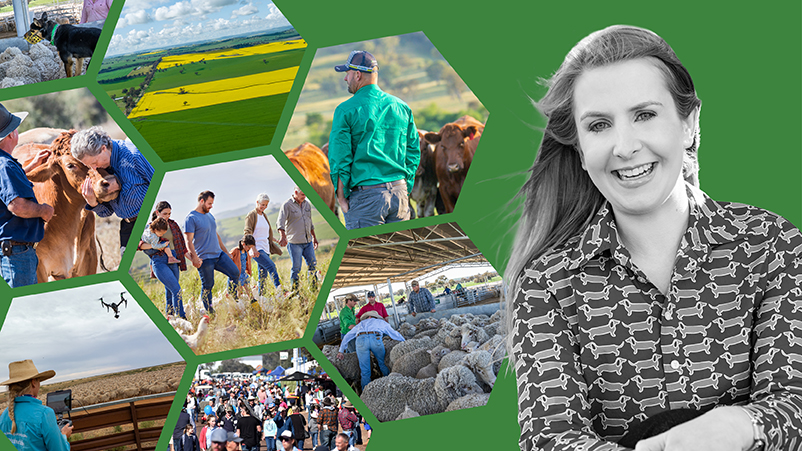
Australian agriculture is a $100 billion industry and there’s an unprecedented transition of agricultural wealth kicking over right now: Four in 10 farm owners and managers aged over 60 are looking towards retirement, prompting succession planning and land transfers across the country. It’s widescale change that’s triggering growing demand for financial and professional services, while opening up category spending in areas including technology and renewables. Partnering with trusted agri media - where 74 per cent of readers trust published content and 45 per cent view supporting brands favourably – is a critical way of securing credibility and capturing active switchers.
Australian agriculture is approaching a pivotal turning point. With 40 per cent of farm owners and managers currently aged over 60, approximately 15,765 farm operations – worth billions in land assets – are poised to change hands over the next five years as this cohort looks toward retirement.
However, a critical gap exists between intent and action. Despite two in five farm owners admitting they are worried about the future of their operations, 57 per cent do not have a formal, up-to-date succession plan in place. For many, they’ve had informal discussions amongst the family but struggle to put pen to paper and formalise a plan until forced to by health or aging concerns (72 per cent of owners, 81 per cent of children of owners¹). Succession in farming is far more than a simple transaction; 77 per cent agree it’s a complex balancing act of preserving family relationships, honouring legacy and ensuring financial viability for both exiting and incoming generations.
If the property is family owned and the next generation is interested in a career in the business, what is the timeline and processes taken to deliver a result that is fair and equitable to all parties concerned?
While 65 per cent of owners hope to pass their properties down within the family, and almost half of children wanting to take over their parent’s farm, fairness rarely means an equal financial split with owners trying to maintain family relationships while balancing fairness and transparency among inheritors. Negotiating equity for non-farming siblings while maintaining farm viability remains a primary hurdle, with families unsure how the farming siblings can afford to pay out the non-farming siblings while also running a sustainable operation.
Key takeouts and opportunities for brands
1. Gain trust with value-led education
Farm owners predominantly rely on service providers who they have a personal relationship with – such as accountants (74 per cent), lawyers (43 per cent), and financial planners (43 per cent) – for retirement advice. Banks are not top of mind for retirement advice (17 per cent) and are often met with hesitation: 31 per cent of farmers feel banks lack their family's best interests, and 29 per cent fear product pushing.
For organisations, tax, estate planning, or major financial decisions are the main ways into a conversation on succession planning. If you’re having financial discussions with a client, leaning into conversations around selling land or taking on a loan for capital works, or restructuring debts are important and helpful ways to open a discussion.
Brand opportunity: Financial and professional services must lead with relationship driven, objective, value-first education rather than hard selling. Partnering with trusted agri media - where 74 per cent of readers trust published content and 45 per cent view supporting brands favourably - allows institutions to deliver succession education that builds credibility and captures active switchers.
2. Facilitate gradual transfers and capital expansion
Among farmers willing to engage banks for retirement (17 per cent), they are looking for the provider to stay in their lane. Close to two thirds seek flexible finance solutions and 64 per cent want help structuring a gradual transfer of ownership. Assist them in creating a sustainable asset for sale or succession, with 50 per cent looking at integrating new technologies into their operations and one third looking at labour saving automation technologies.
Brand opportunity: Lenders and advisory firms can introduce multi-generational loan models and joint-equity transition frameworks. These solutions support founders as they gradually step back while funding the incoming generation's expansion ambitions.
3. Incorporate next-gen engagement
The incoming generation views succession as an opportunity to innovate. Next Gen farmers (Millennials and Gen Z) are keen on investing in on-farm infrastructure or technology upgrades (45 per cent), new machinery, vehicles or equipment (53 per cent) and AI, IVF or ET technology for genetic testing (13 per cent). Next Gen farmers are more open to diversifying their land use for renewables (19 per cent).
Brand opportunity: Reach both groups effectively with tailored multi-channel campaigns. Engage established farm owners through print (56 per cent readership) and premium digital placements, while targeting next-gen decision-makers on social media (58 per cent engagement) and targeted enewsletters (26 per cent readership) with content focused on financial leadership and modern farm tech.
Sources:
¹ Australian Agricultural Succession study - Farmers plans for the future, August 2026, Australian Regional Insights and ACM. n=355 national farm owners. *Heartbeat of Australia 2026, Australian Regional Insights, ACM and The University of Canberra. n=567.
Laura Allen has over 15 years’ experience as a dual quantitative and qualitative researcher, with experience at some of Australia and London’s top research agencies. Laura bridges the gap between research and industry to help businesses activate insights. australianregionalinsights.com.au
