"Serious momentum": Seven Media Group pitches connected, audience-first play at upfronts; phoenix's rising, audience intelligence and single ad sales welcomed but buyers says ambition has to be proven
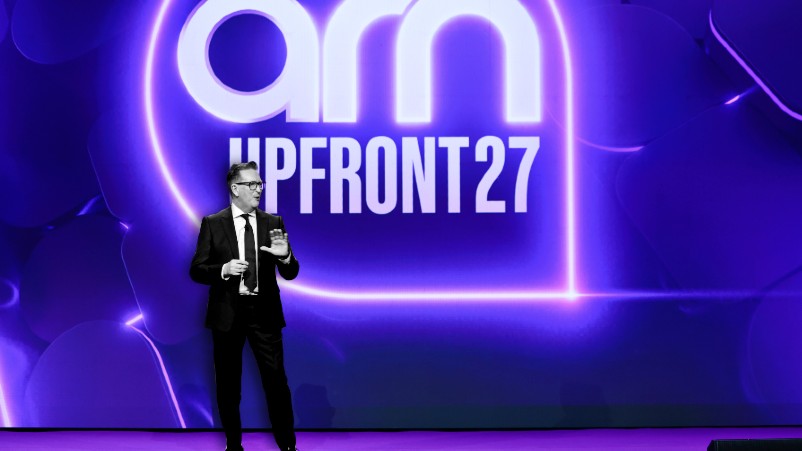
After last year’s no-frills upfronts in Randwick, hindered by a signed, sealed but not yet delivered merger with SCA, this year’s Seven upfronts under its newly minted group moniker, Seven Media Group, put forward a refreshingly stronger showing. At a top-line level, the story of TV and radio ratings dominance coupled with audience connection and executive momentum touted by group chief, Rohan Lund, and chief revenue officer, Nat Harvey, was well met. Seven’s argument: Its reach is an assumed baseline, and the prize is now audience-first engagement wherever they want to go, including off network. Media buyers speaking to Mi3 say the ‘connections’ message is the right one to pitch. Yet they agreed the juxtaposition of Seven’s very familiar TV talent with the edgy, locally nuanced stable of personalities from the airwaves made an awkward showing at times, while a lack of fresh programming and drama was noted. What was smoother in the storytelling was Seven’s integrated planning, trading, audience intelligence and identity play on and off-network. Media buyers say they like what they’re hearing, and they’re willing to believe the Phoenix can rise to command a few dollars back from social media platform coffers. But as seen with Nine (albeit with a different blend of channels), the proof of unified ad sales and solutions is very firmly in the pudding.
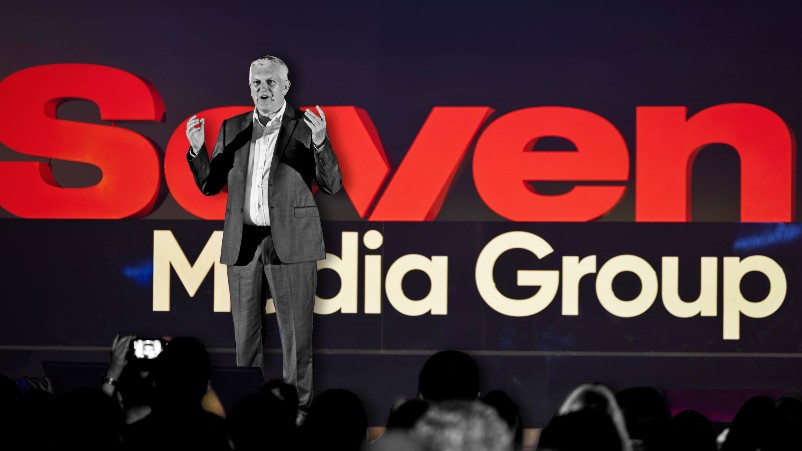
The top-line message from Seven Media Group’s CEO, Rohan Lund, was clear. “This is a new media company with serious momentum,” he told attendees at yesterday’s upfronts.
Seven’s 2026 showcase was a world away from the no-frills version media buyers and planners got last year, with both more dollars and more thought put into what was on and around the stage. The fresh take was equally apparent in a refreshed exec line-up led by Lund, who took over officially on 1 May, just six weeks after joining the group’s board as a non-executive director. Also just six weeks back and in her new role of chief revenue officer was Nat Harvey, returning after nearly three years at Mamamia.
The pair’s emphasis: This is a group with the audience reach, viewing dominance, and first-party data and intelligence – both across streaming plus digital audio – to be a viable contender to global tech platforms swallowing up so many ad dollars. And it’s a group with fresh appetite to connect the channel and content dots. There’s new momentum, integration is a priority and building more audience engagement and trust is the North Star.
For all that, it was a strange blend of super familiar talent and content programming from Seven, juxtaposed with the colloquial, local, sometimes edgy talent and shows across the HIT, Triple M and LiSTNR networks. On the TV side, Seven put forward a well-established program of tentpole reality and entertainment TV and streaming programming, as well as its breadth of news and sports, along with recognisable talent from the Seven stable – Bruce McAveney, Michael Usher, Natalie Barr and Matt Shirvington all made their appearance. These faces stood alongside new stable additions from the airwaves with a decidedly more relaxed, edgy and niche bent. At several points, it felt like talent was meeting for the first time, finding their footing on the same stage as one business, as well as with each other. There are also those who remain fixtures of competing radio networks but have built a presence on Seven TV, including Ricki-Lee, the newly announced co-host of the newest reality program in the stable, ’ I’m a Celebrity, Get Me Out of Here’, while podcast star Andy from Hamish & Andy, is a regular on Channel 9.
In one of the worst kept secrets in media, the group officially debuted its new corporate name, Seven Media Group, backing it up with an audience-oriented, connected narrative across TV and audio that buyers in the room acknowledged to be a strong one, but that still requires demonstrable proof.
What no one argues against is dominance on TV and the airwaves. Lund and the team were bullish on this front, declaring Seven as the number one network with 43.2 per cent commercial share, the number one for broadcast with 43.3 per cent share, a 43.6 per cent of streaming, and the only network to grow its audience in total TV, the 25-54 demo, and BVOD. Lund also flagged Seven’s total TV network share in Q1 FY27 was “the highest since VOZ ratings began”.
Lund also claimed total TV audiences were growing by nine-and-a-half per cent year-on-year, with BVOD audiences up 50 per cent year-on-year.
“In audio, the story is even more powerful. We’ve been Australia’s number one metro radio network for peoples 25-54 for 42 consecutive surveys; number one in men and in women and that share keeps getting bigger. We have a dominant publishing business that has unparalleled influence and reach into Western Australia and readership is still growing,” he said.
Local is part of the message too. “We are proud of being an Australian owner. We employ lots of local talented people. We pay taxes. We care about this country. No one reaches more Australians than we do. Across our platforms, we're now connected with more than 20 million Australians every month. More than 17 million Australians are registered users of our content. Our first-party data is absolutely unmatched. We've got some serious momentum right now across the whole group in everything we do.”
Connected systems
The game isn’t chasing a bigger reach number now for Lund. “We’re not shifting audiences from one screen to another; we’re growing audiences across both,” he claimed.
“We want to earn more of Australians’ time and more of their trust. We want to make our content so compelling and our ecosystem so connected that Australians keep coming back to take more of what they love every day – watch the footy, stay for the conversation, discover a podcast, read the story, come back tomorrow. A media company designed around audiences, and one that meets Australians wherever they are, whenever they want to contribute, and then gives so many more reasons to come back.”
A poignant example of how it’s engaging audiences on one story through multiple formats was Dolly Parton’s passing, which extended from breakfast radio shows through to morning TV programming, the 6pm news, The Nightly, BVOD, digital publishing, podcasts and specials. Per Seven, one story “had Australians connecting over 50 million times with Seven Media Group”.
Seven is also extending its reach beyond owned platforms. It’s selling its own YouTube Inventory as well as Spotify, offering campaign optimisation and effectiveness measurement with it. There’s a compelling reason for this: Incrementality. During the session, the group noted 90 per cent of YouTube audiences for 7’s news offering are completely unique to those engaging on its owned platforms. It’s also built a 3 million-strong audience on TikTok.
But just as Nine still has a job to do to prove it really can integrate and make trading easier across a publishing, TV and out-of-home network offering, Seven Media Group now needs to prove to the market it really can be an easier, more unified proposition to plan, buy, trade, measure and integrate with.
In a pre-upfronts interview, Harvey told Mi3 overlap on clients was still just 14 per cent between what were Seven and Southern Cross Australia.
And in last night’s show, detailed brand integration examples stretching from TV and radio were brief. A Vanguard campaign was a rare pre-recorded example detailing an integrated ecosystem buy: That partnership saw Vanguard sponsoring 6pm news ‘Money Talks’ finance segment, plus customised billboards on the national news, and eight-part video podcast series with recut episodes across social channels, all with a CTA to engage in Vanguard’s Smart Retire Quiz.
Sports is the other huge lure Seven has to cast beyond TV and BVOD. During the upfronts, cricket, AFL, racing, motorsports, surfing, Super Bowl and rugby league broadcasting rights were all given a spotlight.
“A sports fan doesn't think in channels. They don't wake up and decide one morning they're going to be a television viewer, then a radio listener tomorrow, and then a podcast user on Wednesday. They just love footy,” commented Seven sports reporter Emma Freeman.
“A sport partnership doesn't need to start and finish with the game anymore. It can live around the fans,” continued Seven AFL sports reporter and son of Eddie McGuire, Xander McGuire. “So before the first bounce, during the action, after the final siren, then throughout the week, and that's across video, audio, podcast, publishing, social media, talent, content, and now off network as well. We've seen hundreds of thousands of people tuning into AFL Grand Final highlights on Seven’s new YouTube channel. So YouTube will become a regular part of our sport coverage, and the only way really to be a part of the most engaging, authentic, and powerful content, is to buy it through us. Pre-rolls on Seven Sport YouTube can be bought through us. This will go across our Seven News YouTube page, as well as our entertainment brands, as well. That's how partnerships have been reimagined here at Seven Media Group. Not just buying a moment, but building a relationship with the fan.”
We are a proud Australian owner. We employ lots of local talented people. We pay taxes. We care about this country. No one reaches more Australians than we do. Across our platforms, we're now connected with more than 20 million Australians every month. More than 17 million Australians are registered users of our content. Our first-party data is absolutely unmatched. We've got some serious momentum right now across the whole group in everything we do.
What the agencies thought
Managing director of independent media agency Involved Media, Sarah Keith, said the challenge for the Seven Media Group is not just flagging audiences it has, but improving the way brands connect to them.
"Last night was a reminder that the company has scale, established audiences and powerful platforms. Reassurance that it understands the fragmented media environment and is building an ecosystem designed to respond to it,” she told Mi3. “It had a statement of intent that being Australian remains a clear competitive advantage, not a nostalgic footnote.
“For Nat Harvey and the commercial team, the challenge is not simply to sell audiences. It is to help brands understand how to connect with them.”
Keith believed the rebranded Seven Media Group demonstrated it “understands the changing expectations around talent and presentation. “Last night saw them reposition and also reassure the market post-merger,” she continued. "What's good is the next generation doesn't necessarily need to look or sound like the generation before it. They were really clear that audiences are increasingly drawn to people who feel relatable, spontaneous and comfortable in their own skin. The appeal is not a lack of professionalism; it's the absence of unnecessary polish.
"The same thinking appeared in the broader approach to content and commercial partnerships”.
A key announcement on this front is Studio Seven, Seven’s new group solution to integrated strategy, creative, research and content partnerships with brands. It combines Seven’s 7Red marketing solutions team with SCA’s Studio counterpart, to span TV, streaming, radio, podcasts, publishing, social, sport and entertainment.
“Studio Seven, audience insights and content opportunities were all part of a wider proposition: Giving brands ways to connect with Australians through environments that have meaning, relevance and cultural currency,” commented Keith.
The team at Kaimera also saw Seven Media Group’s 2027 strategy reflecting where the market is heading. Audience-led as the foundation sent a strong signal that the ambition and desire to connect the dots between content, audiences and outcomes is there.
“Connection needs to go beyond content and translate into more effective ways for brands to reach Australians. It’s clear that Seven understands this and has made this the cornerstone of 2027,” they told Mi3.
But several agencies pointed to a lack of genuine new programming and the notable absence of fresh drama on the slate. The only ‘new’ programs highlighted in 2027 are ‘I’m a celebrity get me out of here’ – which has clearly already had a run elsewhere – and a fresh gameshow, Stacks of Cash.
“The clear content strategy is to focus on Sport and News, with the existing programs base being the filler,” said one media buyer.
Seven’s professionally made content positions it as a big tentpole programming broadcaster. When it comes to the technology space, Seven is competing with a completely different set of technology providers – Google, Meta and TikTok. Those technologies are very streamlined. So it will depend on how well it works and how well it integrates with other systems, if clients want to have a good view of their omnichannel buys.
The integration story: Planning and trading
Where the real work is going on behind-the-scenes is around the integration pieces Seven Media Group has to land to provide a simpler, easier and more unified way to plan, trade and report across its portfolio of offerings, as well as understand and target audiences using insights, intelligence and unified identity.
As already noted, Studio Seven is the customer solution aimed at forging more integrated, outcomes-based partnerships with brands. “Studio Seven helps us with the customer problem and to use the whole ecosystem to solve it,” Harvey told attendees.
Turning then to outcomes, Harvey highlighted data showing every dollar invested by those using both linear television and BVOD combined was generating 5.6 times in long-term return on investment.
Seven also struck a partnership with Westpac Data X last year to link advertising exposure on 7Plus to sales outcomes across more than 50 product and service categories, leveraging Westpac’s 12 million Australian customers. Harvey said it’s now analysed brand campaigns against $230m in customer transactions across five category spending areas: Entertainment, insurance, QSR, travel and retail. It found that, in insurance, overall market spend grew +7.5 per cent, while exposed customers spent +20 per cent per person more. In QSR, overall spend was up +0.8 per cent, but exposed 7Plus audiences were up +26 per cent per person.
“Australians on 7Plus spent more per person than those who weren't: Between 17 and 45 per cent more. That was in every single category, and that gap held every month from November through to August. This is not a survey. It's not a model. This is real Australians spending real money at the till,” said Harvey.
Phoenix rising
The group’s other big bet is on technology. Seven’s Phoenix has once again arisen, pitched as the exchange platform infrastructure Seven is now investing in to make integrated trading across its broader TV, streaming, publishing and audio offerings easier.
Currently, advertisers can access broadcast inventory, and work has begun on bringing SCA’s audio trading capabilities, now dubbed Phoenix Audio, starting with podcast inventory. More inventory is due by December, with converged audio trading slated for February 2027. AI-generated campaign optimisation tool, Precision+, will also be extending across video assets. Within 12 months, Seven said group inventory will be available via an agnostic trading workflow powered by agentic buying tech.
Speaking to Mi3, Spark Foundry Australia chief media and digital officer, Rachida Murray, applauded the focus on bringing technology, identity, audience intelligence and trading together – something she hadn’t really seen from Seven before.
“It’s an interesting proposition because Phoenix had been announced in previous years. The platform has existed for a while now, and it keeps evolving,” said Murray. “But this is the first time they connected Phoenix as a trading automation platform, Seven ID around the audience intelligence piece, and then Phoenix Exchange, which allows buying across both the TV and [unclear] ecosystems.
“I think it’s strong on paper. What we’ll have to see is how well it works when it launches. It’s always a challenge when there’s a lot of excitement around a new product, and then it’s a case of whether that product can deliver.”
Seven’s ambition is to offer programmatic, self-service, agency trading platform integrations and agentic simultaneously. “We don't want to dictate how you buy. We want to make it incredibly easy for you to buy however you choose. And making our content easier to buy doesn't make it any less premium – I should be very clear about that, it’s still very premium,” Harvey said.
“What we're doing is removing the friction between some brands and some of Australia's most valuable content in trusted environments and highly valuable audiences. We're making it easy to trade with us, so we can both focus on how to drive your brands forward to deliver the growth that we never thought possible. And importantly, we're putting a roadmap against it.”
Murray pointed out Seven’s professionally made content positions it as a big tentpole programming broadcaster. “When it comes to the technology space, Seven is competing with a completely different set of technology providers – Google, Meta and TikTok. Those technologies are very streamlined,” she said.
“So it will depend on how well it works and how well it integrates with other systems, if clients want to have a good view of their omnichannel buys. I think Seven understands that quite well. Yesterday, they talked a lot about being able to reach the audience across an entire ecosystem. It’s not just within the Seven group channels … They talked about their audience reach on all the platforms. They really do understand that the omnichannel strategy is important for advertisers.
“How efficient that technology is, and how interoperable it is, allowing clients to connect their audiences across multiple platforms and see the results and measurements across platforms, I think that’s where we’ll see whether the proposition can or not.”
Audience signalling
Identity resolution is the other part of this picture. To this end, Seven Media Group has debuted Seven iD, a unified audience identity and intelligence platform bringing all of its first-party data assets into one customer identity. That includes 15.5 million registered users on 7Plus, along with 2.8 million known users on LiSTNR and 500,000 across The West Australian. Advertisers will be able to use this to activate audience segments via Seven’s.
“The idea of bringing richer audio signals and making the buying more flexible is really valuable,” Murray said. “That can help position Seven as a stronger competitor when clients need to see the efficiency and effectiveness of all their buys.”
To further augment audience intelligence for advertisers, Seven has extended its partnership with Landmarks ID and adopted its Scope audience reach insights and campaign planning platform. It’ll be used to combine consumer intelligence from a panel of 500,000 Australians, connecting their brand preferences with OzTAM’s VOZ Total TV audience measurement data.
On offer are profiles of daily brand and category associations, audience planning based on brand and category buyer reach scores for all broadcast and BVOD media inventory, evaluation of sponsorship opportunities and analysis against audience and brand alignment, and insights into audience composition across key entertainment programs and special events.
The content slate
As to its content slate, Seven is charging up its 2027 content slate with cross-pollination of familiar entertainment IP’s and names, expanded sports coverage, fresh radio line-ups and a bigger push into video and social podcasting across LiSTNR.
Seven Media Group MD of Television and Streaming, Angus Ross, said the fresh 2027 line-up is “primed” to expand on the 2026 growth, “giving our commercial partners absolute certainty through unparalleled reach and unmatched engagement across every screen.”
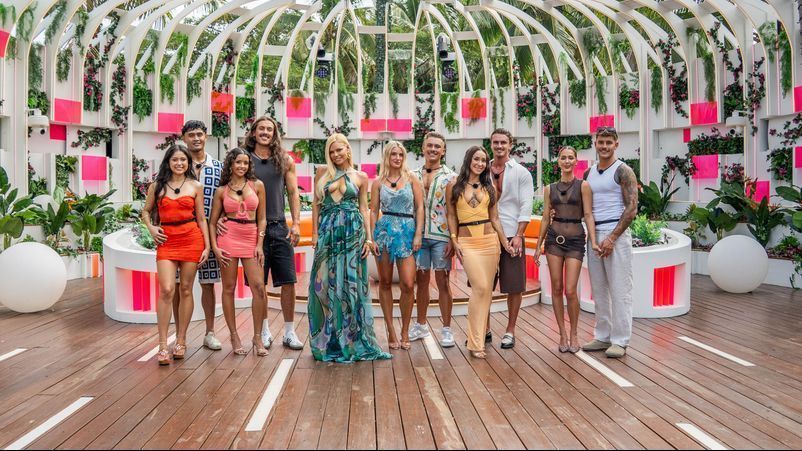
One of the few ‘new’ programs on TV will be ‘I’m A Celebrity… Get Me Out of Here! – previously axed by Paramount’s Channel 10 – which moves to Seven with Ricki-Lee and Jim Jefferies as its new hosts. Matt Shirvington will front the new prime-time game show, Stacks of Cash.
Returning staples include Farmer Wants A Wife, My Kitchen Rules, The Voice, Australian Idol and Home and Away. Australian Idol will also add Morgan Evans to its judging panel alongside Marcia Hines and Amy Shark. Other returning titles include The 1% Club Australia, The Chase Australia, Better Homes and Gardens, Border Security and Highway Patrol, while Shane Jacobson will host the new quiz format, Caught in the Middle.
7NEWS remains dominant as the number one news source; Sunrise, the "number one breakfast show", also remains central to the schedule, with The Morning Show heading into its 20th year as the “nation's number 1 program” after 19 consecutive years.
And sport remains a crucial pillar. The 2027 line-up spans AFL and AFLW, cricket, the Rugby League World Cup, Super Bowl LXI and the NFL, Supercars including the Bathurst 1000, horse racing, the World Surf League and the Santos Tour Down Under.
Cricket coverage will include Australia’s Test series against New Zealand, the WBBL and BBL, women’s T20 and ODI series, and the 150th Anniversary Test against England at the MCG, with Brendon McCullum and Stuart Broad joining the commentary roster. The Agenda Setters: Cricket also joins the slate alongside T20 Gold Clash: Footy vs Cricket.
Beyond live sport, The Front Bar returns alongside Unfiltered, NFL Tailgate and The Agenda Setters across AFL, cricket and rugby league.
Radio is also getting its own shake-up. Luisa Dal Din and Jack Archdale will take over a new national Hit Network Drive show, while former Australian cricket captain Michael Clarke joins Nath Roye and Emma Chow on 2DayFM Breakfast.
In an indication of cross-talent pollination, Triple M is leveraging further into Seven’s sports power, adding Ricky Ponting and Brendon McCullum to its summer cricket coverage and Bruce McAvaney to Triple M Racing.
LiSTNR is also accelerating its shift from audio into video and social. Hamish & Andy, Life Uncut, The Imperfects, The Howie Games and Happy Hour with Lucy & Nikki will add full-video episodes across platforms including YouTube and Apple Podcasts and clippings distributed on socials. We Mean Well joins LiSTNR alongside its hosts’ new Hit Drive show, while content creator Maddy MacRae will launch a new podcast. LiSTNR now consists of more than 800 podcast titles.
Publishing will also expand, with The Nightly extending into The Nightly On, a quarterly executive magazine, and ROAM, a premium weekend travel brand. The broader live and community list includes the return of the TV WEEK Logie Awards, the 60th anniversary of Telethon, the Good Friday Appeal, Triple M Fest and The Fox’s The Underdogs.