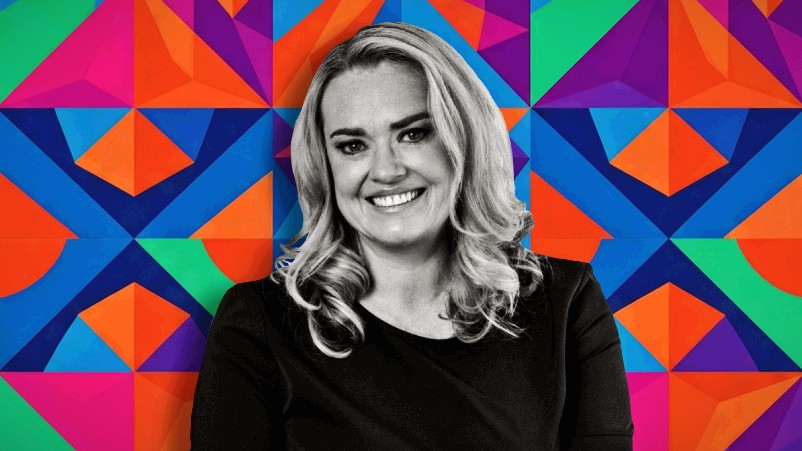
B2B breakthrough: ServiceNow global CMO Colin Fleming cut performance spend, tired tactics, upweighted brand, synthetics and buried 'foggy bullshit'; conversions jumped 133%

Colin Fleming: "We never had a lead problem. Actually, we never had a pipeline problem"

"Half of B2B marketing is just full of bullshit," says the refreshingly frank global CMO at ServiceNow, Colin Fleming. When he took the marketing reins at the $US178 billion B2B juggernaut ServiceNow, Flemming knew the classic lead-generation playbook was cooked. After overhauling Salesforce marketing during his 13-year tenure, Fleming moved to ServiceNow just over a year ago, slashed lead gen activity and diverted marketing dollars toward orchestrating B2B buying groups. The strategy delivered with a huge uptick in conversion rates but admits there were a few white knuckle moments during the three months it took for his bet to pay off. As part of the marketing overhaul, Fleming’s team dismantled the MQL [marketing qualified leads] model, built synthetic AI personas to pre-test campaigns and shifted to a 50/50 brand-to-demand investment ratio. More recently, he's laid down guardrails to avoid the looming potential cost shocks of agentic AI. In doing so, ServiceNow reframed what modern enterprise marketing can, and should, look like inside the software giant.
What You Need to Know
- ServiceNow demotes MQLs, boosts conversions 133%. Global CMO Colin Fleming slashed lead gen spend by 63% and killed off MQLs, pivoting to buying group orchestration via Adobe Journey Optimizer, lifting conversion rates by 133%.
- Buying signals now trigger persona mapping, not handoffs and leads are treated as signals to build complete buying groups across decision-maker clusters like CIOs and CHROs, and importantly they are jointly owned by sales and marketing.
- The brand bet paid off, but not instantly. The company has shifted to a 50/50 brand vs. demand budget split, almost unheard of in B2B tech, as shrinking RFP shortlists demand stronger mental availability.
- AI-powered synthetic personas will compress go-to-market cycles. ServiceNow now uses digital twins of key personas to test messaging pre-launch, dramatically speeding up feedback loops and derisking campaign rollouts.
- ‘Hidden buyers’ from ServiceNow’s broader community are materially influencing deals, prompting the firm to formalise community programs akin to SAP’s user groups.
- Fleming warns of ‘Bill Shock 2.0’ as AI agent usage scales. Token-based pricing models are poorly understood, with some users racking up $300k overages.
- And he argues, 'Clarity kills jargon.' His marketing team's internal “fog meter” aims to eliminate B2B fluff, replacing legacy taglines with clear language, part of a broader shift toward authenticity and faster execution.
The FOG (fact-obfuscating generalities) acronym is just such a perfect interpretation of some B2B marketing, especially tech. Half of B2B marketing is just full of bullshit.
On paper at least, it was a risky play. Colin Fleming, Global CMO of ServiceNow, made the call to radically pare back lead generation, slashing it by 63%, and shifting investment toward brand and buying group orchestration. The short-term optics were potentially grim. “Usually, that’s the recipe for a CMO to be fired,” Fleming quipped. But three months later, the results spoke for themselves: a 133% jump in conversion rate.
The pipeline may have been smaller, but it was a lot smarter and richer, and the net of it all was stronger revenue growth.
“We never had a lead problem. Actually, we never had a pipeline problem,” said Fleming. “It was just the conversion of that pipeline. We looked at it like this: we could keep going down the path of finding 1% to 2% conversion optimisations, but what if instead we aligned our marketing with how people actually buy our technology?”
That rethink ushered in a new operating model at ServiceNow. The firm jettisoned MQL obsession in favour of dynamic buying group construction. Lead signals still matter, but they no longer trigger sales handoffs. Instead, they ignite a process to complete buying groups across personas, think CIOs, CMOs, CFO, and all those often invisible influencers with often outsized impacts on the purchase decision.
“This is a joint venture between sales and marketing. The account executive and the marketing leader co-own the opportunity,” Fleming said. “Only when it flips does the marketer back away a little bit.”
It's also an almost textbook example of the kinds of trends Dentsu B2B surfaced in its September study into B2B marketing last year. As Mi3 reported at the time, "For the first time in its history, dentsu's B2B marketing study finds that brand awareness is now more important to future strategy than performance marketing – which is sliding quickly into reverse."
"As corporate buying committees expand, and millennials and digital natives gradually replace Gen X as key decision-makers, another tipping point has been reached, per the study: Personal decision drivers have overtaken professional ones – and they have a very different set of buying criteria."
New Mindset
Service Now's new approach required more than just a new mindset. It meant reengineering CRM, sales methodology, and marketing orchestration end-to-end, and leaning heavily on Adobe to automate the scaffolding around incomplete buying groups, he suggested.
“We treat a lead now as a signal, not as an outcome,” he said. “We create opportunities for all of our customers, $0 opportunities, that we build a buying group around. So I know that buying groups have grown to 22 people in a B2B buying cycle. Now how do I get the top seven and make sure that if someone comes in, or whoever comes in, I know I need to build out the three people that are adjacent to them in order for me to truly have an opportunity.”
Alongside its buying group pivot, ServiceNow is leaning into synthetic data to compress creative cycles and get to market faster. Fleming says the company now uses AI-based digital twins of key personas to test and validate messaging before launch.
“We built out synthetic and in-person research that created models for our core personas,” he said. “I can query my CIO. I can query my CHRO. They have names. They have personalities.”
"That's been a huge home run for us," he said, while calling out the importance of Adobe as a marketing platform partner in the shift to hunting for buying groups.
These synthetic personas, developed in partnership with Evidence and others, help the marketing team run narrative and message iterations with speed and fidelity.
We asked Fleming how close we are getting to a world where companies will design a product, release it into a synthetic environment, before they release into the wild, and know the outcome with a high degree of confidence.
"I don't think we're fully there yet on the product side. Right now, we're in a 'trust but verify' mindset with messaging, narrative, and use cases, but it's been really interesting."
The implication? You no longer have to wait until campaigns hit the wild to know if they’ll land. That’s critical in a generative AI arms race where the difference between winning and chasing is measured in weeks.
"We're all in a race, and we're a modest company compared to some of our peers. Let's say we beat them to market on AI agents, on orchestration, and on control tower, not because we were clever, but because we were moving quickly."
“We walked into Knowledge, our user conference, super confident,” said Fleming. “Because we had tested it within an inch of its life."
Brand vs. Demand
In a market often obsessed with performance advertising, Fleming’s opted for the Binet and Field playbook. That meant going all-in on brand. At a time when B2B tech marketers are being told to measure every dollar to the decimal, ServiceNow has rebalanced its marketing investment to an even 50/50 split between brand and demand.
“In tech, that’s unheard of,” Fleming admitted. “But we’re seeing buying groups get bigger and shortlists get shorter. You used to get seven or eight companies in an RFP. Now you get three and a half.”
That shrinkage in consideration windows puts a premium on mental availability, core Ehrenberg-Bass territory. “If you're not top of mind, you’re not part of the conversation,” he said.
The new strategy is backed by brand equity research and community development initiatives like ServiceNow University. It’s not just a visibility play, it’s a deeper bet on building influence among “hidden buyers” that traditional CRM systems fail to capture.
“We’ve seen an outsized influence from our community. These people aren’t in the CRM. They’re not tagged to an opportunity. But they’re impacting deals,” Fleming said.
The company is also starting to build structures similar to SAP’s famed User Group Executive Network to formalise community input into the go-to-market function, and that's perhaps not surprising given ServiceNow CEO Bill McDermott's five-year stint as CEO of the German powerhouse (9 years if you include his time as co-CEO).
Agentic service
When the conversation turns to agentic AI, the ServiceNow exec believes the firm has a powerful role to play given its instinctive understanding of its client's business processes. It was a theme Fleming addressed earlier when he offered a candid warning for enterprise marketers: learn from the past.
In his keynote presentation to the company's Australian user conference, he suggested those past mistakes are embodied in what he calls the “sidecar” approach to artificial intelligence, bolting on isolated tools and fragmented systems that recreate the same spaghetti mess enterprises spent the last decade trying to untangle. (Interestingly, Boomi's head of AI, Michael Bachman, used the same metaphor - a spaghetti factory of chaos - speaking to Mi3 in May. Perhaps the tech sector is trying to tell us something!)
ServiceNow, he insists, is betting on a unified platform play, one that tightly binds intelligence, connected data, and workflows. The argument is straightforward: AI is only as good as the system it runs on, and silos kill outcomes.
That platform-first philosophy underpins ServiceNow’s vision of agentic AI. It sees software agents designed not just to assist, but to act. Fleming described autonomous digital workers that can provision resources, fix issues before they become problems, and resolve routine queries end-to-end without human intervention. In practice, that means, for example ,an HR onboarding agent that doesn’t just send a welcome email, but orders the laptop, configures access rights, and flags any compliance gaps. Or an IT support bot that doesn’t merely log a ticket but diagnoses, patches, and closes out the issue, all without escalation.
The real leap, however, comes from orchestration across the enterprise. Fleming told delegates that agentic AI’s real advantage lies in context-sharing across departments that traditionally operate as silos. An HR agent can coordinate with IT and facilities to stand up a new workplace; procurement agents can watch inventory and trigger service tickets before the shelves run dry; customer service bots can anticipate demand spikes and deflect routine queries before they hit the queue.
Bill shock
There's another old problem marketers might want to plan to avoid - bill shock, and that means taking the time to understand the drivers of cost, Fleming told Mi3.
“We’re seeing similar impact that you saw within a CDP environment,” he said.
AI agents incur cost based on token consumption, orchestration complexity, and data freshness. Many marketers, Fleming warned, don’t yet understand the full TCO implications.
“There have been scenarios where it did too good of a job, and you ran out the bill relatively high,” he said. “If anybody tells you they have the answer on this, they’d be lying.”
To mitigate the risk, ServiceNow has moved to a hybrid pricing model for AI agents, license plus usage, but has stopped short of full outcomes-based billing, citing forecasting challenges for both customers and shareholders.
Still, Fleming thinks pricing model evolution is inevitable. “This is going to be the hottest space in agentic AI, how it changes the pricing model,” he said.
Through the fog
Internally, Fleming operates a “fog meter” to kill B2B’s worst instincts: fact-obfuscating generalities. “The fog acronym is just such a perfect interpretation of some B2B marketing, especially tech. Half of B2B marketing is just full of bullshit. So we just try to speak like humans. We changed our tagline from ‘IT workflow transformation initiatives’ to ‘put AI to work for people.’ It's that simple.”
And that ethos, clarity over complexity, runs through everything, from community design to orchestration to brand storytelling.
“The quality of the prompt is the answer,” Fleming said. “We’re all just trying to move faster than the next guy.”