‘We need to shut the shop of undercutting’: Holdco chiefs confront business model reset, task-based AI, change management and talent shifts

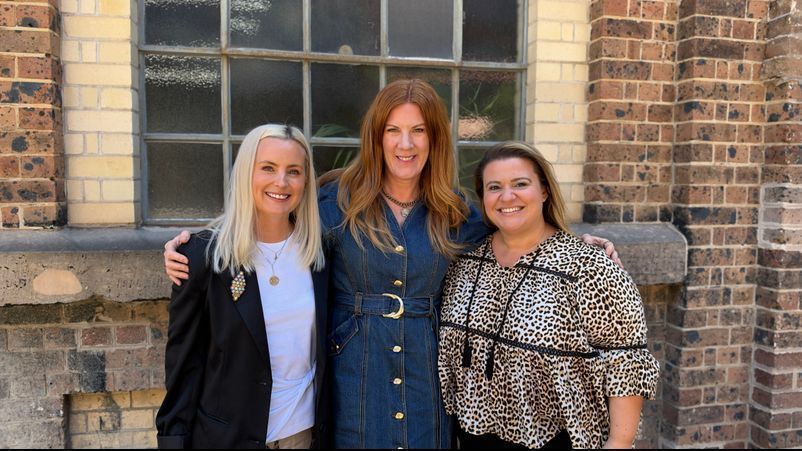
Omnicom Media Group Australia CEO Kristiaan Kroon, This Is Flow founder and CEO Jimmy Hyett. Publicis Groupe chief media officer Imogen Hewitt and WPP’s CEO Aimee Buchanan.
“It's not all on clients - a big part is on us": As AI closes the time-to-value gap, WPP’s Aimee Buchanan says the old time-and-resource agency model is coming under fresh pressure and undercutting is eroding industry value. Increasingly pricey AI may temper some of the enthusiasm for putting AI onto every task - Omnicom’s Kristiaan Kroon says agencies will need to layer AI by need and cost. But nevertheless, the industry has to get better at change management it's “never done well”. But for all that, agencies insist they will remain in style. As Publicis’ Imogen Hewitt put it, leopard print keeps “popping up and still trending year on year”, but the model underneath is shifting fast, from how agencies charge beyond hours and headcount, to where AI replaces manual work, and the new skills they are hiring for.
Media agencies are being forced to rethink what clients are actually paying them for as AI strips time and manual labour from delivery. Traditional remuneration models, already under pressure, face even more strain, and a heavy onus falls on agencies that continue to undercut one another on price.
Speaking at the Media Federation of Australia’s MFA EX Leadership Unfiltered panel in Sydney, WPP Media ANZ boss, Aimee Buchanan warned the industry risked eroding the value of its own work if it remained tied to good old time-and-resource remuneration.
“I think as the MFA, we're undergoing quite a big piece of work at the moment on commercial models, and we're really excited to be thinking about how to evolve the commercial model,” Buchanan told attendees. “We need to rethink this approach.”
But there isn't only one culprit. Buchanan turned the tables back on agencies themselves, arguing that aggressive undercutting during pitches was damaging both individual businesses and the wider market.
“It's not all on clients - a big part is on us, and there needs to be a greater level of diligence around undercutting," said Buchanan. “There's way too much of that happening. The majority of clients, when you have a really sensible conversation about the cost of doing business and the cost of servicing their business, are super receptive to that. There aren’t many clients that don't understand we're a business, and as a business, we need to make money.
“It's almost like, how can we service them strategically if we can't uphold that in our own business?”
Buchanan said the moment agencies take the cheaper route, they defeat the whole purpose. “I think [the work with the MFA] will help us get a better structure around how we go to clients with different models and a way to educate the market on this topic," she argued.
"A lot of it's on us, and we need to shut the shop of the undercutting.”
Rethinking the model
The comments point to a bigger commercial obstacle facing media agencies: If technology increasingly reduces the human time required to produce the work, a model that still links value closely to people and hours becomes harder to sustain.
That question threaded through a wider panel discussion involving some of the industry’s heavy hitters: Buchanan, Omnicom Media Group Australia chief executive, Kristiaan Kroon, Publicis Groupe chief media officer, Imogen Hewitt and full-service indie This Is Flow founder and CEO, Jimmy Hyett.
Kroon said the industry has always been “in a good position” to evolve - although he argued creative agencies have it much worse.
“We are changing up. We've always evolved. Media is very good at evolving. You think about creative agencies; they're doing it really tough. Whereas media has been evolving and been pushed to evolve for the last decade plus," he said.
For Kroon, the bigger issue was change management, something “we've never done well as an industry”. He argued the industry’s failure to properly explain and manage that change had contributed to a more positive view of where agencies were heading.
“We've, I think, failed to land that well, and it never really sat at the top of the surface. But now you've got four or five things all happening at once. It really matters," he said.
Kroon said AI was already redefining the economics of agency work by shortening the time between a task beginning and value being delivered. “AI is awesome. It closes the time-to-value gap. It's also extremely confident in what it presents to people, and it sounds great.”
But he warned AI’s speed and confidence did not remove the need for human judgement; if anything, it made that role more important.
“The question for a client is: is it right? Is it not right? That judgment piece sits with effectiveness," Kroon said.
With great power comes great responsibility. Kroon also said agencies would increasingly need to make harder, more selective commercial decisions about which AI tools were actually worth paying for.
“We’ve always been dependent on other people's technology and tools in different parts of what we do. As AI increases its costs … within our own businesses, it'll be how we manage the commercials. It's what you use AI for, and then also what type of AI is used for specific tasks.”
Kroon also argued increasingly pricey and complex models would not be rolled out across every task and every employee because “it's not needed, and it comes with a higher cost”.
“So I think we'll start to see it kind of layered, depending on the task you're completing.”
Agencies have a history of being unbelievably resilient. They're really good at thinking about how we might need to pivot or what other opportunities we might need to unlock to keep servicing clients.
Hyett argued technology would increasingly absorb more of the efficiency side of agency delivery, leaving human thinking as the differentiator. “But the thinking and the human piece is really what we all stand for, and that's what's going to make the work even better,” he said.
He argued anyone could increasingly access the tools required to execute media activity. “It's everything else that we do, and our knowledge around that makes us special," Hyett said.
Publicis’s Hewitt said the growing complexity of the media ecosystem increased the need for agencies rather than diminishing it.
“If you think about the ecosystem we're working in, there's more technology, there's more choice, there's more channels, there's more of just about everything, which makes it incredibly complex,” she said. “The biggest advantage we have in that is we come to our clients with the ability to give strategically neutral advice, and the more value there will be behind that.”
Asked why CMOs would still need agencies by 2030, Hewitt was emphatic: “We're not going anywhere.
“Agencies have a history of being unbelievably resilient. They're really good at thinking about how we might need to pivot or what other opportunities we might need to unlock to keep servicing clients.”
Comparing agencies to leopard print, Hewitt added: “People keep telling us that we're going out of style, but we are popping up and still trending year on year.”
Are junior jobs disappearing?
The commercial model is not the only part of the agency structure changing. AI is also reshaping the younger talent pool - and the mood in the room was notably pessimistic, with the 1,400-strong audience leaning towards fewer opportunities for media professionals over the next five years.
Buchanan pushed back against the suggestion that automation and offshoring were wiping out entry-level opportunities, while acknowledging that the types of jobs agencies are hiring for have changed markedly.
“I don't think this is all negative. I think most of us have capping on offshore, and there are no more roles going to offshore," she said. "I think what we're fundamentally seeing is a challenge to the type of capability we need in the industry moving forward.”
WPP Media had hired about 100 entry-level employees this year, Buchanan said, but increasingly into new areas such as creator, data science, machine learning, data technology and GEO rather than the same functions agencies were hiring into five years ago.
“The roles that we're hiring for aren't the roles we hired for 20 years ago. I don't think that we're seeing entry-level roles disappear. They're certainly not getting all offshore," she said.
Despite industry uncertainty around AI, remuneration, talent and the future shape of agencies, Kroon argued there was still reason for confidence. He pointed to the MFA bringing together around 1,400 people in Sydney, alongside nearly 1,000 in Melbourne, as proof that a “hyper-competitive” industry can still come together around shared challenges.
Buchanan told Mi3 she remained optimistic about where the agency model was heading, arguing AI should augment people rather than replace the source of agency differentiation. “Ultimately, our people are going to be augmented by the technology. It's the human ingenuity and our people that drive creativity and innovation. And innovation in an AI world is going to be ever more important.”
According to Buchanan, the strongest pitch conversations were still ultimately centred on the quality of the work and how agencies could deliver better outcomes faster. “Clients still want creativity, innovation, smart thinking," she continued.
“This should just enable the activation to be at speed. We still need the humans to get to the interesting work.”
Buchanan said the future for agencies would look increasingly strategic, advisory and technology-led. “Our jobs are only to reach the right people at the right time with the right message and make them feel something and do something.”