
‘Strip away the noise’: Dentsu ANZ claims strongest operating position in years as Harvey dismantles complexity, retires brands and resets holdco model
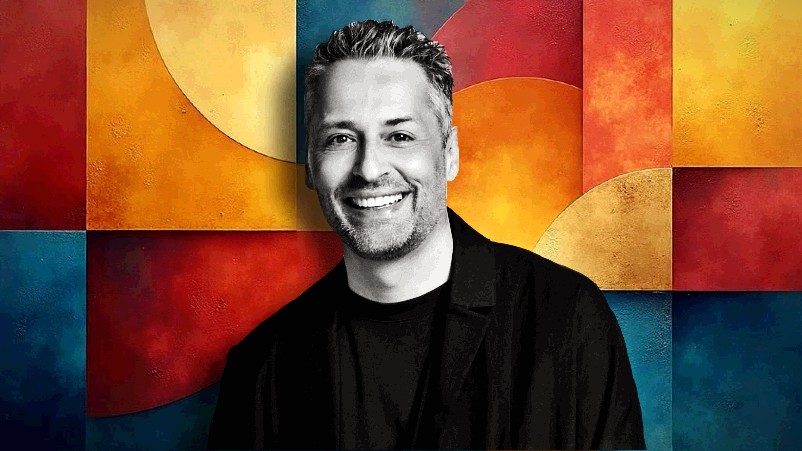
Dentsu CEO ANZ Rob Harvey
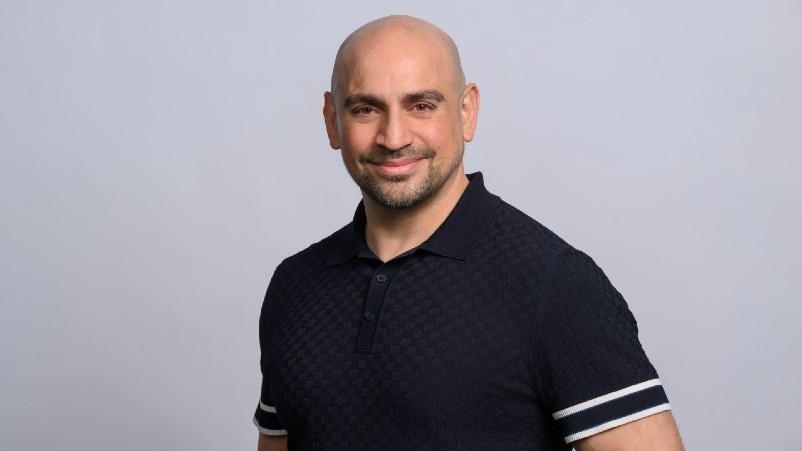
Six months ago, axing the Carat and iProspect brands for a single media brand proposition, jettisoning the Merkle moniker and selling off the Salesforce implementation business would have been unpalatable decisions locally, Dentsu ANZ CEO, Rob Harvey admits. But having built internal confidence through his initial steps and a commitment to simplify years of overly complex re-engineering and executive layers in the local business – transformations that helped create $1bn+ in losses and continue to darken the local balance sheet – he’s put the next part of the restructuring plan into action. These are not purely cost-savings exercises, Harvey tells Mi3 in an exclusive interview nine months into his local rein. Getting specialist talent closer to the coalface is critical if Dentsu is to help clients find a way out of their own complexity issues, and it’s also key to ensuring Dentsu can bring the best of what it has in the stable to each client task at hand – whether it’s creative, media or experience capability. And whatever the bleak ANZ local losses suggested in 2025, Dentsu ANZ is back in positive operating territory, he insists.
What you need to know:
- Dentsu ANZ CEO Rob Harvey is adamant the local business is starting to emerge from years of losses and “noise”, complexity and restructuring after posting more than $1bn in cumulative local losses over recent years.
- The restructure follows years of failed “consulting-style” transformation under former CEOs Angela Tangas and Patricio de Matteis, which Harvey says created unnecessary complexity internally and externally.
- Harvey has accelerated a simplification strategy nine months into the top job, scrapping media agency brands Carat and iProspect locally in favour of a single media operating model, while retiring the Merkle brand in ANZ.
- Dentsu also sold off its Salesforce implementation business to Enduring Ventures as part of a broader effort to refocus on core media, creative and CX capabilities.
- Harvey insists the changes are not primarily cost-cutting measures, claiming no costs were removed from merging Carat and iProspect. Instead, he says the goal is to remove leadership layers, break down internal silos and make specialist capability easier for clients to access.
- Multiple senior executive departures have accompanied the reset, including former leaders Kirsty Muddle, Fiona Johnston, Cate Stuart-Robertson, Ben Coulson and Brett Elliott. But new leadership hires are also part of the rebuild, including former Nine executive Danica Bellchambers, who will oversee AI, product development and analytics capability.
- Despite another year of heavy statutory losses in 2025, Harvey claims Dentsu ANZ returned to positive operating profit territory in Q4 after stripping out impairments, restructuring charges and global financing costs. ASIC filings showed net revenue fell 18 per cent to $196m in 2025, while net losses widened 20 per cent to $76.9m, following a prior-year $391m goodwill impairment.
- Dentsu previously secured a $100m recapitalisation injection from its French parent entity and reportedly sought a further $300m to stabilise the balance sheet.
- The ANZ boss pushed back on claims Dentsu underinvested in media capability compared to rivals such as WPP and Omnicom Media Group, saying the issue was organisational structure, not capability depth.
- Harvey is positioning human intelligence plus AI as the future operating model, aligning with global CEO Takeshi Sano’s “AI for Growth” strategy. Dentsu Japan is already using more than 4,500 AI agents and 1,300 AI applications internally. Harvey also points to growing, material collaboration between Australia and Japan, including shared client projects, AI product development and innovation partnerships with Dentsu Lab in Tokyo.
Within his first 90 days as Dentsu Australia’s CEO, Harvey told Mi3 his five ingredients to get the job done were: Simplicity, elevating culture, being present, instilling confidence and putting local needs and pride first. Coming into this year, that mission to cut out layers and years of complexity is coming into evidence.
Harvey is the fifth CEO in seven years at the helm of Dentsu ANZ, and was parachuted into the post after 12 years running the New Zealand unit. He inherited no small task: Steer Dentsu Australia out of years of complexity and misguided efforts to transform, simplify the ship and gain clarity for staff and clients, and get the P&L back into the black. At the time of Harvey’s appointment, Dentsu ANZ had stacked up losses of over $1bn, exacerbated under his predecessors, Angela Tangas and Patricio de Matteis, whose efforts to introduce consulting-style, cross-functional and product matrix structure of capabilities and services, failed to hit the mark with clients or staff.
Swiftly, simplification proof points started stacking up. Last year, a swathe of local senior executive exits kicked off. The first step was doing away with CEO-level roles that came into being under de Mattheis: Kirsty Muddle, practices and products CEO (who resigned in order to take up a post leading Ogilvy); Fiona Johnston, media, client and commercial CEO both left last year. Since then, Dentsu has waved goodbye to Cate Stuart-Robertson, MD of Dentsu Creative; Ben Coulson, chief creative officer; and Brett Eliott, chief operating officer (after under a year in the role).
This month, Dentsu dropped its two media brands, Carat and iProspect, in favour of a single media agency operating model and brand proposition locally. Each state now has a single MD for media, reporting into group chief practice officer, Chris Ernst, who took up the gig in January.
Merkle was next on the chopping block, with the brand retired locally and its experience, commerce, data and technology capabilities folding into Dentsu’s Customer Experience Management (CXM) practice. The local business also divested its Salesforce implementation offering, selling it off to Enduring Ventures. The leadership team - Paul Whittaker and Gareth Reason - have moved to lead the new business under its new ownership.
In an exclusive interview with Mi3 this week, Harvey insists that assuming a single media brand proposition was not driven as a cost-saving exercise. “We have not taken cost out as a result of doing that,” he says.
“This was a way of going, we’ve got all of this brilliant capability, but we're not unlocking the potential of this because we have it contained in multiple floors and agency brands under multiple leadership structures. You've got specialist capabilities sitting in one brand that don’t sit in another brand. We wanted to bring all of the goodness of that together as one.”
Likewise, divesting the Salesforce business was about bringing the data analytics back into the core of Dentsu.
“We are investing in the core of our capabilities – media is a component of that, and creative and experience is the other critical ingredient in all of that,” he says. “And we see those as deeply interconnected, not as silos within the organisation.”
The bigger structural vision here is bringing specialist capability and talent closer to the client coalface. “As we looked at the capability we have – and none of this is to say we're diminishing the capability at all – and how we orchestrate that in a way that is more compelling for our clients, and easier for our clients to navigate and access … without all of the internal barriers or leadership structures that often get in the way of that,” continues Harvey.
“Clients have enough complexity in their world as it is: Technological changes, they're dealing with agency villages, they’re dealing with a lot of pressure on their growth ambitions. How do we remove all of the noise attached to that and provide a proposition to clients that is just simple and gives them access to the very best of our capability, wherever that might sit? There's that element of it.”
If you look at the operating performance of this business – so how this business is performing as a day-to-day entity – we were in positive operating profit last year. We had a quarter of growth in Q4, and this is the strongest operating profit position this business has been in for a number of years. So if you strip away the noise, and the global stuff, and base it on the merits of what we are doing in market, there’s positive operating profit.
Confidence before change
Removing layers and simplicity is Harvey’s catch-cry against the other holdcos – no wonder, given the complexity that had been created internally at Dentsu. “We are all in on simplicity. I don't mean simplicity as dumbing any of this down. I mean simplicity of access and simplicity of coordination, to ensure we can surface all that capability. It is a different strategy we have,” he says.
The plan now is to have chief practice officers lead their capability and teams within them, but who don’t lead the whole P&L, says Harvey. Likewise, KPIs are now lined up behind the success of the business in totality, not individual silos. “It’s a very different way of operating,” he adds.
“If we had done this stuff six months ago, it would have been really challenging. But we've been seeding the strategy with the teams, we've been bringing them on the journey. So when it got to the point where we made this announcement, yes, there was some reaction to change, because you are removing brands. But for the most part, everyone understands why we're doing it, because we've been clear about the strategy. We have absolute conviction that it's the right thing for us to be doing.
“If I compare it to what some of our competitors are doing, it would be like us taking Carat and putting that into iProspect, or taking iProspect and putting that into Carat. We are not doing that. These teams are coming together as equals to form something new. There is real excitement in that, and we are starting to see the benefits already of that in the market.”
While acknowledging the cuts at a leadership level, Harvey says he’s also bringing in new talent to fill perceived capability gaps. One of these is Danica Bellchambers, who joined Dentsu in the newly created role of chief data and technology officer this month. She was previously head of product at Nine and led its AI product strategy as well as deployment of AI-driven solutions in the market. Prior to her media stint, Bellchambers was at Clemenger BBDO, overseeing data science and analytics capabilities.
“She’s bringing the whole data and analytics team together and will drive all of our product development and the data analytics capability we have,” Harvey says.
Dentsu is also recruiting for a new MD of the NSW market for media as a fresh role. “So it hasn’t been a cost-saving exercise, although in some cases, there are cost benefits,” he says.
Ongoing losses and revenue decline locally
Yet cost out is still a very real issue for Dentsu ANZ. According to 2025 calendar year financials filed with ASIC, Dentsu Australia suffered another year of losses, with revenue streams slumping for a third year, and losses after tax increasing. It’s the ongoing halo effect of years of overly complex re-engineering that Harvey is now determined to remove in order to get back to the black.
Net revenue fell 18 per cent to $196 million in the 12 months to 31 December 2025, with drops in revenue across media (down 10 per cent to $115.5m), consulting fees (down 30 per cent to $45.1m) and production (down 24 per cent to $35.3m). Net losses also increased by 20 per cent to $76.9m, at least a third of which was due to a $25.8m impairment charge. In its ASIC filings last year, Dentsu ANZ also noted another $391m ‘goodwill impairment’ cost within its total $63.9m loss for the 2024 year.
As reported by Mi3, Dentsu ANZ last September received a $100m injection from Dentsu France in order to recapitalise, and sought a further $300m from the group to wipe out borrowings and get the balance sheet back in order.
Yet Harvey insists Dentsu ANZ, as of Q4 2025, is in positive operating profit territory, something he promised to try and make happen within the first 12-18 months of his tenure.
While Dentsu Australia’s statutory accounts still show heavy losses and negative equity, the filing does indicate operating performance improved during 2025, with lower cash burn, reduced severance costs and signs of improved underlying operating performance around cost discipline, cash generation, and restructuring efficiency, before those impairment charges.
“What you read in the statutory accounts are an incomplete picture of how the business is performing,” Harvey tells Mi3. “Yes, there was a loss last year. There was a loss as we filed our statutory accounts. If you break that down, that is the final stages of the simplification process we've gone through – the goodwill write-down of historic assets, legal entity rationalisation, and so on. That is a good chunk of that. Then there's a whole lot of internal accounting factors you get as part of a global organisation, some of those financing charges, and so on, which are in those numbers.
“If you look at the operating performance of this business – so how this business performing as a day-to-day entity – we were in positive operating profit last year. We had a quarter of growth in Q4, and this is the strongest operating profit position this business has been in for a number of years. So if you strip away the noise, and the global stuff, and base it on the merits of what we are doing in market, there’s positive operating profit.”
Harvey suggests the creative and experience capability is performing “really strongly, and we have good momentum in there”, and he sees momentum in the media business too. “So those core aspects of the business,” he says.
The strategy we have globally will take different forms in different markets. We're an example of a market that's leaning very heavily into how we integrate capabilities and bring it together as one cohesive culture. That will look different in other markets, but under the same strategic mandate.
Investment decision-making
“We made some intentional decisions last year to start scaling back on some of the capabilities that we are now divesting, and so that part of the business in Australia, in particular, not so much in New Zealand, shrank last year. Where we are focused on our growth strategically, is where we are seeing the growth,” continues Harvey.
Harvey pushes back on recent commentary suggesting Dentsu focused on investing into experience and the Merkle proposition to the potential detriment of investment into advancing its media business. In more recent years, Dentsu has lagged behind WPP and Omnicom Media Group, who are both seen as stronger and more sophisticated media operators by many industry commentators and in the new wins ranks (the most recent COMvergence data, Publicis led the tally for new business wins, followed closely by WPP Media).
“It’s probably a little unfair to say we haven’t invested in it [media], because we have great talent and capability, and we're building out a lot of really strong product and technology capability within that as well,” Harvey says in his rebuttal. “I just don't think we've organised it in a way that's set it up for success. This is the reason we're doing all of this.”
“I don't think, though, that we need to introduce a whole new layer of consultancy capability to orchestrate that. I see that with the likes of the work we're doing with American Express, for example. This leadership team are deeply engaged in all parts of that business. They are not just working with the marketing organisation. Do we need consultants to fulfil that role? No, we need just great talent who are connected and engaged in client business, aligned on the growth ambitions for those clients.”
But Harvey is well aware he needs to get more client runs on the board – and importantly, talked about in market. Over coming months, he’s touting positive movements off the pipeline building now – both in terms of deeper engagement with existing clients plus net new wins.
Again, he’s insisting on “being intentional” with where he spies the growth potential with particular clients. The client sweet spot Harvey sees Dentsu connecting best in is “with clients that have an aligned view of the world with us, which is one which is much more connected”.
“It isn’t a siloed capability; they want to access the full breadth of what it is that we do. That doesn't mean they need to assign us the creative and the media, and so on. But do they want to access the talent that exists within that breadth of capability through the particular area we’re working with them on,” he says. “If I make that real: We may have a media relationship, but we are focused on ensuring we bring creativity to how we deliver media. So, however we access the creative or experience capability, we've got to deliver a better and more creative media product – it doesn't mean they need to give us the whole creative assignment.
“We've got great growth with organic clients, and there's a lot of work in the pipeline for the creative business. I feel really optimistic around where the creative is tracking, and David Halter [chief practice officer, creative] and the team are doing a brilliant job on that front.”
There’s also a decidedly human slant being taken in the media practice, and Harvey stresses the continuing importance of human intelligence in delivering media products alongside AI innovation.
“Yes, we're moving into a future that is much more determined by agentic AI, and we will absolutely use AI for efficiencies and to raise the floor of our capability and to deliver a stronger data product, but at the heart of it still, I think, is really good human insight,” he comments. “We’ll lean quite heavily into that.”
In its Q1 quarterly earnings call, Dentsu’s global CEO, Takeshi Sano, pointed to the growth vision, AI for Growth, combining human intelligence with AI capabilities. “We do not see AI simply as a tool for improving efficiency. We position it as a driver and support for growth and innovation of both ourselves and our clients,” Sano told investors. Within Dentsu Japan, for instance, more than 4500 AI agents and 1300 AI applications are being used in production.
Harvey says that will become true locally, too. “Danica will be better to coordinate that for us,” he says. “We are seeing huge investment globally in the space, so it’s important we have consistency of the tools and products that we're putting into the market here in Australia and New Zealand. But equally, I want us to be leading the network in terms of the tools and products we're building here locally as well, and there are some great examples of that. We were taking products that have been built here in the local market and exporting those into the region.”
Harvey wouldn’t name one right now. “But soon we probably can,” he says.
Global collaboration, not conflict
While his commitment is local first, international second, it was arguably music to Harvey’s ears last week when Dentsu’s recently installed global CEO and president of Japan, who took over the top job in March, used the group’s Q1 earnings call to reiterate “steady results” through simplification, agility and accelerating collaboration across the international businesses.
The company has reiterated its full-year guidance of 1 per cent growth after reporting a global positive organic growth rate of just 0.2 per cent for the March quarter – that figure was within expectations and slightly ahead of internal forecasts. Dentsu reported revenue of ¥357.12bn (AUD$3.04bn), up 3.5 per cent, while pre-tax profit was up 187 per cent to ¥62.54bn.
Yet organic performance in APAC excluding Japan was down 7.5 per cent, driven by the worst-performing markets: Australia, China and Singapore. Overall net revenue in APAC was ¥22.77bn, a -1.3 per cent decrease year-on-year.
Harvey cites a growing sense of confidence and optimism within the international business since Sano’s promotion. He also claims the loud – and distracting – rumours of an international sell-off have calmed as a consequence.
“Japan has delivered 12 consecutive quarters of growth within Dentsu, so he's come from running a very successful Japanese operation,” he comments. “He's quietened all of that conversation down, he's clear about the direction. Yes, there are parts of the business they need to fix, but they're committed to the international market,” says Harvey.
“I'm seeing much greater connectivity between what we're doing here in Australia and Japan. There are a number of shared clients we're working on now. We had some people from Japan down here last week on particular client projects – they were not down here to assist the business; they were down here on client projects.”
In addition, Harvey spies more innovation-led opportunities for collaboration and says the local team is exploring some of those opportunities, such as with Dentsu Lab in Tokyo, which was set up to explore emerging technology and the connection between it and creativity.
“We are exploring how we can more formalise some of those relationships, and we've got a couple of clients here who are working on some projects with Dentsu Labs and Tokyo now,” says Harvey.
“We’re working with them on AI product development, so connecting directly into the team who are leading that work in Japan, and Sano San has been very active in meeting clients internationally. He's been actively involved in pitch processes – he was deeply involved in the Heineken retention for us globally. So it's quite a shift in terms of how the Japanese business engages with the international markets.
“And he's very clear about the strategy, which conveniently nicely aligns to our strategy.”
Equally, Harvey reiterates the commitment to letting local markets succeed by doing what they need to do. “The majority of our clients are locally based; we're important within the global network because of international clients and so on, but we have to be able to win locally. In order for us to do that, we have to shape the business and the local market in a way that suits the needs of local clients. That's exactly what we've been focused on,” he says.
“The strategy we have globally will take different forms in different markets. We're an example of a market that's leaning very heavily into how we integrate capabilities and bring it together as one cohesive culture. That will look different in other markets, but under the same strategic mandate.”
I fully appreciate this business has had a lot of noise around it in the past, and what maybe externally has appeared as a lot of change and instability. But I genuinely feel we're coming through the other side of that now.
The one-year mark
So will the numbers reported to ASIC look better than what we saw in 2023, 2024 and 2025 then? And what does the year-one milestone mark look like for Harvey?
“From what will be a statutory reporting perspective, we are again taking a component of the business out, but we are focused on the most profitable components of the business. So yes, the profit position will continue to improve, and we are continuing to focus on the growth of the organisation,” Harvey responds. “Growth and momentum is really important for the team, for our presence in market. This isn't just a profit play; we have to be driving growth into the business.
While the volatility and challenging economic conditions continue, Harvey points to a push across its clients to get things done. “I think we've actually moved from a period of indecisiveness to much more agility, faster decision making, and a real appetite to be a bit more ambitious, which is exciting,” he says.
Meanwhile, Harvey is keeping an eye on the culture and buy-in and claims both are on the upward trajectory: 29 of its 30 internal employee metrics had improved as of the end of last year. “Everyone has very quickly become much more future-focused than looking backwards,” he claims.
“I fully appreciate this business has had a lot of noise around it in the past, and what may externally appear to be a lot of change and instability. But I genuinely feel we're coming through the other side of that now. There's a great opportunity in front of us. We have stabilised and built a strong united leadership team who are really enjoying working with each other. We've done the hard work on the reset work we needed to do on some of the financial aspects of the business, the rebuild of the culture, the alignment around the go-to-market problems. These are big strategic changes we've made. We come out the other side of that with a great degree of optimism, which happens to align nicely with the shift in optimism internationally. I don’t think the market should underestimate the potential we have.”
Harvey, like the rest of the industry, knows the Holdco model of the past has to change significantly. And it’s clear his path forward, while it has the hallmarks of the integration work that’s happened or is happening across the rest of its rivals, will look different – and local.
“What you see with the decisions we're making is that we believe it's much more of a singular agency operating model for the local market. It's not necessarily going to work for Dentsu in every market, where it operates as one really connected organisation,” says Harvey.
“This is not a parent company sitting on top of a whole lot of different capabilities and brands. We are all in this together as one. We go into that model with real confidence and conviction that's the right approach. The Holdco title doesn't even really fit or apply so much in that model.”
