Anthropic pledges not to sell ads, but it's buying them by the bucketful; IPO filing reveals soaring revenue and computing commitments
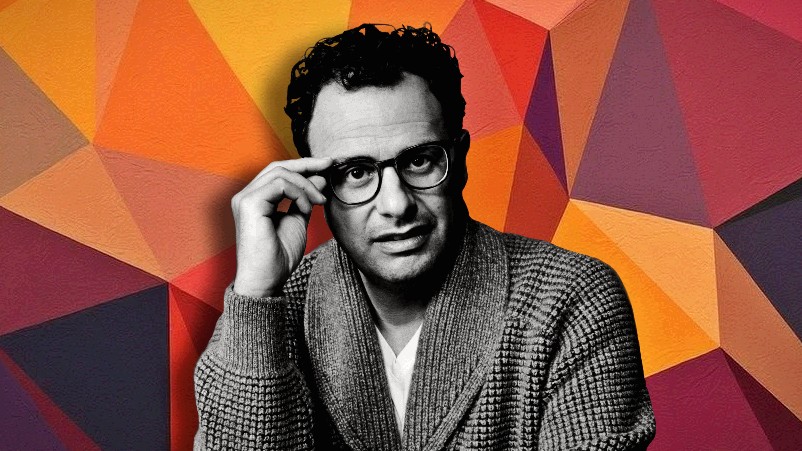
Anthropic CEO Dario Amodei
Anthropic will sell you intelligence, but not attention, according to its IPO filings. The AI company’s IPO prospectus pledges to keep advertising out of its assistant, arguing that once ad revenue becomes a target, pressure to optimise engagement follows. There is still plenty of commerce in the picture: Claude helps Shopify merchants plan promotions and Walmart shoppers find products. Anthropic is also enthusiastically funding the advertising industry itself, having more than quadrupled its annual ad spend to US$147 million during 2025. Behind the principled stand sits a formidable financing challenge. Revenue is surging, a quarterly operating profit has arrived, but computing commitments stretch into the hundreds of billions. The risk disclosures are equally expansive: Anthropic warns that a catastrophic AI incident could overwhelm even the insurance industry’s collective capacity to cover the damage. Investors are being offered a business whose founders are prepared to forgo revenue for their principles, whose technology already helps others sell, and whose IPO price tag remains blank.
What you need to know:
-
Anthropic has pledged to keep Claude free of advertising, warning that ad revenue would introduce pressure to optimise engagement over helpful answers. Its preliminary IPO filing leaves the offering’s size and price undisclosed.
-
Claude already supports commerce through Shopify’s Sidekick and Walmart’s Sparky. Walmart reports 35% higher average order values for Sparky orders, although the comparison does not establish that Claude caused the difference.
-
Anthropic’s own advertising expenditure rose from US$33 million in 2024 to US$147 million in 2025. Its much larger sales, marketing and partnerships expense includes substantial distribution fees.
-
First-half revenue surged to US$16.3 billion, and Anthropic posted a second-quarter operating profit. Its US$80.7 billion half-year net loss was dominated by accounting revaluations, while extensive computing commitments will require further spending.
-
Anthropic warns that autonomous agents can cause unintended harm and potentially catastrophic liabilities beyond insurers’ capacity to cover. Copyright disputes and regulatory scrutiny persist, while founders and the Long-Term Benefit Trust retain substantial governance powers.
Once advertising becomes part of a company’s revenue targets, the pressure to optimise for engagement tends to grow. We have chosen not to introduce that pressure into Claude.
You won't be buying ads on Claude anytime soon, and maybe never. Anthropic made the pledge in its preliminary IPO prospectus, saying the potential revenue would introduce engagement pressures into an assistant users trust with important work and personal questions.
“We have also committed to keeping Claude free of advertising,” the founders wrote. “Advertising funds much of the modern internet, and it would likely be a large source of revenue for us.”
The commitment appears in a founders’ letter accompanying a filing that reveals sharply higher revenue, extensive computing obligations and continuing safety and legal risks, while leaving the proposed stock offering’s size and price undisclosed.
“But people bring some of their most important work and most personal questions to Claude, and we want Claude’s only incentive to be giving them a helpful answer,” the letter said. “Once advertising becomes part of a company’s revenue targets, the pressure to optimise for engagement tends to grow. We have chosen not to introduce that pressure into Claude.”
Anthropic, however, clearly sees a place for itself as a channel - by extension - for others.
Shopify uses Claude as one of the models powering Sidekick, its assistant for merchants, which supports business analysis, promotion planning and other tasks. Walmart uses Claude in Sparky, its shopping assistant, to help customers discover and compare products. A customer case study included in the filing reports average order values 35 per cent higher for Sparky orders than for orders without Sparky.
But while it may not be selling ads, it's buying them like there's no tomorrow. Accounts show advertising expense of US$147 million in 2025, up from US$33 million in 2024. The much larger US$3.17 billion first-half 2026 sales, marketing and partnerships category includes substantial channel partner costs. Anthropic attributes about US$2.7 billion of that category’s year-on-year increase to additional partner fees, while broader marketing and advertising expenses increased US$273 million.
Its products also extend into marketing work through Claude Design, aimed at designers and marketers, and tools for building agents that connect to business systems. The company says deployment requires connectors, governance arrangements and orchestration software beyond the models themselves.
Anthropic’s October 26 filing with the U.S. Securities and Exchange Commission proposes a Nasdaq listing under the ticker, ANT. The offering would include shares sold by the company and existing shareholders, but the number of shares, proposed price and expected proceeds remain blank.
Proceeds from Anthropic’s shares would support computing infrastructure, personnel, working capital and other corporate purposes. Money from selling shareholders’ shares would go to those holders.
Revenue reached US$16.3 billion in the first six months of 2026, compared with US$1.16 billion a year earlier, according to the unaudited interim accounts. Second-quarter revenue was US$11.6 billion, with an operating profit of US$974 million.
That quarterly result followed an operating loss in the first quarter, leaving a US$693 million operating loss for the half-year. The reported net loss was US$80.7 billion, dominated by accounting charges associated with changes in the value of convertible financing and related instruments. Those charges did not represent equivalent cash payments. Operating activities generated US$3.9 billion in cash during the half-year.
Anthropic held US$131.7 billion in cash, cash equivalents and short-term investments at June 30, following substantial private fundraising. It nevertheless warned infrastructure expansion will require significant spending before some capacity becomes operational.
“Our net cash used in these activities may increase regardless of whether our financial performance improves,” the filing stated.
Massive future obligations
The financial notes disclosed approximately US$321.4 billion in estimated future undiscounted obligations for leases that had not commenced at June 30, alongside US$265.6 billion in expected fixed or minimum guaranteed purchase commitments.
They also disclosed approximately US$245 billion in future minimum payments under new or amended lease and commercial agreements entered into after June 30, plus US$21 billion under short-term agreements. Some arrangements depend on contractual conditions being met.
The commitments span different periods and conditions. Some suppliers also finance Anthropic, distribute its products or compete with its models, relationships the company said could create conflicts over cost, access and commercial terms, according to the documentation.
In addition, with the scale of harm that could result from a catastrophic AI related incident, no single insurer, and potentially the insurance industry in the aggregate, may have sufficient capacity or expertise to underwrite insurance commensurate with such exposure.
Risks
The prospectus also warned that agents can make incorrect decisions or take unauthorised actions, while human reviewers may struggle to keep pace with their volume and speed. Connected tools and customer credentials can increase the consequences of security failures.
And this comment is not reassuring if you work in the insurance industry: "Because our models may behave in ways that no user or developer intended, claims arising from such actions could result in substantial liability. Our insurance policies also may not provide sufficient coverage to adequately mitigate the potential liabilities we face, especially where any one incident, or a group of incidents, causes disproportionate harm. In addition, with the scale of harm that could result from a catastrophic AI-related incident, no single insurer, and potentially the insurance industry in the aggregate, may have sufficient capacity or expertise to underwrite insurance commensurate with such exposure."
Anthropic also discloses an October FTC civil investigative demand concerning consumer protection, privacy and safety. The demand is an inquiry rather than a finding of wrongdoing. Its US$1.5 billion Bartz copyright settlement leaves other copyright proceedings and claims outstanding.
Public shareholders would enter a structure preserving substantial founder influence.
Finally, the founders describe a willingness to delay releases or forgo revenue over safety concerns, while their personal pledges to donate 80 per cent of their equity are disclosed elsewhere as voluntary and revocable. So there's that. It was ever thus.