Avoiding complacency: ServiceNow CMO Caroline Raj on bringing consumer marketing to B2B tech, commerciality and leading AI adoption from the front
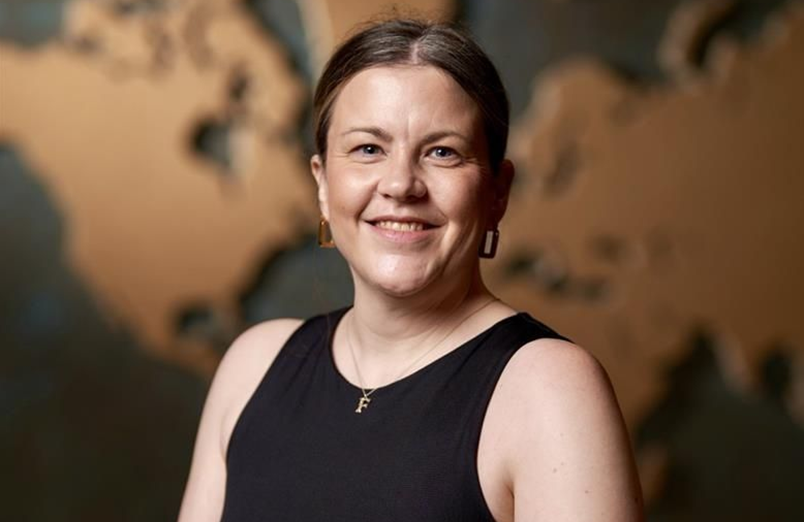
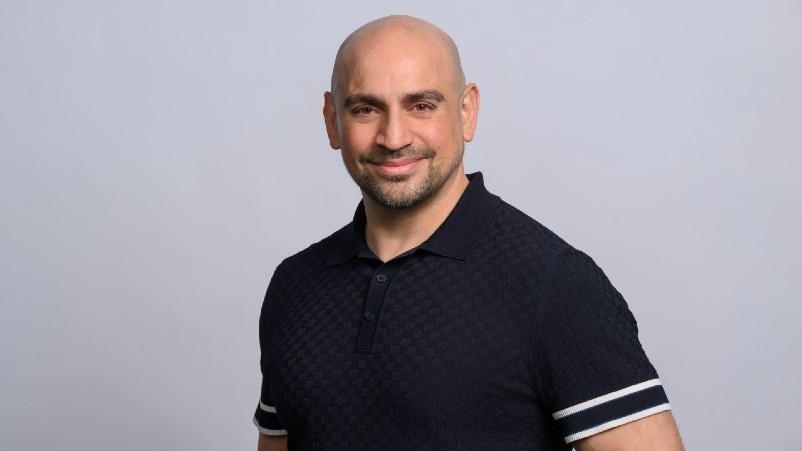
ServiceNow senior director of marketing for ANZ, Caroline Raj
There’s no room for complacency when you’re a CMO in the B2B tech industry, but there’s plenty of room for consumer marketing tactics and principles, says Caroline Raj. She should know: She’s spent the last five-and-a-half years at ServiceNow as it bolstered annual revenues more than twofold and hit a $US160 billion market cap. During this time, Raj has worked for ServiceNow’s flamboyant former global CMO, Colin Fleming, best known for labelling half of B2B marketing “bullshit” and demoting marketing qualified leads in favour of brand investment. That kind of experience is arguably a mile away from her 13 years at IBM. But bundle them together, and what it’s all taught Raj is the power of being curious, commercially grounded and collaborative as a marketer. Having been recognised as CMO of the Year at this year’s AMI Excellence Awards, Raj speaks here about what it takes to drive effectiveness, why marketing leaders pushing AI transformation have to lead from the front, and how the B2B approach to customer storytelling has evolved to keep pace with buying groups.
“Creativity to attract attention”, a commitment to customer-needs based storytelling and proof points, and “offers that accelerate purchase” aren’t just principles for consumer marketers, according to ServiceNow senior director of marketing for ANZ, Caroline Raj. They’re every inch as relevant and critical to modern B2B marketers looking to supercharge growth, she says.
Raj is the second B2B marketer in a row to win the CMO of the Year gong at the 2026 Australian Marketing Institute’s Excellence Awards – last year’s award went to former Flintfox CMO, Cath Brands. Raj was up against four other finalists this year: Tassal chief commercial and risk officer, Matt Vince, Insignia / MLC chief customer officer, Renee Howie, Blackmores chief brand, innovation and communications officer, Joanne Smith, and Patties Food Group chief marketing and growth officer, Anand Surujpal.
Raj began her career in account management in agencies, and she counts working on the launch of NRMA in Queensland with the Brisbane Broncos, along with the rebrand of Power Gen to Eon Energy in the UK, as highlight programs of work.
But she’s spent the majority of her career in B2B. Raj first joined IBM as a demand programs leader, spending over 13 years with big Blue before shifting to fast-growing ServiceNow as senior director of marketing for ANZ in May 2021. Since then, she’s been part of a team building out ServiceNow’s Australian business, sitting at the marketing coalface as it strives to become the AI platform of choice.
It’s been a wild, fast-growth ride. When Raj joined, ServiceNow was reporting about US$5.89bn in annual revenue. In 2026, ServiceNow reported well over 2.5 times that: US$14.73 billion. In her five-and-a-half years, ServiceNow also doubled its number of employees.
Nearly 20 years in an industry of such growth, driving leading-edge product capability and innovation, is something Raj points to as ‘good’ in the ‘good, bad and ugly’ of her tech company tenure. The challenge as a tech marketer is that growth keeps coming from targets, which continue to leap year-on-year.
“What that means is you just can't be complacent. You constantly need to be reviewing and re-evaluating how you're driving growth and how you account for every dollar,” says Raj. “As much as the industry is moving and you're moving with it, it keeps you on your toes.”
The ugly is you’re also running at incredible speed. “You really have to keep reminding yourself around burnout and looking after yourself,” says Raj. “What’s more, the peaks and troughs of the marketing calendar just don’t exist anymore. It's more around how you make the day-to-day sustainable for yourself and your team. That's something that I'm really passionate about when we move at such speed and scale.”
Building commerciality
Raj credits time out of marketing for giving her both a new-found appreciation for what marketing can do, as well as her commerciality. While at IBM, she did a stint reporting into the chief operating officer on a customer transformation program, leading 4500 people and outcomes across a range of customer-led initiatives. Results included a 22-point NPS increase, “a phenomenal result from all the work we did,” she says.
It’s this putting your hand up that’s critical for marketers if they’re not only to keep learning, but also to build influence and connection across an organisation, Raj argues.
“I think we should always take on challenges. Just staying in marketing doesn’t have to be your whole career,” she comments. “And I got a lot out of that experience. When I went back into marketing, I could bring a lot more insights and context from the business, and from the transformation we did.”
Being a commercial marketer for Raj is ultimately about “being commercially grounded”. “That means marketing is accountable for the outcomes the business cares about,” she says.
“We can go off kilter and have all of these different KPIs, but that doesn't mean anything to the business when you're having those leadership discussions. It starts by knowing the numbers, then being able to talk to them at any time. Every campaign, every event, every partner program needs to tie back to the pipeline or some clear business outcome. It's talking the same language, making sure you understand the language that the business is using and being across it.
“One of the things I really pride myself on is making sure I'm a key partner to drive growth of the business. I see that as my job, not just as some nice-to have.”
We can go off kilter and have all of these different KPIs, but that doesn't mean anything to the business when you're having those leadership discussions. It starts by knowing the numbers, then being able to talk to them at any time. Every campaign, every event, every partner program needs to tie back to the pipeline or some clear business outcome. It's talking the same language, making sure you understand the language that the business is using and being across it. One of the things I really pride myself on is making sure I'm a key partner to drive growth of the business. I see that as my job, not just as some nice-to have.
Bringing consumer thinking to B2B marketing
Raj is also one of those people that sees consumer-oriented marketing principles and approaches clearly translating to B2B marketing.
The first she points to is “creativity to attract attention”. “In B2B, that means breaking through the noise, just like B2C, with ideas that earn the attention of busy executives. B2B buyers are still people, and we're selling to people. We can never forget creativity is not just about a B2C campaign. We are seeing B2B showing up more at Carnes Lions every year, and I love that because it shows we're now stamping down saying creativity is important when we're trying to capture attention.”
The second complementary aspect is being relevant storytellers. “The most important thing for B2B marketers is telling stories people want to hear,” Raj continues. “It's not just product messages in our region, it means bringing that global story to life to local audiences with local voices and local proof.”
Raj points to how ServiceNow is leveraging the stories of key Australian customers, Orica and Salvos. Orica, a multinational mining services firm, has deployed ServiceNow Virtual Agent across 35 use cases so far, improving its deflection rate from 18 per cent to 94 per cent while also gaining a day back per week on average in incidental resolution time. The Salvation Army uses ServiceNow for core digital and tech operations and also has leveraged its AI assistant to answer customer queries, saving more than 5000 staff hours.
“In this day and age, particularly in AI, people want to see proof, and doing that through your customer voices is really important,” Raj argues.
The third consumer-oriented pillar for Raj is “offers to accelerate purchase”. “Consumer marketing uses this all the time to offer to activate a purchase. But that's no different to how we talk about it in enterprise terms,” she says. “It looks a little bit different, but has the same intent. So it's about curating a compelling proposition, driving to the next step and moving the buying group forward. This could include offers like briefings and assessment, a POC, business case. That’s how we get prospects to the next step in the buying process.”
A further principle Raj points to is customer experiences and recognising the moments that matter. “It means treating the buying group the way we want to be treated as consumers,” she says. “We need to understand what they need. We need to make it easy to engage and earn their attention over time. And at ServiceNow, once again, we show up with stories, personalised journeys.
“And we have been a little more creative over the years around how we show up, from how we film it, to how they tell those stories, and how it's more personable … we've jazzed up how we share the stories, and it depends on what stage or what forum you're using it for. But the customer story is still the same. That’s because the need is still the same.
“What buyers want to know is: What outcomes have they achieved? Because when someone's looking at that, they put themselves in their shoes. They’re going ok, they've done that. That means this. That’s credibility. I can use that to build a business case back inside of my business using that story.”
Brand and demand: Working for a global CMO dynamo
It’s well-known that B2B organisations can get caught up in the demand generation funnel and low-ball brand investment, to their detriment. One of the global catalysts helping ServiceNow buck this trend was former CMO, Colin Fleming, who started his career in car racing. A frank speaker, Fleming built respected notoriety for calling out the “fact obfuscating generalities” peppering B2B marketing’s lexicon and playbook, and calling half of B2B marketing “bullshit”.
As previously reported by Mi3, one of Fleming’s big decisions was to demote marketing qualified leads (MQLs) as part of his transformation of the tech company’s marketing KPIs and slash lead gen spend by 63 per cent. He also oversaw implementation of sophisticated personalised person mapping and buying group approaches. That saw conversion rates lift 133 per cent.
“Colin really came in at the right time for us,” comments Raj. “ I was driving this brand investment case really hard for Australia for a couple of years, and we'd done quite a lot of testing in the digital channels to build the business case. We had a really great engine for demand generation. But we were hearing from the field that the customers don't know us, and they don't know what we do. So there was definitely a gap we needed to close, and brand was going to be what was going to get us into the room before the buying decision started.
“Demand generation doesn't allow you to do that. We were able to secure the investment at that time and take brand to the next level.”
This brand-led approach has focused on sporting and entertainment moments across Australia, which Raj says have worked well, such as the Australian Open and Formula 1. ServiceNow not only leverages sponsorships, but also hosting and experiences it can build into broader marketing plans that extend the journey for customers and partners.
“Brand investment increased the awareness and consideration in the market significantly,” says Raj. “We also saw an increase in our demand gen. That’s the really important point: It's not just in a silo itself; brand has this holistic effect on all your channels.”
As to Fleming’s quip that the “MQL is dead”, what that was really all about was rethinking conversion, says Raj. “We refined internally our lead modelling to uplift conversion and review what success really meant. It's easy to sit in a meeting as a marketer with a page of green ticks and say you've achieved X amount of MQLs and therefore you are successful. But the key is how you're supporting the pipeline and the revenue of the business – that is really what makes the difference,” she says.
For Raj, what was also interesting about upweighting brand investment was the volume and quality of candidates coming to the business for open roles. “That increased due to the brand investment as well, because they now knew our name. So there were some really important, so brand and bringing brand into the mix and increasing that investment has been really key for us, and something I'm really proud of.”
Fleming has now moved on from ServiceNow, and Simon Mouyal, former CMO of Armis, which ServiceNow acquired, has taken the global reins.
We need [as leaders] to get hands-on the keyboard. We need to make sure we have the experience. That’s because we know how to do the change management and transformation, not younger members of the team. That's been a big one for me about making sure it's not just asking the team to do it. It's doing alongside them, learning as we go, making sure I'm putting in the time myself to learn as much as I can.
What it takes to lead AI adoption in marketing
Outside of the demonstration of her effectiveness, another reason Raj was awarded the CMO of the Year Award at this year’s AMI Excellence Awards was her approach to AI adoption. Judges praised Raj for her “culture-first approach to AI adoption that was one of the most sophisticated in the field”.
She explains that at ServiceNow, AI adoption is less about the tools and more about how the team learns and works.
“This has meant visible leadership sponsorship, hands-on experimentation, and just providing a safe environment to try things and learn,” Raj says. “We've been really clear that AI is a part of marketing and how we get it done today, and we're focused on making it easy for people to build it into their everyday work and support them to focus on the value add work.”
Easy to say, but in practice, what that means is hands-on access to tools, and a dedicated window of time each week for the team to experiment. There are also tailored training and assessments where people can understand where they're at in their AI journey and areas they can learn.
ServiceNow marketers now have KPIs on AI adoption and use. Raj says her team's goal is to share three innovations a quarter on how they're applying AI.
“It's not just about efficiencies; it's about how you create new workflows and innovations to support how we work,” she says. An example here is an internal AI content engine that produces assets and seconds aligned to the branding and messaging.
For Raj, a key win has been regular sharing sessions. “Everybody's working at certain levels, and they've got certain capabilities, but there's a really powerful discussion when they collaborate and say, ‘Hey, this is how I've done this, and this is what works’,” she says. “Even if it's for half an hour, and we do it every two to three weeks. People sharing what they're learning and what they're working on really makes a big difference, rather than them just learning in a vacuum.”
Raj admits to an earlier misconception when AI began infiltrating enterprises that it “would be bottoms up” tech adoption. “It didn't take long for me to really realise quickly that as leaders, we need to lead from the front,” she says.
“We need to get hands-on the keyboard. We need to make sure we have the experience. That’s because we know how to do the change management and transformation, not younger members of the team. That's been a big one for me about making sure it's not just asking the team to do it. It's doing alongside them, learning as we go, making sure I'm putting in the time myself to learn as much as I can.”
That also goes for failing fast together. “You have to experiment; it's so critical,” adds Raj. “We can't think of that as a bad thing. There are things that are not going to work, and I certainly myself learn things all the time. I’ll go, well, I won't spend time doing that again.
“The thing is, we have lots to do in marketing, and it continues to be a longer list of what we're accountable for and what we need to do for the business. But making time and using AI to be able to focus on the things that matter is really the benefit here.”
And ultimately it all comes back to what Raj sees as a CMO’s most critical attribute: Curiosity.
“In this world, we need people willing to try new things, to be brave, to fail fast,” she said. “We need people to really lean forward and lean into try things. The other one attribute that ties to this is having a growth mindset and adaptability. What we knew yesterday is going to be very different to what the world looks like tomorrow, so we need to adapt and change.”