
B2B street cred: Influential millennial, Gen Z execs upweight trust, peer validation and integrity in buying decisions – CMOs from Built, MUFG, Humanforce on flipping the old-school script
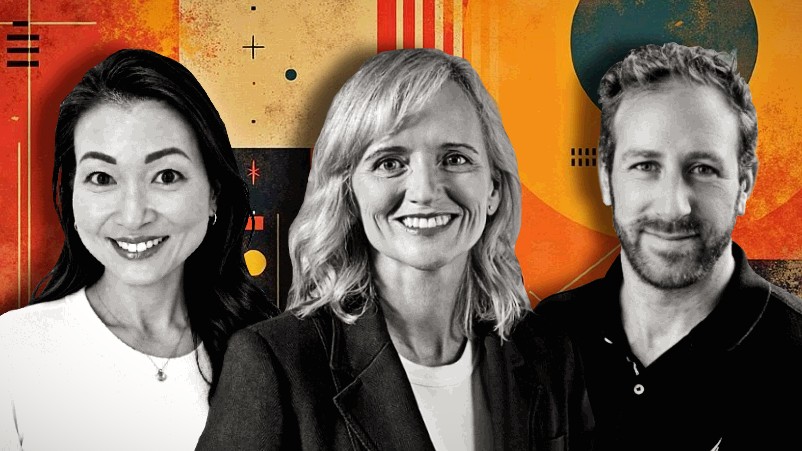
From brand-led to people-led: That’s how a trio of marketing and growth chiefs describe the shifting influences shaking up B2B buying decision making. New LinkedIn research attributes a rising preference for evidence-based, professional peer-led endorsement in B2B decision making to the growing swathes of millennials and Gen Zs now climbing the executive corporate ladder – these demos now make up nearly half of executive leaders across sectors. But their penchant for what trusted peers and other B2B buyers have to say isn’t the only factor contributing to this story, B2B marketers tell Mi3. You can also blame AI, the overwhelming wash of data and more proactive, easy access to content for this shift too. And while building credibility and trust is more important than ever, you are still going to need to build visibility to get considered, they argue.
What you need to know:
- B2B buyers are younger than ever: LinkedIn research shows millennials and Gen Z now account for 48% of Australian leadership roles, rising to 50.2% in the country’s biggest enterprises.
- And what they’re being influenced by is challenging B2B marketing conventions. New LinkedIn data found that 88% of Australian marketers believe Gen Z buyers are more likely to consider brands validated by someone in their professional community, with evidence, trusted recommendations and expertise increasingly shaping decisions.
- But for marketing and growth chiefs at Built, MUFG and Humanforce, the shift isn’t purely a generational one. Easier access to information, AI-driven discovery, greater scrutiny and more complex buying groups are all changing B2B buying behaviour and decision making.
- Critical in the mix are homegrown experts as brand assets, and the trio all point to putting executives, subject-matter experts and customers front and centre across LinkedIn, podcasts, conferences, roundtables and other channels – per MUFG’s Wendy Mak, it’s a “brand-led to a people-led” shift.
- For Built’s Melina Cruickshank, reputation isn’t enough; evidence-based proof points are in demand.
- They also agree content needs proof, not just polish, especially with the rise of AI slop. LinkedIn research identifies short-form video and expert voices as leading ways to engage younger B2B buyers; marketers say practical, specific, evidence-backed content is also what’s cutting through the noise.
- Humanforce’s Cameron Partridge argues brands still need enough visibility to get considered – but that credibility is what helps move buyers through the decision process.
- AI is also raising the trust bar as AI makes it easier to produce polished content at scale.
- The bottom line; Trust ultimately has to be earned.
According to fresh research from LinkedIn, nearly nine in 10 Aussie B2B marketers believe future growth depends on their ability to influence the Gen Z and millennials who’ve now ascended to nearly half of all leadership roles across the country. And who are these younger B2B buyers swayed by? Professional peers, evidence-based insight and trusted recommendations.
Per LinkedIn’s platform data, millennials and Gen Z now make up 48 per cent of Australian leadership roles. It’s even higher in Australia’s biggest enterprises – millennials and Gen Z now hold 50.2 per cent of leadership roles, up 14.2 percentage points since 2016. LinkedIn data also shows it’s not just newer industries such as tech with a penchant for these younger leaders: They hold 48.7 per cent of leadership roles in Australian non-tech industries (versus tech at 44.2 per cent).
But it’s how this new generation of leaders is deciding which products to buy that could potentially have B2B demand gen aficionados' knees quaking. LinkedIn’s research found professional relationships and trusted recommendations are increasingly shaping how Gen Z evaluates brands. Over eight in 10 marketers believe Gen Z buyers are more likely to consider a brand validated by someone in their professional community (84 per cent), a sentiment that rises to 88 per cent in Australia.
A trio of B2B marketing and growth leaders speaking to Mi3 agreed with the main premise of the research – that B2B decision making is changing, and that it’s increasingly influenced by peer-led evidence and recommendations, trust and pragmatic integrity. They just don’t chalk this up purely to generational preference.
Built chief AI and brand officer, Melina Cruickshank, agreed B2B marketers need to understand how younger people are making decisions. More broadly, the job is about understanding what data is underpinning all of today’s decision making.
Cruickshank also agreed brands gain credibility by being endorsed by someone in a prospect’s professional community. “Reputation still matters, but reputation alone is no longer enough,” she said. “Clients want data and proof. They want to hear from the people delivering the work but understand how technology, data and innovation are being applied to improve outcomes.”
Built’s clients include developers, government agencies, institutional investors and asset owners and operators. “We’re seeing more decision-makers expect direct access to expertise, greater transparency and evidence-backed decision making,” Cruickshank told Mi3. “They want to understand how projects will be delivered, what risks have been identified and what systems are in place to manage them.”
Strategically, Built’s response is to show the work it does and, importantly, showcase the people doing it. “Clients are selecting teams they know they’ll be working with for years, so the best and most credible thing we can do is connect them with the people they will be working with - the project director, the engineer or the specialists who will actually deliver their job,” Cruickshank said.
In practice, that’s meant upping the ante on getting Built’s people to share what they've learned on projects, in their own words. It’s also about being specific about how it’s using data and AI in delivery, “with real examples rather than claims”, said Cruickshank.
“We’re putting our people in the rooms and forums where our clients' teams already spend time,” she said. “And we’re bringing clients onto Built AI, our project collaboration platform which provides them much more transparency on how we operate.”
There are now 18 projects running through Built AI, which captures project data as a working source of intelligence. The platform is designed so lessons from one job can carry into the next, and risks are surfaced earlier in the process. “Construction has historically been slow to document and capture what it knows. AI is changing that quickly and helping give teams and clients better visibility to make better decisions earlier,” added Cruickshank.
We’re seeing more decision-makers expect direct access to expertise, greater transparency and evidence-backed decision making. They want to understand how projects will be delivered, what risks have been identified and what systems are in place to manage them.
From brand-led to people-led
CMO at financial and investment services firm MUFG, Wendy Mak, backed up LinkedIn’s findings in so far as agreeing modern marketing had to move with the times. And these times call for more integrated, peer-led and digitally dynamic forms of content and engagement.
“If your marketing still speaks to the buyer you had 10 years ago, you're not planning for the future,” she argued. “It’s the same when we created digital portals and mobile apps to allow a new, younger generation of users to self-serve, and moved away from high reliance on contact centres and paper mail in operational processes.”
But Mak warned marketers against relying too much on demos to understand why this is happening. “We should be careful not to market to a specific ‘generation’ because in the B2B decision landscape – and especially complex, high-investment products – decisions are rarely made by one person,” she pointed out.
“Gen Z or Millennials might form part of this decision making, but so too would your ‘traditional’ decision makers. Our job is to build relevance and confidence across the entire buying group.”
Mak saw this shift supporting her efforts to move away "from a brand-led model to a people-led one”. “This means finding the voices within our subject-matter experts and client-facing teams that resonate and can represent our brand in the market, not just via our owned channels but other channels, such as external conferences, round tables and networking events,” she explained.
“We’re also leveraging our long-form thought leadership reports, which still have a role to play, into shorter form pieces like an infographic for social media, an executive perspective in a video, a set of key client messages, a roundtable discussion or podcast interview.”
Humanforce chief growth officer, Cameron Partridge, was similarly more interested in whether how B2B buyers discover, evaluate and build confidence in companies has changed.
“I think it clearly has,” he told Mi3. Humanforce provides an AI-powered platform for workforce operations management. “These days, buyers can access far more information and much earlier. They are doing more research independently, influence is spread across more people and channels, and increasingly AI is mediating discovery before a buyer ever reaches your website or speaks to sales.
“So I’m not sure I’d treat this purely as a Gen Z issue. A lot of these behaviours are simply becoming normal B2B buying behaviour.”
For Partridge, it’s not that people suddenly matter more than brands either. “Big B2B decisions are still made by people, and deals are still ultimately won through human relationships. What has changed is how early those relationships can start,” he argued.
“For example, buyers might hear an executive on a podcast, see an expert on LinkedIn, or hear directly from a customer before there is any sales conversation. So the first sales meeting is increasingly not the first human impression. That inevitably means we are putting more emphasis on making genuine expertise around the business visible: Executives with real points of view, subject-matter experts who know what they are talking about, and customers with something real to say.”
Partridge admitted none of that is new. “What is different now is that buyers can form a view of those people much earlier, often before they ever speak to sales,” he added.
The fundamentals haven’t changed as much as some of the language around them suggests. You still need people to know who you are, trust you, and have a reason to choose you. What has changed is how much information buyers have to work through, and how easy it has become to make something look credible. That puts more pressure on companies to actually prove the expertise behind the brand.
Rethinking the B2B content playbook
According to LinkedIn’s research, B2B marketers see shortform immersive videos (49 per cent) and content from expert voices (44 per cent) as the top two ways to engage Gen Z buyers. In addition, 43 per cent said content from expert voices (employees, creators, or industry experts) is the most effective way to engage this evolving buyer group.
This is where Cruickshank aligned with LinkedIn's data. “In construction, honest and useful data-led content matters most to younger generations,” she agreed. “We’re finding content that is short, specific and made by people who know what they're talking about gets cut through, whether that’s a two-minute clip of a site supervisor explaining how they re-sequenced a program to recover three weeks, or an engineer sharing lessons learned, or a discussion about safety or innovation.
“We have to find those stories that add value and are practical: Lessons learned, technical explainers, behind-the-scenes on complex builds, and honest commentary on where the industry is heading.”
Cruickshank has also noticed younger generations, on both the client and employee sides, expect technology and data to fully inform decisions. “Whereas the previous generations tended to draw on years of hands-on experience,” she argued. “Both matter, and AI is helping us bring the two together much faster.”
It's moving from a brand-led model to a people-led one. This means finding the voices within our subject-matter experts and client-facing teams that resonate and can represent our brand in the market, not just via our owned channels but other channels, such as external conferences, roundtables and networking events. We’re also leveraging our longform thought leadership reports, which still have a role to play, into shorter form pieces like an infographic for social media, an executive perspective in a video, a set of key client messages, a roundtable discussion or a podcast interview.
Brand street cred
The other side of this coin is brand credibility. Per the LinkedIn survey, 75 per cent of marketers agree brand credibility is becoming more important than brand visibility, and 76 per cent said brands must show up in trusted professional networks to earn it.
“Gen Z are paying attention, but they’ve also raised the bar for what earns their trust,” according to LinkedIn Marketing Solutions director, Andrea Rule. “Today’s buyers look to their community of peers and experts to help them make decisions, and that’s why focusing on just visibility without credibility in your marketing strategies falls short. Right now, there is no more valuable currency in the world than trust. The brands that win will show up creatively, through the people and channels their audiences trust most.”
In response, 45 per cent expected greater investment in content from expert voices to build brand credibility and influence AI-driven discovery. Per LinkedIn’s research, 74 per cent of B2B marketers who currently work with ‘expert voices’ agreed that their content is more effective than traditional campaign types at turning awareness into consideration, and one-third said campaigns using expert voices have their greatest impact at the consideration stage. This contrasted with 17 per cent who see the biggest impact on awareness.
LinkedIn is seeing the benefits of this: The company noted LinkedIn Thought Leader Ad adoption had grown nearly 40 per cent year-on-year and claimed the format delivered up to two times higher click-through rates than comparable single-image ads.
Trust as a fundamental is nothing new in construction. “What has changed most though is the level of scrutiny,” commented Cruickshank.
“Younger decision-makers have grown up able to check almost anything on the spot – they do their research before taking a meeting. With the size of projects we work on, we know that clients can't afford a gap between what a company promises and what it delivers. Built’s approach has always been to be honest and open about what we’ve learned and be able to show capability through real projects and outcomes we’ve delivered.”
But Partridge didn’t see “credibility as replacing visibility”. “If nobody knows who you are, you still have a visibility problem. If everyone knows who you are but doesn’t trust or rate you, that is a different problem,” he said.
“You need enough visibility to get considered, and enough credibility to move the decision forward.”
Nor did Partridge believe trust has suddenly become more important in B2B marketing. “The fundamentals haven’t changed as much as some of the language around them suggests. You still need people to know who you are, trust you, and have a reason to choose you,” he continued.
“What has changed is how much information buyers have to work through, and how easy it has become to make something look credible." That's a pitch at how much more research is being done and is possible using AI too. "That puts more pressure on companies to actually prove the expertise behind the brand.”
While marketing can amplify trust and make it visible to the market, “we can’t buy or create it in a campaign”, Mak pointed out. “It has to be established and felt,” she agreed. “And we definitely can’t establish it without consistency across the board – not just in what we do in marketing.
“Yes, we can use our voices to support credibility and trust in the ways I’ve mentioned above, but where it’s really built and felt is within the entire business. A client email answered promptly and properly, a phone call that resolves a problem, a digital interaction that is seamless, an issue resolved quickly and satisfactorily.
“In short – and this has not changed over time: We need to deliver and do what we say and promise we will, to build trust. The difference is how vocal Gen Z and Millennials are when this trust is broken. They’re not afraid to voice it, and across all the channels and mediums they use.”
The trio of marketers agreed that AI was another input into the mix, arguably only adding to the criticality of building trust. “AI has also changed the trust factor for marketers, as it has dramatically increased the volume of content people are exposed to and how easily it creates something that looks polished and authoritative,” commented Mak.
“But younger B2B audiences are increasingly savvy about recognising content that feels generic or manufactured – your AI slop. That puts an even greater premium on who to put forward as the voice of your brand. Do they have genuine expertise? Do they have a point of view? Are they actually saying something useful?
“There is also an important distinction between B2B and B2C. In consumer marketing, there can be a legitimate role for AI in creating highly produced, imaginative or aspirational brand worlds. In B2B, particularly when you’re asking someone to trust you with a significant or complex decision, polish is no substitute for expertise. The credibility of the person behind the content - and the value of what they have to say - becomes much more important.”
In Partridge’s mind, AI has made marketing easier to produce, but harder to win. “It is now incredibly easy to create something that looks reasonably good, so simply making more content becomes less of an advantage,” he claimed. “The things that are harder to manufacture become more valuable: Judgement, originality, evidence, reputation and trust.”
LinkedIn’s latest research was conducted by Censuswide among a sample of 6196 marketers involved in B2B marketing across the UK, Saudi Arabia, UAE, Australia, USA, Netherlands, India, Singapore, France, Germany, Italy, and Brazil.
