‘Why does CX still suck so much?’: Two of martech’s top thinkers say AI exposed the hard truth that brands optimised for surveillance, efficiency and software sprawl, not customers
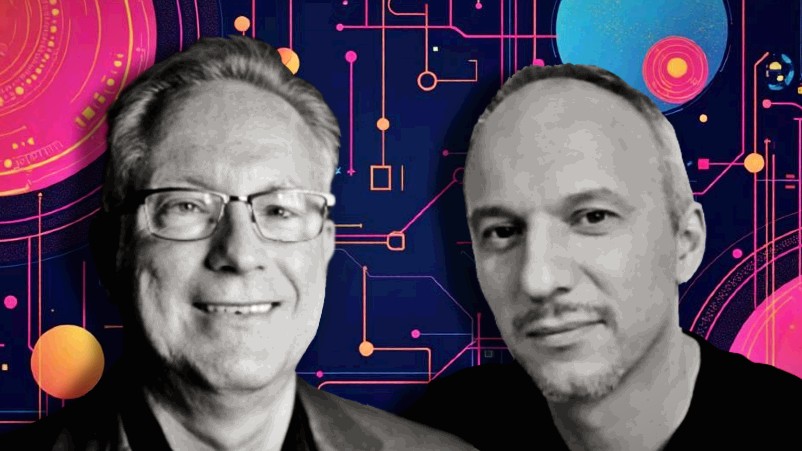

Perhaps we shouldn't have left marketing to the techies. Somewhere along the way customer experience became an engineering problem instead of a human one. Companies built towering stacks of CRM systems, CDPs, automation engines, AI copilots and personalisation layers in the belief that enough data and enough software would eventually produce intimacy at scale. Instead, many customers ended up trapped in automated phone trees, stalked across the internet by ads for products they had already bought, or funnelled into journeys designed more for operational efficiency than actual usefulness. That growing disconnect sat at the centre of Frans Riemersma and Scott Brinker's double act this week at Martech Next, where the veteran martech analysts delivered a blunt diagnosis of the industry they helped build. They mounted an argument that the sector had largely optimised for coverage, complexity and internal metrics while drifting further away from how customers actually behave, think and decide.
What you need to know
- Data from industry analysts Gartner suggests businesses have spent more than $40 trillion on technology over the past decade, yet study after study suggests the gap between the experiences brands believe they are delivering and how customers actually feel about experience has barely improved. Brands have fallen into the trap of optimising for systems, not people.
- Speaking at Progress Software's Martech Next event in Melbourne , Martech Tribe founder Frans Riemersma, part of the double act along with Scott Brinker that produces the influential annual State of Martech report, said marketers have mistaken more data, integrations and personalisation for genuine customer understanding.
- He warned many brands have shifted from customer-centric marketing to what he described as “stalking”, chasing full behavioural coverage across every touchpoint while creating operational complexity instead of customer intimacy.
- Both analysts argued generative AI is exposing weaknesses in traditional martech stacks because software features are rapidly becoming commoditised - making trust, relevance and contextual understanding the real competitive advantage.
- Brinker, while pushing back against the SaaS is dead crowd, cautioned AI-powered automation risks industrialising bad customer experiences at scale, particularly in customer service where companies often optimise for ticket deflection and efficiency rather than satisfaction and loyalty.
- The pair said future winners will not necessarily have the biggest AI or martech stacks, but will be organisations that reconnect technology with direct customer observation, experimentation and value creation.
We have been optimising for coverage. Do we cover every single touch point, every interaction, every integration. In marketing terminology that is not called marketing, it’s called stalking.
Let's begin with a data point. Over the last decade the world spent more than $40 trillion on information technology, according to industry analysts Gartner. Yet per Capgemini’s recent global study, the gulf between how well executives believe companies are meeting customer expectations and how customers feel about that same question is vast and locked.
When you compare Capgemini's new study with its comparable 2017 report, Gartner's twelve zeros closed the CX gap by a single per cent – from a 40-point spread to 39. We should probably start asking some hard questions, which is exactly where Frans Riemersma went when he began his keynote at this week's Martech Next event in Melbourne, hosted by Progress Software.
Riemersma is one of the world’s leading martech analysts, and his words, famously, are not for mincing: “Why does customer experience still suck so much?”
He told attendees that there is more customer data than at any point in human history.
To that, you can add more AI tools, more marketing systems, more dashboards, more automation engines and more personalisation software than marketers could have conceived of 15 years ago when his colleague Scott Brinker began tracking the martech ecosystem
"Then the next question, do you think it's getting less anytime soon? "
Yet consumers continue to complain about broken journeys, irrelevant engagement, manipulative targeting and customer service systems seemingly designed to prevent human contact at all costs.
For Riemersma and fellow martech analyst Brinker, the problem is not that companies lack technology. It is that they have spent years optimising for the wrong things.
He illustrated the point with an example from Ikea founder Ingvar Kamprad, who built one of the world’s most successful retail experiences without sophisticated analytics or AI systems. Dyslexic and instinctively observational, Kamprad focused obsessively on how customers behaved in stores.
“He could not learn this by looking at the data,” Riemersma said. “He followed people.”
The famous Ikea journey, from cheap candles near the entrance to Swedish meatballs midway through the maze-like floor plan, was not accidental merchandising. It was behavioural choreography designed to reassure customers they were getting value while gently guiding them deeper into the store. Kamprad was not trying to optimise touchpoints or maximise data collection. He was trying to understand what customers actually felt.
“He thought this through, and he's not tricking you, he's serving you, and he could not learn this by looking at the data,” Riemersma said.
That distinction sits at the centre of a growing debate inside the marketing industry as generative AI collides with decades of accumulated marketing technology. Riemersma argued the industry had confused technological sophistication with customer understanding and, in the process, drifted away from the very people it was supposed to serve.
“Do we need more technology? Do we need more data? Will that solve the problem? No,” he said.
You can hide the shit with snow, and you're safe till spring. Well, I think AI brought springtime
Springtime for Martech
For years, the martech industry sold companies on the idea that better customer experience required broader data collection, more integrations, larger customer profiles and increasingly comprehensive software stacks. The result was an explosion of technology, as evidenced by Riemersma and Brinker’s latest martech landscape that now tracks 15,505 products globally.
But Riemersma argued much of that expansion created operational complexity rather than customer intimacy.
“We have been optimising for coverage,” he said. “Do we cover every single touch point, every interaction, every integration. In marketing terminology that is not called marketing, it’s called stalking.”
Riemersma believes many companies became trapped in a technology-centric worldview where success was measured by how much data they collected rather than whether they genuinely improved the customer relationship.
He argued AI is now exposing those weaknesses.
“AI commoditised code. We have to look at customer benefits, because everybody can build stuff now. So now it's all about customer benefits. Oh my god, we have to understand what a customer really wants. We thought we just buy a tool and we're safe.”
The fact that features that once differentiated marketing platforms can now be reproduced rapidly through generative AI, in Riemersma’s telling, is forcing companies to confront a harder truth: "You can hide the shit with snow, and you're safe till spring. Well, I think AI brought springtime."
"AI exposes the fact that selling and shipping features by the kilo is no longer adding value.
“Nobody cares about your features,” he said. “They never did, but now it's really exposed in spring, so they're not interested in you. I'm so sorry that your mother told you you're a unique snowflake in the universe."
What customers care about, he argued, is whether a company solves a meaningful problem in a way that feels relevant, trustworthy and valuable. That requires understanding context rather than simply collecting data.
Both Riemersma and, earlier Brinker described this emerging challenge as “golden context” which attempts to align customer intent, company priorities and system-level intelligence into something operationally useful. The problem is that most organisations have fragmented all three across disconnected systems, teams and incentives.
That old personalisation canard
Until recently, many marketers believed more personalisation would solve the issue. Riemersma said that assumption underestimated how crude many marketing systems actually were.
“For a long time personalisation has felt a little bit awkward,” he said. “How can you if-then-else somebody and be personal?”
Traditional martech systems were deterministic. They followed rules. AI systems are probabilistic. They interpret language, ambiguity and shifting intent. Riemersma argued companies now need both.
“There’s some things you don’t want to do probabilistically, and some things you want to do deterministically,” he said.
Yeah, about those events
That hybrid future is already forcing organisations to rethink how they structure customer journeys. He described working with a German laboratory equipment manufacturer that believed its customers discovered products at trade events, attended webinars and eventually converted through product pages.
The data showed the exact opposite.
Customers typically began on product pages because they already owned older equipment and wanted upgrades. They attended webinars afterwards to understand technical changes. Events came last, largely to validate trust in the company before purchase.
“They got these channels exactly right, but in the wrong order. They did everything right to chase the leads out of their funnel. It was a bloodbath,” Riemersma said.
And that revelation emerged not from advanced AI modelling but from combining basic data analysis with direct customer interviews.
“Let’s talk to the customer,” he said. “That’s the scary part.”
The company ultimately reorganised its customer journey around the handful of interactions that materially influenced buying behaviour. According to Riemersma, the changes generated returns of up to 16-to-one without purchasing new software or dramatically expanding data collection.
“Their data was incomplete and it was pretty dirty,” he said. “Still, you can do this stuff.”
There’s a difference between resolving a ticket and deflecting a ticket,
The law of unintended consequence
Speaking early, Brinker approached the same problem from a different angle. Where Riemersma focused on customer intimacy and value engineering, Brinker concentrated on the growing complexity of AI-driven marketing systems and the unintended consequences of automation.
“We kind of got used to internet time,” Brinker told the Melbourne audience. “Then a few years ago people started talking about AI speed.”
Brinker argued AI is accelerating marketing operations beyond the organisational capacity of many companies to govern them properly. The rise of “vibe coding” and natural language software creation means employees can increasingly generate internal tools, workflows and automations without engineering teams.
“The hottest new programming language is English,” he said, quoting Andrej Karpathy, a prominent AI researcher, former Director of AI at Tesla, co-founding member of OpenAI, who recently landed at Anthropic.
That democratisation may increase creativity and experimentation, but Brinker warned it also risks creating sprawling layers of fragile systems and poorly governed automation.
More importantly, he argued AI amplifies whatever operational logic already exists inside an organisation. If customer journeys are badly designed, AI simply industrialises the problem.
Nowhere is that more visible than in customer service automation.
For years companies deployed chatbots and automated service flows primarily to reduce operational costs. The systems often frustrated customers because success was measured internally through metrics like ticket deflection and resolution speed rather than actual customer satisfaction.
“There’s a difference between resolving a ticket and deflecting a ticket,” Brinker said.
He warned companies repeatedly optimise for what is easiest to measure rather than what creates long-term customer value. Faster ticket handling may improve quarterly efficiency metrics while simultaneously eroding loyalty and advocacy.
As we noted in an earlier story this week, Brinker warned, “We have to be really careful not to over-optimise all of these out, because a lot of them take on the characteristic that they are inefficient for the company in the short game. 'Oh, this particular interaction, this is the less efficient way to do it.' But when taken over the lifetime of that customer, the brand loyalty and love those experiences can create, and the add-on effects of advocacy that can come out of that, mean there are actually cases where it’s worth it.",” he said.
The Sorcerer’s Apprentice
Brinker framed the issue through a two-by-two matrix comparing customer benefit with company efficiency. The ideal scenario improves both. The danger emerges when automation becomes efficient for the company while degrading the customer experience.
He compared the phenomenon to Disney’s “The Sorcerer’s Apprentice,” where Mickey Mouse enchants brooms to automate chores only to lose control as the same flawed process repeats endlessly at scale.
“That’s automation at speed and scale,” Brinker said. “Not a good experience.”
The challenge becomes even more complicated as consumers begin deploying their own AI agents. Brinker described a future where customers increasingly rely on ChatGPT, Gemini or AI shopping assistants to filter marketing messages, evaluate products and even manage inboxes on their behalf.
For marketers, that creates an entirely new competitive environment where brands may no longer communicate directly with humans at all.
“These are agents that customers are using that are not under our control,” he said.
The result is a marketing industry entering a period of growing uncertainty. The old assumptions about customer journeys, attribution, engagement and persuasion are starting to fracture under the weight of AI-mediated interactions and increasingly fragmented consumer behaviour.
Both Riemersma and Brinker argued the companies most likely to succeed will not necessarily be those with the largest technology stacks or the most advanced AI deployments. The winners will be organisations capable of reconnecting technology to genuine customer understanding.
For all the excitement surrounding AI, both men delivered a surprisingly old-fashioned conclusion. Talk to customers, observe their behaviour and focus on the moments that matter. Oh, and stop measuring activity and start measuring value.
Or as Riemersma put it: “The only antidote against uncertainty is experimentation. Learn by doing.”